Blog Categories
Interior Design Degree | Course Details & Career Scope
Interior design is a fulfilling profession since it transforms plain environments into visually beautiful ones. Interior designers create an environment that is safe, practical, and aesthetically pleasing by identifying a place’s needs and choosing necessary and ornamental elements.
In recent years, there have been many work prospects for young and skilled interior designers due to the growing popularity of interior design as a vocation. As more individuals invest in opulent and cosy houses, the interior design sector is becoming increasingly significant to construction projects.
All of these led to the rising demand for an interior design degree. In the blog we will put more insight into an interior design degree.
What is an Interior Design Degree Course?
An interior design degree course teaches students how to plan, design, and enhance interior spaces to make them functional, safe, and aesthetically pleasing. It covers design principles, materials, space planning, creativity, and technical skills like CAD. The course prepares learners for careers in residential, commercial, and specialised design fields.
An interior design course covers a wide range of topics, including:
- Methods for organising and designing spaces
- Colour theory and lighting
- Furniture design and planning
- CAD and design software applications
- Material selections and environmental principles
Both undergraduate and graduate-level courses are offered in this discipline. Certain institutions provide degrees or certifications as well.
Top Techniques Learnt in an Interior Design Degree Course
Every professional interior design course teaches students a well-rounded combination of hard and soft skills. To satisfy the needs of clients and the design business, interior designers need to possess certain skills that are as follows:
Technical Skills
The course includes intensive instruction in the following technical abilities necessary for an interior designer:
- Computer-Aided Design (CAD): Acquire proficiency with industry-standard commercial software such as AutoCAD, SketchUp, and Revit.
- 3D Visualisation: Make realistic design prototypes using 3D models and rendering technologies.
- Space Planning: Recognise how to maximise available space while considering client needs.
- Lighting Design: Learn about the technical details of artificial and natural lighting in different settings.
- Knowledge of Materials: Learn about materials, textures, finishes, and sustainable materials used in interior design.
- Technical Drawing: To implement plans, become an expert in architectural drawing and blueprint design.
- Building Codes & Safety: Learn about safety standards for residential and commercial spaces, along with relevant local and regional building codes and regulations.
Students who possess these technical interior design abilities are better equipped to manage real-world projects with accuracy.
Soft Skills
In the field of design, soft skills are just as important as technical expertise. The course will teach the learner:
- Communication Skills: Communicate effectively with clients, contractors, and suppliers.
- Creativity: Develop original ideas for various environments and lifestyles.
- Solving Issues: Use critical thinking to solve design issues.
- Time Management: Discover how to finish projects on schedule without compromising on quality.
- Collaboration with Experts: Work together with engineers, architects, and construction departments with ease.
- Client Handling: Recognise a client’s mental state and treat him with respect.
These skills are essential for an interior designer to ensure smooth collaboration and client satisfaction throughout the design process.
Also Read: Best College For Bachelor of Interior Design in Delhi-NCR
Factors Driving Interior Design Degree Popularity
Today, a Bachelor of Interior Design course is a desirable option among aspiring interior designers due to the rising need for creative professionals in residential and commercial design. Additionally, it has led to cultural changes in technology and how we see our living and working environments.
The following distinctive elements contribute to its popularity:
Becoming a Lifestyle Need
Nowadays, interior design is more of a lifestyle need. Even though they may be living in small urban flats these days, people still need individualised and functional designs. This cultural change proposes the conversion of lifestyle goals into practical settings.
Combining Design Thinking with Technology
Additionally, digital visualisation tools, AR/VR walkthroughs, and sustainable materials science are used in interior design. Aesthetics may stand out since the profession has included technology and problem-solving.
Increasing Interest in Sustainable Practices
Progressive interior design includes things like sustainable layouts, energy-efficient lighting, and green materials. Students are enthusiastic about environmental concerns and wish to contribute by combining artistic expression with environmental responsibility.
Growth of Careers in Multiple Sectors
A degree in interior design can also lead to careers in retail design, urban planning, real estate consultancy, media and film set design, and even product creation. When compared to other speciality degrees, career routes are very significant due to their variety.
Possibility of Independence in Entrepreneurship
One of the industries where you might take a chance on being an early entrepreneur is interior design. A lot of young professionals can launch their own independent businesses. They can also work with architects or launch small firms.
Who Should Pursue an Interior Design Degree?
Below are the key characteristics of students who should pursue this degree:
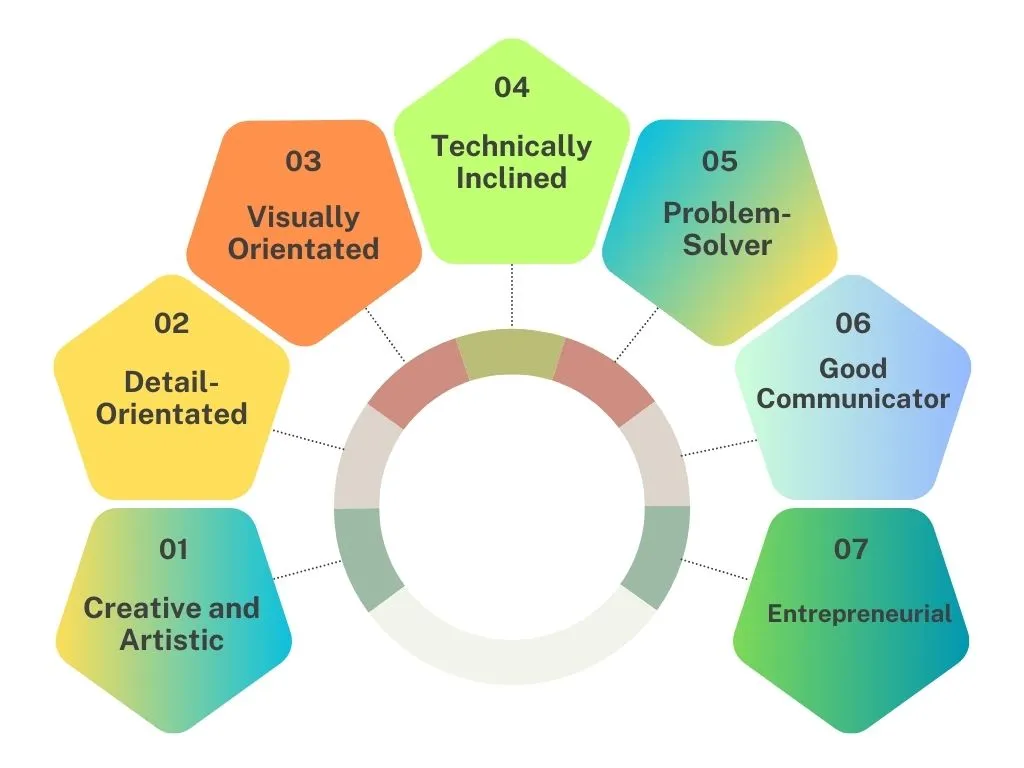
- Creative and Artistic: Candidates who have an eye for aesthetics; working with colours and textures should be enjoyable for them. To produce original designs, they have to be able to think creatively.
- Detail-Orientated: Their attention to detail must be acute. They should interpret how a space’s atmosphere and feel are influenced by design aspects.
- Visually Orientated: They take delight in turning boring or unremarkable areas into lovely and useful settings.
- Technically Inclined: They have a strong desire to learn and advance their proficiency using design software. These programmes include 3D modelling software, AutoCAD, and SketchUp.
- Problem-Solver: They ought to be able to reconcile creative vision with practical constraints. Among these constraints are building rules, budgets, and client demands.
- Good Communicator: They can effectively communicate your design thoughts to clients, vendors, and contractors. They may collaborate with a range of personalities.
- Entrepreneurial: They might want the freedom to start their own design firm and work for themselves in the future.
Interior Designer Degree Requirements
To pursue a bachelor’s degree or certificate in interior design (or a related field), graduates must have completed 10+2 (high school). They need a minimum aggregate score, which usually falls in the range of 50%-55%. This eligibility criteria is required by most colleges offering interior design programmes.
Depending on the institution, they may need to pass an entrance exam and have a portfolio. For master’s degrees, a bachelor’s degree in a relevant field is required.
For Undergraduate Programmes
- Education: Complete 10+2 (Class 12) in any stream from a recognised board.
- Minimum Marks: Meet the minimum aggregate percentage, which is often around 50% to 55% in class 12.
- Entrance Exam: Prepare for and pass entrance exams such as CUET, UCEED, NID DAT, or NIFT, which are required by many colleges.
If aspirants satisfy all of this, they are eligible for an interior design bachelor’s degree.
For Postgraduate Programmes
- Education: Hold a bachelor’s degree in a relevant field like interior design, or an equivalent qualification.
- Minimum Marks: Achieve a minimum aggregate score in your bachelor’s degree, which can vary by institution but is often around 55%.
- Entrance Exam: Entrance exams may be required for master’s programmes as well.
If aspirants satisfy all of this, they are eligible for an interior design postgraduate degree.
Diploma and Certificate Programmes
- Education: A diploma in interior design can be pursued after completing Class 10.
- No Entrance Exam: Many diploma programmes do not require entrance exams.
- Flexibility: These programmes are open to students from all streams.
If aspirants satisfy all of this, then they will acquire a certificate for an interior design degree.
Career Opportunities After an Interior Design Degree
Below are some jobs that graduates or postgraduates can acquire after getting an interior design degree:
- Interior Designers: Interior designers develop spaces that are secure, practical, and visually beautiful. They often generate and alter plans, study building codes and design trends, make client presentations, and oversee project finances.
Average Annual Salary Range (Freshers): Rs 2.5 lakh to Rs 5 lakh
- Interior Decorators: Interior decorators are experts that focus on designing and enhancing the aesthetics of a space. Among their primary duties are selecting colour schemes, obtaining and framing wall art, and finding extra decorations and accessories for a room. These professionals are also responsible for setting up the furniture and creating the layout of the room in order to realise their client’s vision.
Average Annual Salary Range (Freshers): Rs 2.5 lakh to Rs 4.5 lakh
- Technical Designers: Technical designers work with clients and other professionals to turn creative ideas into practical products. Their primary duties may include creating production plans, developing plans, and quality-checking products. In order to make sure that their goods are in demand, technical designers may also explore market trends.
Average Annual Salary Range (Freshers): Rs 3 lakh to Rs 6.5 lakh
- Industrial Designers: Similar to technical designers, industrial designers are responsible for developing plans for a product’s mass manufacturing. Among their primary duties are customer communication, product design, project budget management, etc. Industrial designers also create production strategies and research manufacturing regulations.
Average Annual Salary Range (Freshers): Rs 2.5 lakh to Rs 5 lakh
- Architects: Architects create a variety of buildings, such as homes and corporate offices. Their primary duties frequently include meeting with customers, developing and modifying designs, estimating project costs, and researching building regulations. Architects may often visit construction sites to ensure that the contractors follow their design concepts.
Average Annual Salary Range (Freshers): Rs 1.5 lakh to Rs 3 lakh
- Executive Directors: Senior-level experts work as executive directors for interior design firms. They are in charge of the goals, finances, and product design policies of their company. In addition to overseeing other senior management personnel, executive directors may collaborate closely with the company’s shareholders.
Average Annual Salary Range: Rs 20 lakh to Rs 30 lakh
- Interior Design Assistants: Interior designers receive administrative help from interior design assistants. Their main responsibilities may include organising meetings, procuring supplies, filing client information, etc. Professionals frequently work in this entry-level role to obtain expertise in order to pursue careers as interior designers.
Average Annual Salary Range (Freshers): Rs 2.5 lakh to Rs 5 lakh
- Bloggers: They are professionals who post written information, images, and videos about a certain topic. In order to share their work and ideas, professionals with an interest in interior design may begin working as bloggers. The main responsibilities of this position may vary depending on the topic that the experts choose to concentrate on. Interior design blogs may do research on design trends, offer their thoughts, provide project instructions, or elucidate interior design concepts. To make money from advertising, bloggers frequently have to work with businesses.
Average Income Range/Month: Rs 1.5 lakh to Rs 2.5 lakh
*Note: The incomes mentioned above are sourced from various sources on the internet. Hence, they can vary. Moreover, experience, location, education, and specialisation are some of the elements that affect interior designers’ pay.
K.R. Mangalam University: Best University for Interior Design Degree
K.R. Mangalam University (KRMU) is widely recognised as the best college for interior designer degree in India. This is because its interior designing programme is a blend of creativity, technology, and industry-focused learning. The university’s programme emphasises:
- Architectural understanding
- Hands-on studio work
- Spatial planning
- Design thinking
- CAD tools
All of this helps students develop strong creative and technical capabilities.
KRMU guarantees that students acquire practical knowledge and professional preparation. It does all this through its cutting-edge design laboratories, knowledgeable teachers, worldwide exposure, and internship possibilities with top design studios and businesses. Because of its industry-driven curriculum and robust placement assistance, KRMU is a great option for anybody hoping to pursue a lucrative career in interior design.
Conclusion
Students who pursue an interior design degree get access to innovative, exciting, and lucrative employment. An interior design course is a viable option for students who are enthusiastic about using creativity and beauty to improve environments. Interior design professionals are more in demand than ever because of the expansion of modern homes, business infrastructure, and experiential design trends.
Choosing the right institution is crucial for success in this area. K.R. Mangalam University is among the best universities that offer a comprehensive degree in interior design. As a result, students get outstanding technical capabilities, design thinking abilities, and real-world project experience.
Are you prepared to make a fulfilling profession out of your creativity? Start your path to becoming an interior design professional by getting admission to KRMU’s Interior Design Degree.
Also Read: Interior Design Career: Scope, Skills & Job Opportunities
FAQs
What is an interior design degree?
An interior design degree is a professional programme that teaches students how to plan, design, and enhance interior spaces using creativity, technical skills, and design principles.
What are the eligibility requirements for an interior design degree?
Eligibility for an interior design degree typically includes completing Class 12 from a recognised board. Some institutions may also conduct entrance exams or portfolio evaluations.
Which is the best college for an interior design degree in India?
Several reputed colleges offer quality programmes, but K.R. Mangalam University stands out as one of the best for an interior design degree, thanks to its industry-focused curriculum, experienced faculty, and strong emphasis on practical, hands-on learning.
What is the duration of an interior design degree?
An interior design degree, such as a Bachelor of Interior Design or B.Des. (Interior Design) typically takes 4 years to complete.
Recent Post
All India Forensic Science Entrance Test (AIFSET-2026) Details and Eligibility
Explore the Top Artificial Intelligence University in India
BBA HR Management Syllabus: Semester-Wise Detailed Curriculum
Best AI Colleges in India 2025: Rankings, Fees, Admissions & Placement Insights
Best Universities in Delhi NCR 2025: Rankings, Admissions & Fees Guide
Top Engineering Colleges in Gurgaon 2025-26: Admission, Fees & Placement Guide
Explore the Best Courses After Graduation for High Salary
BSc Data Science: Syllabus, Careers, and Data Science Course
Understanding the Difference Between Logistics and Supply Chain Management
Is Data Science a Good Career Choice? Salary, Scope & Future Growth Explained
Integrated Course After 12th: Complete Guide, List and Benefits
Moot Court for Law Students: Its Importance and Objectives
CAT 2025: Exam Date, Eligibility, Syllabus, Registration & Preparation Tips
Explore the Best College for MBA in Marketing in Delhi NCR
Career Guidance and Counselling: Expert Support for a Successful Future
Importance of Internships: Boost Your Career with Real-World Experience
CUET Result 2025 Out: Check Scores, Cut-Offs & What to Do Next
Pursue Bachelor’s Degree in Journalism & Mass Communication at KRMU
BCA Course After 12th: Best College, Fees, Curriculum and More
BBA in Digital Marketing: Eligibility, Subjects, Fee and Scope
Ph.D. in Mechanical Engineering: Eligibility, Admission and Fee Details
B Pharmacy Admission 2025: Course Details | Eligibility | Career
Is B.Sc. Computer Science Worth It? Salary, Scope & Future Prospects
KRMU: The Destination to Become a Future-Ready Software Engineer
Ph.D. Pharmaceutical Sciences: Course Details and Admission Process
Why KRMU is the Best College for BCom Hons. in Gurugram, Delhi NCR
JEE Mains 2025 Exam Date: Syllabus, Last date, Registration Date
Career After MA English: High Paying Jobs and Government Roles
B.Sc. Full Form Explained: Courses, Eligibility, Jobs & Admission
Why K.R. Mangalam University Is The Best Fine Arts University in India
Benefits of a Culinary Arts Bachelor Degree for Aspiring Chefs
Architecture Careers In India: Your Path To A Successful Future
Is NTA CUET UG Score Mandatory For Admission In All Universities
Choosing The Best B Sc Courses After 12th: A Detailed Guide To Your Future
Data Science and Artificial Intelligence: Revolutionising the Digital Age
Exploring Top Career Options For Commerce Students After The 12th
Exploring The Best Course After B Com To Elevate Future Prospects
The Difference between BE and BTech: Everything you need to know
Exploring Jobs After BSc Chemistry: Private And Government Jobs
What Are Some of The Best Professional Courses After 12th Class
Architecture Courses after 12th: Duration, Eligibility, Career Options
Why KRMU Is Considered One Of The Best BSc Agriculture Colleges In India?
A Complete Guide On Full Stack Development: Career Paths/Eligibility/Duration
Why KRMU Is Considered One Of The Best Hotel Management Colleges In India
Hotel Management Course Fees in Private College: What You Need to Know
Everything You Need to Know About Integrating Dual Degree Programs
Textile Design Course, Eligibility and Career Opportunities
Physiotherapy Course Fees: Career Paths/Eligibility Criteria/Top Colleges
Exploring BJMC Colleges in Delhi: Your Comprehensive Guide
A Comprehensive Guide B Pharm Duration, Syllabus, Job Opportunities
BCA Full Form And Subjects- Comprehensive Understanding Of BCA
Complete Guide of B Sc Agriculture Course Duration, Admission Process, Fees
A Detailed Guide On How To Become A Fashion Designer After 12th
Navigating Sustainability Trends: Preparing Students for Corporate Priorities in 2024
What Can I Do After a BA? Exploring Career Options for Bachelor of Arts Graduates
List Of Top Career Options After B.Tech Computer Science & Engineering
How to Choose the Right 12th Commerce Courses for Your Salary?
K.R. Mangalam University: A Leading University For Comprehensive Excellence
Understanding BBA Travel & Tourism: A Gateway To A Thriving Future
A Journey through K.R. Mangalam University’s as a Student of B.A. Honours Psychology
Why Choose B Tech Cyber Security: Learn Eligibility/Benefits/Career/College
List of B.Tech Courses: Various Specialisations/Eligibility Criteria/Careers
Benefits of Pursuing An MBA After BA: Career/Specialisations/Entrance Exam
Essential Guide On KR Mangalam University Scholarship For 2024-25
Everything You Need To Know About Architecture And Design in 2024
Exploring the UX/UI Race in B.Tech. Computer Science & Engineering
Exploring the UX/UI Race in B.Tech. Computer Science & Engineering
The Rising Demand For Management Professionals In The Country
B.Tech Computer Science Course: Eligibility, Syllabus, Exams, Fees, Scope
Exploring a BBA in Finance: Your Comprehensive Guide to a Promising Career Path
Compelling Reasons to Choose a BBA Program in Travel and Tourism
BA Political Science Honours: Your Path to Political Insight
Beyond Fashion Designing: Exploring the Creative World of B.A. Arts
Unlocking the Path to Success: Your Thriving Career in Cyber Security
Soaring to New Heights: Apeejay Professor Takes Flight as Certified Drone Flyer
D Pharmacy Course Details: Eligibility, Admissions & Subjects
The Art of Public Speaking: Tips for Confident Presentations
Advancing Your Career: Pursuing Diploma Courses After 10th Grade
Computer Science Engineering: Unraveling the Realm of Technology and Innovation
The Ultimate Guide to Choosing the Right Data Science Course for Your Career
Internship and Practical Training Opportunities for B.Com (Honours) Students
Exploring Career Scope of Pharmacology: A Promising Pathway
The Rise of Fintech: Revolutionizing India’s Financial Landscape
The Advancement Postgraduate Courses in India Career Development
Mastering Time Management: A Key to Success in Work and Life
Understanding the Difference Between Psychologist and Psychiatrist
Career in Fashion Designing: Full Guide from Start to Destination
Diploma Course vs Degree Course: Exploring the Pros and Cons
Must Watch Movies and Web series For Forensic Science Student
Exploring a Career in Criminal Law: An In-Depth Guide to LLB Criminal Law
Unveiling the Role of a Supply Chain Analyst: A Path to Success
Comparing CSE and IT: Unveiling Distinctions and Career Opportunities
Exploring the Educational Landscape: Top Universities in Gurgaon
Architecture Course: Guide to Becoming an Architect in India
Traditional Marketing vs Digital Marketing: Exploring their Pros and Cons
The Basics of B Tech: What You Need to Know to Pursue a Degree in Technology
Is Pursuing MBA After Engineering an Excellent Career Choice
How To Become An Interior Designer in India: Qualification & Career Scopes
Exploring the Benefits of an International Accounting and Finance Course
BA LLB (Hons): A Comprehensive Guide to Understanding the Program
5 Full Stack Web Development Course Lessons from the Professionals
Training the future educators at the Best B.Ed College in Gurgaon
Gain Exceptional Business Expertise with Best B-School in Gurgaon
Best Undergraduate Courses to Study in India for a Promising Career
K.R. Mangalam University Admission Process 2023-24 Through KREE
Accelerate Your Career with Best University in Gurgaon for MBA
CTET 2023: Registration details for Central Teacher Eligibility Test
Develop Forensics Expertise with Best BSc Forensic Science Course in Delhi
Best Private Engineering College/University in Delhi NCR 2023
How to Choose a College or University: Key Factors to Count
Best BSc Hons Mathematics Scope: Career Options and Responsibilities
Best Courses After 12th Commerce – Professional Programmes & More
BBA in International Business 2023: Eligibility, Jobs and Salary
Integrated BBA MBA Course Details, Eligibility and Career options
BBA LLB Hons: Admission, Eligibility, Subjects, Scope and Jobs
What should You Do after completing BA in Political Science (honors)
How to Build a Career as an Automotive Designer/Car Designer?
Why studying Machine learning is a good career option after 12th
Ultimate Guide to CAT Exam: Admit card, Exam Date, Syllabus and Preparations
BA Honours in English: Course Details, Syllabus, Eligibility and Career Options
Career and Scopes after BCA with Artificial Intelligence and Data Science
Which Course Should I Choose After Completing 12th from Arts Stream
Why choose MCA: Course details, Eligibility, Benefits, Career Options and Salary
How to prepare for the CUET UG exam? Benefits, Syllabus and Study Material
Career, Scopes and Salary after B.Tech CSE with Specialisation in Cloud Computing
Career and Opportunities after completing your B.Tech Civil Engineering
What are the advantages of pursuing a B.Tech. in (CSE) with specialization in UX/UI
Planning to Pursue Integrated Course in B.Tech CSE with MBA?
Can a PCB Student do B.Tech in Computer Science Engineering in 2022
Why pursuing a BA (Hons.) – Chinese Degree can be a good choice for you?
Top Soft Skills That You Need to Develop for a Successful Career in 2022
Top Business Trends to Follow For a Successful Career In 2022
How to Build a Career in Stock Market in 2022 with Highest Paying Salary
B.Arch vs B.Des: Which Course to Choose for a Better Career?
How to Choose the Best Career Path: Machine Learning Engineer or Data Scientist
Top 20 Things Architects Can Do After B.Arch in India: A Must Read!
Get Better Job Opportunities with the Help of Top Colleges for MCA in Delhi NCR
K.R. Mangalam University Gears up to Sign MoU with Sputnik News Agency, Moscow
How Is Artificial Intelligence Shaping The Pharmacy Industry Of Today
The Emergence Of E-Commerce And E-Business In The Post-Pandemic World
The Role And Contribution Of Chemists In Improving The Overall Healthcare Scenario
5 Best Paying Jobs For Journalism & Mass Communicationgraduates
Clinical Psychology – Career Scope & Earning Potential In India
Challenges & Opportunities For Fashion Designers In The Post Covid World
The Invincible Role Of Medical & Allied Sciences Professionals Amid The Covid Crisis
The Emerging Role Of Information Technology In The Field Of Journalism
Indian Pharma Growing As The Largest Sector In Terms Of Employment & Revenue
The Importance Of Team Bonding For Management Professionals
Covid-19 Projects At KRMU: An Effort To Raise Awareness Among The Young Gen
Cybersecurity: A Much Sought-After Profession In Today’s Technology Oriented World
The Worth Of Industry-Vetted Management Training In 21st-Century Corporate World
Understanding The Twenty-First-Century Entrepreneurial Challenges
Why The World Of Fashion Needs Trendsetters Rather Than Followers?
Technological Trends Changing The Face Of Architecture Today
5 Significant Ways In Which The Industry Of Journalism Has Evolved Over The Years
Acquiring The Right Workforce Is The Key Requirement For Meeting Business Goals
The Vitality Of Application & Research-Based Learning For The 21st-Century Youth
How Will The Current Pandemic Change The Fashion Industry Worldwide?
Business Journalism – An Emerging Career Path For The 21st Century Youth
The Growing Use Of Business Analytics In Financial Services Industry
5 Reasons Why Studying Hotel Management Is A Great Choice In The Modern World
5 Tips For Beginners To Survive & Thrive In The Fashion Industry
Five Skills You Inevitably Need To Succeed As An Interior Designer
How Is The Advancing Technology Redesigning The Fashion Design Industry?
5 Myths About Human Resource Management That Need To Be Busted
Krmu’s Soa – Enabling The 21st Century Youth To Turn Into Agricultural Entrepreneurs
Krmu – Preparing Future Architects With A Global Perspective
Top Technical Skills That Are Highly Demanded in The Modern Job Market
Soil Science – Career Potential & Opportunities In India And Abroad
Key Skills You Need To Thrive In The Domain Of Hotel Management
The Significance Of Critical Thinking In Financial Management
The Role Of KRMU ICC In Establishing A Safe & Secure Environment In The Campus
What It Takes To Grab The Best Jobs In The Fashion Design World?
K.R. Mangalam – Building A Generation Of Creative Fashion Designers
What Makes Project-Based Learning Imperative For The Youth Of Today
KRMU’s Engineering Kitchen Inspiring The Youth To Shape A New World Of Innovation
The Impact Of Technological Advancements On The Efficiency Of Business Professionals
Experiential Projects – An Effective Way To Deep Rooted Management Education
KRMU’s Corporate Connect Aiding Students To Prove Their Mettle
Learn The True Art Of Innovation & Entrepreneurship At KRMU’s TIIE
KRMU To Establish A fully Functional Robotics Lab In Collaboration With IITBombay
Explore Engineering Kitchen – An Excellent Initiative Taken By KRMU
5 Reasons Why You Should Pursue A Degree In Journalism And Mass Communication
Five Reasons That Make Business Management One Among The Top Professions For Future
The Impact Of Artificial Intelligence And Iot On The Management Industry
Diverse Engineering Branches That Have Always Maintained Their Worth
Career Options That Will Be High In Demand In The Next Decade
KRMU – Creating A Culture Of Knowledge, Entrepreneurship, And Management Skills
Effective Marketing Management Can Help To Raise The Overall Value Of A Business
5 Invaluable Steps For Building An Excellent Professional Network
Priceless Qualities A Successful Legal Practitioner Needs To Treasure
Better Grades, Less Stress At School Of Law, K.R Mangalam University,Gurugram
Aesthetic And Logic, The Conflict Between Religion And Humanism In 21st Century
Best Ways For MBA Aspirants To Upgrade Their Communication Skills
How To Know If Journalism Is The Right Career Option For You
Tradition And Modernity Living Historical Quarters: Change And Continuity
Legal Profession One Of The Most Sought After Career Choices For Women Today
Dynamic Career Opportunities In Journalism Cultivated By Modern India
How Can Virtual Reality Help Pave Way For Transforming Architecture Education?
Top Questions Asked To Management Graduates In Placement Interviews
Wish To Make A Career In Ethical Hacking? Here’s All You Need To Know!
Future Career Perspectives Of Technical Education In India And Abroad
Why Is Personality Development An Utmost Need For Professional Success?
KRMU’S School Of Law – Strengthening The Legal Framework Of The Nation
The Importance Of Technology As A Teaching Aid In Higher Education
Top Business Lessons To Learn From Successful Businessmen From Across The World
Grooming The Students For The Current Trends In Medical And Allied Sciences
The Need For Skills Enhancement For The Competitive Corporate World
Tapping The Career Growth And Overseas Opportunities For Management Graduates
Significance Of Mentoring Programs Towards Holistic Development Of Students
KRMU – Delivering Education That Enables You To Lead The Competition
Interior Design Degree | Course Details & Career Scope
Interior design is a fulfilling profession since it transforms plain environments into visually beautiful ones. Interior designers create an environment that is safe, practical, and aesthetically pleasing by identifying a place’s needs and choosing necessary and ornamental elements.
In recent years, there have been many work prospects for young and skilled interior designers due to the growing popularity of interior design as a vocation. As more individuals invest in opulent and cosy houses, the interior design sector is becoming increasingly significant to construction projects.
All of these led to the rising demand for an interior design degree. In the blog we will put more insight into an interior design degree.
What is an Interior Design Degree Course?
An interior design degree course teaches students how to plan, design, and enhance interior spaces to make them functional, safe, and aesthetically pleasing. It covers design principles, materials, space planning, creativity, and technical skills like CAD. The course prepares learners for careers in residential, commercial, and specialised design fields.
An interior design course covers a wide range of topics, including:
- Methods for organising and designing spaces
- Colour theory and lighting
- Furniture design and planning
- CAD and design software applications
- Material selections and environmental principles
Both undergraduate and graduate-level courses are offered in this discipline. Certain institutions provide degrees or certifications as well.
Top Techniques Learnt in an Interior Design Degree Course
Every professional interior design course teaches students a well-rounded combination of hard and soft skills. To satisfy the needs of clients and the design business, interior designers need to possess certain skills that are as follows:
Technical Skills
The course includes intensive instruction in the following technical abilities necessary for an interior designer:
- Computer-Aided Design (CAD): Acquire proficiency with industry-standard commercial software such as AutoCAD, SketchUp, and Revit.
- 3D Visualisation: Make realistic design prototypes using 3D models and rendering technologies.
- Space Planning: Recognise how to maximise available space while considering client needs.
- Lighting Design: Learn about the technical details of artificial and natural lighting in different settings.
- Knowledge of Materials: Learn about materials, textures, finishes, and sustainable materials used in interior design.
- Technical Drawing: To implement plans, become an expert in architectural drawing and blueprint design.
- Building Codes & Safety: Learn about safety standards for residential and commercial spaces, along with relevant local and regional building codes and regulations.
Students who possess these technical interior design abilities are better equipped to manage real-world projects with accuracy.
Soft Skills
In the field of design, soft skills are just as important as technical expertise. The course will teach the learner:
- Communication Skills: Communicate effectively with clients, contractors, and suppliers.
- Creativity: Develop original ideas for various environments and lifestyles.
- Solving Issues: Use critical thinking to solve design issues.
- Time Management: Discover how to finish projects on schedule without compromising on quality.
- Collaboration with Experts: Work together with engineers, architects, and construction departments with ease.
- Client Handling: Recognise a client’s mental state and treat him with respect.
These skills are essential for an interior designer to ensure smooth collaboration and client satisfaction throughout the design process.
Also Read: Best College For Bachelor of Interior Design in Delhi-NCR
Factors Driving Interior Design Degree Popularity
Today, a Bachelor of Interior Design course is a desirable option among aspiring interior designers due to the rising need for creative professionals in residential and commercial design. Additionally, it has led to cultural changes in technology and how we see our living and working environments.
The following distinctive elements contribute to its popularity:
Becoming a Lifestyle Need
Nowadays, interior design is more of a lifestyle need. Even though they may be living in small urban flats these days, people still need individualised and functional designs. This cultural change proposes the conversion of lifestyle goals into practical settings.
Combining Design Thinking with Technology
Additionally, digital visualisation tools, AR/VR walkthroughs, and sustainable materials science are used in interior design. Aesthetics may stand out since the profession has included technology and problem-solving.
Increasing Interest in Sustainable Practices
Progressive interior design includes things like sustainable layouts, energy-efficient lighting, and green materials. Students are enthusiastic about environmental concerns and wish to contribute by combining artistic expression with environmental responsibility.
Growth of Careers in Multiple Sectors
A degree in interior design can also lead to careers in retail design, urban planning, real estate consultancy, media and film set design, and even product creation. When compared to other speciality degrees, career routes are very significant due to their variety.
Possibility of Independence in Entrepreneurship
One of the industries where you might take a chance on being an early entrepreneur is interior design. A lot of young professionals can launch their own independent businesses. They can also work with architects or launch small firms.
Who Should Pursue an Interior Design Degree?
Below are the key characteristics of students who should pursue this degree:
- Creative and Artistic: Candidates who have an eye for aesthetics; working with colours and textures should be enjoyable for them. To produce original designs, they have to be able to think creatively.
- Detail-Orientated: Their attention to detail must be acute. They should interpret how a space’s atmosphere and feel are influenced by design aspects.
- Visually Orientated: They take delight in turning boring or unremarkable areas into lovely and useful settings.
- Technically Inclined: They have a strong desire to learn and advance their proficiency using design software. These programmes include 3D modelling software, AutoCAD, and SketchUp.
- Problem-Solver: They ought to be able to reconcile creative vision with practical constraints. Among these constraints are building rules, budgets, and client demands.
- Good Communicator: They can effectively communicate your design thoughts to clients, vendors, and contractors. They may collaborate with a range of personalities.
- Entrepreneurial: They might want the freedom to start their own design firm and work for themselves in the future.
Interior Designer Degree Requirements
To pursue a bachelor’s degree or certificate in interior design (or a related field), graduates must have completed 10+2 (high school). They need a minimum aggregate score, which usually falls in the range of 50%-55%. This eligibility criteria is required by most colleges offering interior design programmes.
Depending on the institution, they may need to pass an entrance exam and have a portfolio. For master’s degrees, a bachelor’s degree in a relevant field is required.
For Undergraduate Programmes
- Education: Complete 10+2 (Class 12) in any stream from a recognised board.
- Minimum Marks: Meet the minimum aggregate percentage, which is often around 50% to 55% in class 12.
- Entrance Exam: Prepare for and pass entrance exams such as CUET, UCEED, NID DAT, or NIFT, which are required by many colleges.
If aspirants satisfy all of this, they are eligible for an interior design bachelor’s degree.
For Postgraduate Programmes
- Education: Hold a bachelor’s degree in a relevant field like interior design, or an equivalent qualification.
- Minimum Marks: Achieve a minimum aggregate score in your bachelor’s degree, which can vary by institution but is often around 55%.
- Entrance Exam: Entrance exams may be required for master’s programmes as well.
If aspirants satisfy all of this, they are eligible for an interior design postgraduate degree.
Diploma and Certificate Programmes
- Education: A diploma in interior design can be pursued after completing Class 10.
- No Entrance Exam: Many diploma programmes do not require entrance exams.
- Flexibility: These programmes are open to students from all streams.
If aspirants satisfy all of this, then they will acquire a certificate for an interior design degree.
Career Opportunities After an Interior Design Degree
Below are some jobs that graduates or postgraduates can acquire after getting an interior design degree:
- Interior Designers: Interior designers develop spaces that are secure, practical, and visually beautiful. They often generate and alter plans, study building codes and design trends, make client presentations, and oversee project finances.
Average Annual Salary Range (Freshers): Rs 2.5 lakh to Rs 5 lakh
- Interior Decorators: Interior decorators are experts that focus on designing and enhancing the aesthetics of a space. Among their primary duties are selecting colour schemes, obtaining and framing wall art, and finding extra decorations and accessories for a room. These professionals are also responsible for setting up the furniture and creating the layout of the room in order to realise their client’s vision.
Average Annual Salary Range (Freshers): Rs 2.5 lakh to Rs 4.5 lakh
- Technical Designers: Technical designers work with clients and other professionals to turn creative ideas into practical products. Their primary duties may include creating production plans, developing plans, and quality-checking products. In order to make sure that their goods are in demand, technical designers may also explore market trends.
Average Annual Salary Range (Freshers): Rs 3 lakh to Rs 6.5 lakh
- Industrial Designers: Similar to technical designers, industrial designers are responsible for developing plans for a product’s mass manufacturing. Among their primary duties are customer communication, product design, project budget management, etc. Industrial designers also create production strategies and research manufacturing regulations.
Average Annual Salary Range (Freshers): Rs 2.5 lakh to Rs 5 lakh
- Architects: Architects create a variety of buildings, such as homes and corporate offices. Their primary duties frequently include meeting with customers, developing and modifying designs, estimating project costs, and researching building regulations. Architects may often visit construction sites to ensure that the contractors follow their design concepts.
Average Annual Salary Range (Freshers): Rs 1.5 lakh to Rs 3 lakh
- Executive Directors: Senior-level experts work as executive directors for interior design firms. They are in charge of the goals, finances, and product design policies of their company. In addition to overseeing other senior management personnel, executive directors may collaborate closely with the company’s shareholders.
Average Annual Salary Range: Rs 20 lakh to Rs 30 lakh
- Interior Design Assistants: Interior designers receive administrative help from interior design assistants. Their main responsibilities may include organising meetings, procuring supplies, filing client information, etc. Professionals frequently work in this entry-level role to obtain expertise in order to pursue careers as interior designers.
Average Annual Salary Range (Freshers): Rs 2.5 lakh to Rs 5 lakh
- Bloggers: They are professionals who post written information, images, and videos about a certain topic. In order to share their work and ideas, professionals with an interest in interior design may begin working as bloggers. The main responsibilities of this position may vary depending on the topic that the experts choose to concentrate on. Interior design blogs may do research on design trends, offer their thoughts, provide project instructions, or elucidate interior design concepts. To make money from advertising, bloggers frequently have to work with businesses.
Average Income Range/Month: Rs 1.5 lakh to Rs 2.5 lakh
*Note: The incomes mentioned above are sourced from various sources on the internet. Hence, they can vary. Moreover, experience, location, education, and specialisation are some of the elements that affect interior designers’ pay.
K.R. Mangalam University: Best University for Interior Design Degree
K.R. Mangalam University (KRMU) is widely recognised as the best college for interior designer degree in India. This is because its interior designing programme is a blend of creativity, technology, and industry-focused learning. The university’s programme emphasises:
- Architectural understanding
- Hands-on studio work
- Spatial planning
- Design thinking
- CAD tools
All of this helps students develop strong creative and technical capabilities.
KRMU guarantees that students acquire practical knowledge and professional preparation. It does all this through its cutting-edge design laboratories, knowledgeable teachers, worldwide exposure, and internship possibilities with top design studios and businesses. Because of its industry-driven curriculum and robust placement assistance, KRMU is a great option for anybody hoping to pursue a lucrative career in interior design.
Conclusion
Students who pursue an interior design degree get access to innovative, exciting, and lucrative employment. An interior design course is a viable option for students who are enthusiastic about using creativity and beauty to improve environments. Interior design professionals are more in demand than ever because of the expansion of modern homes, business infrastructure, and experiential design trends.
Choosing the right institution is crucial for success in this area. K.R. Mangalam University is among the best universities that offer a comprehensive degree in interior design. As a result, students get outstanding technical capabilities, design thinking abilities, and real-world project experience.
Are you prepared to make a fulfilling profession out of your creativity? Start your path to becoming an interior design professional by getting admission to KRMU’s Interior Design Degree.
Also Read: Interior Design Career: Scope, Skills & Job Opportunities
FAQs
What is an interior design degree?
An interior design degree is a professional programme that teaches students how to plan, design, and enhance interior spaces using creativity, technical skills, and design principles.
What are the eligibility requirements for an interior design degree?
Eligibility for an interior design degree typically includes completing Class 12 from a recognised board. Some institutions may also conduct entrance exams or portfolio evaluations.
Which is the best college for an interior design degree in India?
Several reputed colleges offer quality programmes, but K.R. Mangalam University stands out as one of the best for an interior design degree, thanks to its industry-focused curriculum, experienced faculty, and strong emphasis on practical, hands-on learning.
What is the duration of an interior design degree?
An interior design degree, such as a Bachelor of Interior Design or B.Des. (Interior Design) typically takes 4 years to complete.
Recent Post
All India Forensic Science Entrance Test (AIFSET-2026) Details and Eligibility
Explore the Top Artificial Intelligence University in India
BBA HR Management Syllabus: Semester-Wise Detailed Curriculum
Best AI Colleges in India 2025: Rankings, Fees, Admissions & Placement Insights
Best Universities in Delhi NCR 2025: Rankings, Admissions & Fees Guide
Top Engineering Colleges in Gurgaon 2025-26: Admission, Fees & Placement Guide
Explore the Best Courses After Graduation for High Salary
BSc Data Science: Syllabus, Careers, and Data Science Course
Understanding the Difference Between Logistics and Supply Chain Management
Is Data Science a Good Career Choice? Salary, Scope & Future Growth Explained
Integrated Course After 12th: Complete Guide, List and Benefits
Moot Court for Law Students: Its Importance and Objectives
CAT 2025: Exam Date, Eligibility, Syllabus, Registration & Preparation Tips
Explore the Best College for MBA in Marketing in Delhi NCR
Career Guidance and Counselling: Expert Support for a Successful Future
Importance of Internships: Boost Your Career with Real-World Experience
CUET Result 2025 Out: Check Scores, Cut-Offs & What to Do Next
Pursue Bachelor’s Degree in Journalism & Mass Communication at KRMU
BCA Course After 12th: Best College, Fees, Curriculum and More
BBA in Digital Marketing: Eligibility, Subjects, Fee and Scope
Ph.D. in Mechanical Engineering: Eligibility, Admission and Fee Details
B Pharmacy Admission 2025: Course Details | Eligibility | Career
Is B.Sc. Computer Science Worth It? Salary, Scope & Future Prospects
KRMU: The Destination to Become a Future-Ready Software Engineer
Ph.D. Pharmaceutical Sciences: Course Details and Admission Process
Why KRMU is the Best College for BCom Hons. in Gurugram, Delhi NCR
JEE Mains 2025 Exam Date: Syllabus, Last date, Registration Date
Career After MA English: High Paying Jobs and Government Roles
B.Sc. Full Form Explained: Courses, Eligibility, Jobs & Admission
Why K.R. Mangalam University Is The Best Fine Arts University in India
Benefits of a Culinary Arts Bachelor Degree for Aspiring Chefs
Architecture Careers In India: Your Path To A Successful Future
Is NTA CUET UG Score Mandatory For Admission In All Universities
Choosing The Best B Sc Courses After 12th: A Detailed Guide To Your Future
Data Science and Artificial Intelligence: Revolutionising the Digital Age
Exploring Top Career Options For Commerce Students After The 12th
Exploring The Best Course After B Com To Elevate Future Prospects
The Difference between BE and BTech: Everything you need to know
Exploring Jobs After BSc Chemistry: Private And Government Jobs
What Are Some of The Best Professional Courses After 12th Class
Architecture Courses after 12th: Duration, Eligibility, Career Options
Why KRMU Is Considered One Of The Best BSc Agriculture Colleges In India?
A Complete Guide On Full Stack Development: Career Paths/Eligibility/Duration
Why KRMU Is Considered One Of The Best Hotel Management Colleges In India
Hotel Management Course Fees in Private College: What You Need to Know
Everything You Need to Know About Integrating Dual Degree Programs
Textile Design Course, Eligibility and Career Opportunities
Physiotherapy Course Fees: Career Paths/Eligibility Criteria/Top Colleges
Exploring BJMC Colleges in Delhi: Your Comprehensive Guide
A Comprehensive Guide B Pharm Duration, Syllabus, Job Opportunities
BCA Full Form And Subjects- Comprehensive Understanding Of BCA
Complete Guide of B Sc Agriculture Course Duration, Admission Process, Fees
A Detailed Guide On How To Become A Fashion Designer After 12th
Navigating Sustainability Trends: Preparing Students for Corporate Priorities in 2024
What Can I Do After a BA? Exploring Career Options for Bachelor of Arts Graduates
List Of Top Career Options After B.Tech Computer Science & Engineering
How to Choose the Right 12th Commerce Courses for Your Salary?
K.R. Mangalam University: A Leading University For Comprehensive Excellence
Understanding BBA Travel & Tourism: A Gateway To A Thriving Future
A Journey through K.R. Mangalam University’s as a Student of B.A. Honours Psychology
Why Choose B Tech Cyber Security: Learn Eligibility/Benefits/Career/College
List of B.Tech Courses: Various Specialisations/Eligibility Criteria/Careers
Benefits of Pursuing An MBA After BA: Career/Specialisations/Entrance Exam
Essential Guide On KR Mangalam University Scholarship For 2024-25
Everything You Need To Know About Architecture And Design in 2024
Exploring the UX/UI Race in B.Tech. Computer Science & Engineering
Exploring the UX/UI Race in B.Tech. Computer Science & Engineering
The Rising Demand For Management Professionals In The Country
B.Tech Computer Science Course: Eligibility, Syllabus, Exams, Fees, Scope
Exploring a BBA in Finance: Your Comprehensive Guide to a Promising Career Path
Compelling Reasons to Choose a BBA Program in Travel and Tourism
BA Political Science Honours: Your Path to Political Insight
Beyond Fashion Designing: Exploring the Creative World of B.A. Arts
Unlocking the Path to Success: Your Thriving Career in Cyber Security
Soaring to New Heights: Apeejay Professor Takes Flight as Certified Drone Flyer
D Pharmacy Course Details: Eligibility, Admissions & Subjects
The Art of Public Speaking: Tips for Confident Presentations
Advancing Your Career: Pursuing Diploma Courses After 10th Grade
Computer Science Engineering: Unraveling the Realm of Technology and Innovation
The Ultimate Guide to Choosing the Right Data Science Course for Your Career
Internship and Practical Training Opportunities for B.Com (Honours) Students
Exploring Career Scope of Pharmacology: A Promising Pathway
The Rise of Fintech: Revolutionizing India’s Financial Landscape
The Advancement Postgraduate Courses in India Career Development
Mastering Time Management: A Key to Success in Work and Life
Understanding the Difference Between Psychologist and Psychiatrist
Career in Fashion Designing: Full Guide from Start to Destination
Diploma Course vs Degree Course: Exploring the Pros and Cons
Must Watch Movies and Web series For Forensic Science Student
Exploring a Career in Criminal Law: An In-Depth Guide to LLB Criminal Law
Unveiling the Role of a Supply Chain Analyst: A Path to Success
Comparing CSE and IT: Unveiling Distinctions and Career Opportunities
Exploring the Educational Landscape: Top Universities in Gurgaon
Architecture Course: Guide to Becoming an Architect in India
Traditional Marketing vs Digital Marketing: Exploring their Pros and Cons
The Basics of B Tech: What You Need to Know to Pursue a Degree in Technology
Is Pursuing MBA After Engineering an Excellent Career Choice
How To Become An Interior Designer in India: Qualification & Career Scopes
Exploring the Benefits of an International Accounting and Finance Course
BA LLB (Hons): A Comprehensive Guide to Understanding the Program
5 Full Stack Web Development Course Lessons from the Professionals
Training the future educators at the Best B.Ed College in Gurgaon
Gain Exceptional Business Expertise with Best B-School in Gurgaon
Best Undergraduate Courses to Study in India for a Promising Career
K.R. Mangalam University Admission Process 2023-24 Through KREE
Accelerate Your Career with Best University in Gurgaon for MBA
CTET 2023: Registration details for Central Teacher Eligibility Test
Develop Forensics Expertise with Best BSc Forensic Science Course in Delhi
Best Private Engineering College/University in Delhi NCR 2023
How to Choose a College or University: Key Factors to Count
Best BSc Hons Mathematics Scope: Career Options and Responsibilities
Best Courses After 12th Commerce – Professional Programmes & More
BBA in International Business 2023: Eligibility, Jobs and Salary
Integrated BBA MBA Course Details, Eligibility and Career options
BBA LLB Hons: Admission, Eligibility, Subjects, Scope and Jobs
What should You Do after completing BA in Political Science (honors)
How to Build a Career as an Automotive Designer/Car Designer?
Why studying Machine learning is a good career option after 12th
Ultimate Guide to CAT Exam: Admit card, Exam Date, Syllabus and Preparations
BA Honours in English: Course Details, Syllabus, Eligibility and Career Options
Career and Scopes after BCA with Artificial Intelligence and Data Science
Which Course Should I Choose After Completing 12th from Arts Stream
Why choose MCA: Course details, Eligibility, Benefits, Career Options and Salary
How to prepare for the CUET UG exam? Benefits, Syllabus and Study Material
Career, Scopes and Salary after B.Tech CSE with Specialisation in Cloud Computing
Career and Opportunities after completing your B.Tech Civil Engineering
What are the advantages of pursuing a B.Tech. in (CSE) with specialization in UX/UI
Planning to Pursue Integrated Course in B.Tech CSE with MBA?
Can a PCB Student do B.Tech in Computer Science Engineering in 2022
Why pursuing a BA (Hons.) – Chinese Degree can be a good choice for you?
Top Soft Skills That You Need to Develop for a Successful Career in 2022
Top Business Trends to Follow For a Successful Career In 2022
How to Build a Career in Stock Market in 2022 with Highest Paying Salary
B.Arch vs B.Des: Which Course to Choose for a Better Career?
How to Choose the Best Career Path: Machine Learning Engineer or Data Scientist
Top 20 Things Architects Can Do After B.Arch in India: A Must Read!
Get Better Job Opportunities with the Help of Top Colleges for MCA in Delhi NCR
K.R. Mangalam University Gears up to Sign MoU with Sputnik News Agency, Moscow
How Is Artificial Intelligence Shaping The Pharmacy Industry Of Today
The Emergence Of E-Commerce And E-Business In The Post-Pandemic World
The Role And Contribution Of Chemists In Improving The Overall Healthcare Scenario
5 Best Paying Jobs For Journalism & Mass Communicationgraduates
Clinical Psychology – Career Scope & Earning Potential In India
Challenges & Opportunities For Fashion Designers In The Post Covid World
The Invincible Role Of Medical & Allied Sciences Professionals Amid The Covid Crisis
The Emerging Role Of Information Technology In The Field Of Journalism
Indian Pharma Growing As The Largest Sector In Terms Of Employment & Revenue
The Importance Of Team Bonding For Management Professionals
Covid-19 Projects At KRMU: An Effort To Raise Awareness Among The Young Gen
Cybersecurity: A Much Sought-After Profession In Today’s Technology Oriented World
The Worth Of Industry-Vetted Management Training In 21st-Century Corporate World
Understanding The Twenty-First-Century Entrepreneurial Challenges
Why The World Of Fashion Needs Trendsetters Rather Than Followers?
Technological Trends Changing The Face Of Architecture Today
5 Significant Ways In Which The Industry Of Journalism Has Evolved Over The Years
Acquiring The Right Workforce Is The Key Requirement For Meeting Business Goals
The Vitality Of Application & Research-Based Learning For The 21st-Century Youth
How Will The Current Pandemic Change The Fashion Industry Worldwide?
Business Journalism – An Emerging Career Path For The 21st Century Youth
The Growing Use Of Business Analytics In Financial Services Industry
5 Reasons Why Studying Hotel Management Is A Great Choice In The Modern World
5 Tips For Beginners To Survive & Thrive In The Fashion Industry
Five Skills You Inevitably Need To Succeed As An Interior Designer
How Is The Advancing Technology Redesigning The Fashion Design Industry?
5 Myths About Human Resource Management That Need To Be Busted
Krmu’s Soa – Enabling The 21st Century Youth To Turn Into Agricultural Entrepreneurs
Krmu – Preparing Future Architects With A Global Perspective
Top Technical Skills That Are Highly Demanded in The Modern Job Market
Soil Science – Career Potential & Opportunities In India And Abroad
Key Skills You Need To Thrive In The Domain Of Hotel Management
The Significance Of Critical Thinking In Financial Management
The Role Of KRMU ICC In Establishing A Safe & Secure Environment In The Campus
What It Takes To Grab The Best Jobs In The Fashion Design World?
K.R. Mangalam – Building A Generation Of Creative Fashion Designers
What Makes Project-Based Learning Imperative For The Youth Of Today
KRMU’s Engineering Kitchen Inspiring The Youth To Shape A New World Of Innovation
The Impact Of Technological Advancements On The Efficiency Of Business Professionals
Experiential Projects – An Effective Way To Deep Rooted Management Education
KRMU’s Corporate Connect Aiding Students To Prove Their Mettle
Learn The True Art Of Innovation & Entrepreneurship At KRMU’s TIIE
KRMU To Establish A fully Functional Robotics Lab In Collaboration With IITBombay
Explore Engineering Kitchen – An Excellent Initiative Taken By KRMU
5 Reasons Why You Should Pursue A Degree In Journalism And Mass Communication
Five Reasons That Make Business Management One Among The Top Professions For Future
The Impact Of Artificial Intelligence And Iot On The Management Industry
Diverse Engineering Branches That Have Always Maintained Their Worth
Career Options That Will Be High In Demand In The Next Decade
KRMU – Creating A Culture Of Knowledge, Entrepreneurship, And Management Skills
Effective Marketing Management Can Help To Raise The Overall Value Of A Business
5 Invaluable Steps For Building An Excellent Professional Network
Priceless Qualities A Successful Legal Practitioner Needs To Treasure
Better Grades, Less Stress At School Of Law, K.R Mangalam University,Gurugram
Aesthetic And Logic, The Conflict Between Religion And Humanism In 21st Century
Best Ways For MBA Aspirants To Upgrade Their Communication Skills
How To Know If Journalism Is The Right Career Option For You
Tradition And Modernity Living Historical Quarters: Change And Continuity
Legal Profession One Of The Most Sought After Career Choices For Women Today
Dynamic Career Opportunities In Journalism Cultivated By Modern India
How Can Virtual Reality Help Pave Way For Transforming Architecture Education?
Top Questions Asked To Management Graduates In Placement Interviews
Wish To Make A Career In Ethical Hacking? Here’s All You Need To Know!
Future Career Perspectives Of Technical Education In India And Abroad
Why Is Personality Development An Utmost Need For Professional Success?
KRMU’S School Of Law – Strengthening The Legal Framework Of The Nation
The Importance Of Technology As A Teaching Aid In Higher Education
Top Business Lessons To Learn From Successful Businessmen From Across The World
Grooming The Students For The Current Trends In Medical And Allied Sciences
The Need For Skills Enhancement For The Competitive Corporate World
Tapping The Career Growth And Overseas Opportunities For Management Graduates
Significance Of Mentoring Programs Towards Holistic Development Of Students
KRMU – Delivering Education That Enables You To Lead The Competition
Error: Contact form not found.
Interior Design Degree | Course Details & Career Scope

Blog Content
Interior design is a fulfilling profession since it transforms plain environments into visually beautiful ones. Interior designers create an environment that is safe, practical, and aesthetically pleasing by identifying a place’s needs and choosing necessary and ornamental elements.
In recent years, there have been many work prospects for young and skilled interior designers due to the growing popularity of interior design as a vocation. As more individuals invest in opulent and cosy houses, the interior design sector is becoming increasingly significant to construction projects.
All of these led to the rising demand for an interior design degree. In the blog we will put more insight into an interior design degree.
What is an Interior Design Degree Course?
An interior design degree course teaches students how to plan, design, and enhance interior spaces to make them functional, safe, and aesthetically pleasing. It covers design principles, materials, space planning, creativity, and technical skills like CAD. The course prepares learners for careers in residential, commercial, and specialised design fields.
An interior design course covers a wide range of topics, including:
- Methods for organising and designing spaces
- Colour theory and lighting
- Furniture design and planning
- CAD and design software applications
- Material selections and environmental principles
Both undergraduate and graduate-level courses are offered in this discipline. Certain institutions provide degrees or certifications as well.
Top Techniques Learnt in an Interior Design Degree Course
Every professional interior design course teaches students a well-rounded combination of hard and soft skills. To satisfy the needs of clients and the design business, interior designers need to possess certain skills that are as follows:
Technical Skills
The course includes intensive instruction in the following technical abilities necessary for an interior designer:
- Computer-Aided Design (CAD): Acquire proficiency with industry-standard commercial software such as AutoCAD, SketchUp, and Revit.
- 3D Visualisation: Make realistic design prototypes using 3D models and rendering technologies.
- Space Planning: Recognise how to maximise available space while considering client needs.
- Lighting Design: Learn about the technical details of artificial and natural lighting in different settings.
- Knowledge of Materials: Learn about materials, textures, finishes, and sustainable materials used in interior design.
- Technical Drawing: To implement plans, become an expert in architectural drawing and blueprint design.
- Building Codes & Safety: Learn about safety standards for residential and commercial spaces, along with relevant local and regional building codes and regulations.
Students who possess these technical interior design abilities are better equipped to manage real-world projects with accuracy.
Soft Skills
In the field of design, soft skills are just as important as technical expertise. The course will teach the learner:
- Communication Skills: Communicate effectively with clients, contractors, and suppliers.
- Creativity: Develop original ideas for various environments and lifestyles.
- Solving Issues: Use critical thinking to solve design issues.
- Time Management: Discover how to finish projects on schedule without compromising on quality.
- Collaboration with Experts: Work together with engineers, architects, and construction departments with ease.
- Client Handling: Recognise a client’s mental state and treat him with respect.
These skills are essential for an interior designer to ensure smooth collaboration and client satisfaction throughout the design process.
Also Read: Best College For Bachelor of Interior Design in Delhi-NCR
Factors Driving Interior Design Degree Popularity
Today, a Bachelor of Interior Design course is a desirable option among aspiring interior designers due to the rising need for creative professionals in residential and commercial design. Additionally, it has led to cultural changes in technology and how we see our living and working environments.
The following distinctive elements contribute to its popularity:
Becoming a Lifestyle Need
Nowadays, interior design is more of a lifestyle need. Even though they may be living in small urban flats these days, people still need individualised and functional designs. This cultural change proposes the conversion of lifestyle goals into practical settings.
Combining Design Thinking with Technology
Additionally, digital visualisation tools, AR/VR walkthroughs, and sustainable materials science are used in interior design. Aesthetics may stand out since the profession has included technology and problem-solving.
Increasing Interest in Sustainable Practices
Progressive interior design includes things like sustainable layouts, energy-efficient lighting, and green materials. Students are enthusiastic about environmental concerns and wish to contribute by combining artistic expression with environmental responsibility.
Growth of Careers in Multiple Sectors
A degree in interior design can also lead to careers in retail design, urban planning, real estate consultancy, media and film set design, and even product creation. When compared to other speciality degrees, career routes are very significant due to their variety.
Possibility of Independence in Entrepreneurship
One of the industries where you might take a chance on being an early entrepreneur is interior design. A lot of young professionals can launch their own independent businesses. They can also work with architects or launch small firms.
Who Should Pursue an Interior Design Degree?
Below are the key characteristics of students who should pursue this degree:
- Creative and Artistic: Candidates who have an eye for aesthetics; working with colours and textures should be enjoyable for them. To produce original designs, they have to be able to think creatively.
- Detail-Orientated: Their attention to detail must be acute. They should interpret how a space’s atmosphere and feel are influenced by design aspects.
- Visually Orientated: They take delight in turning boring or unremarkable areas into lovely and useful settings.
- Technically Inclined: They have a strong desire to learn and advance their proficiency using design software. These programmes include 3D modelling software, AutoCAD, and SketchUp.
- Problem-Solver: They ought to be able to reconcile creative vision with practical constraints. Among these constraints are building rules, budgets, and client demands.
- Good Communicator: They can effectively communicate your design thoughts to clients, vendors, and contractors. They may collaborate with a range of personalities.
- Entrepreneurial: They might want the freedom to start their own design firm and work for themselves in the future.
Interior Designer Degree Requirements
To pursue a bachelor’s degree or certificate in interior design (or a related field), graduates must have completed 10+2 (high school). They need a minimum aggregate score, which usually falls in the range of 50%-55%. This eligibility criteria is required by most colleges offering interior design programmes.
Depending on the institution, they may need to pass an entrance exam and have a portfolio. For master’s degrees, a bachelor’s degree in a relevant field is required.
For Undergraduate Programmes
- Education: Complete 10+2 (Class 12) in any stream from a recognised board.
- Minimum Marks: Meet the minimum aggregate percentage, which is often around 50% to 55% in class 12.
- Entrance Exam: Prepare for and pass entrance exams such as CUET, UCEED, NID DAT, or NIFT, which are required by many colleges.
If aspirants satisfy all of this, they are eligible for an interior design bachelor’s degree.
For Postgraduate Programmes
- Education: Hold a bachelor’s degree in a relevant field like interior design, or an equivalent qualification.
- Minimum Marks: Achieve a minimum aggregate score in your bachelor’s degree, which can vary by institution but is often around 55%.
- Entrance Exam: Entrance exams may be required for master’s programmes as well.
If aspirants satisfy all of this, they are eligible for an interior design postgraduate degree.
Diploma and Certificate Programmes
- Education: A diploma in interior design can be pursued after completing Class 10.
- No Entrance Exam: Many diploma programmes do not require entrance exams.
- Flexibility: These programmes are open to students from all streams.
If aspirants satisfy all of this, then they will acquire a certificate for an interior design degree.
Career Opportunities After an Interior Design Degree
Below are some jobs that graduates or postgraduates can acquire after getting an interior design degree:
- Interior Designers: Interior designers develop spaces that are secure, practical, and visually beautiful. They often generate and alter plans, study building codes and design trends, make client presentations, and oversee project finances.
Average Annual Salary Range (Freshers): Rs 2.5 lakh to Rs 5 lakh
- Interior Decorators: Interior decorators are experts that focus on designing and enhancing the aesthetics of a space. Among their primary duties are selecting colour schemes, obtaining and framing wall art, and finding extra decorations and accessories for a room. These professionals are also responsible for setting up the furniture and creating the layout of the room in order to realise their client’s vision.
Average Annual Salary Range (Freshers): Rs 2.5 lakh to Rs 4.5 lakh
- Technical Designers: Technical designers work with clients and other professionals to turn creative ideas into practical products. Their primary duties may include creating production plans, developing plans, and quality-checking products. In order to make sure that their goods are in demand, technical designers may also explore market trends.
Average Annual Salary Range (Freshers): Rs 3 lakh to Rs 6.5 lakh
- Industrial Designers: Similar to technical designers, industrial designers are responsible for developing plans for a product’s mass manufacturing. Among their primary duties are customer communication, product design, project budget management, etc. Industrial designers also create production strategies and research manufacturing regulations.
Average Annual Salary Range (Freshers): Rs 2.5 lakh to Rs 5 lakh
- Architects: Architects create a variety of buildings, such as homes and corporate offices. Their primary duties frequently include meeting with customers, developing and modifying designs, estimating project costs, and researching building regulations. Architects may often visit construction sites to ensure that the contractors follow their design concepts.
Average Annual Salary Range (Freshers): Rs 1.5 lakh to Rs 3 lakh
- Executive Directors: Senior-level experts work as executive directors for interior design firms. They are in charge of the goals, finances, and product design policies of their company. In addition to overseeing other senior management personnel, executive directors may collaborate closely with the company’s shareholders.
Average Annual Salary Range: Rs 20 lakh to Rs 30 lakh
- Interior Design Assistants: Interior designers receive administrative help from interior design assistants. Their main responsibilities may include organising meetings, procuring supplies, filing client information, etc. Professionals frequently work in this entry-level role to obtain expertise in order to pursue careers as interior designers.
Average Annual Salary Range (Freshers): Rs 2.5 lakh to Rs 5 lakh
- Bloggers: They are professionals who post written information, images, and videos about a certain topic. In order to share their work and ideas, professionals with an interest in interior design may begin working as bloggers. The main responsibilities of this position may vary depending on the topic that the experts choose to concentrate on. Interior design blogs may do research on design trends, offer their thoughts, provide project instructions, or elucidate interior design concepts. To make money from advertising, bloggers frequently have to work with businesses.
Average Income Range/Month: Rs 1.5 lakh to Rs 2.5 lakh
*Note: The incomes mentioned above are sourced from various sources on the internet. Hence, they can vary. Moreover, experience, location, education, and specialisation are some of the elements that affect interior designers’ pay.
K.R. Mangalam University: Best University for Interior Design Degree
K.R. Mangalam University (KRMU) is widely recognised as the best college for interior designer degree in India. This is because its interior designing programme is a blend of creativity, technology, and industry-focused learning. The university’s programme emphasises:
- Architectural understanding
- Hands-on studio work
- Spatial planning
- Design thinking
- CAD tools
All of this helps students develop strong creative and technical capabilities.
KRMU guarantees that students acquire practical knowledge and professional preparation. It does all this through its cutting-edge design laboratories, knowledgeable teachers, worldwide exposure, and internship possibilities with top design studios and businesses. Because of its industry-driven curriculum and robust placement assistance, KRMU is a great option for anybody hoping to pursue a lucrative career in interior design.
Conclusion
Students who pursue an interior design degree get access to innovative, exciting, and lucrative employment. An interior design course is a viable option for students who are enthusiastic about using creativity and beauty to improve environments. Interior design professionals are more in demand than ever because of the expansion of modern homes, business infrastructure, and experiential design trends.
Choosing the right institution is crucial for success in this area. K.R. Mangalam University is among the best universities that offer a comprehensive degree in interior design. As a result, students get outstanding technical capabilities, design thinking abilities, and real-world project experience.
Are you prepared to make a fulfilling profession out of your creativity? Start your path to becoming an interior design professional by getting admission to KRMU’s Interior Design Degree.
Also Read: Interior Design Career: Scope, Skills & Job Opportunities
FAQs
What is an interior design degree?
An interior design degree is a professional programme that teaches students how to plan, design, and enhance interior spaces using creativity, technical skills, and design principles.
What are the eligibility requirements for an interior design degree?
Eligibility for an interior design degree typically includes completing Class 12 from a recognised board. Some institutions may also conduct entrance exams or portfolio evaluations.
Which is the best college for an interior design degree in India?
Several reputed colleges offer quality programmes, but K.R. Mangalam University stands out as one of the best for an interior design degree, thanks to its industry-focused curriculum, experienced faculty, and strong emphasis on practical, hands-on learning.
What is the duration of an interior design degree?
An interior design degree, such as a Bachelor of Interior Design or B.Des. (Interior Design) typically takes 4 years to complete.