Website Logo
Apply Now
KRMU · SCHOOL OF MANAGEMENT & COMMERCE

An MBA designed for the next decade, not the last one.

MBA (Digital Marketing) with academic support of IIDE (Indian Institute of Digital Education).
Intern with a real company. Graduate with a portfolio of real work that earns the job.


DURATION2 years, full-time
LAUNCHAugust 2026
PROGRAMME FEE₹3,85,000 / year
MBA in Digital Marketing student at K.R. Mangalam University
August 2026 intake now open  · Scholarships up to 100% · Apply on the admissions portal

Specialisations and Curriculum
Delivered with

Analytics track

Analytics track

Fintech track

Fintech track

Digital Marketing track

Digital Marketing track

Harvard Business Impact

FACULTY & INDUSTRY

Who teaches you, and who teaches alongside them.

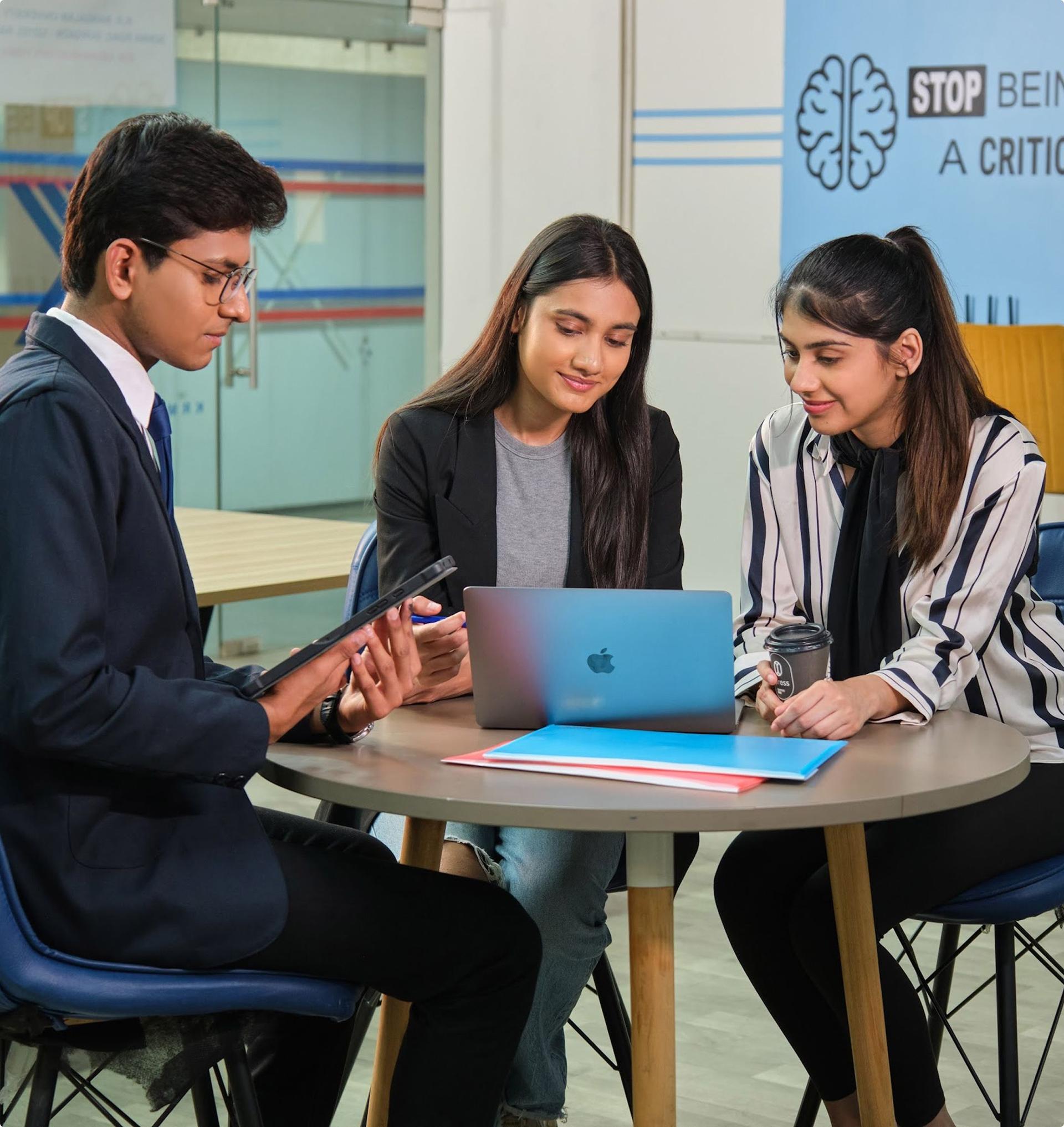
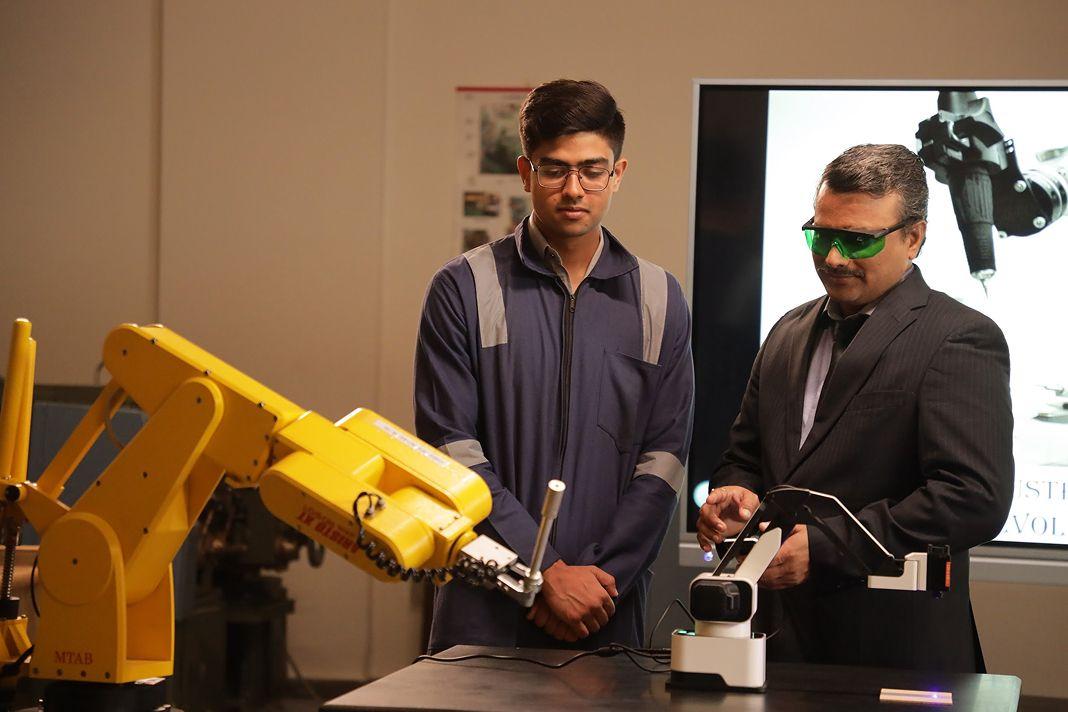
MBA in Digital Marketing classroom session at K.R. Mangalam University

Core Faculty

Doctorates from top business schools, with industry experience.

Courses are taught by faculty who hold doctorates from top business schools and also bring industry experience from before their Ph.D. Their work extends beyond classroom delivery into curriculum design, project mentorship, and active engagements in consulting and executive education, thus bringing insights from industry into classrooms.

Senior Industry Leaders

Practitioners co-teach courses, set real problems, and sit on the juries that grade your work.

Multiple courses are co-taught with serving industry leaders who carry deep expertise in their domain. They open the course, return for a synthesis block of real problems, and sit on the juries that grade student work.

Curriculum Partners

Harvard Business Impact cases and simulations across courses; IBM, EY and IIDE in Year Two.

Harvard Business Impact

(formerly Harvard Business Publishing). Case studies and simulations from the HBI collection are used across courses.

IBM

Co-delivers the Analytics specialisation track in Year Two.

Ernst & Young (EY)

Co-delivers the Fintech specialisation track in Year Two.

IIDE

Co-delivers the Digital Marketing specialisation track in Year Two.

Faculty

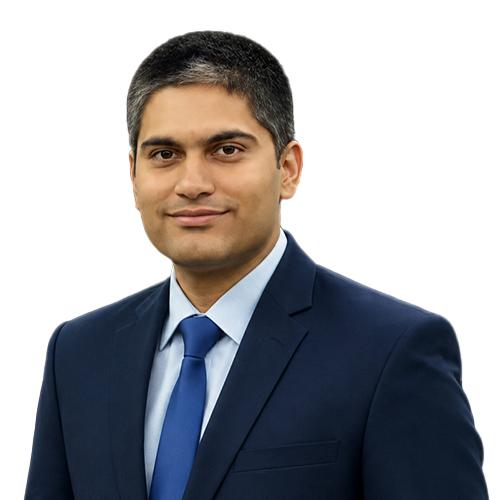
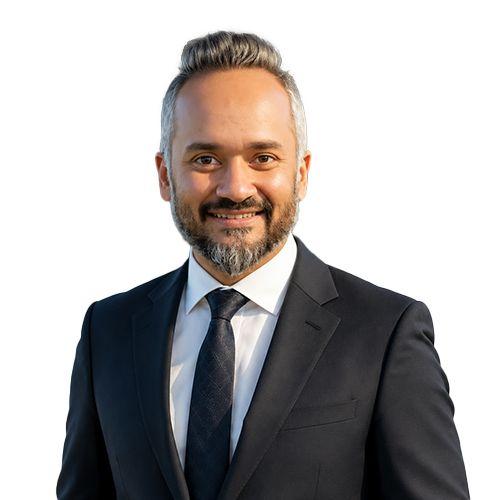
Dr. Hima Gupta, Dean, MBA faculty at KRMU

Dr. Hima Gupta

Dean (School of Management & Commerce)

Ph.D. (Management), MBA (IMT Ghaziabad) plus 35 years of experience

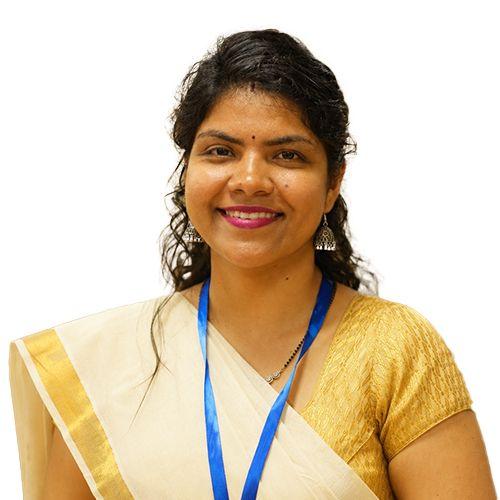
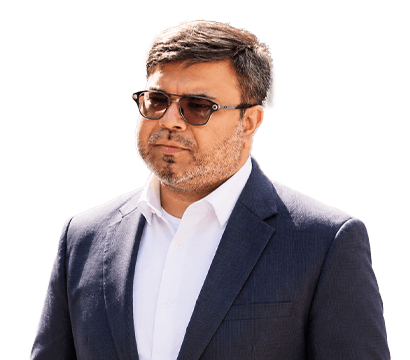
Dr. Deepak Maun, Director of Experiential Learning, KRMU MBA faculty

Dr. Deepak Maun

Director, Experiential Learning

Ph.D. (Innovation & Management in Education) (IIM Ahmedabad)

Prof. Anjana Dharmani, Marketing faculty, KRMU MBA in Digital Marketing

Prof. Anjana Dharmani

Faculty, Marketing

Ph.D. (Marketing) (Pursuing) (XLRI, Jamshedpur)

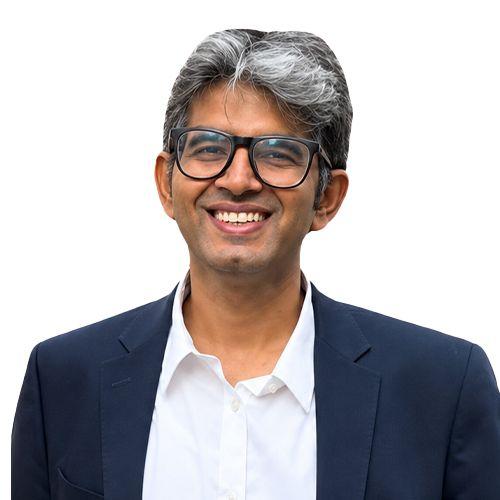
Alok Srivastava, Strategy and Entrepreneurship faculty, KRMU MBA

Alok Srivastava

Faculty, Strategy & Entrepreneurship

IIT Delhi · IIM Calcutta

Sandeep Kochhar, Communication and Placement Training faculty, KRMU MBA

Sandeep Kochhar

Faculty, Communication and Placement Training

Global C-Suite Executive Coach

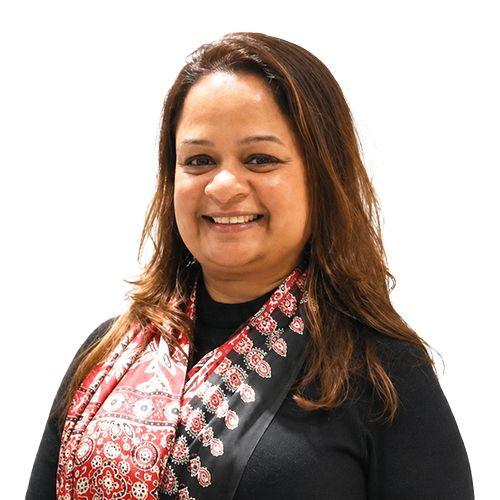
Rakhi Gupta, Communication and Placement Training faculty, KRMU MBA

Rakhi Gupta

Faculty, Communication and Placement Training

Former VP, NatWest Group

Abhinash Jena, Business Analytics faculty, KRMU MBA

Abhinash Jena

Faculty, Business Analytics

Partner, Project Guru

Arnab Chatterjee, Faculty of Organisational Behaviour and Human Resource Management, KRMU MBA

Arnab Chatterjee

Faculty, Organisational Behaviour and Human Resource Management; 25+ years of industry experience

Doctoral Researcher at Christ University

CAREER OUTCOMES

Built for one goal – significantly better career outcomes.

₹56.6 LPA
Highest package
KRMU placement drives, university-wide.
800+
Campus recruiters
KRMU's university-wide recruiter network.
PPO
Pre-Placement Offer pathway
Built into the Year-Two capstone engagement.

Four things a typical MBA doesn't give you.

MBA in Digital Marketing students discussing career outcomes at KRMU placement session

Industry Leads, Theory Follows

Every flagship course opens and closes with a senior practitioner.

A Specialisation With a Name Behind It

Year Two co-delivered with IBM, EY or IIDE – live cases, real budgets.

Real Work, From the First Semester

Field visits, real financial statements, and an 8–10 week company internship.

A Portfolio That Does the Talking

Graduate with real deliverables – every CV claim linked to proof.

WHY THIS MBA EXISTS

We cannot tell you what the jobs of 2028 will be.
We can tell you what those jobs will demand.

The AI shift is structural, not cyclical, and the honest position is to acknowledge that predicting specific roles five years ahead is not credible. The more durable commitment is to the capabilities that any plausible future will require. Courses, projects, and assessments are all built to develop the four capabilities: Hard work | Fluency with AI | Judgement to act | Composure under pressure

01Hard work
02Fluency with AI
03Judgement to act
04Composure under pressure
THE TWO-YEAR ARC

Two years, from watching to deciding.

SEMESTER 1

Foundation and First Diagnoses

Through cases, classroom interactions, and field visits, watch practitioners make decisions. Learn to do the same work under guidance. Read real financial statements, build small marketing experiments, walk into factories and service operations with structured field briefs.

SEMESTER 2

Cross-Functional Integration

Start thinking in terms of crossing subject boundaries. In assignments/projects, present cross-functional diagnoses to mixed juries of faculty and sector practitioners. By the end of the semester, you will shortlist the sectors you want to go deep on from a career perspective.

SUMMER

8 to 10 Week Internship

A problem brief from a real company. You work under joint guidance of a faculty mentor and an industry mentor. Expect weekly reviews leading to a graded portfolio deliverable that the hiring manager's team can use to make actual decisions. From the internship, you return to campus with high self-confidence and a solid understanding of what works in real-world situations.

SEMESTER 3

Sector Commitment

Commit to one or two sectors and job roles. Move from analysing problems to recommending solutions for specific organisations within the sector. Specialisation electives co-delivered with EY India.

SEMESTER 4

Capstone

Electives + possibility of a long-term industry engagement and a Pre-Placement Offer. A capstone project recommendation that a host organisation can act on.

CURRICULUM AND SYLLABUS*

A well-planned curriculum designed from scratch; Mapped to real job descriptions.

Every course in the MBA (Digital Marketing) is built around a single macro question – what a student should be able to do at the end of this course. Theory and concepts are taught in service of that question, not as ends in themselves. Sample courses and macro/micro questions for each Year-One course are listed under each subject. Year two electives are tentative, and will be offered based on batch interest.

*Tentative. The final course structure will be shared at the time of orientation.

Managerial Economics

  • Macro: How do you use economic reasoning – about prices, demand, competition, and policy – to make sharper business decisions?
    • How do you tell whether a price hike will earn more revenue, or lose customers faster than the margin grows?
    • How do you tell which of your costs will move with volume and which will not, and price accordingly?
    • How do you decide what to make in-house and what to outsource, using cost-and-control logic rather than gut?
    • How do you read currency movement and tell whether it helps or hurts your business, and by how much?
    • How do you compete in a market where the marginal cost has dropped close to zero, like power at the wholesale level, content, or digital services?

Business Analytics and Data Visualization

  • Macro: How do you go from a vague business problem to a decision-ready insight that a senior manager can actually act on?
    • How do you turn a vague business concern ('sales are down', 'customers are unhappy') into a clear question with measurable variables?
    • How do you turn messy operational data (CRM dumps, ERP exports, Excel files from three departments) into something you can actually analyse?
    • How do you decide the level of detail to hold the data at – every transaction, daily totals, or monthly summaries?
    • How do you tell whether two variables are causally related, correlated, or just moving together by coincidence?
    • How do you read a dataset and spot the trend, the anomaly, and the lurking outlier in under thirty minutes?
    • How do you build a dashboard a senior manager actually reads, instead of one that looks impressive and gets ignored?

Management Theory and Practice

  • Macro: How do you build the personal philosophy, the ethical frame, and the judgement to lead well when there is no rulebook?
    • How do you tell whether a decision is ethical when 'the policy' does not cover the situation?
    • How do you build a personal framework for hard choices that holds up under pressure, against incentive, and over time?
    • How do you decide what to spend your life on, and let that choice shape the work you say yes to?
    • How do you read a company's actual culture from its hiring, its processes, and its structure, not from what HR says it is?
    • How do you turn an abstract vision into the daily decisions that actually create or destroy that culture?

Organizational Behaviour

  • Macro: How do you read people, motivate teams, and shape workplace culture, including when you are not yet the boss?
    • How do you tell what genuinely motivates you, and keep doing the work that gives you that?
    • How do you give and receive feedback without it becoming about ego, defensiveness, or politics?
    • How do you motivate a team member who is checking out, without resorting to threats or hollow pep talks?
    • How do you build a team that actually performs, rather than one that just plays nice in meetings?
    • How do you handle a conflict on your team that is starting to leak into the work?
    • How do you get a cross-functional project done when you have no formal authority over any of the people involved?
KRMU MBA in Digital Marketing cohort students walking on campus steps
WHAT YOU LEAVE WITH

A portfolio of real work, not just a transcript with your grades on it.

Business diagnoses of three real companies

An internship deliverable signed off by a real firm

A sector report on your chosen industry

A capstone a host organisation can act on

A public case-competition record

An AI skill map linking every claim to proof

The programme does not promise a job. It promises the work that will earn you one.

EXPERIENTIAL LEARNING INFRASTRUCTURE

Real money, real ventures, real platforms.

Student Investment Fund (SIMF) trading floor at KRMU, real capital managed by MBA students
₹10 Lakh

SIMF - Student Investment Fund

Real capital, managed by students.

The Foundry startup incubator at K.R. Mangalam University
Incubator

The Foundry

From idea to registered company, on campus.

MakeShala prototyping and design maker space at KRMU
Maker space

MakeShala

Prototyping, design and fabrication.

Collaborative Solutions Lab, cross-school team workspace at KRMU
Live lab

Collaborative Solutions Lab

Cross-school teams on real challenges.

EXPECTATIONS

Expectations and Outcomes.

What we ask of you?

Work hard and learn to do quality work

  • A commitment to put in hard work.
  • An open mind and an active body, ready to push your own physical and mental boundaries to gain real experience.
  • Zero sloppiness in your actions and outputs.

What will you become?

An individual recognized as a capable leader with solid work-ethic

  • A solid work-ethic that employers will appreciate.
  • The ability to read long documents closely and ask good questions.
  • The ability to link concepts and ideas across domains.

The ability to engage in and lead cross-functional projects with diverse team members.

What you can ask of us

Solid mentorship focused helping you achieve your career goals

  • Mentorship and structured exposure to sectors and roles, so you can find what you want to do.
  • Communication-skill development — written and verbal — embedded across every course.
  • Faculty whose work is subservient to a single goal: significantly better career outcomes for the students.
  • Quality work that earns you the job.
EXPECTATIONS

Career Prospects.

An MBA in Fintech opens up diverse career opportunities at the intersection of finance and technology. With the rise of digital payments, blockchain, AI-driven financial services, and cryptocurrency, the demand for skilled professionals in this domain is rapidly growing. Here are some of the top career options:

Business/Data Analysts

Uses data analysis to identify trends, make data-driven decisions, and interpret big data sets to enhance business practice.

Financial Analyst

Collect, analyse, and interpret financial data, recommend investment strategies and achieve maximum profitability.

Product Manager

From the product’s conceptualisation to its vision, improvement and strategies, a product manager identifies customers and meets their needs.

Cybersecurity Expert

Protects the company’s computer systems, network and other digital assets from data breaches and cyber-attacks, identifies vulnerabilities and implements security measures..

Risk Analyst

Identifies, assesses and manages potential risks of the company to reduce liabilities and mitigate losses.

Investment Analyst

Investment Analysts research financial opportunities and market trends to guide venture capital, private equity, or asset portfolios.

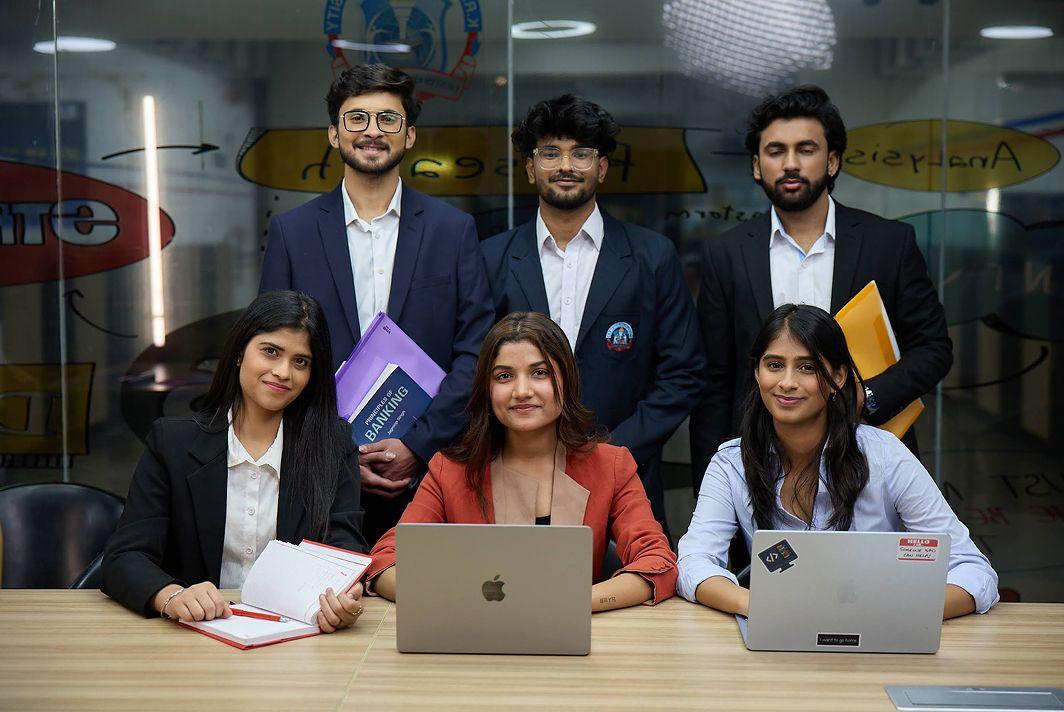
KRMU MBA in Digital Marketing graduates group photo, career prospects
FEES, SCHOLARSHIPS & FINANCING

A serious MBA, priced honestly – with scholarships up to 100%.

Programme Fee

₹3,85,000/ year

Subject to final approval by university authorities. Application fee ₹1,000.

  • Scholarships up to 100% – merit, sports and more
  • Early applicants get scholarship priority

Education-loan partners

Up to 100% funding – tuition, books, hostel and travel – with concessional rates and 5–15 year terms.

Kuhoo
ICICI Bank
Axis Bank
IDFC First Bank
Propelld
GrayQuest
  • Zero processing fees on select partners
  • The admissions team helps you compare offers
ADMISSIONS · AUGUST 2026 INTAKE

How to apply.

Eligibility

A bachelor's degree in any discipline. Work experience welcome, not required.

Selection

KRMU Entrance Examination, followed by a faculty-led personal interview.

1

Apply Online

admissions.krmangalam.edu.in ; Application fee ₹1,000

2

Entrance Examination

The KRMU Entrance Examination

3

Personal Interview

With the faculty panel

4

Offer & Scholarship Decision

Your admission offer with any scholarship award

5

Enrol

Confirm your seat in the August 2026 cohort

LOCATION

On campus in Gurugram – India's corporate, consulting and start-up corridor.

Twenty minutes from Cyber City, within easy reach of the firms students intern with, are hired by, or build alongside.

Address · K.R. Mangalam University, Sohna-Gurgaon Road, Sohna, Gurugram, Haryana 122103
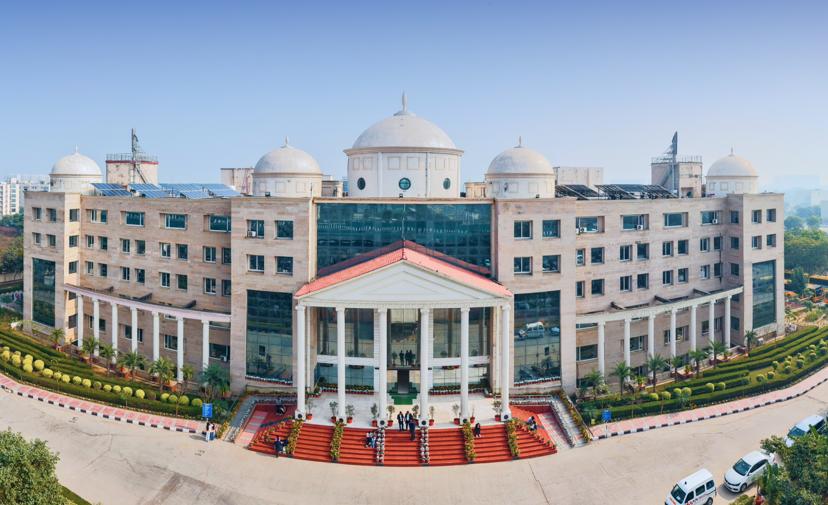
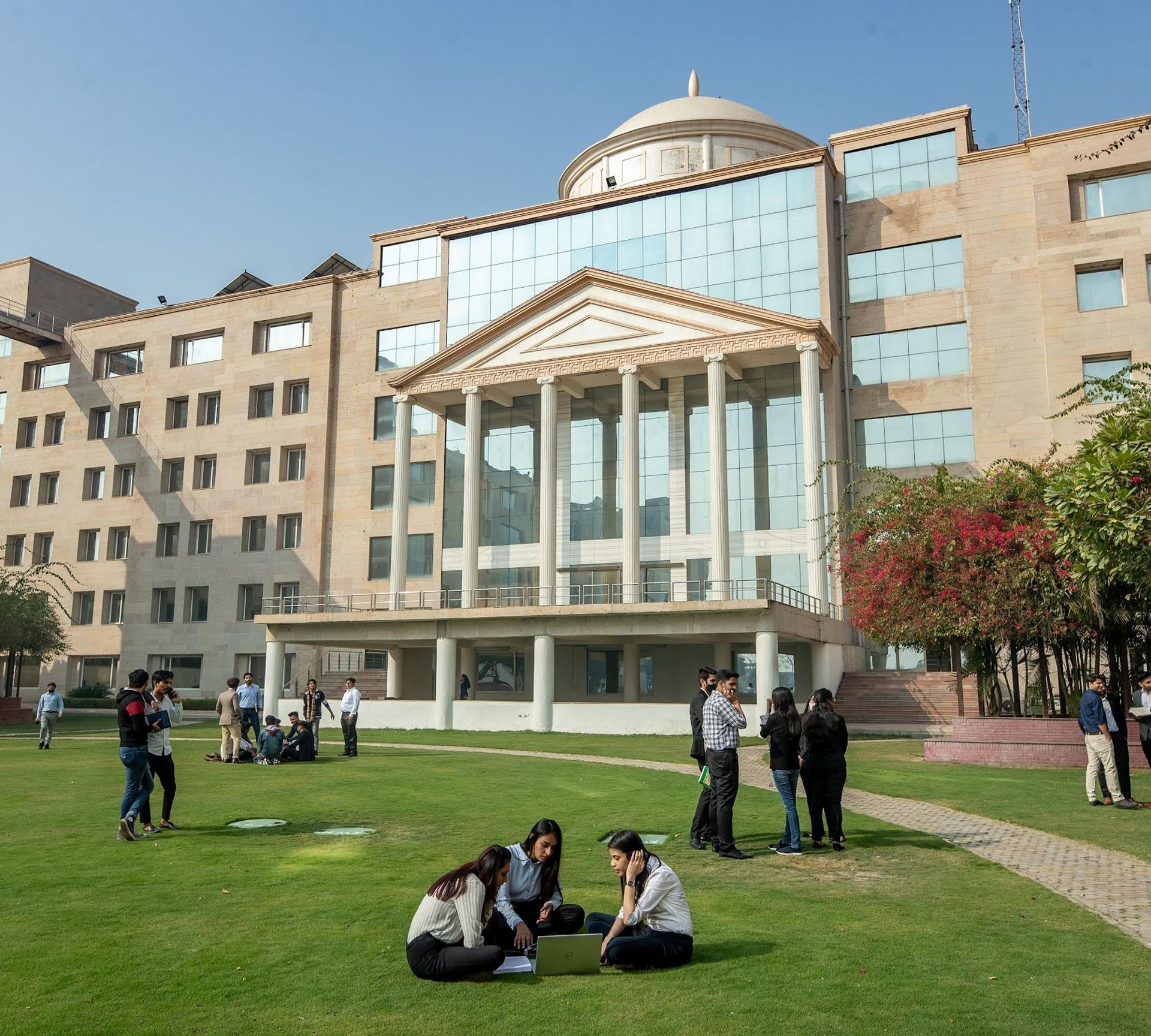
K.R. Mangalam University campus dome building with students, Sohna Road Gurugram
COMMON QUESTIONS

What you might want to know.

What is the programme fee, and what scholarships are available?

₹3,85,000 per year, subject to final approval. Scholarships of up to 100% are available for academic merit, sports achievement and other categories – assessed as part of your application. Education loans from six partner lenders can cover up to 100% of the fee.

Am I eligible? Do I need work experience?

You need a bachelor's degree in any discipline from a recognised university. Work experience is not required – the cohort deliberately mixes freshers and experienced candidates.

How is this different from other private MBA programmes in the NCR?

Most MBA programmes are theory-first, with industry exposure added on top. This programme inverts that: industry leads, theory follows. Year Two is a specialisation co-delivered with IBM, EY or IIDE, and you graduate with a portfolio of real work as the primary evidence of what you can do.

What about placements?

KRMU's placement cell brings 800+ recruiters to campus, with a highest package of ₹56.6 LPA. Within the MBA, the summer internship, the Year-Two capstone and the PPO pathway are designed so your work is in front of employers well before placement season – with mentorship and structured exposure to sectors and roles throughout.

What kind of internships and projects will I work on?

An 8–10 week summer internship under a signed problem brief from a real organisation – a bank, fintech, brand, agency or consulting firm – with weekly reviews and a graded deliverable. In Year Two, a long-term industry engagement with the possibility of a Pre-Placement Offer.

Who is this MBA not for?

A programme built around active participation, repeated field work and cross-functional projects is not the right fit for someone looking for a credential that can be earned passively. It is built for students prepared to do the work – and it rewards them for it.

Three industry tracks.
One August 2026 intake.

Start Your Application Now – Early Applicants Get Scholarship Priority.