For anybody hoping to attend one of India’s top universities, passing the JEE Main exam is a significant achievement. Students generally ask themselves, “After JEE Main what next?” once the results are announced. After JEE Mains, there are other excellent alternatives, including dual degrees, engineering, and architecture. But all of this depends on the JEE Main score, choice, and selection. The best opportunities after JEE Mains are examined in this blog, including getting into B.Tech., B.Arch., or dual-degree programmes. Also, more discussion will be done on career options after JEE Mains.
Quick Glance At The Blog
| Sections |
What They Cover |
| Introduction |
Highlights JEE Main as a key milestone and introduces the core question: After JEE Main what next? Sets the context for academic and career pathways. |
| How Many Attempts for JEE Mains After 12th? |
Explains eligibility rules, total attempts (6), two sessions per year, and the three-year validity after Class 12th. |
| Top Choices After JEE Mains 2026 |
Overview of major options, including B.Tech., B.Arch., and Dual Degree programmes based on JEE Main scores. |
| Colleges After JEE Mains |
Covers top-tier NITs, IIITs, GFTIs, state engineering colleges, and private universities. |
| Counselling After JEE Mains |
Descriptions of JoSAA and state-level counselling processes and their role in seat allotment. |
| Expert Tips for Making the Right Choice |
Considering factors such as accreditation, faculty, placements, industry exposure, and scholarships. |
| Career Options After JEE Mains |
Tabulated overview of career paths, including engineering, architecture, planning, government sector, entrepreneurship, and alternative fields. |
| KRMU for JEE Main Achievers |
Brief introduction to KRMU, highlighting industry-oriented education, infrastructure, and scholarship support. |
| Conclusion |
Summarises key takeaways and reinforces that the answer to after JEE Main what next depends on informed, goal-aligned choices. |
How Many Attempts for JEE Mains After 12th?
Before discussing “after JEE Main what next?”, it is crucial to know the number of attempts for JEE Mains.
After Class 12th, aspirants get up to six attempts for JEE Main over three consecutive years, with two sessions (January & April) each year, allowing them to improve their score or try again if they didn’t perform well initially. This period starts from the year they pass their 12th board exams, offering a total of six chances across three years.
Top Choices after JEE Mains 2026
Here are some choices if JEE Main achievers are unsure after passing JEE Main what next?
Bachelor of Technology (B.Tech.)
After JEE Main, this is the most popular career choice. The top engineering schools, including NITs, IIITs, and GFTIs, are accessible through this option. JEE Main results are accepted for admission to a few private, highly esteemed, internationally renowned colleges.
Specialisations in B.Tech. are available in a number of fields, including:
- Electrical and Electronics Engineering (EEE)
- Computer Science Engineering (CSE)
- Mechanical Engineering (ME)
- Information Technology (IT)
- Civil Engineering (CE)
Why Opt for a B.Tech.?
For B.Tech. graduates, there are distinct employment prospects associated with each of these specialisations. They need long-term professional objectives; industry demand and areas of interest should all be taken into consideration when selecting your specialisation.
Bachelor of Architecture (B.Arch.)
After JEE Mains, a B.Arch. is a great career for those who are drawn to creativity and design. This five-year curriculum, which is offered by NITs and Schools of Planning and Architecture (SPAs), encompasses construction management, urban planning, and architectural design.
Why Opt for B.Arch?
With a growing focus on smart cities and green buildings, B.Arch. graduates are in high demand. It offers diverse career opportunities in architecture, urban planning, etc. Besides, architecture provides professional recognition, creative satisfaction, and long-term career growth.
Dual Degree Programmes
Dual degrees like B.Tech. + M.Tech. or B.Tech.+ MBA, etc., are great employment possibilities for those who want further credentials in less time. These five-year programmes, which include undergraduate and graduate study, are offered by IITs, NITs, and private institutions like K.R. Mangalam University (KRMU).
Students who benefit from these programmes consist of those:
- Those who do not need to continue their studies can choose to receive specialised education in a particular subject.
- Those who wish to pursue managerial or supervisory roles immediately following graduation.
- Who want to combine technical proficiency with business understanding.
Why Opt for Dual Degree Programmes?
Opting for dual degree programmes allows students to earn two qualifications simultaneously, saving both time and cost compared to pursuing them separately. These programmes help build interdisciplinary knowledge, making graduates more versatile and industry-ready. With skills spanning two domains, students gain broader career opportunities, higher employability, and a competitive edge in the job market. Dual degrees also encourage adaptability, critical thinking, and better alignment with evolving industry demands.
Colleges after JEE Mains
After choosing a course, students also have to face another question, i.e., what to do after JEE Mains result in terms of choosing an educational institute. Below are colleges after JEE Mains:
Top College Tiers
- Top-Tier NITs: NIT Trichy, Warangal, Surathkal, etc.
- IIITs: IIIT Allahabad, IIIT Bangalore, IIIT Hyderabad, IIIT Delhi, IIIT Kancheepuram, etc.
- GFTIs (Government Funded Technical Institutes): IIEST Shibpur, PEC Chandigarh, BIT Mesra, IIITs, and newer ones.
State Engineering Colleges
- Delhi: Delhi Technological University (DTU), Netaji Subhas University of Technology (NSUT), etc.
- Maharashtra: COEP Technological University, VJTI Mumbai, etc.
- Karnataka: University Visvesvaraya College of Engineering (UVCE), BMS College of Engineering, etc.
Private Engineering Colleges
There are several private colleges or universities, including KRMU, that students can opt for despite having a low JEE Main score.
Counselling After JEE Mains
Counselling after JEE Main refers to the official admission process through which students are allotted engineering seats in colleges based on their JEE Main rank, preferences, and availability of seats.
| Counsellings |
Descriptions |
| JoSAA Counselling |
For NITs, IIITs, and GFTIs, those who have passed the JEE must participate in the Joint Seat Allocation Authority (JoSAA) counselling process using their JEE Main rank. |
| State-Level Counselling |
For state colleges like DTU, NSUT, and others in Delhi NCR, those who have passed the JEE use the Joint Admission Committee (JAC) counselling portal. |
Expert Tips for Making the Right Choice
When deciding After JEE Main what next, it is important to look beyond rankings and focus on long-term value. Here are a few expert-recommended factors to consider:
| Factors |
Descriptions |
| Accreditation and Recognition |
Ensure the university and programme are approved by relevant authorities, as this impacts degree validity and future opportunities. |
| Faculty Expertise |
Experienced and qualified faculty members enhance conceptual clarity, practical learning, and academic guidance. |
| Placement Support |
Check the institution’s placement record, industry tie-ups, and career guidance services. |
| Industry Exposure |
Internships, live projects, and industry collaborations help bridge the gap between theory and practice. |
| Scholarship Opportunities |
Merit-based and need-based scholarships can reduce financial burden and reward academic excellence. |
Choosing wisely based on these factors helps build a strong academic foundation and a successful career path.
Career Options After JEE Mains
Here are the major career options after JEE Mains:
| Career Paths |
Courses / Options |
Key Focus Areas |
Career Outcomes |
| Engineering |
B.Tech. / BE |
Core & emerging engineering disciplines |
Software Engineer, Core Engineer, R&D roles |
| Architecture |
B.Arch. |
Design, construction, sustainability |
Architects, Urban Designers |
| Planning |
B.Planning |
Urban & regional development |
Urban Planner, Policy Consultant |
| Government Sector |
Competitive exams (PSUs, ESE) |
Technical expertise |
Engineer in the public sector |
| Entrepreneurship |
Startups & innovation |
Product development, business skills |
Founder, Startup professional |
| Alternative Paths |
Management, Design, Certifications |
Interdisciplinary skills |
Analyst, Consultant, Tech Manager |
KRMU for JEE Main Achievers
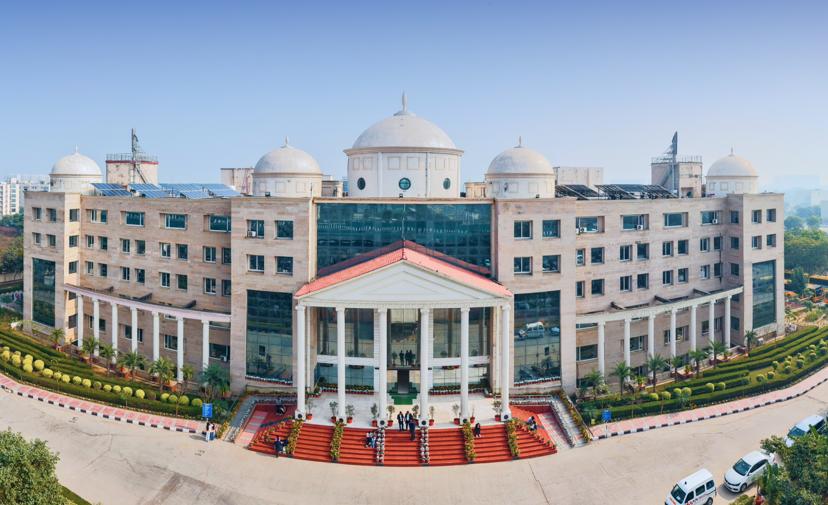
KR Mangalam University (KRMU) can be the best option after JEE Mains. It is a multidisciplinary private university committed to quality education, industry-oriented learning, and holistic student development. The university offers modern engineering programmes supported by experienced faculty, advanced infrastructure, practical exposure, and strong placement support. With a focus on innovation, skill development, and merit-based scholarships, KRMU provides students with an enabling environment to build successful careers.
Conclusion
After JEE Main, students have multiple pathways to shape their future—through counselling, choosing the right college, or exploring diverse career options. Understanding the admission process, evaluating institutions carefully, and aligning choices with personal interests are key to long-term success. Universities like KRMU offer a balanced mix of academic excellence, industry exposure, and student support, helping aspirants move confidently from examination to career.
The question “after JEE Main what next?” doesn’t have a single answer—success depends on making informed decisions about counselling, colleges, and long-term career opportunities.
FAQs
After JEE main what next?
Check your result, understand your rank and percentile, and explore counselling and college options.
How many attempts are allowed for JEE Mains after 12th?
Students can attempt JEE Mains for three consecutive years, with two sessions per year.
Is counselling mandatory after qualifying JEE Mains?
Yes, counselling is required to secure admission through JoSAA or university-level processes.
Can I join a private university after JEE Mains?
Yes, many reputed private universities accept JEE Mains scores for admission.
Why consider KRMU after JEE Mains?
KRMU offers industry-focused programmes, experienced faculty, strong placement support, and scholarship opportunities.















 13+Years of Educational Experience