Copy & Paste Below SCRIPT before the close of body tag
ba vs bsc

BA vs BSc: Key Differences and Career Paths

July 28, 2025

Choosing the right course to pursue after 12th class can be a daunting task, as it requires a lot of research, career counselling, and guidance from the seniors and teaching professionals. When it comes to BA vs. BSc, the decision-making becomes even more difficult, as one programme focuses on the basics of arts, while the other deals in science subjects. Both these courses are good in their respective ways, but to actually understand the key differences and the career paths they offer, we need to deep dive into the complete details of these two courses.

In this blog post, we will talk about what BA vs. BSc is, which is the more difficult of the two, and explore the various BA and BSc courses offered by the prestigious K.R. Mangalam University (KRMU). 

Before starting the discussion about BA and BSc, let’s first understand these two in detail. 

What is BA?

BA stands for Bachelor of Arts; it is an undergraduate programme that focuses on academic fields like humanities, social sciences, and liberal arts. It is a degree programme that offers specialisation in various subjects like psychology, history, English literature, political science, economics, and many more. The School of Liberal Arts (SOLA) at K.R. Mangalam University offers various BA courses, and some of them are as follows:

B.A. (Hons) English

The course offers students a comprehensive knowledge of the English language, literature, and critical theory. Through a rich and diverse curriculum, students delve into the complexities of literary works spanning different genres, periods, and cultures, gaining insights into the human experience and the power of language.

Duration: 3 Years Programme Fee Per Year:

Rs.1,20,000 (as of July 28, 2025).

Eligibility Criteria: Passed 10+2 or equivalent examination from any recognised board/university in any stream with a minimum of 50% aggregate marks.


B.A. (Hons./Hons. with Research) English

The programme offers students the opportunity to explore literary techniques, themes, historical contexts, and critical approaches to analysis. They engage with classic and contemporary texts, refine their writing and communication skills, and conduct in-depth research in their areas of interest.

Duration: 4 Years Programme Fee Per Year:

Rs.1,20,000 (as of July 28, 2025).

Eligibility Criteria: Passed 10+2 or equivalent examination from any recognised board/university in any stream with a minimum of 50% aggregate marks.


B.A. (Hons.) Economics

The programme aims to enable students to develop an excellent understanding of the global economy and financial problems. In this programme, students learn a set of skills that enable them to engage in critical thinking and participate in discussions about a variety of intriguing issues in business, finance, and public policy.

Duration: 3 Years Programme Fee Per Year:

Rs.1,20,000 (as of July 28, 2025).

Eligibility Criteria: Passed 10+2 or equivalent examination from any recognised board/university in any stream with a minimum of 50% aggregate marks.


B.A. (Hons./Hons. with Research) Economics

The programme is curated for students passionate about understanding the complexities of economics and embarking on a successful career in the field. KRMU ensures that it creates a unique blend of academics, practical learning experiences, and research opportunities. This programme enhances the analytical, computational, mathematical, and comprehensive abilities of the mind.

Duration: 4 Years Programme Fee Per Year:

Rs.1,20,000 (as of July 28, 2025).

Eligibility Criteria: Passed 10+2 or equivalent examination from any recognised board/university in any stream with a minimum of 50% aggregate marks.


B.A. (Hons.) Psychology

The programme offers diverse career and academic opportunities in fields like mental health, education, human resources, and social work.

Duration: 3 Years Programme Fee Per Year:

Rs. 1,30,000 (as of July 28, 2025).

Eligibility Criteria: Passed 10+2 or equivalent examination from any recognised board/university in any stream with a minimum of 50% aggregate marks.


B.A. (Hons.) Political Science

This course provides in-depth insights into political systems, theories, and ideologies while also examining international relations and public administration, making it an excellent academic pursuit.

Duration: 3 Years Programme Fee Per Year:

Rs.1,20,000 (as of July 28, 2025).

Eligibility Criteria:

Passed 10+2 or equivalent examination from any recognised board/university in any stream with a minimum of 50% aggregate marks.


B.A. (Hons./Hons. with Research) Political Science

The programme is designed to provide students with a deep understanding of political theories, governance systems, and the dynamics of power in national and global contexts.

Duration: 4 Years Programme Fee Per Year: 1,20,000 (as of July 28, 2025). Eligibility Criteria:

Passed 10+2 or equivalent examination from any recognised board/university in any stream with a minimum of 50% aggregate marks.


These were the B.A. courses available at KRMU along with their details. Now let’s discuss the B.Sc. courses.

Also Read: BA Course Subjects: Syllabus, Fee, Scope and More

What is a BSc?

BSc stands for Bachelor of Science. It is a bachelor’s or undergraduate degree awarded to the students in the fields of science, mathematics, or engineering. The courses focus on providing students with a strong scientific foundation, principles, and practical skills along with hands-on training for the overall development of the students. 

The syllabus of the BSc programmes at KRMU combines lectures and theoretical studies with laboratory work and practical applications. Following is the list of BSc courses available for students to pursue from the university:

B.Sc. (Hons.) Computer Science with academic support of IBM

The programme involves the study of various operating systems, the workings of various computer networks, and how they communicate with each other for efficient data transfer. Besides the software development and overall computational skills, students also develop critical thinking, problem-solving, and analytical abilities.

Duration: 3 Years Programme Fee Per Year:

Rs.1,35,000 (as of July 28, 2025).

Eligibility Criteria:

Passed 10+2 or equivalent from any recognised board/university in any stream with Mathematics/Statistics/Computer Science/Information Science as one subject with a minimum of 50% aggregate marks.


B.Sc. (Hons.) Cyber Security

The programme is curated to help students dive deeper into the depths of cybersecurity, ethical hacking, network security, and more. The programme is facilitated with the best technologies available to ensure that students get hands-on experience with the latest tech to identify vulnerabilities & data breaches and fix them in time.

Duration: 3 Years Programme Fee Per Year:

Rs.1,35,000 (as of July 28, 2025).

Eligibility Criteria:

Passed 10+2 or equivalent from any recognised board/university in any stream with Mathematics/Statistics/Computer
Science/Information Science as one subject with a minimum 50% aggregate marks.


B.Sc. (Hons.) Data Science

The programme ensures that graduates are ready to meet the demands of the global technological industries with the perfect blend of technical and theoretical training.

Duration: 3 Years Programme Fee Per Year:

Rs.1,35,000 (as of July 28, 2025).

Eligibility Criteria:

Passed 10+2 or equivalent from any recognised board/university in any stream with Mathematics/Statistics/Computer
Science/Information Science as one subject with a minimum 50% aggregate marks.


Difference Between the Two: BA vs BSc

Here is a clear comparison table outlining the key differences between a Bachelor of Arts (BA) and a Bachelor of Science (BSc) degree, let’s understand what BA vs. BSc is.

Feature Bachelor of Arts (BA) Bachelor of Science (BSc)
Focus Area Emphasises humanities, social sciences, and arts Emphasises sciences, mathematics, and technology
Subjects History, English, Psychology, Sociology, etc. Biology, Physics, Chemistry, Computer Science, etc.
Curriculum Style Broader, more interdisciplinary More technical and specialized
Analytical Approach Theoretical, critical thinking and analysis Empirical, data-driven, and quantitative
Math/Science Requirements Usually fewer Usually more
Career Paths Education, Journalism, Law, Public Relations Engineering, IT, Medicine, Data Science
Flexibility More electives and room for minors More rigid, structured course requirements
Degree Outcome Often suited for communication and creative roles Often suited for technical and research roles
Common Majors Literature, Languages, Philosophy, Political Science Physics, Biology, Statistics, Computer Science
Research Intensity May involve less lab or technical research Often involves lab work and scientific research


These distinctions between the two courses can help students in making the right choice. A key factor to consider is that pursuing a BA typically does not require a specific background, making it accessible to students from all academic streams. In contrast, a BSc generally demands a foundation in the science stream. The comparison table above is designed to help clarify such differences and also addresses the common question, “Which has more scope, BSc or BA?”

Also Read: BSc Hons Computer Science: Your Pathway to Innovation

Choosing KRMU to Pursue BA and BSc courses

There are many reasons to choose K.R. Mangalam University to pursue these courses, and some of the key reasons are as follows:

  1. Highly Qualified Faculty: The university has a team of highly qualified teachers and faculty members who are experts in their respective fields. Along with this, KRMU also has industry professionals on board as advisors to help the students with real-time events and understand whatever is happening in the current market trends so the students are ready for the competitive job market.
  2. Holistic Development: The university focuses on an overall development of the students so that along with the theoretical knowledge, they also understand the practical skills, they understand the importance of hands-on training, and they understand how it can help them better academically and professionally. KRMU encourages students to participate in co-curricular and extracurricular activities as well.
  3. International Exposure: Selective students from the campus get an opportunity to be chosen for a fully sponsored international study tour to prestigious European universities as a part of their summer training programme. This helps the students to get better exposure and get influenced by the foreign educators and mentors. 
  4. 100% Job Assistance: The career development team at KRMU helps the students to gain basic skills, like making their body language better and tech skills, along with preparing them for interviews by practising mock tests and career development skills. The team also helps the students to find internships and better jobs after graduation.
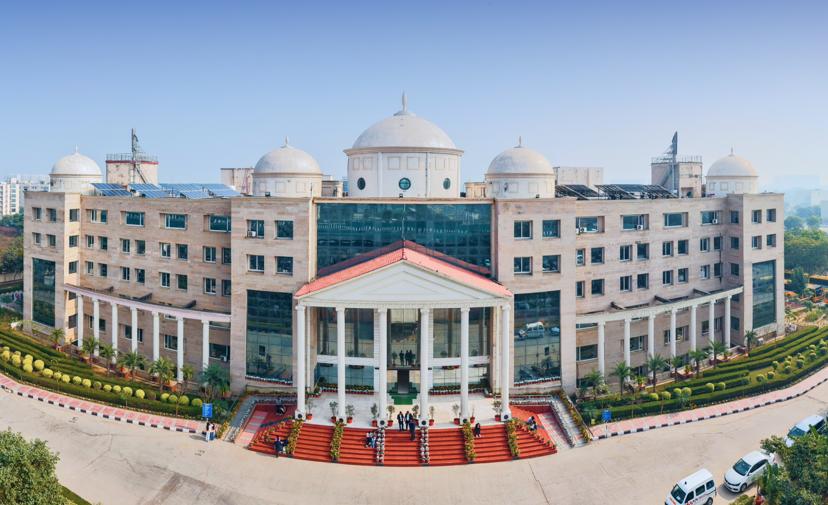
  5. State-of-the-art Facilities: The university campus offers world-class services and ambience to the students so they can study in peace and get better education from the top-level teachers available at the college campus. The facilities include smart classrooms, fully equipped labs, libraries, and two cafeterias in every course block, along with sports amenities like football ground, basketball courts and chess rooms etc. 

Admission Process at KRMU

If you’re wondering where to pursue a BA or a BSc course at a reputed college or university, K.R. Mangalam University is the best choice for you. We recommend checking the eligibility criteria first. Once you meet the eligibility criteria, you need to follow the following steps to take admission at KRMU:

  • Visit admissions.krmangalam.edu.in to initiate the application
  • Fill in the application form and pay the required application fee
  • Appear for an entrance exam, KREE (if applicable)
  • Attend the faculty-led interview
  • After a successful interview, you’ll receive the admission offer letter on your registered email ID
  • Get enrolled

Conclusions

The blog post focuses on BA vs. BSc courses and how they’re different from one another. It educates the students about both the degree programmes and also helps them to decide which offers a better career option. BA programmes majorly focus on arts, while BSc focuses on science and technology. KRMU provides courses and specialisations in both of the programmes.

For the students looking forward to taking admission to K.R. Mangalam University, check here

FAQs

Some frequently asked questions and their answers are as follows: 

BA vs. BSc: Which is better?

Both of the courses cater to different students and are beneficial in their own respective ways. There’s nothing like one course being better than another.

What are the benefits of pursuing a BA programme?

The benefits of pursuing a BA course include the development of critical thinking, communication, and analytical skills.

What are the benefits of pursuing a BSc programme?

Some benefits of pursuing a BSc programme are diverse career opportunities and a strong foundational knowledge in both scientific and technical skills.

What are the career options after a BSc?

After completing a BSc, students get many career options in different fields like research, healthcare, and education. Some jobs include, research scientist, lab technician, and data analyst.

Why choose KRMU to pursue undergraduate programmes?

The university has the best and highly qualified faculty members along with different perks available to the students, like state-of-the-art facilities and 100% job assistance, and all of these benefits make KRMU a good choice for pursuing the undergraduate programmes.

Which is more difficult, a BA or a BSc?

There’s no appropriate answer to this question, as it completely depends on the students’ strengths and interests. One can find a BSc difficult and vice versa.

ba vs bsc

BA vs BSc: Key Differences and Career Paths

July 28, 2025

Choosing the right course to pursue after 12th class can be a daunting task, as it requires a lot of research, career counselling, and guidance from the seniors and teaching professionals. When it comes to BA vs. BSc, the decision-making becomes even more difficult, as one programme focuses on the basics of arts, while the other deals in science subjects. Both these courses are good in their respective ways, but to actually understand the key differences and the career paths they offer, we need to deep dive into the complete details of these two courses.

In this blog post, we will talk about what BA vs. BSc is, which is the more difficult of the two, and explore the various BA and BSc courses offered by the prestigious K.R. Mangalam University (KRMU). 

Before starting the discussion about BA and BSc, let’s first understand these two in detail. 

What is BA?

BA stands for Bachelor of Arts; it is an undergraduate programme that focuses on academic fields like humanities, social sciences, and liberal arts. It is a degree programme that offers specialisation in various subjects like psychology, history, English literature, political science, economics, and many more. The School of Liberal Arts (SOLA) at K.R. Mangalam University offers various BA courses, and some of them are as follows:

B.A. (Hons) English

The course offers students a comprehensive knowledge of the English language, literature, and critical theory. Through a rich and diverse curriculum, students delve into the complexities of literary works spanning different genres, periods, and cultures, gaining insights into the human experience and the power of language.

Duration: 3 Years Programme Fee Per Year:

Rs.1,20,000 (as of July 28, 2025).

Eligibility Criteria: Passed 10+2 or equivalent examination from any recognised board/university in any stream with a minimum of 50% aggregate marks.


B.A. (Hons./Hons. with Research) English

The programme offers students the opportunity to explore literary techniques, themes, historical contexts, and critical approaches to analysis. They engage with classic and contemporary texts, refine their writing and communication skills, and conduct in-depth research in their areas of interest.

Duration: 4 Years Programme Fee Per Year:

Rs.1,20,000 (as of July 28, 2025).

Eligibility Criteria: Passed 10+2 or equivalent examination from any recognised board/university in any stream with a minimum of 50% aggregate marks.


B.A. (Hons.) Economics

The programme aims to enable students to develop an excellent understanding of the global economy and financial problems. In this programme, students learn a set of skills that enable them to engage in critical thinking and participate in discussions about a variety of intriguing issues in business, finance, and public policy.

Duration: 3 Years Programme Fee Per Year:

Rs.1,20,000 (as of July 28, 2025).

Eligibility Criteria: Passed 10+2 or equivalent examination from any recognised board/university in any stream with a minimum of 50% aggregate marks.


B.A. (Hons./Hons. with Research) Economics

The programme is curated for students passionate about understanding the complexities of economics and embarking on a successful career in the field. KRMU ensures that it creates a unique blend of academics, practical learning experiences, and research opportunities. This programme enhances the analytical, computational, mathematical, and comprehensive abilities of the mind.

Duration: 4 Years Programme Fee Per Year:

Rs.1,20,000 (as of July 28, 2025).

Eligibility Criteria: Passed 10+2 or equivalent examination from any recognised board/university in any stream with a minimum of 50% aggregate marks.


B.A. (Hons.) Psychology

The programme offers diverse career and academic opportunities in fields like mental health, education, human resources, and social work.

Duration: 3 Years Programme Fee Per Year:

Rs. 1,30,000 (as of July 28, 2025).

Eligibility Criteria: Passed 10+2 or equivalent examination from any recognised board/university in any stream with a minimum of 50% aggregate marks.


B.A. (Hons.) Political Science

This course provides in-depth insights into political systems, theories, and ideologies while also examining international relations and public administration, making it an excellent academic pursuit.

Duration: 3 Years Programme Fee Per Year:

Rs.1,20,000 (as of July 28, 2025).

Eligibility Criteria:

Passed 10+2 or equivalent examination from any recognised board/university in any stream with a minimum of 50% aggregate marks.


B.A. (Hons./Hons. with Research) Political Science

The programme is designed to provide students with a deep understanding of political theories, governance systems, and the dynamics of power in national and global contexts.

Duration: 4 Years Programme Fee Per Year: 1,20,000 (as of July 28, 2025). Eligibility Criteria:

Passed 10+2 or equivalent examination from any recognised board/university in any stream with a minimum of 50% aggregate marks.


These were the B.A. courses available at KRMU along with their details. Now let’s discuss the B.Sc. courses.

Also Read: BA Course Subjects: Syllabus, Fee, Scope and More

What is a BSc?

BSc stands for Bachelor of Science. It is a bachelor’s or undergraduate degree awarded to the students in the fields of science, mathematics, or engineering. The courses focus on providing students with a strong scientific foundation, principles, and practical skills along with hands-on training for the overall development of the students. 

The syllabus of the BSc programmes at KRMU combines lectures and theoretical studies with laboratory work and practical applications. Following is the list of BSc courses available for students to pursue from the university:

B.Sc. (Hons.) Computer Science with academic support of IBM

The programme involves the study of various operating systems, the workings of various computer networks, and how they communicate with each other for efficient data transfer. Besides the software development and overall computational skills, students also develop critical thinking, problem-solving, and analytical abilities.

Duration: 3 Years Programme Fee Per Year:

Rs.1,35,000 (as of July 28, 2025).

Eligibility Criteria:

Passed 10+2 or equivalent from any recognised board/university in any stream with Mathematics/Statistics/Computer Science/Information Science as one subject with a minimum of 50% aggregate marks.


B.Sc. (Hons.) Cyber Security

The programme is curated to help students dive deeper into the depths of cybersecurity, ethical hacking, network security, and more. The programme is facilitated with the best technologies available to ensure that students get hands-on experience with the latest tech to identify vulnerabilities & data breaches and fix them in time.

Duration: 3 Years Programme Fee Per Year:

Rs.1,35,000 (as of July 28, 2025).

Eligibility Criteria:

Passed 10+2 or equivalent from any recognised board/university in any stream with Mathematics/Statistics/Computer
Science/Information Science as one subject with a minimum 50% aggregate marks.


B.Sc. (Hons.) Data Science

The programme ensures that graduates are ready to meet the demands of the global technological industries with the perfect blend of technical and theoretical training.

Duration: 3 Years Programme Fee Per Year:

Rs.1,35,000 (as of July 28, 2025).

Eligibility Criteria:

Passed 10+2 or equivalent from any recognised board/university in any stream with Mathematics/Statistics/Computer
Science/Information Science as one subject with a minimum 50% aggregate marks.


Difference Between the Two: BA vs BSc

Here is a clear comparison table outlining the key differences between a Bachelor of Arts (BA) and a Bachelor of Science (BSc) degree, let’s understand what BA vs. BSc is.

Feature Bachelor of Arts (BA) Bachelor of Science (BSc)
Focus Area Emphasises humanities, social sciences, and arts Emphasises sciences, mathematics, and technology
Subjects History, English, Psychology, Sociology, etc. Biology, Physics, Chemistry, Computer Science, etc.
Curriculum Style Broader, more interdisciplinary More technical and specialized
Analytical Approach Theoretical, critical thinking and analysis Empirical, data-driven, and quantitative
Math/Science Requirements Usually fewer Usually more
Career Paths Education, Journalism, Law, Public Relations Engineering, IT, Medicine, Data Science
Flexibility More electives and room for minors More rigid, structured course requirements
Degree Outcome Often suited for communication and creative roles Often suited for technical and research roles
Common Majors Literature, Languages, Philosophy, Political Science Physics, Biology, Statistics, Computer Science
Research Intensity May involve less lab or technical research Often involves lab work and scientific research


These distinctions between the two courses can help students in making the right choice. A key factor to consider is that pursuing a BA typically does not require a specific background, making it accessible to students from all academic streams. In contrast, a BSc generally demands a foundation in the science stream. The comparison table above is designed to help clarify such differences and also addresses the common question, “Which has more scope, BSc or BA?”

Also Read: BSc Hons Computer Science: Your Pathway to Innovation

Choosing KRMU to Pursue BA and BSc courses

There are many reasons to choose K.R. Mangalam University to pursue these courses, and some of the key reasons are as follows:

  1. Highly Qualified Faculty: The university has a team of highly qualified teachers and faculty members who are experts in their respective fields. Along with this, KRMU also has industry professionals on board as advisors to help the students with real-time events and understand whatever is happening in the current market trends so the students are ready for the competitive job market.
  2. Holistic Development: The university focuses on an overall development of the students so that along with the theoretical knowledge, they also understand the practical skills, they understand the importance of hands-on training, and they understand how it can help them better academically and professionally. KRMU encourages students to participate in co-curricular and extracurricular activities as well.
  3. International Exposure: Selective students from the campus get an opportunity to be chosen for a fully sponsored international study tour to prestigious European universities as a part of their summer training programme. This helps the students to get better exposure and get influenced by the foreign educators and mentors. 
  4. 100% Job Assistance: The career development team at KRMU helps the students to gain basic skills, like making their body language better and tech skills, along with preparing them for interviews by practising mock tests and career development skills. The team also helps the students to find internships and better jobs after graduation.
  5. State-of-the-art Facilities: The university campus offers world-class services and ambience to the students so they can study in peace and get better education from the top-level teachers available at the college campus. The facilities include smart classrooms, fully equipped labs, libraries, and two cafeterias in every course block, along with sports amenities like football ground, basketball courts and chess rooms etc. 

Admission Process at KRMU

If you’re wondering where to pursue a BA or a BSc course at a reputed college or university, K.R. Mangalam University is the best choice for you. We recommend checking the eligibility criteria first. Once you meet the eligibility criteria, you need to follow the following steps to take admission at KRMU:

  • Visit admissions.krmangalam.edu.in to initiate the application
  • Fill in the application form and pay the required application fee
  • Appear for an entrance exam, KREE (if applicable)
  • Attend the faculty-led interview
  • After a successful interview, you’ll receive the admission offer letter on your registered email ID
  • Get enrolled

Conclusions

The blog post focuses on BA vs. BSc courses and how they’re different from one another. It educates the students about both the degree programmes and also helps them to decide which offers a better career option. BA programmes majorly focus on arts, while BSc focuses on science and technology. KRMU provides courses and specialisations in both of the programmes.

For the students looking forward to taking admission to K.R. Mangalam University, check here

FAQs

Some frequently asked questions and their answers are as follows: 

BA vs. BSc: Which is better?

Both of the courses cater to different students and are beneficial in their own respective ways. There’s nothing like one course being better than another.

What are the benefits of pursuing a BA programme?

The benefits of pursuing a BA course include the development of critical thinking, communication, and analytical skills.

What are the benefits of pursuing a BSc programme?

Some benefits of pursuing a BSc programme are diverse career opportunities and a strong foundational knowledge in both scientific and technical skills.

What are the career options after a BSc?

After completing a BSc, students get many career options in different fields like research, healthcare, and education. Some jobs include, research scientist, lab technician, and data analyst.

Why choose KRMU to pursue undergraduate programmes?

The university has the best and highly qualified faculty members along with different perks available to the students, like state-of-the-art facilities and 100% job assistance, and all of these benefits make KRMU a good choice for pursuing the undergraduate programmes.

Which is more difficult, a BA or a BSc?

There’s no appropriate answer to this question, as it completely depends on the students’ strengths and interests. One can find a BSc difficult and vice versa.

Recent Post

Error: Contact form not found.

BA vs BSc: Key Differences and Career Paths

KRMU Team
KRMU Team
Published On: July 28, 2025
ba vs bsc

Blog Content

Choosing the right course to pursue after 12th class can be a daunting task, as it requires a lot of research, career counselling, and guidance from the seniors and teaching professionals. When it comes to BA vs. BSc, the decision-making becomes even more difficult, as one programme focuses on the basics of arts, while the other deals in science subjects. Both these courses are good in their respective ways, but to actually understand the key differences and the career paths they offer, we need to deep dive into the complete details of these two courses.

In this blog post, we will talk about what BA vs. BSc is, which is the more difficult of the two, and explore the various BA and BSc courses offered by the prestigious K.R. Mangalam University (KRMU). 

Before starting the discussion about BA and BSc, let’s first understand these two in detail. 

What is BA?

BA stands for Bachelor of Arts; it is an undergraduate programme that focuses on academic fields like humanities, social sciences, and liberal arts. It is a degree programme that offers specialisation in various subjects like psychology, history, English literature, political science, economics, and many more. The School of Liberal Arts (SOLA) at K.R. Mangalam University offers various BA courses, and some of them are as follows:

B.A. (Hons) English

The course offers students a comprehensive knowledge of the English language, literature, and critical theory. Through a rich and diverse curriculum, students delve into the complexities of literary works spanning different genres, periods, and cultures, gaining insights into the human experience and the power of language.

Duration: 3 Years Programme Fee Per Year:

Rs.1,20,000 (as of July 28, 2025).

Eligibility Criteria: Passed 10+2 or equivalent examination from any recognised board/university in any stream with a minimum of 50% aggregate marks.


B.A. (Hons./Hons. with Research) English

The programme offers students the opportunity to explore literary techniques, themes, historical contexts, and critical approaches to analysis. They engage with classic and contemporary texts, refine their writing and communication skills, and conduct in-depth research in their areas of interest.

Duration: 4 Years Programme Fee Per Year:

Rs.1,20,000 (as of July 28, 2025).

Eligibility Criteria: Passed 10+2 or equivalent examination from any recognised board/university in any stream with a minimum of 50% aggregate marks.


B.A. (Hons.) Economics

The programme aims to enable students to develop an excellent understanding of the global economy and financial problems. In this programme, students learn a set of skills that enable them to engage in critical thinking and participate in discussions about a variety of intriguing issues in business, finance, and public policy.

Duration: 3 Years Programme Fee Per Year:

Rs.1,20,000 (as of July 28, 2025).

Eligibility Criteria: Passed 10+2 or equivalent examination from any recognised board/university in any stream with a minimum of 50% aggregate marks.


B.A. (Hons./Hons. with Research) Economics

The programme is curated for students passionate about understanding the complexities of economics and embarking on a successful career in the field. KRMU ensures that it creates a unique blend of academics, practical learning experiences, and research opportunities. This programme enhances the analytical, computational, mathematical, and comprehensive abilities of the mind.

Duration: 4 Years Programme Fee Per Year:

Rs.1,20,000 (as of July 28, 2025).

Eligibility Criteria: Passed 10+2 or equivalent examination from any recognised board/university in any stream with a minimum of 50% aggregate marks.


B.A. (Hons.) Psychology

The programme offers diverse career and academic opportunities in fields like mental health, education, human resources, and social work.

Duration: 3 Years Programme Fee Per Year:

Rs. 1,30,000 (as of July 28, 2025).

Eligibility Criteria: Passed 10+2 or equivalent examination from any recognised board/university in any stream with a minimum of 50% aggregate marks.


B.A. (Hons.) Political Science

This course provides in-depth insights into political systems, theories, and ideologies while also examining international relations and public administration, making it an excellent academic pursuit.

Duration: 3 Years Programme Fee Per Year:

Rs.1,20,000 (as of July 28, 2025).

Eligibility Criteria:

Passed 10+2 or equivalent examination from any recognised board/university in any stream with a minimum of 50% aggregate marks.


B.A. (Hons./Hons. with Research) Political Science

The programme is designed to provide students with a deep understanding of political theories, governance systems, and the dynamics of power in national and global contexts.

Duration: 4 Years Programme Fee Per Year: 1,20,000 (as of July 28, 2025). Eligibility Criteria:

Passed 10+2 or equivalent examination from any recognised board/university in any stream with a minimum of 50% aggregate marks.


These were the B.A. courses available at KRMU along with their details. Now let’s discuss the B.Sc. courses.

Also Read: BA Course Subjects: Syllabus, Fee, Scope and More

What is a BSc?

BSc stands for Bachelor of Science. It is a bachelor’s or undergraduate degree awarded to the students in the fields of science, mathematics, or engineering. The courses focus on providing students with a strong scientific foundation, principles, and practical skills along with hands-on training for the overall development of the students. 

The syllabus of the BSc programmes at KRMU combines lectures and theoretical studies with laboratory work and practical applications. Following is the list of BSc courses available for students to pursue from the university:

B.Sc. (Hons.) Computer Science with academic support of IBM

The programme involves the study of various operating systems, the workings of various computer networks, and how they communicate with each other for efficient data transfer. Besides the software development and overall computational skills, students also develop critical thinking, problem-solving, and analytical abilities.

Duration: 3 Years Programme Fee Per Year:

Rs.1,35,000 (as of July 28, 2025).

Eligibility Criteria:

Passed 10+2 or equivalent from any recognised board/university in any stream with Mathematics/Statistics/Computer Science/Information Science as one subject with a minimum of 50% aggregate marks.


B.Sc. (Hons.) Cyber Security

The programme is curated to help students dive deeper into the depths of cybersecurity, ethical hacking, network security, and more. The programme is facilitated with the best technologies available to ensure that students get hands-on experience with the latest tech to identify vulnerabilities & data breaches and fix them in time.

Duration: 3 Years Programme Fee Per Year:

Rs.1,35,000 (as of July 28, 2025).

Eligibility Criteria:

Passed 10+2 or equivalent from any recognised board/university in any stream with Mathematics/Statistics/Computer
Science/Information Science as one subject with a minimum 50% aggregate marks.


B.Sc. (Hons.) Data Science

The programme ensures that graduates are ready to meet the demands of the global technological industries with the perfect blend of technical and theoretical training.

Duration: 3 Years Programme Fee Per Year:

Rs.1,35,000 (as of July 28, 2025).

Eligibility Criteria:

Passed 10+2 or equivalent from any recognised board/university in any stream with Mathematics/Statistics/Computer
Science/Information Science as one subject with a minimum 50% aggregate marks.


Difference Between the Two: BA vs BSc

Here is a clear comparison table outlining the key differences between a Bachelor of Arts (BA) and a Bachelor of Science (BSc) degree, let’s understand what BA vs. BSc is.

Feature Bachelor of Arts (BA) Bachelor of Science (BSc)
Focus Area Emphasises humanities, social sciences, and arts Emphasises sciences, mathematics, and technology
Subjects History, English, Psychology, Sociology, etc. Biology, Physics, Chemistry, Computer Science, etc.
Curriculum Style Broader, more interdisciplinary More technical and specialized
Analytical Approach Theoretical, critical thinking and analysis Empirical, data-driven, and quantitative
Math/Science Requirements Usually fewer Usually more
Career Paths Education, Journalism, Law, Public Relations Engineering, IT, Medicine, Data Science
Flexibility More electives and room for minors More rigid, structured course requirements
Degree Outcome Often suited for communication and creative roles Often suited for technical and research roles
Common Majors Literature, Languages, Philosophy, Political Science Physics, Biology, Statistics, Computer Science
Research Intensity May involve less lab or technical research Often involves lab work and scientific research


These distinctions between the two courses can help students in making the right choice. A key factor to consider is that pursuing a BA typically does not require a specific background, making it accessible to students from all academic streams. In contrast, a BSc generally demands a foundation in the science stream. The comparison table above is designed to help clarify such differences and also addresses the common question, “Which has more scope, BSc or BA?”

Also Read: BSc Hons Computer Science: Your Pathway to Innovation

Choosing KRMU to Pursue BA and BSc courses

There are many reasons to choose K.R. Mangalam University to pursue these courses, and some of the key reasons are as follows:

  1. Highly Qualified Faculty: The university has a team of highly qualified teachers and faculty members who are experts in their respective fields. Along with this, KRMU also has industry professionals on board as advisors to help the students with real-time events and understand whatever is happening in the current market trends so the students are ready for the competitive job market.
  2. Holistic Development: The university focuses on an overall development of the students so that along with the theoretical knowledge, they also understand the practical skills, they understand the importance of hands-on training, and they understand how it can help them better academically and professionally. KRMU encourages students to participate in co-curricular and extracurricular activities as well.
  3. International Exposure: Selective students from the campus get an opportunity to be chosen for a fully sponsored international study tour to prestigious European universities as a part of their summer training programme. This helps the students to get better exposure and get influenced by the foreign educators and mentors. 
  4. 100% Job Assistance: The career development team at KRMU helps the students to gain basic skills, like making their body language better and tech skills, along with preparing them for interviews by practising mock tests and career development skills. The team also helps the students to find internships and better jobs after graduation.
  5. State-of-the-art Facilities: The university campus offers world-class services and ambience to the students so they can study in peace and get better education from the top-level teachers available at the college campus. The facilities include smart classrooms, fully equipped labs, libraries, and two cafeterias in every course block, along with sports amenities like football ground, basketball courts and chess rooms etc. 

Admission Process at KRMU

If you’re wondering where to pursue a BA or a BSc course at a reputed college or university, K.R. Mangalam University is the best choice for you. We recommend checking the eligibility criteria first. Once you meet the eligibility criteria, you need to follow the following steps to take admission at KRMU:

  • Visit admissions.krmangalam.edu.in to initiate the application
  • Fill in the application form and pay the required application fee
  • Appear for an entrance exam, KREE (if applicable)
  • Attend the faculty-led interview
  • After a successful interview, you’ll receive the admission offer letter on your registered email ID
  • Get enrolled

Conclusions

The blog post focuses on BA vs. BSc courses and how they’re different from one another. It educates the students about both the degree programmes and also helps them to decide which offers a better career option. BA programmes majorly focus on arts, while BSc focuses on science and technology. KRMU provides courses and specialisations in both of the programmes.

For the students looking forward to taking admission to K.R. Mangalam University, check here

FAQs

Some frequently asked questions and their answers are as follows: 

BA vs. BSc: Which is better?

Both of the courses cater to different students and are beneficial in their own respective ways. There’s nothing like one course being better than another.

What are the benefits of pursuing a BA programme?

The benefits of pursuing a BA course include the development of critical thinking, communication, and analytical skills.

What are the benefits of pursuing a BSc programme?

Some benefits of pursuing a BSc programme are diverse career opportunities and a strong foundational knowledge in both scientific and technical skills.

What are the career options after a BSc?

After completing a BSc, students get many career options in different fields like research, healthcare, and education. Some jobs include, research scientist, lab technician, and data analyst.

Why choose KRMU to pursue undergraduate programmes?

The university has the best and highly qualified faculty members along with different perks available to the students, like state-of-the-art facilities and 100% job assistance, and all of these benefits make KRMU a good choice for pursuing the undergraduate programmes.

Which is more difficult, a BA or a BSc?

There’s no appropriate answer to this question, as it completely depends on the students’ strengths and interests. One can find a BSc difficult and vice versa.