The term ‘financial literacy’ has lately been trending a lot because in today’s fast-paced, consumer-driven world, the ability to make correct and effective financial decisions has never been more important. However, for many of us, financial terms like budgeting, investments, credit scores, or interest rates still sound distant or confusing. This is where financial literacy steps in. If you are wondering, “What is financial literacy?” read ahead to learn everything about its meaning and importance.
In this blog, we will explore the meaning and importance of financial literacy, its impact on everyday decisions, and why it has become a critical life skill in the 21st century. We’ll also look at how educational institutions like K.R. Mangalam University (KRMU) are addressing this gap by offering finance courses that blend theoretical knowledge with practical training.
If you are a student, a working professional, or simply someone looking to take better control of your finances, understanding financial literacy is your first step toward long-term financial well-being. Let’s get started.
What is Financial Literacy?
A relationship with money is actually one of the relationships you have to care the most about—and it’s one you must take seriously. Financial literacy refers to the understanding of basic financial concepts and the ability to apply that knowledge to manage personal finances effectively. It’s about knowing how to earn, spend, save, borrow, and invest money wisely. Every person should be aware of the principles of money, budgeting, savings and making investments.
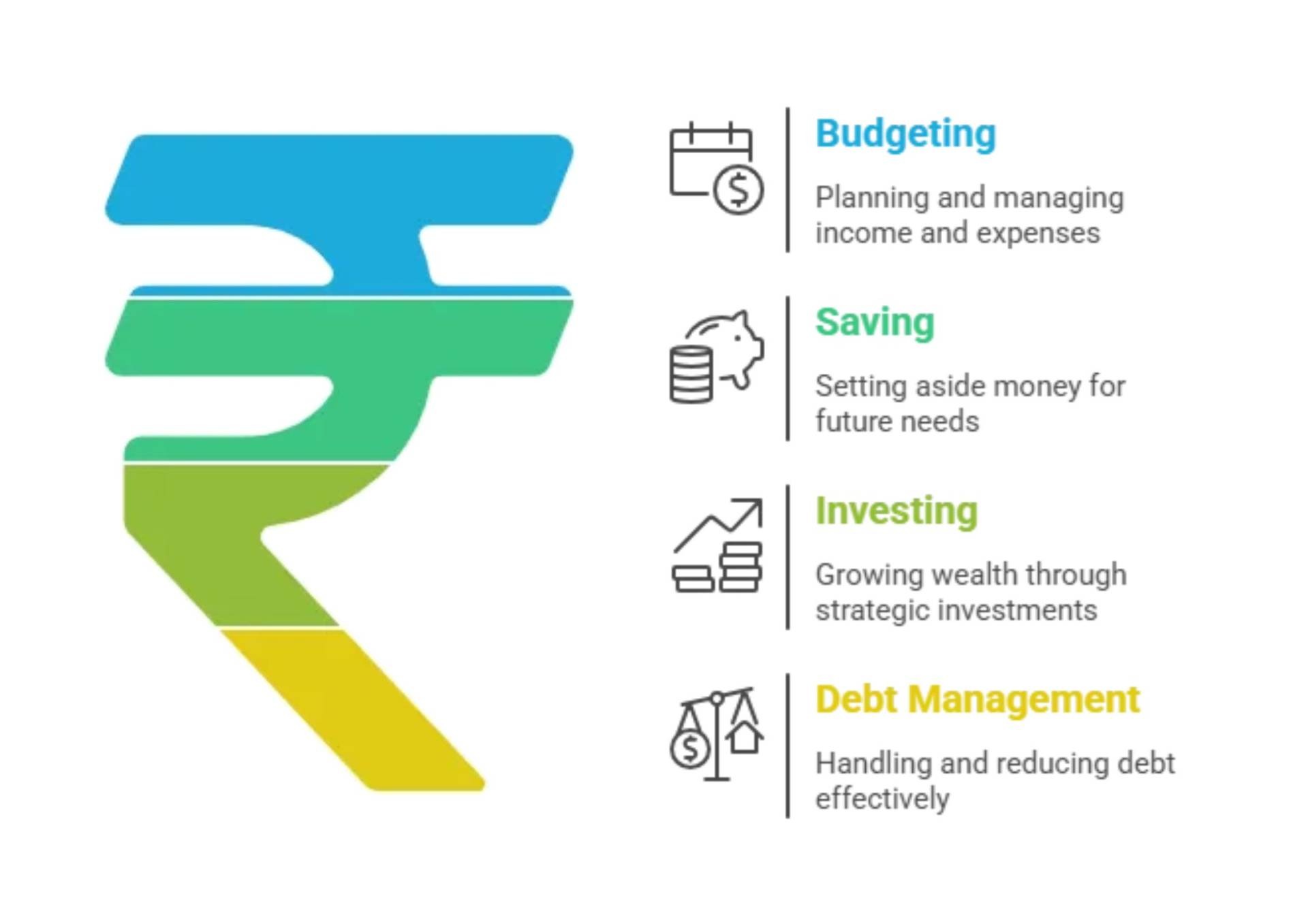
Financial literacy includes:
- The concept of budgeting and saving
- Understanding loans and interest
- Choosing good investments
- Credit and debt management
- Saving and retirement planning
- Emergency saving
To put it in simpler words, financial literacy will assist you to take control of your money so that money does not control you.
Also Read: The Growing Use Of Business Analytics In Financial Services Industry
What is the Importance of Financial Literacy?
You may earn a high salary, but without proper financial management, you can still struggle financially. Due to this, financial literacy cannot be overestimated. Let us explore why financial literacy is important:
Better Decision-Making
You can use financial literacy to decide which is going to be the better option: a credit card or taking a loan, or buying or renting a house, among other things. Through all this, you can balance the advantages and disadvantages of it and make a well-informed decision.
Debt Traps to Avoid
Not knowing how the interest and EMIs work is one of the most widespread causes of falling into debt. Financial literacy can help you escape such traps.
Creating Long-Term Wealth
You can grow your wealth by investing, saving, and planning for taxes.
Financial Independence
Once you learn how to control your money, you do not have to rely on other people to give you financial advice or money. Still, it is especially relevant among students and young professionals.
Stress Reduction
Financial anxiety is real. Being financially literate gives you the tools to manage your expenses, save for emergencies, and handle unexpected situations with confidence.
Improves Family and Social Well-Being
The concept of financial literacy not only affects you, but also your family and society. Use of intelligent money decisions would enable you to give better education to your children, support ageing parents and even donate to social causes. Having financially stable people means that things do not strain as much, so they require fewer handouts via government schemes.
Career Opportunities
In contemporary times, there are a lot of occupations that necessitate the basic knowledge of financial principles. Besides being knowledgeable about payroll deductions and negotiating on compensation packages, financial literacy helps you to become a competent and confident working individual.
The Pillars of Financial Literacy

Understanding Financial Literacy & its Role in Everyday Life
What are Financial Literacy Programmes?
Financial literacy programmes are educational initiatives or courses designed to help people understand the principles of money management. These programmes are essential for students, working professionals, and even homemakers.
Some key areas covered in these programmes include:
- Budgeting and financial planning
- Credit scores and credit card usage
- Banking services and digital payment
- Insurance and taxation basics
- Investment options: stocks, mutual funds, SIPs, etc.
These programmes are conducted by:
- Educational institutions (like universities and colleges)
- Government bodies (e.g., RBI’s financial awareness campaigns)
- Non-profits and NGOs
- Financial firms and banks
They’re often offered through workshops, seminars, webinars, mobile apps, or e-learning platforms so that they are accessible to everyone.
Examples of Financial Literacy Programmes in India and Overseas
In India, both the Reserve Bank of India (RBI) and Securities and the Exchange Board of India (SEBI) conduct awareness campaigns and online modules to educate on financial concepts and Universities like K.R. Mangalam University also offer programmes where they teach financial literacy.
At the international level, there are agencies such as the Financial Literacy and Education Commission (USA) and MoneySmart (Australia) with structured financial literacy education programmes at different levels.
Inclusion in School Curriculum
Countries that have incorporated financial literacy as a study requirement in schools include Canada, Singapore and the UK. Students are taught about savings, how to make income and how to spend their budgets at a very early age.
Best Financial Literacy Books to Read
If you prefer self-learning, books are a wonderful place to start. Some of the most popular financial literacy books include:
Rich Dad Poor Dad by Robert Kiyosaki
A classic that simplifies the difference between working for money and making money work for you.
The Psychology of Money by Morgan Housel
This book explores how emotions, biases, and behaviour impact financial decision-making.
Your Money or Your Life by Joseph R. Dominguez & Vicki Robin
Helps you rethink your relationship with money and how to align your spending with your values.
I Will Teach You to Be Rich by Ramit Sethi
A practical guide, especially for young professionals, on budgeting, saving, and investing.
The Millionaire Next Door by Thomas J. Stanley
Reveals surprising insights about how everyday people become wealthy through discipline and frugality.
These books are excellent for building a strong foundation and changing your money mindset.
Additional Recommendations:
- “Think and Grow Rich” by Napoleon Hill – A mindset-shaping classic on wealth creation.
- “The Barefoot Investor” by Scott Pape – An easy-to-understand financial guide for beginners.
- “Broke Millennial” by Erin Lowry – Tailored for millennials struggling with student loans and budgeting.
These books are excellent for building a strong foundation and changing your money mindset.
How K.R. Mangalam University Promotes Financial Literacy
At K.R. Mangalam University, we believe that financial education is not just a subject; it’s a life skill. We are committed to equipping our students with both academic knowledge and practical financial tools to succeed in real life.
Here’s how we integrate financial literacy into our education system:
Relevant Courses Across Disciplines
Students pursuing Commerce, Business Management, Economics, and even Law are introduced to core financial concepts like budgeting, investment planning, taxation, and risk management.
K.R. Mangalam University offers a wide range of specialised programmes that foster strong financial acumen, including:
- BBA Finance
- BBA (Hons. / Hons. with Research) Finance
- B.Com. (Hons.)
- B.Com. (Hons. / Hons. with Research)
- BBA (International Accounting and Finance) (ACCA – UK) with academic support of Grant Thornton
- BBA (Hons. / Hons. with Research) International Accounting and Finance (ACCA – UK) with academic support of Grant Thornton
- B.Com. (Hons.) International Accounting and Finance (ACCA – UK) with academic support of Grant Thornton
- B.Com. (Hons. / Hons. with Research) International Accounting and Finance (ACCA – UK) with the academic support of Grant Thornton
- BBA (Entrepreneurship) with academic support of GCEC Global Foundation
- BBA (Hons. / Hons. with Research) Entrepreneurship with academic support of GCEC Global Foundation
- Integrated BBA + MBA with the academic support of IBM
These programmes blend theoretical understanding with real-world financial practices to ensure students graduate with job-ready skills.
KRMU Highlights
Hands-on Projects and Simulations
Students work on real-world financial case studies, budgeting challenges, and mock trading simulations to understand how theoretical knowledge applies in real scenarios.
Industry-Expert Sessions
We invite financial experts, bankers, investment advisors, and entrepreneurs to interact with students through workshops, lectures, and Q&A sessions.
Financial Clubs and Activities
Our student-run clubs conduct regular activities like personal finance quizzes, budgeting games, and financial planning contests to keep learning fun and interactive.
Cooperation with Fintech Firms
We collaborate with fintech startups to introduce students to the applications and tools utilised in modern financial planning. This practical method creates a familiarity with online finance, whether it is UPI or budgeting applications or investment or trading platforms like Zerodha, Groww, or Coin.
By instilling financial awareness from the ground up, K.R. Mangalam University helps students become confident, informed, and financially empowered individuals.
Conclusion
In almost every profession today, having a good grip on finances gives you an edge. Whether you’re an entrepreneur, manager, artist, or lawyer, or any professional, financial knowledge helps you:
- Understand contracts and payments
- Make smart business decisions
- Avoid overspending and mismanagement
- Create multiple income streams
Moreover, financial literacy is the first step towards becoming an investor or entrepreneur and building passive income. Financial literacy will train you on major milestones like the purchase of the first home, wedding plans, education of the child, or retirement with confidence. When you have good financial knowledge, you will not be afraid to pursue these goals because you will know how to do it in a way that would not plunge you into debt or financial difficulties.
It also helps create financial resilience, as it will help you to deal with the unknown financial emergencies such as loss of livelihood, medical emergencies or economic collapse. Being financially literate will make you realise the need to have emergency funds, and you will have the ability to come back strongly after the setback, both of which will secure your future stability and inner peace.
Also Read: The Significance Of Critical Thinking In Financial Management
FAQs
Frequently Asked Questions
When should one start learning financial literacy?
The earlier the better! School-going children can also be exposed to simple things like budgeting, saving and even spending. College is the best place to develop a higher knowledge.
Is it possible that I can be financially literate without a commerce background?
Absolutely. People with any background can learn financial literacy.
Are there any online free financial literacy programmes?
Yes. There are a plethora of free courses and tools on many websites, YouTube channels, and mobile apps. Free resources can also be availed through RBI, SEBI and other agencies dealing within the government.
Can students from non-commerce backgrounds at K.R. Mangalam University learn financial literacy?
Absolutely! At K.R. Mangalam University, financial literacy is considered a life skill, not just an academic subject.
How long does it take to become financially literate?
It varies by individual. With consistent reading, practice, and small daily decisions, you can build strong financial literacy in 3 to 6 months. Lifelong learning, however, is key as financial markets and tools evolve.




 13 Schools700+ Faculty Members













 13+Years of Educational Experience