In India, the National Eligibility cum Entrance Test (NEET) is the national-level medical entrance examination to get admission to MBBS, BDS, AYUSH, BSc Nursing, and other undergraduate programmes in allied health sciences. The National Testing Agency (NTA) conducts this test offline, using pen and paper mode for the exam. A NEET UG score is necessary to study at the government, private, deemed, and central universities, including AIIMS and JIPMER. Read this article to learn more about the NEET UG exam.
NEET-UG has become the biggest Medical Entrance Test in India, and every year lakhs of students give this exam. The test score helps the candidates to secure an undergraduate programme seat in medicine, dentistry, nursing, veterinary science, and many other Allied Health Sciences Courses. A strong NEET Score will open doors for candidates to study at one of the top medical colleges of India.
NEET UG: A Quick Glance
Below is a concise, tabular overview that summarises the complete information on the NEET 2026 exam, including exam mode, duration, subjects, tentative NEET UG 2026 application form date & type of questions in a structured and easy-to-read format.
NEET UG Exam Overview
| Particular |
Detail |
| Exam Name |
National Eligibility cum Entrance Test (NEET) |
| Conducting Authority |
National Testing Agency (NTA) |
| Courses Offered |
MBBS, BDS, AYUSH, BSc Nursing, BVSc & AH, Allied Health Sciences |
| Exam Level |
National |
| Exam Mode |
Offline (OMR-based, Pen & Paper) |
| Question Type |
Multiple Choice Questions (MCQs) |
| Exam Duration |
3 hours (180 minutes) |
| Total Questions |
180 |
| Subjects |
Physics, Chemistry, Biology (Botany & Zoology) |
| Syllabus Basis |
NCERT Class 11th & 12th |
Why Do Students Prepare for NEET?
The primary purpose of taking the NEET exam is to join undergraduate medical (MBBS, BDS, etc.) and allied health (BAMS, BHMS, etc.) courses in India. This is due to the fact that NEET is an objective, compulsory entrance exam that can certainly guarantee an equitable, merit-based and uniform selection of students in government colleges and private colleges to fulfil their dreams and ambitions to become doctors or medical practitioners.
Mandatory for Medical Admissions
In India, it is the entryway to get into medical courses.
Career in Healthcare
To work as a physician, dentist, or in other allied health fields like Homoeopathy or Ayurveda.
Merit-Based Selection
It replaces donation-based admissions and guarantees transparency by ensuring that only worthy applicants are admitted.
Uniformity
One test for all universities streamlines the admissions process and lessens the anxiety associated with taking several exams.
Equal Opportunity
It allows students, regardless of background, to have a fair chance to achieve their medical dreams.
Also Read: Guide to Conquer the Challenge of CUET UG 2026 Exam!
NEET 2026 Eligibility Criteria
The table contains the NEET 2026 Eligibility Criteria. It contains the mention of age limits and educational requirements needed to take the test.
| Criteria |
Requirement |
| Minimum Age |
17 Years of Age |
| Maximum Age |
No upper age limit |
| Educational Qualification |
Passed 12th with Physics, Chemistry, Biology/Biotechnology & English |
NEET Exam UG 2026 Syllabus
There have been no changes made to the syllabus from the previous year, and it is completely in line with the NCERT Class 11 and 12 textbooks. To minimise unnecessary study resources, candidates should adhere precisely to this list. The curriculum is intended to assess students’ conceptual clarity, analytical skills, and application of physics, chemistry, and biology foundations. For a thorough topic-by-topic breakdown and weightage, download the official NEET UG 2026 syllabus PDF from the National Medical Commission (NMC) website.
While preparing for NEET, it is very much advised that students have a look at NCERT books for subjects like Physics, Chemistry, & Biology. But the best part of preparation is to have a good practice from previous years’ question papers & mock tests. Understanding conceptually is always better than mugging up.
NEET UG Exam Date 2026
The NEET Re-Exam 2026 was held on 21st June 2026. The entire exam schedule that was followed is mentioned below.
| Event |
Expected Date (Tentative) |
| Release of Official Notification |
February 8 2026 |
| Start of Application Process |
February 8 2026 |
| Last Date to Submit Application |
March 11 2026 |
| Availability of Admit Card |
Last Week of April 2026 |
| NEET 2026 Exam Date |
3 May 2026 |
| NEET Re-Exam Date 2026 |
21st June 2026 |
| Release of Final Answer Key & Result |
July 16 2026 |
| Beginning of Counselling Session |
July 2026 (tentative) |
NEET UG Registration Details
NEET 2026 applications must be submitted online via the official NTA website. Filling out the NEET 2026 application form requires multiple steps.
Registration
To obtain an Application Number, the candidate must first register using their contact information.
Form Filling
Fill out the detailed application by selecting exam cities and providing academic information.
Document Upload
Upload scanned copies of the signature, left-hand thumb impression, passport-size photo, postcard-size photo, ID proofs, etc., in the appropriate format and dimensions.
Fee Payment
Make the required online payment for the exam.
Confirmation
The final Confirmation Page should be saved and downloaded.
Admit Card
An essential document for the test is the NEET UG Admit Card. A few weeks prior to the exam date, it will be made available online on the official NTA website. Each applicant must download and print their admit card in order to bring it to the testing location with a legitimate form of identification (ID Proof).
Preparation Strategy for NEET
A well-planned study routine and consistent practice can significantly improve your NEET preparation. Follow these essential strategies to maximise your score.
- Solve previous year papers.
NEET Exam Pattern
The NTA will conduct the UG NEET 2026, a one-tiered scoring system exam, for admission to both public and private medical and dentistry schools. In order to properly prepare for graduate and post-graduate medical and dental programs, prospective students should familiarise themselves with the NEET UG exam pattern.
Three subjects make up the NEET exam paper pattern: biology, chemistry, and physics. The applicants must complete 180 mandatory questions in 180 minutes (3 hours), including 45 questions in each of the subjects of physics, chemistry, and biology.
NEET Exam 2026 Medium: Important Points to Remember
- There are certain key points related to the language medium that must be remembered by the prospective candidates appearing for the NEET exam:
- Once a language is selected for NEET 2026, it cannot be altered. In their application form, candidates can select the medium of the question paper.
- The question paper will be given in English only to candidates whose preferred language is English.
- A bilingual question paper in both their preferred language and English will be given to candidates who choose any other medium.
- The English version of the question paper will be deemed final and accurate if there is any uncertainty, inaccuracy, or ambiguity in any language.
- Staying updated with all the latest announcements on the NEET exam is recommended.
NEET UG Exam Result 2026 Announced!
On July 16, 2026, the National Testing Agency released the NEET results on neet.nta.nic.in. The Re-NEET test took place on June 21, 2026. On the official website, neet.nta.nic.in, candidates who took the test can access their scorecards. The final answer key was used to create the result, which includes information on the qualifying cutoff, All India Rank (AIR), toppers list, merit list, and other result statistics. Out of the approximately 20 lakh candidates who took the retest, 11.21 lakh passed and qualified for MBBS, BDS, AYUSH, and other related medical programmes.
What After NEET UG? Choose KRMU!
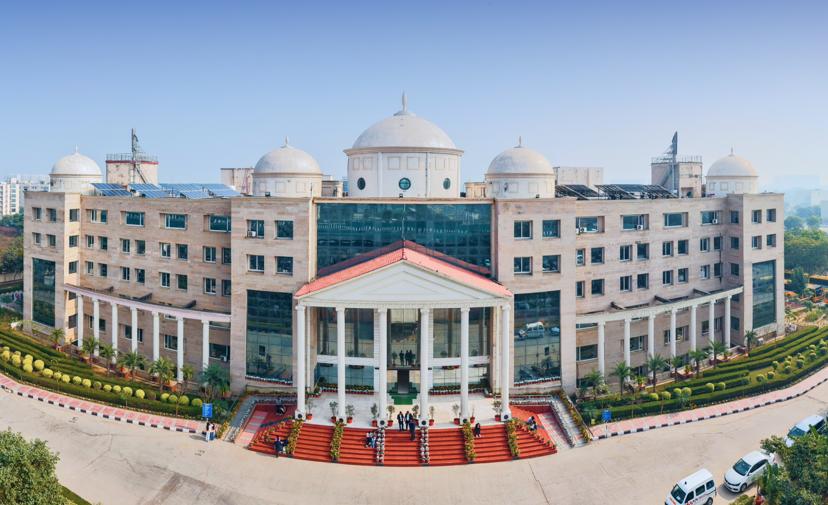
The K.R. Mangalam University (KRMU) attempts to set new standards of comprehensive, value-based education through its innovative interdisciplinary curriculum, good industry-academia connections, state-of-the-art infrastructure (smart classrooms, labs), competent faculty, and orientation towards holistic development of students.
The university aims to provide students with practical industry-needed skills, critical thinking and international exposure, to ensure their success in various fields.
KRMU Edge
- Curriculum that is industry-related and developed in consultation with the most successful professionals and experts.
- State-of-the-art infrastructure with smart and air-conditioned classes, program-specific laboratories, a digital library, and Wi-Fi connectivity all over the campus.
- 100% placement assistance to students with the highest package reaching 56.6 LPA.
- Over 800 top recruiters and more than 700 educators
- Skilled and committed faculty who strive to offer consistent mentoring and direction to the students.
Healthcare Programmes Offered at KRMU
K.R. Mangalam University provides numerous programs related to healthcare which are created to build professional careers in Pharmacy, Physiotherapy, Emergency Care, etc. These Programmes are designed according to industry requirements & have advanced laboratories, experienced faculty members and clinical exposure. Therefore, students who pursue their education through KRMU’s programs can gain both theoretical knowledge and Practical Skills needed to be successful in the Healthcare Sector.
| Programme |
Duration |
Annual Fee |
| B.Pharm |
4 Years |
₹2,14,000 |
| D.Pharm |
2 Years |
₹1,30,000 |
| Bachelor of Physiotherapy |
5 Years |
₹1,95,000 |
| Bachelor of Emergency Medical Technologist |
4 Years |
₹2,60,000 |
| Bachelor of Respiratory Technology |
4 Years |
₹2,60,000 |
| B.Sc. Cardiovascular Technology |
4 Years |
₹2,60,000 |
| M.Pharm |
2 Years |
₹1,70,000 |
Conclusion
In short, preparation for NEET UG 2026 requires a lot of effort and a well-thought-out plan. Students must start studying as early as they can, preferably 12 to 15 months before the test. Pay attention to the understanding of the basic concepts that are presented in the NCERT books. In order to manage time and speed better in the exam, one must practice with mock exams frequently. One needs self-confidence, determination, and training to prepare for and pass NEET UG 2026. Always keep in mind that everyday work is better than working under the pressure of the last minute, despite the fact that progress may seem slow.
FAQs
When is the NEET 2026 test scheduled to take place?
The NEET 2026 test is scheduled for May 2026. As this tentative date is based on past trends, candidates should check the official NTA notification for confirmation.
Will there be regional language versions of the question paper available?
Thirteen regional languages will be offered for the NEET test question paper.
What are the NEET UG passing marks?
NEET UG passing marks are based on NTA-established percentile cutoffs rather than fixed scores.
What is the subject-wise distribution of 720 marks for NEET?
In the NEET exam, the 720 points are split equally amongst Biology, Chemistry, and Physics. Chemistry and Physics each have 45 questions and 180 points. With 360 points and 90 questions from Botany and Zoology, Biology has the most weight. Four marks are given for each right answer, while one mark is subtracted for each wrong answer.
Who prescribes the NEET UG exam syllabus?
The syllabus is prescribed by the National Medical Commission (NMC).
























 13+Years of Educational Experience