Blog Categories

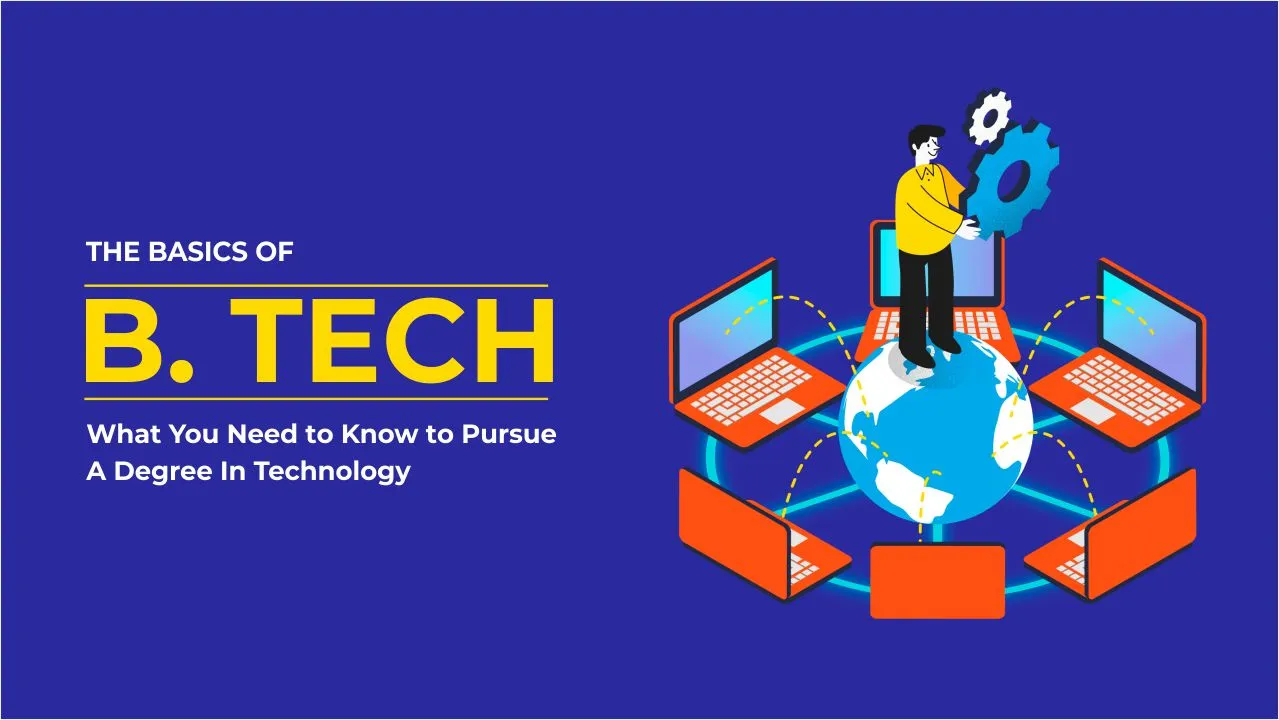
The Basics of B Tech: What You Need to Know to Pursue a Degree in Technology
B Tech, short for Bachelor of Technology, is an undergraduate degree program. The course focuses on technology and engineering disciplines. It is designed to provide students with a comprehensive education in various branches of engineering. The course equips them with the necessary technical skills and knowledge for a successful career in the field. In this blog post, we will explore what B Tech is and discuss how it can benefit you in your career.
Table of Contents
1. Understanding B Tech
i. What is B.Tech?
B Tech stands for Bachelor of Technology and it’s a 4 years program. It is an undergraduate academic degree awarded in the field of engineering and technology. Although the duration may vary depending on the country and educational institution.
B Tech programs are designed to provide students with a strong foundation in technical knowledge and skills related to a specific branch of engineering. Some of the common branches of engineering offered by K.R. Mangalam University are:
- B Tech CSE (AI & ML) with the academic support of Samatrix & IBM (4 Years)
- B Tech CSE (Cyber Security) with the academic support of EC-Council & IBM (4 Years)
- B Tech CSE (Data Science) with the academic support of IBM (4 Years)
- B Tech CSE (Full Stack Development) with the academic support of Xebia (4 Years)
- B Tech CSE (UX/UI) with the academic support of ImaginXP (4 Years)
- B Tech Mechanical Engineering (Automotive Designs & Electric Vehicle) with the academic support of Siemens (4 Years)
- B Tech. (Civil Engineering) with specialization in Sustainable Development & Smart Cities (4 Years)
- B Tech – Computer and Electronics Engineering (CEE) (4 Years)
During a btech program, students study a combination of core engineering subjects and specialized courses related to their chosen branch of engineering. University like K.R. Mangalam also provides practical projects and internships to gain hands-on experience. The curriculum typically includes a mix of theoretical lectures, laboratory work, workshops, and seminars.
Upon completion of a b tech degree, graduates are equipped with the necessary technical expertise to pursue careers in their respective engineering fields. They can work in various industries such as manufacturing, construction, information technology, telecommunications, automotive, energy, and many others.
Some BTech graduates also choose to pursue higher education. Some of them are postgraduate degrees (e.g., MTech, MS, or PhD) or management programs like an MBA, to further specialize or broaden their career opportunities.
ii. Eligibility
The eligibility criteria for B.Tech admissions in India can vary slightly among universities and colleges. However, there are some common requirements that most institutions follow. Here is a general outline of the btech eligibility in India:
- Educational Qualifications: Candidates must have completed their 10+2 or equivalent examination from a recognized board or institution. The qualifying examination should include subjects such as Physics, Chemistry, and Mathematics.
- Minimum Marks: Most institutions require candidates to secure a minimum percentage of marks in the qualifying examination. The minimum marks required can vary, but it is generally around 50% to 60% aggregate marks in PCM (Physics, Chemistry, and Mathematics).
- Entrance Exams: Many engineering institutions and universities in India conduct entrance exams for admission to b tech programs. The most common entrance exams are:
- Joint Entrance Examination (JEE) Main: This is a national-level entrance exam conducted by the National Testing Agency (NTA). It is the primary exam for admission to undergraduate engineering programs in India. It includes the prestigious Indian Institutes of Technology (IITs).
- State-Level Entrance Exams: Each state in India conducts its entrance exams for admission to engineering colleges within the state. Examples include the Karnataka Common Entrance Test (KCET), Maharashtra Common Entrance Test (MHT-CET), and Tamil Nadu Engineering Admission (TNEA), among others.
- Other Entrance Exams: Some institutions also conduct their entrance exams for B.Tech admissions. For example, the Birla Institute of Technology and Science Admission Test (BITSAT) is conducted by BITS Pilani for admission to its Tech programs.
- Counselling and Seat Allotment: After qualifying in the entrance exams, candidates are required to participate in the counselling and seat allotment process. The counselling process varies depending on the respective entrance exam and state or central counselling authorities.
Candidates have to fill in their preferences for colleges and courses. Based on their rank and availability of seats, they are allotted seats in various institutions.
iii. Specializations
B.Tech specializations refer to the specific engineering disciplines or branches that allow students to specialize during their undergraduate studies. The choice of specialization helps students to focus on a particular area of engineering. It gives students in-depth knowledge and skills related to that field. Here are some popular B.Tech specializations:
- Computer Science and Engineering (CSE): Btech in computer science focuses on computer systems, software development, algorithms, data structures, artificial intelligence, machine learning, and computer networks. BTech CSE prepares students for careers in software development, data analytics, cybersecurity, web development, and other related fields.
- Electrical Engineering: Electrical engineering deals with the study and application of electrical and electronic systems. It includes power generation and transmission, control systems, electrical circuits, and communication systems. Graduated students can work in various sectors such as power generation, electronics, telecommunications, robotics, and renewable energy.
- Mechanical Engineering: Mechanical engineering involves the design, analysis, and manufacturing of mechanical systems and devices. It covers areas such as thermodynamics, fluid mechanics, materials science, solid mechanics, and robotics. Mechanical engineers find opportunities in industries like automotive, aerospace, energy, manufacturing, and product design.
- Civil Engineering: Civil engineering focuses on the design, construction, and maintenance of infrastructure projects. Projects such as buildings, bridges, roads, dams, and water supply systems. The program specialization includes subjects like structural engineering, geotechnical engineering, transportation engineering, and environmental engineering. Civil engineers work in construction companies, consulting firms, government agencies, and urban planning organizations.
- Electronics and Communication Engineering (ECE): ECE deals with electronic devices, communication systems, signal processing, integrated circuits, and wireless technology. Graduates can work in areas such as telecommunications, electronics manufacturing, research and development, and satellite communication.
- Chemical Engineering: Chemical engineering involves the design and operation of chemical processes used in industries like pharmaceuticals, petrochemicals, energy production, and environmental engineering. Students learn about chemical reactions, process design, transport phenomena, and separation techniques.
- Aerospace Engineering: Aerospace engineering focuses on the design, development, and maintenance of aircraft and spacecraft. It includes subjects like aerodynamics, propulsion, flight mechanics, and aerospace materials. Graduates can work in the aerospace industry, defence organizations, research institutes, and space agencies.
- Biotechnology: Biotechnology combines biology, chemistry, and engineering principles to develop technologies. Also develop products in areas such as healthcare, agriculture, and environmental conservation. It includes subjects like genetic engineering, bioinformatics, bioprocessing, and molecular biology.
These are just a few examples of B.Tech specializations, and there are several other branches available, including petroleum engineering, biomedical engineering, environmental engineering, and more. The choice of specialization should align with your interests, career goals, and aptitude.
2. B.Tech Subjects
B Tech subjects can vary based on the chosen specialization or branch of engineering. Here are some common b tech subjects that are typically included in various specializations:
- Engineering Mechanics
- Structural Analysis and Design
- Construction Materials and Technology
- Geotechnical Engineering
- Transportation Engineering
- Environmental Engineering
- Fluid Mechanics
- Surveying
- Thermodynamics
- Fluid Mechanics
- Engineering Mechanics
- Manufacturing Processes
- Machine Design
- Heat and Mass Transfer
- Control Systems
- Automobile Engineering
- Electrical Engineering
- Circuit Theory
- Power Systems
- Electrical Machines
- Control Systems
- Power Electronics
- Digital Electronics
- Electromagnetic Theory
- Measurements and Instrumentation
- Programming Languages (C, C++, Java, Python)
- Data Structures and Algorithms
- Operating Systems
- Database Management Systems
- Computer Networks
- Software Engineering
- Artificial Intelligence
- Web Technologies
- Electronics and Communication Engineering
- Analog and Digital Electronics
- Communication Systems
- Signal Processing
- Microprocessors and Microcontrollers
- VLSI Design
- Electromagnetic Waves and Transmission Lines
- Wireless Communication
- Antenna Theory
These are some examples of common b tech subjects that are typically covered in these specializations. It’s important to note that the actual subjects can vary among universities. Additionally, B.Tech programs may also include general subjects. These subjects include Mathematics, Physics, Chemistry and Engineering Graphics., and Engineering Mathematics, which are common across all branches of engineering.
3. Career Options After BTech
B.Tech (Bachelor of Technology) is a popular undergraduate degree program that comes numerous benefits for your career. Here are some of the key career options after btech:
- Technical Expertise: B.Tech programs provide in-depth knowledge and practical skills in a specific engineering discipline. Computer science, electrical engineering, mechanical engineering, civil engineering, etc are some of the important disciplines of it. This technical expertise equips you with a solid foundation in your chosen field. As a result, it enables you to understand and tackle complex engineering problems effectively.
- Versatility and Flexibility: A B.Tech degree provides a versatile skill set that can be applied across various industries and sectors. The problem-solving and analytical skills acquired during the course make you adaptable to different roles and technologies. Thus, it allows you to explore a wide range of career options.
- High Demand and Job Prospects: Engineers are in high demand across industries, and the job prospects for B.Tech graduates are generally quite promising. The practical training and real-world projects undertaken during the program make you job-ready. Thus, it increases your chances of securing lucrative employment opportunities.
- Competitive Salary: B.Tech graduates often command competitive salaries due to their specialized skills and technical knowledge. The demand-supply gap for skilled engineers can contribute to higher remuneration and benefits.
- Career Advancement: A B.Tech degree serves as a strong foundation for career growth. With relevant work experience and continuous learning. One can progress into leadership and management roles, where one can oversee projects, and teams, and even start your venture.Additionally, a B.Tech degree may open doors for higher education opportunities, such as pursuing a master’s or doctoral degree.
- Industry Collaboration and Networking: The programs often foster collaborations with industries, offering internships, guest lectures, and industry-sponsored projects. This exposure enables you to network with professionals, gain practical insights, and potentially secure job offers or recommendations.
- Entrepreneurial Opportunities: The technical and problem-solving skills acquired during a B.Tech program can be instrumental if you aspire to become an entrepreneur. You can leverage your knowledge to identify innovative solutions, develop prototypes, and create technology-based startups.
- Continuous Learning and Innovation: Engineering is a field that constantly evolves and there are various career options after btech. The degree instils a mindset of continuous learning and innovation. This mindset enables you to stay updated with emerging technologies. Also, help you to understand the latest trends, and industry developments, ensuring long-term employability and career growth.
It’s important to note that b tech courses after 12th science can benefit you in different fields as per the specialization. The benefits of a B.Tech degree may vary depending on various factors. Factors such as the specialization chosen, individual capabilities, and market conditions.
Nevertheless, a B.Tech degree can provide a strong foundation for a successful and rewarding career in engineering and related fields.
4. Why Choose B.Tech?
There are several reasons why one might choose to pursue a B.Tech (Bachelor of Technology) degree. Here are some key factors that make BTech a popular choice among students:
- Specialized Knowledge and Skills:Tech programs provide in-depth knowledge and specialized skills in a specific engineering discipline. Whether it’s b tech computer science, electrical engineering, mechanical engineering, civil engineering, or any other field, it equips students with the technical expertise required to excel in their chosen area.
- Diverse Career Opportunities: The course opens up a wide range of career opportunities across various industries. Engineers are in high demand in sectors such as technology, manufacturing, infrastructure, automotive, aerospace, energy, healthcare, and many more.The versatile skills gained during the B.Tech program open doors to diverse career paths. Also, it provides flexibility in choosing one’s professional trajectory.
- Problem-Solving and Analytical Skills: The programs foster the development of problem-solving and analytical skills. These skills are crucial in engineering. Through coursework, projects, and practical training, students learn to approach complex problems, analyze data, think critically, and devise innovative solutions. These skills are highly valued in the professional world.
- Industry Relevance and Practical Experience:Tech programs often emphasize practical learning and real-world application of knowledge. Many universities and colleges collaborate with industries to provide internships, industrial training, and projects.It allows students to gain hands-on experience. The industry relevance enhances employability and prepares students for the challenges of the workplace.
- Technological Advancements and Innovation: The field of engineering is constantly evolving with advancements in technology and innovation. Pursuing a B.Tech degree enables students to stay updated with the latest developments in their chosen field.This exposure to emerging technologies prepares students for the future. Also, equips them to contribute to technological advancements.
- Networking and Collaborative Opportunities: B.Tech programs often provide opportunities to network and collaborate with professionals, experts, and peers. Through guest lectures, workshops, industry partnerships, and student organizations, students can build a strong professional network. It further establishes connections that can benefit their career advancement.
- Higher Education and Research Opportunities: The course acts as a stepping stone for students with higher education and research. After completing the undergraduate degree, students can pursue postgraduate programs like M.Tech or MS in their specialized field.Additionally, B.Tech graduates can opt for research and development careers in academia, research institutions, or industry.
- Prestige and Recognition: Having a B.Tech degree from the renowned institution K. R. Mangalam University holds prestige. They are widely recognized both nationally and internationally. Institutions such as the Indian Institutes of Technology (IITs) in India and other globally recognized universities are known for their rigorous B.Tech programs. Graduates from reputed universities are highly sought after by employers.
5. Top Universities for B.Tech in Gurgaon
- Indian Institutes of Technology (IITs): The IITs are prestigious institutions in India renowned for their engineering programs. Some of the well-known IITs include IIT Bombay, IIT Delhi, IIT Madras, IIT Kanpur, IIT Kharagpur, and IIT Roorkee.
- National Institutes of Technology (NITs): The NITs are another group of esteemed technical institutions in India. Some prominent NITs include NIT Trichy, NIT Warangal, NIT Surathkal, NIT Calicut, and NIT Rourkela.
- BITS Pilani: Birla Institute of Technology and Science (BITS) Pilani is a renowned private institution known for its strong emphasis on science, engineering, and technology education. It has campuses in Pilani, Goa, and Hyderabad.
- Delhi Technological University (DTU): Formerly known as Delhi College of Engineering, DTU is a well-regarded technical university located in New Delhi. It offers a range of engineering programs, including B.Tech.
- K.R. Mangalam University (KRMU): The university is widely regarded as one of the best universities due to its exceptional commitment to academic excellence, innovative teaching methodologies, and comprehensive range of programs across various disciplines.With a strong emphasis on practical learning, the university provides students with ample opportunities. Along with hands-on experience and industry exposure, preparing them to excel in their chosen fields.
- Vellore Institute of Technology (VIT): VIT is a private university located in Vellore, Tamil Nadu. It is known for its strong engineering programs and has gained recognition as one of the top private engineering institutions in India.
- Jadavpur University: Located in Kolkata, Jadavpur University is a renowned institution offering quality engineering programs. It has a strong reputation for its engineering and technology courses.
- Anna University: Based in Chennai, Anna University is well-known for its engineering and technology programs. It is one of the largest technical universities in India and offers a wide range of engineering disciplines.
- Indian School of Mines (ISM) Dhanbad: ISM Dhanbad is a prestigious institution known for its programs in mining and earth sciences. It offers various engineering programs, including B.Tech.
6. Salary Structure
The salary structure for B.Tech graduates in India can vary depending on several factors such as specialization, level of experience, industry, company, and location. Here is a general overview of the salary range for B.Tech graduates in different sectors:
- Information Technology (IT) and Software Development: B.Tech graduates in the IT and software development sectors are in high demand. Entry-level positions such as software engineer or systems analyst can have a salary range of approximately ₹3 lahks to ₹6 lahks per annum. With experience and expertise, professionals can earn significantly higher salaries ranging from ₹8 lacks to ₹20 lacks or more per annum.
- Core Engineering: Salaries in core engineering sectors can vary depending on the specialization. For example:
- Civil Engineering: Starting salaries for civil engineers can range from ₹3 lacks to ₹5 lacks per annum. Experienced professionals with expertise in specific areas can earn salaries upwards of ₹10 lacks per annum or more.
- Mechanical Engineering: Btech mechanical engineering graduates can expect salaries ranging from ₹3 lacks to ₹6 lacks per annum. With experience and specialization, salaries can increase from ₹8 lakh to ₹15 lakh or more per annum.
- Electrical and Electronics Engineering: Entry-level salaries for electrical and electronics engineers can range from ₹3 lahks to ₹6 lahks per annum. Experienced professionals can earn higher salaries of ₹8 lacks to ₹15 lacks or more per annum.
- Consulting and Analytics: B.Tech graduates working in consulting firms or analytics roles can earn competitive salaries. Entry-level positions in consulting may offer salaries ranging from ₹5 lacks to ₹10 lacks per annum. In the analytics field, salaries can start around ₹4 lahks to ₹8 lahks per annum, and with experience, professionals can earn higher salaries of ₹10 lakh to ₹20 lakh or more per annum.
- Government Sector: After graduation, students can join government organizations through competitive exams like Indian Engineering Services (IES) or Public Sector Undertakings (PSUs) can have a structured salary scale. Starting salaries can range from ₹7 lacks to ₹10 lacks per annum, and over time, with promotions, salaries can increase significantly.
These salary ranges are approximate and can vary according to the specialization. Additionally, salaries may differ in different cities and regions of India due to the cost of living variations.
7. Top Recruiters
B.Tech graduates in India have diverse career opportunities and can be recruited by various companies across different sectors. Here are some top recruiters that actively hire B.Tech graduates in India:
1. Information Technology (IT) and Software Development
- Tata Consultancy Services (TCS)
- Infosys
- Wipro
- Accenture
- Cognizant
- HCL Technologies
- IBM
- Tech Mahindra
- Capgemini
- Microsoft
2. Core Engineering
- Larsen & Toubro (L&T)
- Tata Motors
- Mahindra & Mahindra
- BHEL (Bharat Heavy Electricals Limited)
- DRDO (Defense Research and Development Organization)
- ONGC (Oil and Natural Gas Corporation)
- NTPC (National Thermal Power Corporation)
- Hindustan Unilever Limited
- Hindustan Aeronautics Limited (HAL)
- Bajaj Auto
1. Government Sector
- Indian Engineering Services (IES)
- Public Sector Undertakings (PSUs) such as:
- Bharat Electronics Limited (BEL)
- Indian Oil Corporation Limited (IOCL)
- Power Grid Corporation of India Limited (PGCIL)
- National Thermal Power Corporation (NTPC)
- Oil and Natural Gas Corporation (ONGC)
- Steel Authority of India Limited (SAIL)
2. Consulting and Analytics
- McKinsey & Company
- Boston Consulting Group (BCG)
- Bain & Company
- Accenture Strategy
- Deloitte
- KPMG
- PricewaterhouseCoopers (PwC)
- Mu Sigma
- Fractal Analytics
4. Automotive and Manufacturing
- Tata Motors
- Maruti Suzuki
- Hero MotoCorp
- Ashok Leyland
- TVS Motor Company
- Hyundai Motors
- Ford India
- Mahindra & Mahindra
- Bosch India
- Siemens India
5. E-commerce and Technology Startups
- Amazon India
- Flipkart
- Paytm
- Swiggy
- Zomato
- Ola Cabs
- Byju’s
- OYO Rooms
- MakeMyTrip
- Practo
These are just a few examples of top recruiters across different sectors. It’s important to note that the list is not exhaustive, and many other companies and organizations actively hire B.Tech graduates in India.
Besides, the recruitment landscape can change over time, so it’s advisable to research and stay updated on the latest trends and opportunities in your field of interest.
8. Is MBA a good option after BTech?
Deciding whether pursuing an MBA (Master of Business Administration) after completing a BTech (Bachelor of Technology) is a good option depends on various factors. It all depends on one personal career goals. Here are some points to consider:
- Career Goals: If your career aspirations involve positions in management, leadership, or entrepreneurship, an MBA can be a valuable degree. It provides you with a broad set of business skills. It develops knowledge that can complement your technical background and open up opportunities in various industries.
- Skill Diversification: Combining technical expertise from your BTech with business acumen gained through an MBA can make you a well-rounded professional. This combination of technical and business skills could be highly sought after by employers, especially in roles that require a blend of technical knowledge and managerial abilities.
- Networking Opportunities: One of the significant advantages of pursuing an MBA is the opportunity to build a strong professional network. Business schools often have a diverse student body with individuals from different backgrounds and industries. This network can prove beneficial for future collaborations, job opportunities, and entrepreneurship endeavours.
- Career Progression: An MBA can accelerate your career progression, particularly in fields such as consulting, finance, marketing, or general management. Many organizations value the skills and knowledge acquired during an MBA. It may offer higher-level positions or faster promotions to MBA graduates.
- Entrepreneurship: If you’ve aspirations to start your business or work in a startup environment, an MBA can provide you with valuable insights into areas like business strategy, finance, marketing, and leadership. The entrepreneurial-focused courses and resources available in many MBA programs can help you develop the necessary skills and knowledge to navigate the challenges of running a business.
- Consider Cost and Time: Pursuing an MBA is a significant investment in terms of time and money. It’s essential to carefully evaluate the financial implications, including tuition fees and potential loss of income during the study period, and assess whether the long-term benefits align with your career goals.
Ultimately, the decision to pursue an MBA after BTech depends on your specific circumstances, career aspirations, and personal preferences. It may be helpful to research and speak with professionals who have followed a similar path.
9. FAQs?
Q: What is the duration of a B.Tech program in India?
A: The B.Tech program typically has a duration of four years, consisting of eight semesters. However, some universities may have a slightly different duration or offer integrated programs that combine B.Tech with a master’s degree.
Q: Can I pursue B.Tech after completing my 12th grade (high school)?
A: Yes, B.Tech is an undergraduate program. The program can be pursued after completing 12th grade (or equivalent) with a science stream, typically with Physics, Chemistry, and Mathematics as core subjects.
Q: What are the popular specializations available in B.Tech?
A: Some popular specializations in B.Tech include Computer Science Engineering, Mechanical Engineering, Civil Engineering, Electrical Engineering, Electronics and Communication Engineering, Chemical Engineering, and Information Technology.
Q: How can I get admission to a B.Tech program in India?
A: Admissions to B.Tech programs in India are generally based on entrance exams. The most common national-level entrance exams are the Joint Entrance Examination (JEE Main and JEE Advanced) and state-level entrance exams. Some universities and private institutions also conduct their entrance exams for admission.
Q: What is the difference between the IITs and NITs?
A: The Indian Institutes of Technology (IITs) and National Institutes of Technology (NITs) are both esteemed institutions in India. IITs are autonomous public technical universities known for their rigorous academic standards and research focus. NITs are also top engineering institutions, but they are centrally funded and have a strong focus on undergraduate engineering education.
Q: Are scholarships available for B.Tech students in India?
A: Yes, several scholarships and financial aid options are available for B.Tech students in India. These scholarships can be merit-based, need-based, or offered by specific institutions or government schemes. Students can explore various scholarship programs and eligibility criteria offered by universities and external organizations.
Q: What are the career prospects after completing B.Tech?
A: B.Tech graduates have diverse career opportunities in sectors such as IT and software development, core engineering industries, research and development, consulting, analytics, government organizations, and entrepreneurship. Many students also pursue higher education or specialize further through postgraduate programs like M.Tech or MBA.
Why choose B.Tech from K.R. Mangalam University?
Choosing to pursue a B.Tech program from K.R. Mangalam University can offer several benefits and reasons to consider. Here are some potential reasons to choose B.Tech from K.R. Mangalam University:
- Academic Excellence:R. Mangalam University is known for its emphasis on academic excellence and quality education. The university strives to provide a rigorous and industry-relevant curriculum that focuses on practical learning and skill development.
- Experienced Faculty: The university boasts a team of experienced and qualified faculty members who have expertise in their respective fields. They bring practical knowledge and industry experience to the classroom, ensuring a well-rounded learning experience for students.
- Industry Collaboration: K.R. Mangalam University often collaborates with industry partners to provide students with exposure to real-world scenarios and industry practices.This collaboration can include guest lectures, workshops, internships, and industry visits, helping students bridge the gap between theoretical knowledge and practical application.
- State-of-the-Art Infrastructure: The university is equipped with modern infrastructure and facilities. They offer well-equipped laboratories, libraries, research centres, and computer facilities. It enables students to gain hands-on experience and access the resources necessary for their studies.
- Entrepreneurship and Innovation: K.R. Mangalam University promotes an entrepreneurial mindset and encourages innovation among its students. The university may provide platforms, incubation centres, and mentorship programs to support students’ entrepreneurial ventures and innovative ideas.
- Placement Support: The university typically has a dedicated placement cell that assists students in securing internships and job placements. They may organize placement drives, invite industry recruiters, and provide career guidance and counselling to enhance students’ employability.
- Holistic Development: Alongside technical skills, K.R. Mangalam University may also focus on the overall personality development of students. They may offer opportunities for extracurricular activities, cultural events, sports, and leadership development programs, fostering a well-rounded growth experience.
Recent Post
All India Forensic Science Entrance Test (AIFSET-2026) Details and Eligibility
Explore the Top Artificial Intelligence University in India
BBA HR Management Syllabus: Semester-Wise Detailed Curriculum
Best AI Colleges in India 2025: Rankings, Fees, Admissions & Placement Insights
Best Universities in Delhi NCR 2025: Rankings, Admissions & Fees Guide
Top Engineering Colleges in Gurgaon 2025-26: Admission, Fees & Placement Guide
Explore the Best Courses After Graduation for High Salary
BSc Data Science: Syllabus, Careers, and Data Science Course
Understanding the Difference Between Logistics and Supply Chain Management
Is Data Science a Good Career Choice? Salary, Scope & Future Growth Explained
Integrated Course After 12th: Complete Guide, List and Benefits
Moot Court for Law Students: Its Importance and Objectives
CAT 2025: Exam Date, Eligibility, Syllabus, Registration & Preparation Tips
Explore the Best College for MBA in Marketing in Delhi NCR
Career Guidance and Counselling: Expert Support for a Successful Future
Importance of Internships: Boost Your Career with Real-World Experience
CUET Result 2025 Out: Check Scores, Cut-Offs & What to Do Next
Pursue Bachelor’s Degree in Journalism & Mass Communication at KRMU
BCA Course After 12th: Best College, Fees, Curriculum and More
BBA in Digital Marketing: Eligibility, Subjects, Fee and Scope
Ph.D. in Mechanical Engineering: Eligibility, Admission and Fee Details
B Pharmacy Admission 2025: Course Details | Eligibility | Career
Is B.Sc. Computer Science Worth It? Salary, Scope & Future Prospects
KRMU: The Destination to Become a Future-Ready Software Engineer
Ph.D. Pharmaceutical Sciences: Course Details and Admission Process
Why KRMU is the Best College for BCom Hons. in Gurugram, Delhi NCR
JEE Mains 2025 Exam Date: Syllabus, Last date, Registration Date
Career After MA English: High Paying Jobs and Government Roles
B.Sc. Full Form Explained: Courses, Eligibility, Jobs & Admission
Why K.R. Mangalam University Is The Best Fine Arts University in India
Benefits of a Culinary Arts Bachelor Degree for Aspiring Chefs
Architecture Careers In India: Your Path To A Successful Future
Is NTA CUET UG Score Mandatory For Admission In All Universities
Choosing The Best B Sc Courses After 12th: A Detailed Guide To Your Future
Data Science and Artificial Intelligence: Revolutionising the Digital Age
Exploring Top Career Options For Commerce Students After The 12th
Exploring The Best Course After B Com To Elevate Future Prospects
The Difference between BE and BTech: Everything you need to know
Exploring Jobs After BSc Chemistry: Private And Government Jobs
What Are Some of The Best Professional Courses After 12th Class
Architecture Courses after 12th: Duration, Eligibility, Career Options
Why KRMU Is Considered One Of The Best BSc Agriculture Colleges In India?
A Complete Guide On Full Stack Development: Career Paths/Eligibility/Duration
Why KRMU Is Considered One Of The Best Hotel Management Colleges In India
Hotel Management Course Fees in Private College: What You Need to Know
Everything You Need to Know About Integrating Dual Degree Programs
Textile Design Course, Eligibility and Career Opportunities
Physiotherapy Course Fees: Career Paths/Eligibility Criteria/Top Colleges
Exploring BJMC Colleges in Delhi: Your Comprehensive Guide
A Comprehensive Guide B Pharm Duration, Syllabus, Job Opportunities
BCA Full Form And Subjects- Comprehensive Understanding Of BCA
Complete Guide of B Sc Agriculture Course Duration, Admission Process, Fees
A Detailed Guide On How To Become A Fashion Designer After 12th
Navigating Sustainability Trends: Preparing Students for Corporate Priorities in 2024
What Can I Do After a BA? Exploring Career Options for Bachelor of Arts Graduates
List Of Top Career Options After B.Tech Computer Science & Engineering
How to Choose the Right 12th Commerce Courses for Your Salary?
K.R. Mangalam University: A Leading University For Comprehensive Excellence
Understanding BBA Travel & Tourism: A Gateway To A Thriving Future
A Journey through K.R. Mangalam University’s as a Student of B.A. Honours Psychology
Why Choose B Tech Cyber Security: Learn Eligibility/Benefits/Career/College
List of B.Tech Courses: Various Specialisations/Eligibility Criteria/Careers
Benefits of Pursuing An MBA After BA: Career/Specialisations/Entrance Exam
Essential Guide On KR Mangalam University Scholarship For 2024-25
Everything You Need To Know About Architecture And Design in 2024
Exploring the UX/UI Race in B.Tech. Computer Science & Engineering
The Rising Demand For Management Professionals In The Country
B.Tech Computer Science Course: Eligibility, Syllabus, Exams, Fees, Scope
Exploring a BBA in Finance: Your Comprehensive Guide to a Promising Career Path
Compelling Reasons to Choose a BBA Program in Travel and Tourism
BA Political Science Honours: Your Path to Political Insight
Beyond Fashion Designing: Exploring the Creative World of B.A. Arts
Unlocking the Path to Success: Your Thriving Career in Cyber Security
Soaring to New Heights: Apeejay Professor Takes Flight as Certified Drone Flyer
D Pharmacy Course Details: Eligibility, Admissions & Subjects
The Art of Public Speaking: Tips for Confident Presentations
Advancing Your Career: Pursuing Diploma Courses After 10th Grade
Computer Science Engineering: Unraveling the Realm of Technology and Innovation
The Ultimate Guide to Choosing the Right Data Science Course for Your Career
Internship and Practical Training Opportunities for B.Com (Honours) Students
Exploring Career Scope of Pharmacology: A Promising Pathway
The Rise of Fintech: Revolutionizing India’s Financial Landscape
The Advancement Postgraduate Courses in India Career Development
Mastering Time Management: A Key to Success in Work and Life
Understanding the Difference Between Psychologist and Psychiatrist
Career in Fashion Designing: Full Guide from Start to Destination
Diploma Course vs Degree Course: Exploring the Pros and Cons
Must Watch Movies and Web series For Forensic Science Student
Exploring a Career in Criminal Law: An In-Depth Guide to LLB Criminal Law
Unveiling the Role of a Supply Chain Analyst: A Path to Success
Comparing CSE and IT: Unveiling Distinctions and Career Opportunities
Exploring the Educational Landscape: Top Universities in Gurgaon
Architecture Course: Guide to Becoming an Architect in India
Traditional Marketing vs Digital Marketing: Exploring their Pros and Cons
The Basics of B Tech: What You Need to Know to Pursue a Degree in Technology
Is Pursuing MBA After Engineering an Excellent Career Choice
How To Become An Interior Designer in India: Qualification & Career Scopes
Exploring the Benefits of an International Accounting and Finance Course
BA LLB (Hons): A Comprehensive Guide to Understanding the Program
5 Full Stack Web Development Course Lessons from the Professionals
Training the future educators at the Best B.Ed College in Gurgaon
Gain Exceptional Business Expertise with Best B-School in Gurgaon
Best Undergraduate Courses to Study in India for a Promising Career
K.R. Mangalam University Admission Process 2023-24 Through KREE
Accelerate Your Career with Best University in Gurgaon for MBA
CTET 2023: Registration details for Central Teacher Eligibility Test
Develop Forensics Expertise with Best BSc Forensic Science Course in Delhi
Best Private Engineering College/University in Delhi NCR 2023
How to Choose a College or University: Key Factors to Count
Best BSc Hons Mathematics Scope: Career Options and Responsibilities
Best Courses After 12th Commerce – Professional Programmes & More
BBA in International Business 2023: Eligibility, Jobs and Salary
Integrated BBA MBA Course Details, Eligibility and Career options
BBA LLB Hons: Admission, Eligibility, Subjects, Scope and Jobs
What should You Do after completing BA in Political Science (honors)
How to Build a Career as an Automotive Designer/Car Designer?
Why studying Machine learning is a good career option after 12th
Ultimate Guide to CAT Exam: Admit card, Exam Date, Syllabus and Preparations
BA Honours in English: Course Details, Syllabus, Eligibility and Career Options
Career and Scopes after BCA with Artificial Intelligence and Data Science
Which Course Should I Choose After Completing 12th from Arts Stream
Why choose MCA: Course details, Eligibility, Benefits, Career Options and Salary
How to prepare for the CUET UG exam? Benefits, Syllabus and Study Material
Career, Scopes and Salary after B.Tech CSE with Specialisation in Cloud Computing
Career and Opportunities after completing your B.Tech Civil Engineering
What are the advantages of pursuing a B.Tech. in (CSE) with specialization in UX/UI
Planning to Pursue Integrated Course in B.Tech CSE with MBA?
Can a PCB Student do B.Tech in Computer Science Engineering in 2022
Why pursuing a BA (Hons.) – Chinese Degree can be a good choice for you?
Top Soft Skills That You Need to Develop for a Successful Career in 2022
Top Business Trends to Follow For a Successful Career In 2022
How to Build a Career in Stock Market in 2022 with Highest Paying Salary
B.Arch vs B.Des: Which Course to Choose for a Better Career?
How to Choose the Best Career Path: Machine Learning Engineer or Data Scientist
Top 20 Things Architects Can Do After B.Arch in India: A Must Read!
Get Better Job Opportunities with the Help of Top Colleges for MCA in Delhi NCR
K.R. Mangalam University Gears up to Sign MoU with Sputnik News Agency, Moscow
How Is Artificial Intelligence Shaping The Pharmacy Industry Of Today
The Emergence Of E-Commerce And E-Business In The Post-Pandemic World
The Role And Contribution Of Chemists In Improving The Overall Healthcare Scenario
5 Best Paying Jobs For Journalism & Mass Communicationgraduates
Clinical Psychology – Career Scope & Earning Potential In India
Challenges & Opportunities For Fashion Designers In The Post Covid World
The Invincible Role Of Medical & Allied Sciences Professionals Amid The Covid Crisis
The Emerging Role Of Information Technology In The Field Of Journalism
Indian Pharma Growing As The Largest Sector In Terms Of Employment & Revenue
The Importance Of Team Bonding For Management Professionals
Covid-19 Projects At KRMU: An Effort To Raise Awareness Among The Young Gen
Cybersecurity: A Much Sought-After Profession In Today’s Technology Oriented World
The Worth Of Industry-Vetted Management Training In 21st-Century Corporate World
Understanding The Twenty-First-Century Entrepreneurial Challenges
Why The World Of Fashion Needs Trendsetters Rather Than Followers?
Technological Trends Changing The Face Of Architecture Today
5 Significant Ways In Which The Industry Of Journalism Has Evolved Over The Years
Acquiring The Right Workforce Is The Key Requirement For Meeting Business Goals
The Vitality Of Application & Research-Based Learning For The 21st-Century Youth
How Will The Current Pandemic Change The Fashion Industry Worldwide?
Business Journalism – An Emerging Career Path For The 21st Century Youth
The Growing Use Of Business Analytics In Financial Services Industry
5 Reasons Why Studying Hotel Management Is A Great Choice In The Modern World
5 Tips For Beginners To Survive & Thrive In The Fashion Industry
Five Skills You Inevitably Need To Succeed As An Interior Designer
How Is The Advancing Technology Redesigning The Fashion Design Industry?
5 Myths About Human Resource Management That Need To Be Busted
Krmu’s Soa – Enabling The 21st Century Youth To Turn Into Agricultural Entrepreneurs
Krmu – Preparing Future Architects With A Global Perspective
Top Technical Skills That Are Highly Demanded in The Modern Job Market
Soil Science – Career Potential & Opportunities In India And Abroad
Key Skills You Need To Thrive In The Domain Of Hotel Management
The Significance Of Critical Thinking In Financial Management
The Role Of KRMU ICC In Establishing A Safe & Secure Environment In The Campus
What It Takes To Grab The Best Jobs In The Fashion Design World?
K.R. Mangalam – Building A Generation Of Creative Fashion Designers
What Makes Project-Based Learning Imperative For The Youth Of Today
KRMU’s Engineering Kitchen Inspiring The Youth To Shape A New World Of Innovation
The Impact Of Technological Advancements On The Efficiency Of Business Professionals
Experiential Projects – An Effective Way To Deep Rooted Management Education
KRMU’s Corporate Connect Aiding Students To Prove Their Mettle
Learn The True Art Of Innovation & Entrepreneurship At KRMU’s TIIE
KRMU To Establish A fully Functional Robotics Lab In Collaboration With IITBombay
Explore Engineering Kitchen – An Excellent Initiative Taken By KRMU
5 Reasons Why You Should Pursue A Degree In Journalism And Mass Communication
Five Reasons That Make Business Management One Among The Top Professions For Future
The Impact Of Artificial Intelligence And Iot On The Management Industry
Diverse Engineering Branches That Have Always Maintained Their Worth
Career Options That Will Be High In Demand In The Next Decade
KRMU – Creating A Culture Of Knowledge, Entrepreneurship, And Management Skills
Effective Marketing Management Can Help To Raise The Overall Value Of A Business
5 Invaluable Steps For Building An Excellent Professional Network
Priceless Qualities A Successful Legal Practitioner Needs To Treasure
Better Grades, Less Stress At School Of Law, K.R Mangalam University,Gurugram
Aesthetic And Logic, The Conflict Between Religion And Humanism In 21st Century
Best Ways For MBA Aspirants To Upgrade Their Communication Skills
How To Know If Journalism Is The Right Career Option For You
Tradition And Modernity Living Historical Quarters: Change And Continuity
Legal Profession One Of The Most Sought After Career Choices For Women Today
Dynamic Career Opportunities In Journalism Cultivated By Modern India
How Can Virtual Reality Help Pave Way For Transforming Architecture Education?
Top Questions Asked To Management Graduates In Placement Interviews
Wish To Make A Career In Ethical Hacking? Here’s All You Need To Know!
Future Career Perspectives Of Technical Education In India And Abroad
Why Is Personality Development An Utmost Need For Professional Success?
KRMU’S School Of Law – Strengthening The Legal Framework Of The Nation
The Importance Of Technology As A Teaching Aid In Higher Education
Top Business Lessons To Learn From Successful Businessmen From Across The World
Grooming The Students For The Current Trends In Medical And Allied Sciences
The Need For Skills Enhancement For The Competitive Corporate World
Tapping The Career Growth And Overseas Opportunities For Management Graduates
Significance Of Mentoring Programs Towards Holistic Development Of Students
KRMU – Delivering Education That Enables You To Lead The Competition

The Basics of B Tech: What You Need to Know to Pursue a Degree in Technology
B Tech, short for Bachelor of Technology, is an undergraduate degree program. The course focuses on technology and engineering disciplines. It is designed to provide students with a comprehensive education in various branches of engineering. The course equips them with the necessary technical skills and knowledge for a successful career in the field. In this blog post, we will explore what B Tech is and discuss how it can benefit you in your career.
Table of Contents
1. Understanding B Tech
i. What is B.Tech?
B Tech stands for Bachelor of Technology and it’s a 4 years program. It is an undergraduate academic degree awarded in the field of engineering and technology. Although the duration may vary depending on the country and educational institution.
B Tech programs are designed to provide students with a strong foundation in technical knowledge and skills related to a specific branch of engineering. Some of the common branches of engineering offered by K.R. Mangalam University are:
- B Tech CSE (AI & ML) with the academic support of Samatrix & IBM (4 Years)
- B Tech CSE (Cyber Security) with the academic support of EC-Council & IBM (4 Years)
- B Tech CSE (Data Science) with the academic support of IBM (4 Years)
- B Tech CSE (Full Stack Development) with the academic support of Xebia (4 Years)
- B Tech CSE (UX/UI) with the academic support of ImaginXP (4 Years)
- B Tech Mechanical Engineering (Automotive Designs & Electric Vehicle) with the academic support of Siemens (4 Years)
- B Tech. (Civil Engineering) with specialization in Sustainable Development & Smart Cities (4 Years)
- B Tech – Computer and Electronics Engineering (CEE) (4 Years)
During a btech program, students study a combination of core engineering subjects and specialized courses related to their chosen branch of engineering. University like K.R. Mangalam also provides practical projects and internships to gain hands-on experience. The curriculum typically includes a mix of theoretical lectures, laboratory work, workshops, and seminars.
Upon completion of a b tech degree, graduates are equipped with the necessary technical expertise to pursue careers in their respective engineering fields. They can work in various industries such as manufacturing, construction, information technology, telecommunications, automotive, energy, and many others.
Some BTech graduates also choose to pursue higher education. Some of them are postgraduate degrees (e.g., MTech, MS, or PhD) or management programs like an MBA, to further specialize or broaden their career opportunities.
ii. Eligibility
The eligibility criteria for B.Tech admissions in India can vary slightly among universities and colleges. However, there are some common requirements that most institutions follow. Here is a general outline of the btech eligibility in India:
- Educational Qualifications: Candidates must have completed their 10+2 or equivalent examination from a recognized board or institution. The qualifying examination should include subjects such as Physics, Chemistry, and Mathematics.
- Minimum Marks: Most institutions require candidates to secure a minimum percentage of marks in the qualifying examination. The minimum marks required can vary, but it is generally around 50% to 60% aggregate marks in PCM (Physics, Chemistry, and Mathematics).
- Entrance Exams: Many engineering institutions and universities in India conduct entrance exams for admission to b tech programs. The most common entrance exams are:
- Joint Entrance Examination (JEE) Main: This is a national-level entrance exam conducted by the National Testing Agency (NTA). It is the primary exam for admission to undergraduate engineering programs in India. It includes the prestigious Indian Institutes of Technology (IITs).
- State-Level Entrance Exams: Each state in India conducts its entrance exams for admission to engineering colleges within the state. Examples include the Karnataka Common Entrance Test (KCET), Maharashtra Common Entrance Test (MHT-CET), and Tamil Nadu Engineering Admission (TNEA), among others.
- Other Entrance Exams: Some institutions also conduct their entrance exams for B.Tech admissions. For example, the Birla Institute of Technology and Science Admission Test (BITSAT) is conducted by BITS Pilani for admission to its Tech programs.
- Counselling and Seat Allotment: After qualifying in the entrance exams, candidates are required to participate in the counselling and seat allotment process. The counselling process varies depending on the respective entrance exam and state or central counselling authorities.
Candidates have to fill in their preferences for colleges and courses. Based on their rank and availability of seats, they are allotted seats in various institutions.
iii. Specializations
B.Tech specializations refer to the specific engineering disciplines or branches that allow students to specialize during their undergraduate studies. The choice of specialization helps students to focus on a particular area of engineering. It gives students in-depth knowledge and skills related to that field. Here are some popular B.Tech specializations:
- Computer Science and Engineering (CSE): Btech in computer science focuses on computer systems, software development, algorithms, data structures, artificial intelligence, machine learning, and computer networks. BTech CSE prepares students for careers in software development, data analytics, cybersecurity, web development, and other related fields.
- Electrical Engineering: Electrical engineering deals with the study and application of electrical and electronic systems. It includes power generation and transmission, control systems, electrical circuits, and communication systems. Graduated students can work in various sectors such as power generation, electronics, telecommunications, robotics, and renewable energy.
- Mechanical Engineering: Mechanical engineering involves the design, analysis, and manufacturing of mechanical systems and devices. It covers areas such as thermodynamics, fluid mechanics, materials science, solid mechanics, and robotics. Mechanical engineers find opportunities in industries like automotive, aerospace, energy, manufacturing, and product design.
- Civil Engineering: Civil engineering focuses on the design, construction, and maintenance of infrastructure projects. Projects such as buildings, bridges, roads, dams, and water supply systems. The program specialization includes subjects like structural engineering, geotechnical engineering, transportation engineering, and environmental engineering. Civil engineers work in construction companies, consulting firms, government agencies, and urban planning organizations.
- Electronics and Communication Engineering (ECE): ECE deals with electronic devices, communication systems, signal processing, integrated circuits, and wireless technology. Graduates can work in areas such as telecommunications, electronics manufacturing, research and development, and satellite communication.
- Chemical Engineering: Chemical engineering involves the design and operation of chemical processes used in industries like pharmaceuticals, petrochemicals, energy production, and environmental engineering. Students learn about chemical reactions, process design, transport phenomena, and separation techniques.
- Aerospace Engineering: Aerospace engineering focuses on the design, development, and maintenance of aircraft and spacecraft. It includes subjects like aerodynamics, propulsion, flight mechanics, and aerospace materials. Graduates can work in the aerospace industry, defence organizations, research institutes, and space agencies.
- Biotechnology: Biotechnology combines biology, chemistry, and engineering principles to develop technologies. Also develop products in areas such as healthcare, agriculture, and environmental conservation. It includes subjects like genetic engineering, bioinformatics, bioprocessing, and molecular biology.
These are just a few examples of B.Tech specializations, and there are several other branches available, including petroleum engineering, biomedical engineering, environmental engineering, and more. The choice of specialization should align with your interests, career goals, and aptitude.
2. B.Tech Subjects
B Tech subjects can vary based on the chosen specialization or branch of engineering. Here are some common b tech subjects that are typically included in various specializations:
- Engineering Mechanics
- Structural Analysis and Design
- Construction Materials and Technology
- Geotechnical Engineering
- Transportation Engineering
- Environmental Engineering
- Fluid Mechanics
- Surveying
- Thermodynamics
- Fluid Mechanics
- Engineering Mechanics
- Manufacturing Processes
- Machine Design
- Heat and Mass Transfer
- Control Systems
- Automobile Engineering
- Electrical Engineering
- Circuit Theory
- Power Systems
- Electrical Machines
- Control Systems
- Power Electronics
- Digital Electronics
- Electromagnetic Theory
- Measurements and Instrumentation
- Programming Languages (C, C++, Java, Python)
- Data Structures and Algorithms
- Operating Systems
- Database Management Systems
- Computer Networks
- Software Engineering
- Artificial Intelligence
- Web Technologies
- Electronics and Communication Engineering
- Analog and Digital Electronics
- Communication Systems
- Signal Processing
- Microprocessors and Microcontrollers
- VLSI Design
- Electromagnetic Waves and Transmission Lines
- Wireless Communication
- Antenna Theory
These are some examples of common b tech subjects that are typically covered in these specializations. It’s important to note that the actual subjects can vary among universities. Additionally, B.Tech programs may also include general subjects. These subjects include Mathematics, Physics, Chemistry and Engineering Graphics., and Engineering Mathematics, which are common across all branches of engineering.
3. Career Options After BTech
B.Tech (Bachelor of Technology) is a popular undergraduate degree program that comes numerous benefits for your career. Here are some of the key career options after btech:
- Technical Expertise: B.Tech programs provide in-depth knowledge and practical skills in a specific engineering discipline. Computer science, electrical engineering, mechanical engineering, civil engineering, etc are some of the important disciplines of it. This technical expertise equips you with a solid foundation in your chosen field. As a result, it enables you to understand and tackle complex engineering problems effectively.
- Versatility and Flexibility: A B.Tech degree provides a versatile skill set that can be applied across various industries and sectors. The problem-solving and analytical skills acquired during the course make you adaptable to different roles and technologies. Thus, it allows you to explore a wide range of career options.
- High Demand and Job Prospects: Engineers are in high demand across industries, and the job prospects for B.Tech graduates are generally quite promising. The practical training and real-world projects undertaken during the program make you job-ready. Thus, it increases your chances of securing lucrative employment opportunities.
- Competitive Salary: B.Tech graduates often command competitive salaries due to their specialized skills and technical knowledge. The demand-supply gap for skilled engineers can contribute to higher remuneration and benefits.
- Career Advancement: A B.Tech degree serves as a strong foundation for career growth. With relevant work experience and continuous learning. One can progress into leadership and management roles, where one can oversee projects, and teams, and even start your venture.Additionally, a B.Tech degree may open doors for higher education opportunities, such as pursuing a master’s or doctoral degree.
- Industry Collaboration and Networking: The programs often foster collaborations with industries, offering internships, guest lectures, and industry-sponsored projects. This exposure enables you to network with professionals, gain practical insights, and potentially secure job offers or recommendations.
- Entrepreneurial Opportunities: The technical and problem-solving skills acquired during a B.Tech program can be instrumental if you aspire to become an entrepreneur. You can leverage your knowledge to identify innovative solutions, develop prototypes, and create technology-based startups.
- Continuous Learning and Innovation: Engineering is a field that constantly evolves and there are various career options after btech. The degree instils a mindset of continuous learning and innovation. This mindset enables you to stay updated with emerging technologies. Also, help you to understand the latest trends, and industry developments, ensuring long-term employability and career growth.
It’s important to note that b tech courses after 12th science can benefit you in different fields as per the specialization. The benefits of a B.Tech degree may vary depending on various factors. Factors such as the specialization chosen, individual capabilities, and market conditions.
Nevertheless, a B.Tech degree can provide a strong foundation for a successful and rewarding career in engineering and related fields.
4. Why Choose B.Tech?
There are several reasons why one might choose to pursue a B.Tech (Bachelor of Technology) degree. Here are some key factors that make BTech a popular choice among students:
- Specialized Knowledge and Skills:Tech programs provide in-depth knowledge and specialized skills in a specific engineering discipline. Whether it’s b tech computer science, electrical engineering, mechanical engineering, civil engineering, or any other field, it equips students with the technical expertise required to excel in their chosen area.
- Diverse Career Opportunities: The course opens up a wide range of career opportunities across various industries. Engineers are in high demand in sectors such as technology, manufacturing, infrastructure, automotive, aerospace, energy, healthcare, and many more.The versatile skills gained during the B.Tech program open doors to diverse career paths. Also, it provides flexibility in choosing one’s professional trajectory.
- Problem-Solving and Analytical Skills: The programs foster the development of problem-solving and analytical skills. These skills are crucial in engineering. Through coursework, projects, and practical training, students learn to approach complex problems, analyze data, think critically, and devise innovative solutions. These skills are highly valued in the professional world.
- Industry Relevance and Practical Experience:Tech programs often emphasize practical learning and real-world application of knowledge. Many universities and colleges collaborate with industries to provide internships, industrial training, and projects.It allows students to gain hands-on experience. The industry relevance enhances employability and prepares students for the challenges of the workplace.
- Technological Advancements and Innovation: The field of engineering is constantly evolving with advancements in technology and innovation. Pursuing a B.Tech degree enables students to stay updated with the latest developments in their chosen field.This exposure to emerging technologies prepares students for the future. Also, equips them to contribute to technological advancements.
- Networking and Collaborative Opportunities: B.Tech programs often provide opportunities to network and collaborate with professionals, experts, and peers. Through guest lectures, workshops, industry partnerships, and student organizations, students can build a strong professional network. It further establishes connections that can benefit their career advancement.
- Higher Education and Research Opportunities: The course acts as a stepping stone for students with higher education and research. After completing the undergraduate degree, students can pursue postgraduate programs like M.Tech or MS in their specialized field.Additionally, B.Tech graduates can opt for research and development careers in academia, research institutions, or industry.
- Prestige and Recognition: Having a B.Tech degree from the renowned institution K. R. Mangalam University holds prestige. They are widely recognized both nationally and internationally. Institutions such as the Indian Institutes of Technology (IITs) in India and other globally recognized universities are known for their rigorous B.Tech programs. Graduates from reputed universities are highly sought after by employers.
5. Top Universities for B.Tech in Gurgaon
- Indian Institutes of Technology (IITs): The IITs are prestigious institutions in India renowned for their engineering programs. Some of the well-known IITs include IIT Bombay, IIT Delhi, IIT Madras, IIT Kanpur, IIT Kharagpur, and IIT Roorkee.
- National Institutes of Technology (NITs): The NITs are another group of esteemed technical institutions in India. Some prominent NITs include NIT Trichy, NIT Warangal, NIT Surathkal, NIT Calicut, and NIT Rourkela.
- BITS Pilani: Birla Institute of Technology and Science (BITS) Pilani is a renowned private institution known for its strong emphasis on science, engineering, and technology education. It has campuses in Pilani, Goa, and Hyderabad.
- Delhi Technological University (DTU): Formerly known as Delhi College of Engineering, DTU is a well-regarded technical university located in New Delhi. It offers a range of engineering programs, including B.Tech.
- K.R. Mangalam University (KRMU): The university is widely regarded as one of the best universities due to its exceptional commitment to academic excellence, innovative teaching methodologies, and comprehensive range of programs across various disciplines.With a strong emphasis on practical learning, the university provides students with ample opportunities. Along with hands-on experience and industry exposure, preparing them to excel in their chosen fields.
- Vellore Institute of Technology (VIT): VIT is a private university located in Vellore, Tamil Nadu. It is known for its strong engineering programs and has gained recognition as one of the top private engineering institutions in India.
- Jadavpur University: Located in Kolkata, Jadavpur University is a renowned institution offering quality engineering programs. It has a strong reputation for its engineering and technology courses.
- Anna University: Based in Chennai, Anna University is well-known for its engineering and technology programs. It is one of the largest technical universities in India and offers a wide range of engineering disciplines.
- Indian School of Mines (ISM) Dhanbad: ISM Dhanbad is a prestigious institution known for its programs in mining and earth sciences. It offers various engineering programs, including B.Tech.
6. Salary Structure
The salary structure for B.Tech graduates in India can vary depending on several factors such as specialization, level of experience, industry, company, and location. Here is a general overview of the salary range for B.Tech graduates in different sectors:
- Information Technology (IT) and Software Development: B.Tech graduates in the IT and software development sectors are in high demand. Entry-level positions such as software engineer or systems analyst can have a salary range of approximately ₹3 lahks to ₹6 lahks per annum. With experience and expertise, professionals can earn significantly higher salaries ranging from ₹8 lacks to ₹20 lacks or more per annum.
- Core Engineering: Salaries in core engineering sectors can vary depending on the specialization. For example:
- Civil Engineering: Starting salaries for civil engineers can range from ₹3 lacks to ₹5 lacks per annum. Experienced professionals with expertise in specific areas can earn salaries upwards of ₹10 lacks per annum or more.
- Mechanical Engineering: Btech mechanical engineering graduates can expect salaries ranging from ₹3 lacks to ₹6 lacks per annum. With experience and specialization, salaries can increase from ₹8 lakh to ₹15 lakh or more per annum.
- Electrical and Electronics Engineering: Entry-level salaries for electrical and electronics engineers can range from ₹3 lahks to ₹6 lahks per annum. Experienced professionals can earn higher salaries of ₹8 lacks to ₹15 lacks or more per annum.
- Consulting and Analytics: B.Tech graduates working in consulting firms or analytics roles can earn competitive salaries. Entry-level positions in consulting may offer salaries ranging from ₹5 lacks to ₹10 lacks per annum. In the analytics field, salaries can start around ₹4 lahks to ₹8 lahks per annum, and with experience, professionals can earn higher salaries of ₹10 lakh to ₹20 lakh or more per annum.
- Government Sector: After graduation, students can join government organizations through competitive exams like Indian Engineering Services (IES) or Public Sector Undertakings (PSUs) can have a structured salary scale. Starting salaries can range from ₹7 lacks to ₹10 lacks per annum, and over time, with promotions, salaries can increase significantly.
These salary ranges are approximate and can vary according to the specialization. Additionally, salaries may differ in different cities and regions of India due to the cost of living variations.
7. Top Recruiters
B.Tech graduates in India have diverse career opportunities and can be recruited by various companies across different sectors. Here are some top recruiters that actively hire B.Tech graduates in India:
1. Information Technology (IT) and Software Development
- Tata Consultancy Services (TCS)
- Infosys
- Wipro
- Accenture
- Cognizant
- HCL Technologies
- IBM
- Tech Mahindra
- Capgemini
- Microsoft
2. Core Engineering
- Larsen & Toubro (L&T)
- Tata Motors
- Mahindra & Mahindra
- BHEL (Bharat Heavy Electricals Limited)
- DRDO (Defense Research and Development Organization)
- ONGC (Oil and Natural Gas Corporation)
- NTPC (National Thermal Power Corporation)
- Hindustan Unilever Limited
- Hindustan Aeronautics Limited (HAL)
- Bajaj Auto
1. Government Sector
- Indian Engineering Services (IES)
- Public Sector Undertakings (PSUs) such as:
- Bharat Electronics Limited (BEL)
- Indian Oil Corporation Limited (IOCL)
- Power Grid Corporation of India Limited (PGCIL)
- National Thermal Power Corporation (NTPC)
- Oil and Natural Gas Corporation (ONGC)
- Steel Authority of India Limited (SAIL)
2. Consulting and Analytics
- McKinsey & Company
- Boston Consulting Group (BCG)
- Bain & Company
- Accenture Strategy
- Deloitte
- KPMG
- PricewaterhouseCoopers (PwC)
- Mu Sigma
- Fractal Analytics
4. Automotive and Manufacturing
- Tata Motors
- Maruti Suzuki
- Hero MotoCorp
- Ashok Leyland
- TVS Motor Company
- Hyundai Motors
- Ford India
- Mahindra & Mahindra
- Bosch India
- Siemens India
5. E-commerce and Technology Startups
- Amazon India
- Flipkart
- Paytm
- Swiggy
- Zomato
- Ola Cabs
- Byju’s
- OYO Rooms
- MakeMyTrip
- Practo
These are just a few examples of top recruiters across different sectors. It’s important to note that the list is not exhaustive, and many other companies and organizations actively hire B.Tech graduates in India.
Besides, the recruitment landscape can change over time, so it’s advisable to research and stay updated on the latest trends and opportunities in your field of interest.
8. Is MBA a good option after BTech?
Deciding whether pursuing an MBA (Master of Business Administration) after completing a BTech (Bachelor of Technology) is a good option depends on various factors. It all depends on one personal career goals. Here are some points to consider:
- Career Goals: If your career aspirations involve positions in management, leadership, or entrepreneurship, an MBA can be a valuable degree. It provides you with a broad set of business skills. It develops knowledge that can complement your technical background and open up opportunities in various industries.
- Skill Diversification: Combining technical expertise from your BTech with business acumen gained through an MBA can make you a well-rounded professional. This combination of technical and business skills could be highly sought after by employers, especially in roles that require a blend of technical knowledge and managerial abilities.
- Networking Opportunities: One of the significant advantages of pursuing an MBA is the opportunity to build a strong professional network. Business schools often have a diverse student body with individuals from different backgrounds and industries. This network can prove beneficial for future collaborations, job opportunities, and entrepreneurship endeavours.
- Career Progression: An MBA can accelerate your career progression, particularly in fields such as consulting, finance, marketing, or general management. Many organizations value the skills and knowledge acquired during an MBA. It may offer higher-level positions or faster promotions to MBA graduates.
- Entrepreneurship: If you’ve aspirations to start your business or work in a startup environment, an MBA can provide you with valuable insights into areas like business strategy, finance, marketing, and leadership. The entrepreneurial-focused courses and resources available in many MBA programs can help you develop the necessary skills and knowledge to navigate the challenges of running a business.
- Consider Cost and Time: Pursuing an MBA is a significant investment in terms of time and money. It’s essential to carefully evaluate the financial implications, including tuition fees and potential loss of income during the study period, and assess whether the long-term benefits align with your career goals.
Ultimately, the decision to pursue an MBA after BTech depends on your specific circumstances, career aspirations, and personal preferences. It may be helpful to research and speak with professionals who have followed a similar path.
9. FAQs?
Q: What is the duration of a B.Tech program in India?
A: The B.Tech program typically has a duration of four years, consisting of eight semesters. However, some universities may have a slightly different duration or offer integrated programs that combine B.Tech with a master’s degree.
Q: Can I pursue B.Tech after completing my 12th grade (high school)?
A: Yes, B.Tech is an undergraduate program. The program can be pursued after completing 12th grade (or equivalent) with a science stream, typically with Physics, Chemistry, and Mathematics as core subjects.
Q: What are the popular specializations available in B.Tech?
A: Some popular specializations in B.Tech include Computer Science Engineering, Mechanical Engineering, Civil Engineering, Electrical Engineering, Electronics and Communication Engineering, Chemical Engineering, and Information Technology.
Q: How can I get admission to a B.Tech program in India?
A: Admissions to B.Tech programs in India are generally based on entrance exams. The most common national-level entrance exams are the Joint Entrance Examination (JEE Main and JEE Advanced) and state-level entrance exams. Some universities and private institutions also conduct their entrance exams for admission.
Q: What is the difference between the IITs and NITs?
A: The Indian Institutes of Technology (IITs) and National Institutes of Technology (NITs) are both esteemed institutions in India. IITs are autonomous public technical universities known for their rigorous academic standards and research focus. NITs are also top engineering institutions, but they are centrally funded and have a strong focus on undergraduate engineering education.
Q: Are scholarships available for B.Tech students in India?
A: Yes, several scholarships and financial aid options are available for B.Tech students in India. These scholarships can be merit-based, need-based, or offered by specific institutions or government schemes. Students can explore various scholarship programs and eligibility criteria offered by universities and external organizations.
Q: What are the career prospects after completing B.Tech?
A: B.Tech graduates have diverse career opportunities in sectors such as IT and software development, core engineering industries, research and development, consulting, analytics, government organizations, and entrepreneurship. Many students also pursue higher education or specialize further through postgraduate programs like M.Tech or MBA.
Why choose B.Tech from K.R. Mangalam University?
Choosing to pursue a B.Tech program from K.R. Mangalam University can offer several benefits and reasons to consider. Here are some potential reasons to choose B.Tech from K.R. Mangalam University:
- Academic Excellence:R. Mangalam University is known for its emphasis on academic excellence and quality education. The university strives to provide a rigorous and industry-relevant curriculum that focuses on practical learning and skill development.
- Experienced Faculty: The university boasts a team of experienced and qualified faculty members who have expertise in their respective fields. They bring practical knowledge and industry experience to the classroom, ensuring a well-rounded learning experience for students.
- Industry Collaboration: K.R. Mangalam University often collaborates with industry partners to provide students with exposure to real-world scenarios and industry practices.This collaboration can include guest lectures, workshops, internships, and industry visits, helping students bridge the gap between theoretical knowledge and practical application.
- State-of-the-Art Infrastructure: The university is equipped with modern infrastructure and facilities. They offer well-equipped laboratories, libraries, research centres, and computer facilities. It enables students to gain hands-on experience and access the resources necessary for their studies.
- Entrepreneurship and Innovation: K.R. Mangalam University promotes an entrepreneurial mindset and encourages innovation among its students. The university may provide platforms, incubation centres, and mentorship programs to support students’ entrepreneurial ventures and innovative ideas.
- Placement Support: The university typically has a dedicated placement cell that assists students in securing internships and job placements. They may organize placement drives, invite industry recruiters, and provide career guidance and counselling to enhance students’ employability.
- Holistic Development: Alongside technical skills, K.R. Mangalam University may also focus on the overall personality development of students. They may offer opportunities for extracurricular activities, cultural events, sports, and leadership development programs, fostering a well-rounded growth experience.
Recent Post
All India Forensic Science Entrance Test (AIFSET-2026) Details and Eligibility
Explore the Top Artificial Intelligence University in India
BBA HR Management Syllabus: Semester-Wise Detailed Curriculum
Best AI Colleges in India 2025: Rankings, Fees, Admissions & Placement Insights
Best Universities in Delhi NCR 2025: Rankings, Admissions & Fees Guide
Top Engineering Colleges in Gurgaon 2025-26: Admission, Fees & Placement Guide
Explore the Best Courses After Graduation for High Salary
BSc Data Science: Syllabus, Careers, and Data Science Course
Understanding the Difference Between Logistics and Supply Chain Management
Is Data Science a Good Career Choice? Salary, Scope & Future Growth Explained
Integrated Course After 12th: Complete Guide, List and Benefits
Moot Court for Law Students: Its Importance and Objectives
CAT 2025: Exam Date, Eligibility, Syllabus, Registration & Preparation Tips
Explore the Best College for MBA in Marketing in Delhi NCR
Career Guidance and Counselling: Expert Support for a Successful Future
Importance of Internships: Boost Your Career with Real-World Experience
CUET Result 2025 Out: Check Scores, Cut-Offs & What to Do Next
Pursue Bachelor’s Degree in Journalism & Mass Communication at KRMU
BCA Course After 12th: Best College, Fees, Curriculum and More
BBA in Digital Marketing: Eligibility, Subjects, Fee and Scope
Ph.D. in Mechanical Engineering: Eligibility, Admission and Fee Details
B Pharmacy Admission 2025: Course Details | Eligibility | Career
Is B.Sc. Computer Science Worth It? Salary, Scope & Future Prospects
KRMU: The Destination to Become a Future-Ready Software Engineer
Ph.D. Pharmaceutical Sciences: Course Details and Admission Process
Why KRMU is the Best College for BCom Hons. in Gurugram, Delhi NCR
JEE Mains 2025 Exam Date: Syllabus, Last date, Registration Date
Career After MA English: High Paying Jobs and Government Roles
B.Sc. Full Form Explained: Courses, Eligibility, Jobs & Admission
Why K.R. Mangalam University Is The Best Fine Arts University in India
Benefits of a Culinary Arts Bachelor Degree for Aspiring Chefs
Architecture Careers In India: Your Path To A Successful Future
Is NTA CUET UG Score Mandatory For Admission In All Universities
Choosing The Best B Sc Courses After 12th: A Detailed Guide To Your Future
Data Science and Artificial Intelligence: Revolutionising the Digital Age
Exploring Top Career Options For Commerce Students After The 12th
Exploring The Best Course After B Com To Elevate Future Prospects
The Difference between BE and BTech: Everything you need to know
Exploring Jobs After BSc Chemistry: Private And Government Jobs
What Are Some of The Best Professional Courses After 12th Class
Architecture Courses after 12th: Duration, Eligibility, Career Options
Why KRMU Is Considered One Of The Best BSc Agriculture Colleges In India?
A Complete Guide On Full Stack Development: Career Paths/Eligibility/Duration
Why KRMU Is Considered One Of The Best Hotel Management Colleges In India
Hotel Management Course Fees in Private College: What You Need to Know
Everything You Need to Know About Integrating Dual Degree Programs
Textile Design Course, Eligibility and Career Opportunities
Physiotherapy Course Fees: Career Paths/Eligibility Criteria/Top Colleges
Exploring BJMC Colleges in Delhi: Your Comprehensive Guide
A Comprehensive Guide B Pharm Duration, Syllabus, Job Opportunities
BCA Full Form And Subjects- Comprehensive Understanding Of BCA
Complete Guide of B Sc Agriculture Course Duration, Admission Process, Fees
A Detailed Guide On How To Become A Fashion Designer After 12th
Navigating Sustainability Trends: Preparing Students for Corporate Priorities in 2024
What Can I Do After a BA? Exploring Career Options for Bachelor of Arts Graduates
List Of Top Career Options After B.Tech Computer Science & Engineering
How to Choose the Right 12th Commerce Courses for Your Salary?
K.R. Mangalam University: A Leading University For Comprehensive Excellence
Understanding BBA Travel & Tourism: A Gateway To A Thriving Future
A Journey through K.R. Mangalam University’s as a Student of B.A. Honours Psychology
Why Choose B Tech Cyber Security: Learn Eligibility/Benefits/Career/College
List of B.Tech Courses: Various Specialisations/Eligibility Criteria/Careers
Benefits of Pursuing An MBA After BA: Career/Specialisations/Entrance Exam
Essential Guide On KR Mangalam University Scholarship For 2024-25
Everything You Need To Know About Architecture And Design in 2024
Exploring the UX/UI Race in B.Tech. Computer Science & Engineering
The Rising Demand For Management Professionals In The Country
B.Tech Computer Science Course: Eligibility, Syllabus, Exams, Fees, Scope
Exploring a BBA in Finance: Your Comprehensive Guide to a Promising Career Path
Compelling Reasons to Choose a BBA Program in Travel and Tourism
BA Political Science Honours: Your Path to Political Insight
Beyond Fashion Designing: Exploring the Creative World of B.A. Arts
Unlocking the Path to Success: Your Thriving Career in Cyber Security
Soaring to New Heights: Apeejay Professor Takes Flight as Certified Drone Flyer
D Pharmacy Course Details: Eligibility, Admissions & Subjects
The Art of Public Speaking: Tips for Confident Presentations
Advancing Your Career: Pursuing Diploma Courses After 10th Grade
Computer Science Engineering: Unraveling the Realm of Technology and Innovation
The Ultimate Guide to Choosing the Right Data Science Course for Your Career
Internship and Practical Training Opportunities for B.Com (Honours) Students
Exploring Career Scope of Pharmacology: A Promising Pathway
The Rise of Fintech: Revolutionizing India’s Financial Landscape
The Advancement Postgraduate Courses in India Career Development
Mastering Time Management: A Key to Success in Work and Life
Understanding the Difference Between Psychologist and Psychiatrist
Career in Fashion Designing: Full Guide from Start to Destination
Diploma Course vs Degree Course: Exploring the Pros and Cons
Must Watch Movies and Web series For Forensic Science Student
Exploring a Career in Criminal Law: An In-Depth Guide to LLB Criminal Law
Unveiling the Role of a Supply Chain Analyst: A Path to Success
Comparing CSE and IT: Unveiling Distinctions and Career Opportunities
Exploring the Educational Landscape: Top Universities in Gurgaon
Architecture Course: Guide to Becoming an Architect in India
Traditional Marketing vs Digital Marketing: Exploring their Pros and Cons
The Basics of B Tech: What You Need to Know to Pursue a Degree in Technology
Is Pursuing MBA After Engineering an Excellent Career Choice
How To Become An Interior Designer in India: Qualification & Career Scopes
Exploring the Benefits of an International Accounting and Finance Course
BA LLB (Hons): A Comprehensive Guide to Understanding the Program
5 Full Stack Web Development Course Lessons from the Professionals
Training the future educators at the Best B.Ed College in Gurgaon
Gain Exceptional Business Expertise with Best B-School in Gurgaon
Best Undergraduate Courses to Study in India for a Promising Career
K.R. Mangalam University Admission Process 2023-24 Through KREE
Accelerate Your Career with Best University in Gurgaon for MBA
CTET 2023: Registration details for Central Teacher Eligibility Test
Develop Forensics Expertise with Best BSc Forensic Science Course in Delhi
Best Private Engineering College/University in Delhi NCR 2023
How to Choose a College or University: Key Factors to Count
Best BSc Hons Mathematics Scope: Career Options and Responsibilities
Best Courses After 12th Commerce – Professional Programmes & More
BBA in International Business 2023: Eligibility, Jobs and Salary
Integrated BBA MBA Course Details, Eligibility and Career options
BBA LLB Hons: Admission, Eligibility, Subjects, Scope and Jobs
What should You Do after completing BA in Political Science (honors)
How to Build a Career as an Automotive Designer/Car Designer?
Why studying Machine learning is a good career option after 12th
Ultimate Guide to CAT Exam: Admit card, Exam Date, Syllabus and Preparations
BA Honours in English: Course Details, Syllabus, Eligibility and Career Options
Career and Scopes after BCA with Artificial Intelligence and Data Science
Which Course Should I Choose After Completing 12th from Arts Stream
Why choose MCA: Course details, Eligibility, Benefits, Career Options and Salary
How to prepare for the CUET UG exam? Benefits, Syllabus and Study Material
Career, Scopes and Salary after B.Tech CSE with Specialisation in Cloud Computing
Career and Opportunities after completing your B.Tech Civil Engineering
What are the advantages of pursuing a B.Tech. in (CSE) with specialization in UX/UI
Planning to Pursue Integrated Course in B.Tech CSE with MBA?
Can a PCB Student do B.Tech in Computer Science Engineering in 2022
Why pursuing a BA (Hons.) – Chinese Degree can be a good choice for you?
Top Soft Skills That You Need to Develop for a Successful Career in 2022
Top Business Trends to Follow For a Successful Career In 2022
How to Build a Career in Stock Market in 2022 with Highest Paying Salary
B.Arch vs B.Des: Which Course to Choose for a Better Career?
How to Choose the Best Career Path: Machine Learning Engineer or Data Scientist
Top 20 Things Architects Can Do After B.Arch in India: A Must Read!
Get Better Job Opportunities with the Help of Top Colleges for MCA in Delhi NCR
K.R. Mangalam University Gears up to Sign MoU with Sputnik News Agency, Moscow
How Is Artificial Intelligence Shaping The Pharmacy Industry Of Today
The Emergence Of E-Commerce And E-Business In The Post-Pandemic World
The Role And Contribution Of Chemists In Improving The Overall Healthcare Scenario
5 Best Paying Jobs For Journalism & Mass Communicationgraduates
Clinical Psychology – Career Scope & Earning Potential In India
Challenges & Opportunities For Fashion Designers In The Post Covid World
The Invincible Role Of Medical & Allied Sciences Professionals Amid The Covid Crisis
The Emerging Role Of Information Technology In The Field Of Journalism
Indian Pharma Growing As The Largest Sector In Terms Of Employment & Revenue
The Importance Of Team Bonding For Management Professionals
Covid-19 Projects At KRMU: An Effort To Raise Awareness Among The Young Gen
Cybersecurity: A Much Sought-After Profession In Today’s Technology Oriented World
The Worth Of Industry-Vetted Management Training In 21st-Century Corporate World
Understanding The Twenty-First-Century Entrepreneurial Challenges
Why The World Of Fashion Needs Trendsetters Rather Than Followers?
Technological Trends Changing The Face Of Architecture Today
5 Significant Ways In Which The Industry Of Journalism Has Evolved Over The Years
Acquiring The Right Workforce Is The Key Requirement For Meeting Business Goals
The Vitality Of Application & Research-Based Learning For The 21st-Century Youth
How Will The Current Pandemic Change The Fashion Industry Worldwide?
Business Journalism – An Emerging Career Path For The 21st Century Youth
The Growing Use Of Business Analytics In Financial Services Industry
5 Reasons Why Studying Hotel Management Is A Great Choice In The Modern World
5 Tips For Beginners To Survive & Thrive In The Fashion Industry
Five Skills You Inevitably Need To Succeed As An Interior Designer
How Is The Advancing Technology Redesigning The Fashion Design Industry?
5 Myths About Human Resource Management That Need To Be Busted
Krmu’s Soa – Enabling The 21st Century Youth To Turn Into Agricultural Entrepreneurs
Krmu – Preparing Future Architects With A Global Perspective
Top Technical Skills That Are Highly Demanded in The Modern Job Market
Soil Science – Career Potential & Opportunities In India And Abroad
Key Skills You Need To Thrive In The Domain Of Hotel Management
The Significance Of Critical Thinking In Financial Management
The Role Of KRMU ICC In Establishing A Safe & Secure Environment In The Campus
What It Takes To Grab The Best Jobs In The Fashion Design World?
K.R. Mangalam – Building A Generation Of Creative Fashion Designers
What Makes Project-Based Learning Imperative For The Youth Of Today
KRMU’s Engineering Kitchen Inspiring The Youth To Shape A New World Of Innovation
The Impact Of Technological Advancements On The Efficiency Of Business Professionals
Experiential Projects – An Effective Way To Deep Rooted Management Education
KRMU’s Corporate Connect Aiding Students To Prove Their Mettle
Learn The True Art Of Innovation & Entrepreneurship At KRMU’s TIIE
KRMU To Establish A fully Functional Robotics Lab In Collaboration With IITBombay
Explore Engineering Kitchen – An Excellent Initiative Taken By KRMU
5 Reasons Why You Should Pursue A Degree In Journalism And Mass Communication
Five Reasons That Make Business Management One Among The Top Professions For Future
The Impact Of Artificial Intelligence And Iot On The Management Industry
Diverse Engineering Branches That Have Always Maintained Their Worth
Career Options That Will Be High In Demand In The Next Decade
KRMU – Creating A Culture Of Knowledge, Entrepreneurship, And Management Skills
Effective Marketing Management Can Help To Raise The Overall Value Of A Business
5 Invaluable Steps For Building An Excellent Professional Network
Priceless Qualities A Successful Legal Practitioner Needs To Treasure
Better Grades, Less Stress At School Of Law, K.R Mangalam University,Gurugram
Aesthetic And Logic, The Conflict Between Religion And Humanism In 21st Century
Best Ways For MBA Aspirants To Upgrade Their Communication Skills
How To Know If Journalism Is The Right Career Option For You
Tradition And Modernity Living Historical Quarters: Change And Continuity
Legal Profession One Of The Most Sought After Career Choices For Women Today
Dynamic Career Opportunities In Journalism Cultivated By Modern India
How Can Virtual Reality Help Pave Way For Transforming Architecture Education?
Top Questions Asked To Management Graduates In Placement Interviews
Wish To Make A Career In Ethical Hacking? Here’s All You Need To Know!
Future Career Perspectives Of Technical Education In India And Abroad
Why Is Personality Development An Utmost Need For Professional Success?
KRMU’S School Of Law – Strengthening The Legal Framework Of The Nation
The Importance Of Technology As A Teaching Aid In Higher Education
Top Business Lessons To Learn From Successful Businessmen From Across The World
Grooming The Students For The Current Trends In Medical And Allied Sciences
The Need For Skills Enhancement For The Competitive Corporate World
Tapping The Career Growth And Overseas Opportunities For Management Graduates
Significance Of Mentoring Programs Towards Holistic Development Of Students
KRMU – Delivering Education That Enables You To Lead The Competition
Error: Contact form not found.
The Basics of B Tech: What You Need to Know to Pursue a Degree in Technology

Blog Content
B Tech, short for Bachelor of Technology, is an undergraduate degree program. The course focuses on technology and engineering disciplines. It is designed to provide students with a comprehensive education in various branches of engineering. The course equips them with the necessary technical skills and knowledge for a successful career in the field. In this blog post, we will explore what B Tech is and discuss how it can benefit you in your career.
Table of Contents
1. Understanding B Tech
i. What is B.Tech?
B Tech stands for Bachelor of Technology and it’s a 4 years program. It is an undergraduate academic degree awarded in the field of engineering and technology. Although the duration may vary depending on the country and educational institution.
B Tech programs are designed to provide students with a strong foundation in technical knowledge and skills related to a specific branch of engineering. Some of the common branches of engineering offered by K.R. Mangalam University are:
- B Tech CSE (AI & ML) with the academic support of Samatrix & IBM (4 Years)
- B Tech CSE (Cyber Security) with the academic support of EC-Council & IBM (4 Years)
- B Tech CSE (Data Science) with the academic support of IBM (4 Years)
- B Tech CSE (Full Stack Development) with the academic support of Xebia (4 Years)
- B Tech CSE (UX/UI) with the academic support of ImaginXP (4 Years)
- B Tech Mechanical Engineering (Automotive Designs & Electric Vehicle) with the academic support of Siemens (4 Years)
- B Tech. (Civil Engineering) with specialization in Sustainable Development & Smart Cities (4 Years)
- B Tech – Computer and Electronics Engineering (CEE) (4 Years)
During a btech program, students study a combination of core engineering subjects and specialized courses related to their chosen branch of engineering. University like K.R. Mangalam also provides practical projects and internships to gain hands-on experience. The curriculum typically includes a mix of theoretical lectures, laboratory work, workshops, and seminars.
Upon completion of a b tech degree, graduates are equipped with the necessary technical expertise to pursue careers in their respective engineering fields. They can work in various industries such as manufacturing, construction, information technology, telecommunications, automotive, energy, and many others.
Some BTech graduates also choose to pursue higher education. Some of them are postgraduate degrees (e.g., MTech, MS, or PhD) or management programs like an MBA, to further specialize or broaden their career opportunities.
ii. Eligibility
The eligibility criteria for B.Tech admissions in India can vary slightly among universities and colleges. However, there are some common requirements that most institutions follow. Here is a general outline of the btech eligibility in India:
- Educational Qualifications: Candidates must have completed their 10+2 or equivalent examination from a recognized board or institution. The qualifying examination should include subjects such as Physics, Chemistry, and Mathematics.
- Minimum Marks: Most institutions require candidates to secure a minimum percentage of marks in the qualifying examination. The minimum marks required can vary, but it is generally around 50% to 60% aggregate marks in PCM (Physics, Chemistry, and Mathematics).
- Entrance Exams: Many engineering institutions and universities in India conduct entrance exams for admission to b tech programs. The most common entrance exams are:
- Joint Entrance Examination (JEE) Main: This is a national-level entrance exam conducted by the National Testing Agency (NTA). It is the primary exam for admission to undergraduate engineering programs in India. It includes the prestigious Indian Institutes of Technology (IITs).
- State-Level Entrance Exams: Each state in India conducts its entrance exams for admission to engineering colleges within the state. Examples include the Karnataka Common Entrance Test (KCET), Maharashtra Common Entrance Test (MHT-CET), and Tamil Nadu Engineering Admission (TNEA), among others.
- Other Entrance Exams: Some institutions also conduct their entrance exams for B.Tech admissions. For example, the Birla Institute of Technology and Science Admission Test (BITSAT) is conducted by BITS Pilani for admission to its Tech programs.
- Counselling and Seat Allotment: After qualifying in the entrance exams, candidates are required to participate in the counselling and seat allotment process. The counselling process varies depending on the respective entrance exam and state or central counselling authorities.
Candidates have to fill in their preferences for colleges and courses. Based on their rank and availability of seats, they are allotted seats in various institutions.
iii. Specializations
B.Tech specializations refer to the specific engineering disciplines or branches that allow students to specialize during their undergraduate studies. The choice of specialization helps students to focus on a particular area of engineering. It gives students in-depth knowledge and skills related to that field. Here are some popular B.Tech specializations:
- Computer Science and Engineering (CSE): Btech in computer science focuses on computer systems, software development, algorithms, data structures, artificial intelligence, machine learning, and computer networks. BTech CSE prepares students for careers in software development, data analytics, cybersecurity, web development, and other related fields.
- Electrical Engineering: Electrical engineering deals with the study and application of electrical and electronic systems. It includes power generation and transmission, control systems, electrical circuits, and communication systems. Graduated students can work in various sectors such as power generation, electronics, telecommunications, robotics, and renewable energy.
- Mechanical Engineering: Mechanical engineering involves the design, analysis, and manufacturing of mechanical systems and devices. It covers areas such as thermodynamics, fluid mechanics, materials science, solid mechanics, and robotics. Mechanical engineers find opportunities in industries like automotive, aerospace, energy, manufacturing, and product design.
- Civil Engineering: Civil engineering focuses on the design, construction, and maintenance of infrastructure projects. Projects such as buildings, bridges, roads, dams, and water supply systems. The program specialization includes subjects like structural engineering, geotechnical engineering, transportation engineering, and environmental engineering. Civil engineers work in construction companies, consulting firms, government agencies, and urban planning organizations.
- Electronics and Communication Engineering (ECE): ECE deals with electronic devices, communication systems, signal processing, integrated circuits, and wireless technology. Graduates can work in areas such as telecommunications, electronics manufacturing, research and development, and satellite communication.
- Chemical Engineering: Chemical engineering involves the design and operation of chemical processes used in industries like pharmaceuticals, petrochemicals, energy production, and environmental engineering. Students learn about chemical reactions, process design, transport phenomena, and separation techniques.
- Aerospace Engineering: Aerospace engineering focuses on the design, development, and maintenance of aircraft and spacecraft. It includes subjects like aerodynamics, propulsion, flight mechanics, and aerospace materials. Graduates can work in the aerospace industry, defence organizations, research institutes, and space agencies.
- Biotechnology: Biotechnology combines biology, chemistry, and engineering principles to develop technologies. Also develop products in areas such as healthcare, agriculture, and environmental conservation. It includes subjects like genetic engineering, bioinformatics, bioprocessing, and molecular biology.
These are just a few examples of B.Tech specializations, and there are several other branches available, including petroleum engineering, biomedical engineering, environmental engineering, and more. The choice of specialization should align with your interests, career goals, and aptitude.
2. B.Tech Subjects
B Tech subjects can vary based on the chosen specialization or branch of engineering. Here are some common b tech subjects that are typically included in various specializations:
- Engineering Mechanics
- Structural Analysis and Design
- Construction Materials and Technology
- Geotechnical Engineering
- Transportation Engineering
- Environmental Engineering
- Fluid Mechanics
- Surveying
- Thermodynamics
- Fluid Mechanics
- Engineering Mechanics
- Manufacturing Processes
- Machine Design
- Heat and Mass Transfer
- Control Systems
- Automobile Engineering
- Electrical Engineering
- Circuit Theory
- Power Systems
- Electrical Machines
- Control Systems
- Power Electronics
- Digital Electronics
- Electromagnetic Theory
- Measurements and Instrumentation
- Programming Languages (C, C++, Java, Python)
- Data Structures and Algorithms
- Operating Systems
- Database Management Systems
- Computer Networks
- Software Engineering
- Artificial Intelligence
- Web Technologies
- Electronics and Communication Engineering
- Analog and Digital Electronics
- Communication Systems
- Signal Processing
- Microprocessors and Microcontrollers
- VLSI Design
- Electromagnetic Waves and Transmission Lines
- Wireless Communication
- Antenna Theory
These are some examples of common b tech subjects that are typically covered in these specializations. It’s important to note that the actual subjects can vary among universities. Additionally, B.Tech programs may also include general subjects. These subjects include Mathematics, Physics, Chemistry and Engineering Graphics., and Engineering Mathematics, which are common across all branches of engineering.
3. Career Options After BTech
B.Tech (Bachelor of Technology) is a popular undergraduate degree program that comes numerous benefits for your career. Here are some of the key career options after btech:
- Technical Expertise: B.Tech programs provide in-depth knowledge and practical skills in a specific engineering discipline. Computer science, electrical engineering, mechanical engineering, civil engineering, etc are some of the important disciplines of it. This technical expertise equips you with a solid foundation in your chosen field. As a result, it enables you to understand and tackle complex engineering problems effectively.
- Versatility and Flexibility: A B.Tech degree provides a versatile skill set that can be applied across various industries and sectors. The problem-solving and analytical skills acquired during the course make you adaptable to different roles and technologies. Thus, it allows you to explore a wide range of career options.
- High Demand and Job Prospects: Engineers are in high demand across industries, and the job prospects for B.Tech graduates are generally quite promising. The practical training and real-world projects undertaken during the program make you job-ready. Thus, it increases your chances of securing lucrative employment opportunities.
- Competitive Salary: B.Tech graduates often command competitive salaries due to their specialized skills and technical knowledge. The demand-supply gap for skilled engineers can contribute to higher remuneration and benefits.
- Career Advancement: A B.Tech degree serves as a strong foundation for career growth. With relevant work experience and continuous learning. One can progress into leadership and management roles, where one can oversee projects, and teams, and even start your venture.Additionally, a B.Tech degree may open doors for higher education opportunities, such as pursuing a master’s or doctoral degree.
- Industry Collaboration and Networking: The programs often foster collaborations with industries, offering internships, guest lectures, and industry-sponsored projects. This exposure enables you to network with professionals, gain practical insights, and potentially secure job offers or recommendations.
- Entrepreneurial Opportunities: The technical and problem-solving skills acquired during a B.Tech program can be instrumental if you aspire to become an entrepreneur. You can leverage your knowledge to identify innovative solutions, develop prototypes, and create technology-based startups.
- Continuous Learning and Innovation: Engineering is a field that constantly evolves and there are various career options after btech. The degree instils a mindset of continuous learning and innovation. This mindset enables you to stay updated with emerging technologies. Also, help you to understand the latest trends, and industry developments, ensuring long-term employability and career growth.
It’s important to note that b tech courses after 12th science can benefit you in different fields as per the specialization. The benefits of a B.Tech degree may vary depending on various factors. Factors such as the specialization chosen, individual capabilities, and market conditions.
Nevertheless, a B.Tech degree can provide a strong foundation for a successful and rewarding career in engineering and related fields.
4. Why Choose B.Tech?
There are several reasons why one might choose to pursue a B.Tech (Bachelor of Technology) degree. Here are some key factors that make BTech a popular choice among students:
- Specialized Knowledge and Skills:Tech programs provide in-depth knowledge and specialized skills in a specific engineering discipline. Whether it’s b tech computer science, electrical engineering, mechanical engineering, civil engineering, or any other field, it equips students with the technical expertise required to excel in their chosen area.
- Diverse Career Opportunities: The course opens up a wide range of career opportunities across various industries. Engineers are in high demand in sectors such as technology, manufacturing, infrastructure, automotive, aerospace, energy, healthcare, and many more.The versatile skills gained during the B.Tech program open doors to diverse career paths. Also, it provides flexibility in choosing one’s professional trajectory.
- Problem-Solving and Analytical Skills: The programs foster the development of problem-solving and analytical skills. These skills are crucial in engineering. Through coursework, projects, and practical training, students learn to approach complex problems, analyze data, think critically, and devise innovative solutions. These skills are highly valued in the professional world.
- Industry Relevance and Practical Experience:Tech programs often emphasize practical learning and real-world application of knowledge. Many universities and colleges collaborate with industries to provide internships, industrial training, and projects.It allows students to gain hands-on experience. The industry relevance enhances employability and prepares students for the challenges of the workplace.
- Technological Advancements and Innovation: The field of engineering is constantly evolving with advancements in technology and innovation. Pursuing a B.Tech degree enables students to stay updated with the latest developments in their chosen field.This exposure to emerging technologies prepares students for the future. Also, equips them to contribute to technological advancements.
- Networking and Collaborative Opportunities: B.Tech programs often provide opportunities to network and collaborate with professionals, experts, and peers. Through guest lectures, workshops, industry partnerships, and student organizations, students can build a strong professional network. It further establishes connections that can benefit their career advancement.
- Higher Education and Research Opportunities: The course acts as a stepping stone for students with higher education and research. After completing the undergraduate degree, students can pursue postgraduate programs like M.Tech or MS in their specialized field.Additionally, B.Tech graduates can opt for research and development careers in academia, research institutions, or industry.
- Prestige and Recognition: Having a B.Tech degree from the renowned institution K. R. Mangalam University holds prestige. They are widely recognized both nationally and internationally. Institutions such as the Indian Institutes of Technology (IITs) in India and other globally recognized universities are known for their rigorous B.Tech programs. Graduates from reputed universities are highly sought after by employers.
5. Top Universities for B.Tech in Gurgaon
- Indian Institutes of Technology (IITs): The IITs are prestigious institutions in India renowned for their engineering programs. Some of the well-known IITs include IIT Bombay, IIT Delhi, IIT Madras, IIT Kanpur, IIT Kharagpur, and IIT Roorkee.
- National Institutes of Technology (NITs): The NITs are another group of esteemed technical institutions in India. Some prominent NITs include NIT Trichy, NIT Warangal, NIT Surathkal, NIT Calicut, and NIT Rourkela.
- BITS Pilani: Birla Institute of Technology and Science (BITS) Pilani is a renowned private institution known for its strong emphasis on science, engineering, and technology education. It has campuses in Pilani, Goa, and Hyderabad.
- Delhi Technological University (DTU): Formerly known as Delhi College of Engineering, DTU is a well-regarded technical university located in New Delhi. It offers a range of engineering programs, including B.Tech.
- K.R. Mangalam University (KRMU): The university is widely regarded as one of the best universities due to its exceptional commitment to academic excellence, innovative teaching methodologies, and comprehensive range of programs across various disciplines.With a strong emphasis on practical learning, the university provides students with ample opportunities. Along with hands-on experience and industry exposure, preparing them to excel in their chosen fields.
- Vellore Institute of Technology (VIT): VIT is a private university located in Vellore, Tamil Nadu. It is known for its strong engineering programs and has gained recognition as one of the top private engineering institutions in India.
- Jadavpur University: Located in Kolkata, Jadavpur University is a renowned institution offering quality engineering programs. It has a strong reputation for its engineering and technology courses.
- Anna University: Based in Chennai, Anna University is well-known for its engineering and technology programs. It is one of the largest technical universities in India and offers a wide range of engineering disciplines.
- Indian School of Mines (ISM) Dhanbad: ISM Dhanbad is a prestigious institution known for its programs in mining and earth sciences. It offers various engineering programs, including B.Tech.
6. Salary Structure
The salary structure for B.Tech graduates in India can vary depending on several factors such as specialization, level of experience, industry, company, and location. Here is a general overview of the salary range for B.Tech graduates in different sectors:
- Information Technology (IT) and Software Development: B.Tech graduates in the IT and software development sectors are in high demand. Entry-level positions such as software engineer or systems analyst can have a salary range of approximately ₹3 lahks to ₹6 lahks per annum. With experience and expertise, professionals can earn significantly higher salaries ranging from ₹8 lacks to ₹20 lacks or more per annum.
- Core Engineering: Salaries in core engineering sectors can vary depending on the specialization. For example:
- Civil Engineering: Starting salaries for civil engineers can range from ₹3 lacks to ₹5 lacks per annum. Experienced professionals with expertise in specific areas can earn salaries upwards of ₹10 lacks per annum or more.
- Mechanical Engineering: Btech mechanical engineering graduates can expect salaries ranging from ₹3 lacks to ₹6 lacks per annum. With experience and specialization, salaries can increase from ₹8 lakh to ₹15 lakh or more per annum.
- Electrical and Electronics Engineering: Entry-level salaries for electrical and electronics engineers can range from ₹3 lahks to ₹6 lahks per annum. Experienced professionals can earn higher salaries of ₹8 lacks to ₹15 lacks or more per annum.
- Consulting and Analytics: B.Tech graduates working in consulting firms or analytics roles can earn competitive salaries. Entry-level positions in consulting may offer salaries ranging from ₹5 lacks to ₹10 lacks per annum. In the analytics field, salaries can start around ₹4 lahks to ₹8 lahks per annum, and with experience, professionals can earn higher salaries of ₹10 lakh to ₹20 lakh or more per annum.
- Government Sector: After graduation, students can join government organizations through competitive exams like Indian Engineering Services (IES) or Public Sector Undertakings (PSUs) can have a structured salary scale. Starting salaries can range from ₹7 lacks to ₹10 lacks per annum, and over time, with promotions, salaries can increase significantly.
These salary ranges are approximate and can vary according to the specialization. Additionally, salaries may differ in different cities and regions of India due to the cost of living variations.
7. Top Recruiters
B.Tech graduates in India have diverse career opportunities and can be recruited by various companies across different sectors. Here are some top recruiters that actively hire B.Tech graduates in India:
1. Information Technology (IT) and Software Development
- Tata Consultancy Services (TCS)
- Infosys
- Wipro
- Accenture
- Cognizant
- HCL Technologies
- IBM
- Tech Mahindra
- Capgemini
- Microsoft
2. Core Engineering
- Larsen & Toubro (L&T)
- Tata Motors
- Mahindra & Mahindra
- BHEL (Bharat Heavy Electricals Limited)
- DRDO (Defense Research and Development Organization)
- ONGC (Oil and Natural Gas Corporation)
- NTPC (National Thermal Power Corporation)
- Hindustan Unilever Limited
- Hindustan Aeronautics Limited (HAL)
- Bajaj Auto
1. Government Sector
- Indian Engineering Services (IES)
- Public Sector Undertakings (PSUs) such as:
- Bharat Electronics Limited (BEL)
- Indian Oil Corporation Limited (IOCL)
- Power Grid Corporation of India Limited (PGCIL)
- National Thermal Power Corporation (NTPC)
- Oil and Natural Gas Corporation (ONGC)
- Steel Authority of India Limited (SAIL)
2. Consulting and Analytics
- McKinsey & Company
- Boston Consulting Group (BCG)
- Bain & Company
- Accenture Strategy
- Deloitte
- KPMG
- PricewaterhouseCoopers (PwC)
- Mu Sigma
- Fractal Analytics
4. Automotive and Manufacturing
- Tata Motors
- Maruti Suzuki
- Hero MotoCorp
- Ashok Leyland
- TVS Motor Company
- Hyundai Motors
- Ford India
- Mahindra & Mahindra
- Bosch India
- Siemens India
5. E-commerce and Technology Startups
- Amazon India
- Flipkart
- Paytm
- Swiggy
- Zomato
- Ola Cabs
- Byju’s
- OYO Rooms
- MakeMyTrip
- Practo
These are just a few examples of top recruiters across different sectors. It’s important to note that the list is not exhaustive, and many other companies and organizations actively hire B.Tech graduates in India.
Besides, the recruitment landscape can change over time, so it’s advisable to research and stay updated on the latest trends and opportunities in your field of interest.
8. Is MBA a good option after BTech?
Deciding whether pursuing an MBA (Master of Business Administration) after completing a BTech (Bachelor of Technology) is a good option depends on various factors. It all depends on one personal career goals. Here are some points to consider:
- Career Goals: If your career aspirations involve positions in management, leadership, or entrepreneurship, an MBA can be a valuable degree. It provides you with a broad set of business skills. It develops knowledge that can complement your technical background and open up opportunities in various industries.
- Skill Diversification: Combining technical expertise from your BTech with business acumen gained through an MBA can make you a well-rounded professional. This combination of technical and business skills could be highly sought after by employers, especially in roles that require a blend of technical knowledge and managerial abilities.
- Networking Opportunities: One of the significant advantages of pursuing an MBA is the opportunity to build a strong professional network. Business schools often have a diverse student body with individuals from different backgrounds and industries. This network can prove beneficial for future collaborations, job opportunities, and entrepreneurship endeavours.
- Career Progression: An MBA can accelerate your career progression, particularly in fields such as consulting, finance, marketing, or general management. Many organizations value the skills and knowledge acquired during an MBA. It may offer higher-level positions or faster promotions to MBA graduates.
- Entrepreneurship: If you’ve aspirations to start your business or work in a startup environment, an MBA can provide you with valuable insights into areas like business strategy, finance, marketing, and leadership. The entrepreneurial-focused courses and resources available in many MBA programs can help you develop the necessary skills and knowledge to navigate the challenges of running a business.
- Consider Cost and Time: Pursuing an MBA is a significant investment in terms of time and money. It’s essential to carefully evaluate the financial implications, including tuition fees and potential loss of income during the study period, and assess whether the long-term benefits align with your career goals.
Ultimately, the decision to pursue an MBA after BTech depends on your specific circumstances, career aspirations, and personal preferences. It may be helpful to research and speak with professionals who have followed a similar path.
9. FAQs?
Q: What is the duration of a B.Tech program in India?
A: The B.Tech program typically has a duration of four years, consisting of eight semesters. However, some universities may have a slightly different duration or offer integrated programs that combine B.Tech with a master’s degree.
Q: Can I pursue B.Tech after completing my 12th grade (high school)?
A: Yes, B.Tech is an undergraduate program. The program can be pursued after completing 12th grade (or equivalent) with a science stream, typically with Physics, Chemistry, and Mathematics as core subjects.
Q: What are the popular specializations available in B.Tech?
A: Some popular specializations in B.Tech include Computer Science Engineering, Mechanical Engineering, Civil Engineering, Electrical Engineering, Electronics and Communication Engineering, Chemical Engineering, and Information Technology.
Q: How can I get admission to a B.Tech program in India?
A: Admissions to B.Tech programs in India are generally based on entrance exams. The most common national-level entrance exams are the Joint Entrance Examination (JEE Main and JEE Advanced) and state-level entrance exams. Some universities and private institutions also conduct their entrance exams for admission.
Q: What is the difference between the IITs and NITs?
A: The Indian Institutes of Technology (IITs) and National Institutes of Technology (NITs) are both esteemed institutions in India. IITs are autonomous public technical universities known for their rigorous academic standards and research focus. NITs are also top engineering institutions, but they are centrally funded and have a strong focus on undergraduate engineering education.
Q: Are scholarships available for B.Tech students in India?
A: Yes, several scholarships and financial aid options are available for B.Tech students in India. These scholarships can be merit-based, need-based, or offered by specific institutions or government schemes. Students can explore various scholarship programs and eligibility criteria offered by universities and external organizations.
Q: What are the career prospects after completing B.Tech?
A: B.Tech graduates have diverse career opportunities in sectors such as IT and software development, core engineering industries, research and development, consulting, analytics, government organizations, and entrepreneurship. Many students also pursue higher education or specialize further through postgraduate programs like M.Tech or MBA.
Why choose B.Tech from K.R. Mangalam University?
Choosing to pursue a B.Tech program from K.R. Mangalam University can offer several benefits and reasons to consider. Here are some potential reasons to choose B.Tech from K.R. Mangalam University:
- Academic Excellence:R. Mangalam University is known for its emphasis on academic excellence and quality education. The university strives to provide a rigorous and industry-relevant curriculum that focuses on practical learning and skill development.
- Experienced Faculty: The university boasts a team of experienced and qualified faculty members who have expertise in their respective fields. They bring practical knowledge and industry experience to the classroom, ensuring a well-rounded learning experience for students.
- Industry Collaboration: K.R. Mangalam University often collaborates with industry partners to provide students with exposure to real-world scenarios and industry practices.This collaboration can include guest lectures, workshops, internships, and industry visits, helping students bridge the gap between theoretical knowledge and practical application.
- State-of-the-Art Infrastructure: The university is equipped with modern infrastructure and facilities. They offer well-equipped laboratories, libraries, research centres, and computer facilities. It enables students to gain hands-on experience and access the resources necessary for their studies.
- Entrepreneurship and Innovation: K.R. Mangalam University promotes an entrepreneurial mindset and encourages innovation among its students. The university may provide platforms, incubation centres, and mentorship programs to support students’ entrepreneurial ventures and innovative ideas.
- Placement Support: The university typically has a dedicated placement cell that assists students in securing internships and job placements. They may organize placement drives, invite industry recruiters, and provide career guidance and counselling to enhance students’ employability.
- Holistic Development: Alongside technical skills, K.R. Mangalam University may also focus on the overall personality development of students. They may offer opportunities for extracurricular activities, cultural events, sports, and leadership development programs, fostering a well-rounded growth experience.