
Copy & Paste Below SCRIPT before the close of body tag
Herbal Drugs vs Modern Medicines

Herbal Drugs vs. Modern Medicines

June 11, 2024

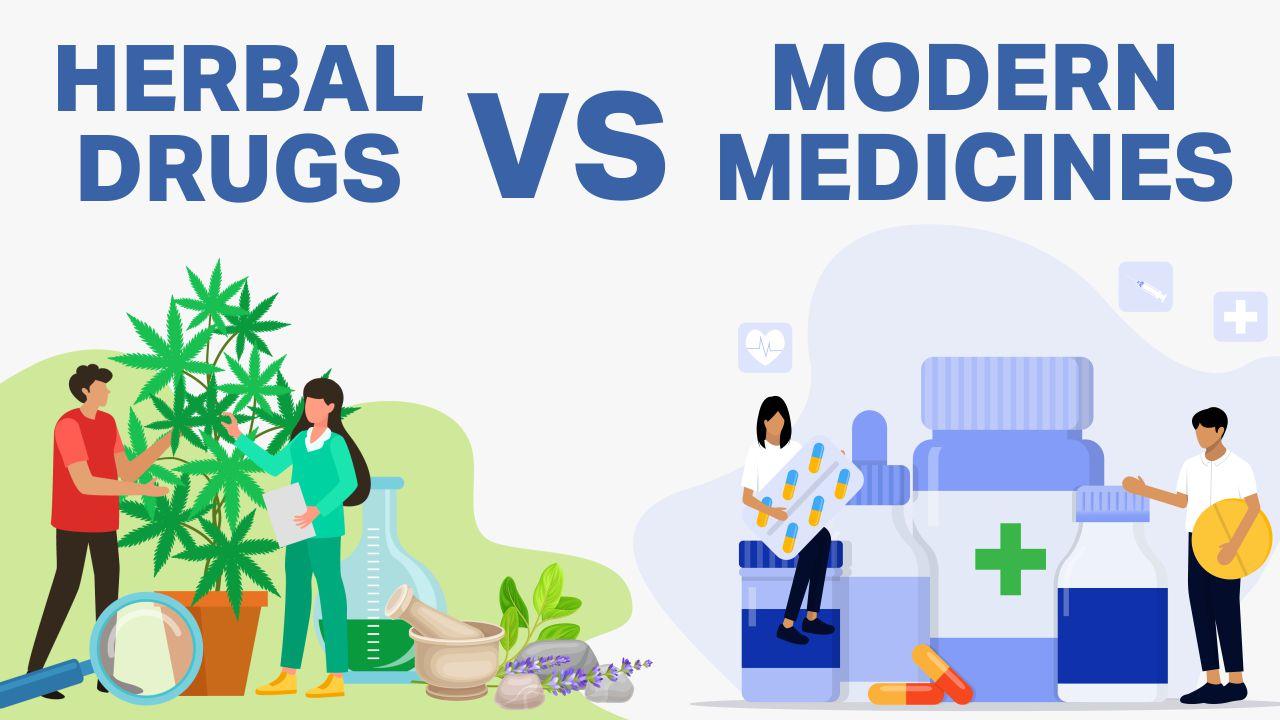
Since time immemorial, herbal remedies have served as a mainstay for the treatment of various diseases and ailments. Although therapies involving these agents have shown promising potential, many of their uses are either poorly monitored or not even monitored at all. Comparatively, modern medicines involving allopathic medicines offer instant efficacy for the treatment of several diseases. In such a scenario, it becomes imperative to decide which of these two systems- herbal drugs vs. modern medicines can be the mainstay of treatment in the present time, as both are highly acceptable to the people.

Today, the debate between these two approaches has become even more relevant due to rising lifestyle disorders, growing awareness about natural healing, and increasing concerns over drug resistance and side effects. Many individuals now seek a balanced approach that combines the holistic benefits of herbal remedies with the scientific precision of modern medicine. As healthcare evolves, understanding the strengths, limitations, and ideal use cases of both systems becomes essential for making informed treatment choices.

In this blog post, we aim to provide deeper insight into the distinctions between these two medical systems.

Definitions

Herbal Drugs

Herbal drugs are natural remedies made from plants and plant extracts. They use parts such as leaves, roots, bark, flowers, and seeds to prevent, manage, or treat various health conditions. These medicines are based on traditional knowledge passed down through generations and are commonly used in Ayurveda, Traditional Chinese Medicine, Unani, and other healing systems.

They are believed to promote healing by supporting the body’s natural processes, often with fewer synthetic chemicals compared to modern drugs. Herbal medicines are available in many forms, including powders, teas, capsules, oils, syrups, and topical applications.

Modern Medicines

Modern medicines, also known as allopathic or conventional medicines, are drugs developed using scientific research, clinical trials, and advanced medical technologies. They are formulated with carefully measured chemical compounds or biological agents designed to target specific diseases, symptoms, or bodily processes.

These medicines offer quick and predictable results, making them highly effective for treating acute illnesses, infections, chronic diseases, and emergencies. Modern medicines are produced under strict regulatory standards, ensuring safety, dosage accuracy, and quality. They come in various forms such as tablets, injections, syrups, capsules, vaccines, and intravenous solutions.

Herbal Drugs vs. Modern Medicines 

The use of herbal medicines has increased tremendously, especially after the COVID-19 era, wherein a huge dependency has been shown towards herbal medicines, which are primarily based on the concept that “prevention is better than cure.” Another reason for this dependency was the lack of remedies for COVID-19 in the allopathic system of medicine, which made the world turn around towards herbal medicines. Several herbal medicines were prescribed at that time to increase the immunity of the people to the SARS-COVID-19 virus. 

Despite the numerous advantages offered by herbal drugs, herbal therapies need to combat misinformation and misconceptions spread by non-registered practitioners about their potential as a fantastic alternative cure for chronic diseases like diabetes and cancer. However, the legitimacy of the allopathic system of medicine as a properly acceptable and trusted form of healing cannot be denied. 

Differences Involved in the Principles of Herbal Medicines and Modern Medicines 

There is a big variation in the principles of the herbal and modern systems of medicine. Herbal medicines are based on mythological and holistic approaches, while allopathic medicines are based on the criteria of mechanisms of therapeutic action. Although herbal drug therapies have shown promising potential with the efficacy of a good number of herbal products established, many of them remain poorly monitored with no insight into the putative active principles responsible for the observed effects.

The consequence of this is an inadequate knowledge of the pharmacokinetics and pharmacodynamic profiling of herbal medicines and related drug interactions. Comparatively, modern medicines involving allopathic medicines offer the major advantage of immediate effects for the treatment of several diseases and disorders. The presence of defined structures in modern drugs enables the configuration of the structure-activity relationship (SAR) of the molecule, thereby clearly demonstrating the mechanism of action of such drugs, including the drug interactions involved with every drug. 

Although modern medicines provide quick relief, the advantages offered by herbal medicines cannot be left unseen. Herbal medicines offer long-term effects and are safer and cheaper to use. They have fewer side effects, and therefore they are highly acceptable to people of all ages for the treatment of various diseases and disorders. On the contrary, modern medicines provide quick relief but are associated with several adverse effects. 

It is also pertinent to mention that modern medicines, including allopathic treatments, are expensive and time-consuming in several cases. They can significantly drain the financial resources of the patient, thereby leading to anxiety and emotional distress for them as well as for their families. On the contrary, herbal therapies focus on simple natural healing, making them cost-effective and an alternative form of treatment. Chronic lifestyle diseases are increasing day by day in today’s world. The frequency of diseases such as diabetes, cataracts, heart attacks, cancer, etc. is rising like anything else. Allopathic medicines are a popular mode of treatment for these diseases, but unfortunately, they don’t offer a permanent cure. Therefore, coupling herbal medicines with modern medicines can provide better relief to patients. While modern medicines focus on treating symptoms, herbal medicines work on uprooting the ailment from its roots. The treatment plan is holistic, natural, and safe, and it doesn’t cause any side effects for the patients. 

Considering the advantages and disadvantages offered by herbal drugs and modern medicines, it has become highly difficult to decide which system of medicine is better and more inquisitive in comparison with the other, as both hold their key areas strongly when it comes to the treatment of various diseases and disorders. It would be suggestive to say that both are equally important and should act concomitantly in the treatment of various diseases and disorders. Therefore, if one therapy fails to cure the disease or disorder, the other can replace the previous to provide better treatment. 

How is K.R. Mangalam University preparing medical professionals?

At K. R. Mangalam University, the students gain knowledge concerning the theoretical and practical approaches related to herbal drugs as well as modern medicines to conceptualise both systems of medicine efficiently, enabling better understanding. The university assists students to understand these concepts in the following manner: 

  1. Pharmaceutical Laboratories: The presence of state-of-the-art laboratories, especially pharmacognosy, phytochemistry, and pharmacology laboratories, enables students to get practical exposure and conceptually understand traditional and modern medicines. 
  1. Herbal Drug Research: The scientific facilities available at K. R. Mangalam University facilitate PhD Scholars to carry out research in the area of herbal drug discovery and enable them to understand the principle differences involved in traditional and modern methods of medicine comprehensively. 
  1. Seed Grants: The university engages qualified professionals in the field of pharmacy to impart professional knowledge to students and aids them by providing start-up seed grants so that they create leads from traditional knowledge for developing modern medicines. 

Conclusion 

The pros and cons related to both systems of medicine, namely herbal and modern medicines, create a state of dilemma as to which system of medicine is better than the other. The holistic approach of herbal therapies and the instant efficacy of modern medicines cannot be denied at any cost. A parallel and concomitant path involving both systems of medicine can deliver fruitful results in terms of treatment, and if one therapy fails to deliver, the other can replace it.

Students at K. R. Mangalam University learn about the theoretical and practical techniques pertaining to both contemporary and herbal treatments in order to effectively conceptualise both medical systems and facilitate greater comprehension. 

Also Read: Career Scope & Opportunities in Pharmacology

FAQs

Are herbal medicines safer than modern medicines?

Herbal medicines are often perceived as safer because they are natural, but they can still cause side effects, allergies, or interactions with other medications. Modern medicines undergo strict testing, making their risks more predictable.

Which works faster: herbal drugs or modern medicines?

Modern medicines typically act faster due to their targeted chemical formulations. Herbal medicines may take longer as they work gradually and holistically.

Can herbal medicines and modern medicines be taken together?

Not always. Some herbal remedies can interact with modern drugs, reducing effectiveness or causing side effects. Always consult a healthcare professional before combining them.

Do herbal medicines have scientific backing?

Many herbal medicines do have research support, but the level of scientific evidence varies widely. Modern medicines, on the other hand, go through rigorous clinical trials before approval.

Herbal Drugs vs Modern Medicines

Herbal Drugs vs. Modern Medicines

June 11, 2024

Since time immemorial, herbal remedies have served as a mainstay for the treatment of various diseases and ailments. Although therapies involving these agents have shown promising potential, many of their uses are either poorly monitored or not even monitored at all. Comparatively, modern medicines involving allopathic medicines offer instant efficacy for the treatment of several diseases. In such a scenario, it becomes imperative to decide which of these two systems- herbal drugs vs. modern medicines can be the mainstay of treatment in the present time, as both are highly acceptable to the people.

Today, the debate between these two approaches has become even more relevant due to rising lifestyle disorders, growing awareness about natural healing, and increasing concerns over drug resistance and side effects. Many individuals now seek a balanced approach that combines the holistic benefits of herbal remedies with the scientific precision of modern medicine. As healthcare evolves, understanding the strengths, limitations, and ideal use cases of both systems becomes essential for making informed treatment choices.

In this blog post, we aim to provide deeper insight into the distinctions between these two medical systems.

Definitions

Herbal Drugs

Herbal drugs are natural remedies made from plants and plant extracts. They use parts such as leaves, roots, bark, flowers, and seeds to prevent, manage, or treat various health conditions. These medicines are based on traditional knowledge passed down through generations and are commonly used in Ayurveda, Traditional Chinese Medicine, Unani, and other healing systems.

They are believed to promote healing by supporting the body’s natural processes, often with fewer synthetic chemicals compared to modern drugs. Herbal medicines are available in many forms, including powders, teas, capsules, oils, syrups, and topical applications.

Modern Medicines

Modern medicines, also known as allopathic or conventional medicines, are drugs developed using scientific research, clinical trials, and advanced medical technologies. They are formulated with carefully measured chemical compounds or biological agents designed to target specific diseases, symptoms, or bodily processes.

These medicines offer quick and predictable results, making them highly effective for treating acute illnesses, infections, chronic diseases, and emergencies. Modern medicines are produced under strict regulatory standards, ensuring safety, dosage accuracy, and quality. They come in various forms such as tablets, injections, syrups, capsules, vaccines, and intravenous solutions.

Herbal Drugs vs. Modern Medicines 

The use of herbal medicines has increased tremendously, especially after the COVID-19 era, wherein a huge dependency has been shown towards herbal medicines, which are primarily based on the concept that “prevention is better than cure.” Another reason for this dependency was the lack of remedies for COVID-19 in the allopathic system of medicine, which made the world turn around towards herbal medicines. Several herbal medicines were prescribed at that time to increase the immunity of the people to the SARS-COVID-19 virus. 

Despite the numerous advantages offered by herbal drugs, herbal therapies need to combat misinformation and misconceptions spread by non-registered practitioners about their potential as a fantastic alternative cure for chronic diseases like diabetes and cancer. However, the legitimacy of the allopathic system of medicine as a properly acceptable and trusted form of healing cannot be denied. 

Differences Involved in the Principles of Herbal Medicines and Modern Medicines 

There is a big variation in the principles of the herbal and modern systems of medicine. Herbal medicines are based on mythological and holistic approaches, while allopathic medicines are based on the criteria of mechanisms of therapeutic action. Although herbal drug therapies have shown promising potential with the efficacy of a good number of herbal products established, many of them remain poorly monitored with no insight into the putative active principles responsible for the observed effects.

The consequence of this is an inadequate knowledge of the pharmacokinetics and pharmacodynamic profiling of herbal medicines and related drug interactions. Comparatively, modern medicines involving allopathic medicines offer the major advantage of immediate effects for the treatment of several diseases and disorders. The presence of defined structures in modern drugs enables the configuration of the structure-activity relationship (SAR) of the molecule, thereby clearly demonstrating the mechanism of action of such drugs, including the drug interactions involved with every drug. 

Although modern medicines provide quick relief, the advantages offered by herbal medicines cannot be left unseen. Herbal medicines offer long-term effects and are safer and cheaper to use. They have fewer side effects, and therefore they are highly acceptable to people of all ages for the treatment of various diseases and disorders. On the contrary, modern medicines provide quick relief but are associated with several adverse effects. 

It is also pertinent to mention that modern medicines, including allopathic treatments, are expensive and time-consuming in several cases. They can significantly drain the financial resources of the patient, thereby leading to anxiety and emotional distress for them as well as for their families. On the contrary, herbal therapies focus on simple natural healing, making them cost-effective and an alternative form of treatment. Chronic lifestyle diseases are increasing day by day in today’s world. The frequency of diseases such as diabetes, cataracts, heart attacks, cancer, etc. is rising like anything else. Allopathic medicines are a popular mode of treatment for these diseases, but unfortunately, they don’t offer a permanent cure. Therefore, coupling herbal medicines with modern medicines can provide better relief to patients. While modern medicines focus on treating symptoms, herbal medicines work on uprooting the ailment from its roots. The treatment plan is holistic, natural, and safe, and it doesn’t cause any side effects for the patients. 

Considering the advantages and disadvantages offered by herbal drugs and modern medicines, it has become highly difficult to decide which system of medicine is better and more inquisitive in comparison with the other, as both hold their key areas strongly when it comes to the treatment of various diseases and disorders. It would be suggestive to say that both are equally important and should act concomitantly in the treatment of various diseases and disorders. Therefore, if one therapy fails to cure the disease or disorder, the other can replace the previous to provide better treatment. 

How is K.R. Mangalam University preparing medical professionals?

At K. R. Mangalam University, the students gain knowledge concerning the theoretical and practical approaches related to herbal drugs as well as modern medicines to conceptualise both systems of medicine efficiently, enabling better understanding. The university assists students to understand these concepts in the following manner: 

  1. Pharmaceutical Laboratories: The presence of state-of-the-art laboratories, especially pharmacognosy, phytochemistry, and pharmacology laboratories, enables students to get practical exposure and conceptually understand traditional and modern medicines. 
  1. Herbal Drug Research: The scientific facilities available at K. R. Mangalam University facilitate PhD Scholars to carry out research in the area of herbal drug discovery and enable them to understand the principle differences involved in traditional and modern methods of medicine comprehensively. 
  1. Seed Grants: The university engages qualified professionals in the field of pharmacy to impart professional knowledge to students and aids them by providing start-up seed grants so that they create leads from traditional knowledge for developing modern medicines. 

Conclusion 

The pros and cons related to both systems of medicine, namely herbal and modern medicines, create a state of dilemma as to which system of medicine is better than the other. The holistic approach of herbal therapies and the instant efficacy of modern medicines cannot be denied at any cost. A parallel and concomitant path involving both systems of medicine can deliver fruitful results in terms of treatment, and if one therapy fails to deliver, the other can replace it.

Students at K. R. Mangalam University learn about the theoretical and practical techniques pertaining to both contemporary and herbal treatments in order to effectively conceptualise both medical systems and facilitate greater comprehension. 

Also Read: Career Scope & Opportunities in Pharmacology

FAQs

Are herbal medicines safer than modern medicines?

Herbal medicines are often perceived as safer because they are natural, but they can still cause side effects, allergies, or interactions with other medications. Modern medicines undergo strict testing, making their risks more predictable.

Which works faster: herbal drugs or modern medicines?

Modern medicines typically act faster due to their targeted chemical formulations. Herbal medicines may take longer as they work gradually and holistically.

Can herbal medicines and modern medicines be taken together?

Not always. Some herbal remedies can interact with modern drugs, reducing effectiveness or causing side effects. Always consult a healthcare professional before combining them.

Do herbal medicines have scientific backing?

Many herbal medicines do have research support, but the level of scientific evidence varies widely. Modern medicines, on the other hand, go through rigorous clinical trials before approval.

Recent Post

    Enquiry Form