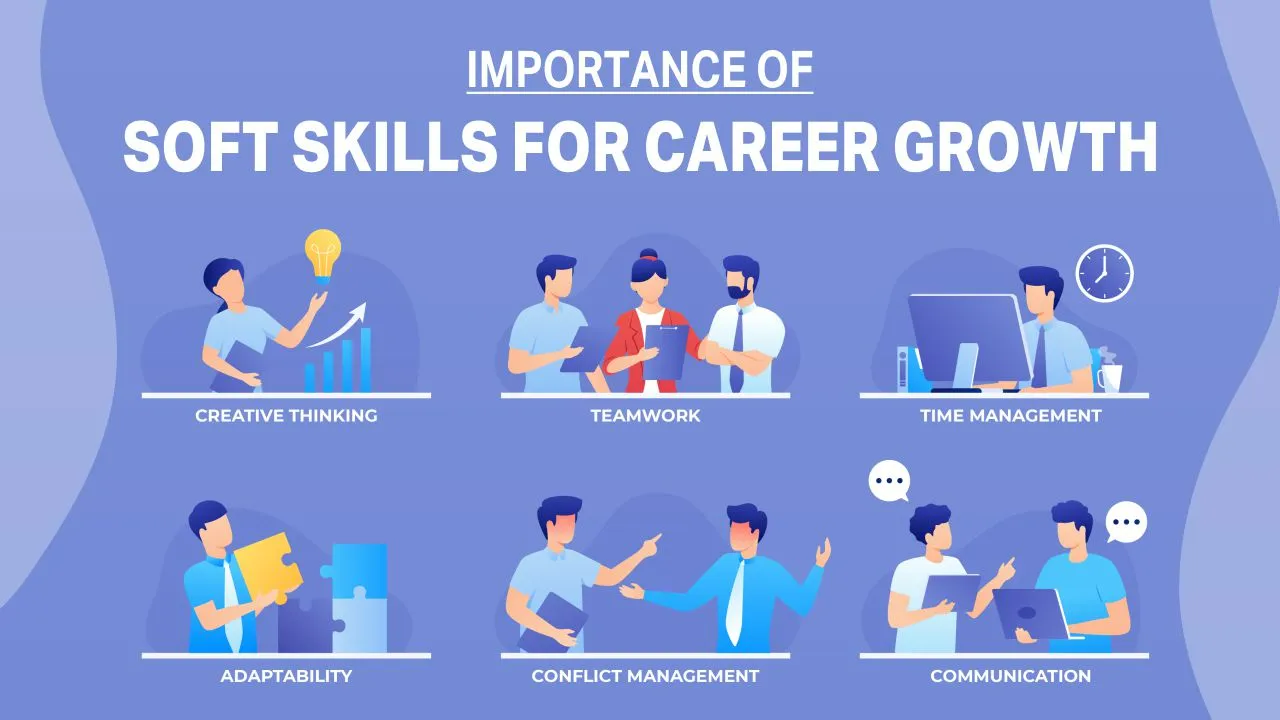
In today’s dynamic and competitive job market, technical expertise alone is not enough to ensure career success. The importance of soft skills becomes crucial and plays a pivotal role in shaping an individual’s professional journey. These skills encompass communication, teamwork, problem-solving, adaptability, and more. They not only complement your technical knowledge but also enhance your ability to work effectively with diverse teams, navigate workplace challenges, and build strong professional relationships. Moreover, employers increasingly value candidates who can demonstrate emotional intelligence, leadership qualities, and a proactive mindset, making soft skills a key differentiator in long-term career growth and advancement. Here, we’ve explored the importance of soft skills in career growth and how developing them can pave the way for a rewarding and prosperous professional life.
Overview
| Sections |
Descriptions |
| Types of Soft Skills |
Key soft skills include communication and cognitive & thinking. |
| Understanding the Importance of Soft Skills |
Soft skills enhance employability, improve workplace relationships, support career growth, and help individuals adapt effectively to professional environments. |
| Conclusion |
Developing strong soft skills is essential for personal and professional success, complementing technical knowledge and academic learning. |
Types of Soft Skills
Below are different types of soft skills:
Communication Skills
- Verbal communication: Ability to express ideas clearly through spoken words.
- Non-verbal communication: Using body language, eye contact, and gestures effectively.
- Written communication: Communicating clearly through emails, reports, or messages.
- Active listening: Fully focusing on what others are saying and responding thoughtfully.
- Presentation skills: Delivering information confidently to an audience.
Interpersonal Skills
- Teamwork: Working effectively and respectfully with others.
- Empathy: Understanding and sharing the feelings of others.
- Relationship building: Developing strong and trusting connections.
- Conflict resolution: Solving disagreements in a calm and fair manner.
- Networking: Making professional connections for growth and opportunities.
Self-Management Skills
- Time management: Prioritising tasks and meeting deadlines efficiently.
- Self-discipline: Staying focused and consistent without supervision.
- Adaptability: Adjusting to changes quickly and positively.
- Stress management: Handling pressure without compromising performance.
- Self-motivation: Taking initiative and driving yourself to achieve goals.
Leadership & Management Skills
- Decision-making: Choosing the best possible action from available options.
- Delegation: Assigning tasks effectively based on strengths.
- Problem-solving: Identifying issues and finding practical solutions.
- Strategic thinking: Planning ahead with a long-term perspective.
- People management: Guiding and supporting team members.
- Mentoring and coaching: Helping others grow through guidance and feedback.
Cognitive & Thinking Skills
- Critical thinking: Evaluating information logically before making decisions.
- Analytical reasoning: Breaking down complex problems into clear parts.
- Creativity: Generating original and innovative ideas.
- Attention to detail: Noticing small but important elements in tasks.
- Innovation: Creating improved methods, ideas, or solutions.
Professionalism & Work Ethic
- Accountability: Taking responsibility for your actions and results.
- Reliability: Being dependable and consistent in your work.
- Integrity: Acting honestly and ethically at all times.
- Punctuality: Being on time and respecting others’ schedules.
- Positive attitude: Approaching tasks with enthusiasm and optimism.
Digital Soft Skills
- Digital literacy: Comfortably using digital tools, platforms, and technology.
- Online etiquette: Communicating respectfully and professionally online.
- Virtual collaboration: Working effectively with teams using digital platforms.
- Remote communication: Communicating clearly in virtual meetings or chats.
Emotional Intelligence (EQ)
- Self-awareness: Understanding your feelings, strengths, and weaknesses.
- Self-regulation: Managing emotions calmly and constructively.
- Social awareness: Recognising others’ emotions and social cues.
- Relationship management: Handling interactions and relationships smoothly.
Understanding the Importance of Soft Skills
While technical skills are essential for performing specific tasks, the importance of soft skills in professional life is effectively utilized. They are the driving force behind effective collaboration, positive work relationships, and the ability to navigate complex workplace scenarios.
Effective Communication
Effective communication is at the heart of all interactions, both within and outside the workplace. Strong communication skills enable professionals to convey ideas clearly, listen actively, and build rapport with colleagues, clients, and stakeholders. Adept communicators are more likely to be understood, respected, and able to resolve conflicts efficiently.
Make Teamwork and Collaboration
Modern work environments emphasize collaboration and teamwork. Individuals who possess strong teamwork skills can seamlessly integrate into diverse groups. As a result, it contributes to their unique perspectives and collectively achieves shared goals. Collaboration fosters innovation and enhances productivity.
Problem-Solving and Critical Thinking
The ability to analyze situations critically and devise effective solutions is highly valued. Career growth and soft skills like problem-solving and critical thinking empower professionals to tackle challenges with creativity and resourcefulness. These skills contribute to efficient decision-making and demonstrate one’s value to an organization.
Adaptability and Flexibility
With evolving business landscape, adaptability is crucial. Professionals who can embrace change and adjust to new circumstances demonstrate resilience and a willingness to learn. Employers seek adaptable individuals who can navigate change while maintaining high levels of performance.
Leadership and Influence
Even for non-leadership roles, possessing leadership qualities is advantageous. The importance of interpersonal skills encompasses the ability to motivate, inspire, and influence others. Individuals who exhibit leadership traits often find themselves entrusted with greater responsibilities and opportunities.
Emotional Intelligence
Emotional intelligence involves understanding and managing one’s own emotions while empathizing with others. This skill enables professionals to navigate interpersonal relationships sensitively, resolve conflicts, and create a harmonious work environment.
Time Management and Organizational Skills
Efficient time management and organizational skills ensure that tasks are completed promptly and effectively. Professionals who demonstrate these skills are more likely to meet deadlines, maintain quality work, and reduce stress.
Networking and Relationship Building
The ability to build meaningful professional relationships is a hallmark of successful careers. Soft skills in networking enable individuals to connect with mentors, colleagues, and industry peers. It opens the doors to new opportunities and insights.
Customer Service Orientation
Customer-centric industries thrive on professionals who prioritize customer satisfaction. Soft skills in customer service orientation help create positive interactions. It leads to loyal customers and repeat business.
Customer-based industries thrive on professionals who prioritize customer satisfaction. Soft skills in customer service.
Conclusion
The importance of soft skills in professional life cannot be overstated. While developing soft skills for job advancement, technical skills get your foot in the door. These skills are the threads that weave strong work relationships, effective communication, and personal growth. ;
To ensure career growth and success, individuals should actively invest in developing and honing their soft skills. Continuous learning, seeking feedback, and practising these skills in various scenarios. It helps the individuals stand out from the crowd. Also, it helps them to achieve their career aspirations and thrive in the competitive landscape of today’s professional world.
Related Blog
FAQs
Wondering why soft skills are important for career growth? Check out these frequently asked questions.
What are soft skills and why are they important?
Soft skills are personal and interpersonal abilities such as communication, teamwork, adaptability, and problem-solving. They are important because they help individuals collaborate effectively, handle workplace challenges, and thrive in professional environments.
Are soft skills more important than technical skills?
Both are important. Technical skills help you perform specific tasks, while soft skills enable you to communicate, lead, and work well with others. Employers today look for a balance of both.
Can soft skills be learned and improved?
Yes, soft skills can be developed through practice, self-awareness, communication training, workshops, and real-world experiences like internships or group projects.
Which soft skills are most in demand by employers?
Some of the most sought-after soft skills include communication, teamwork, adaptability, leadership, emotional intelligence, and critical thinking.




 13 Schools700+ Faculty Members













 13+Years of Educational Experience