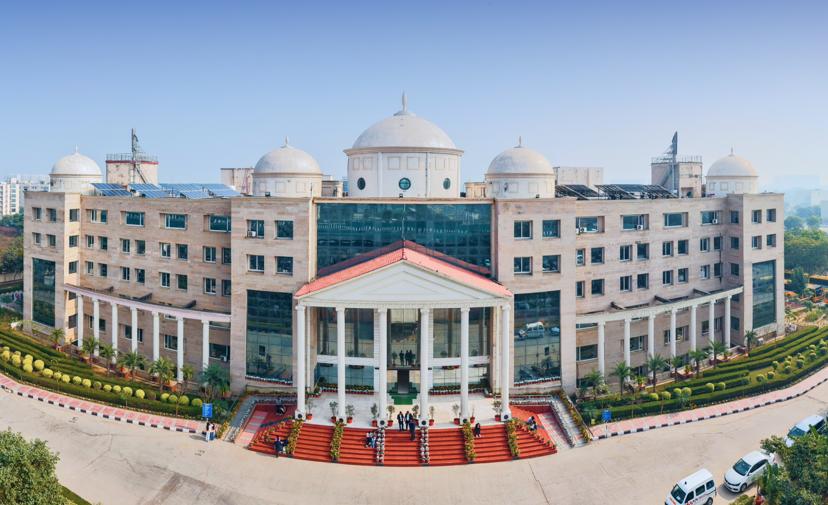
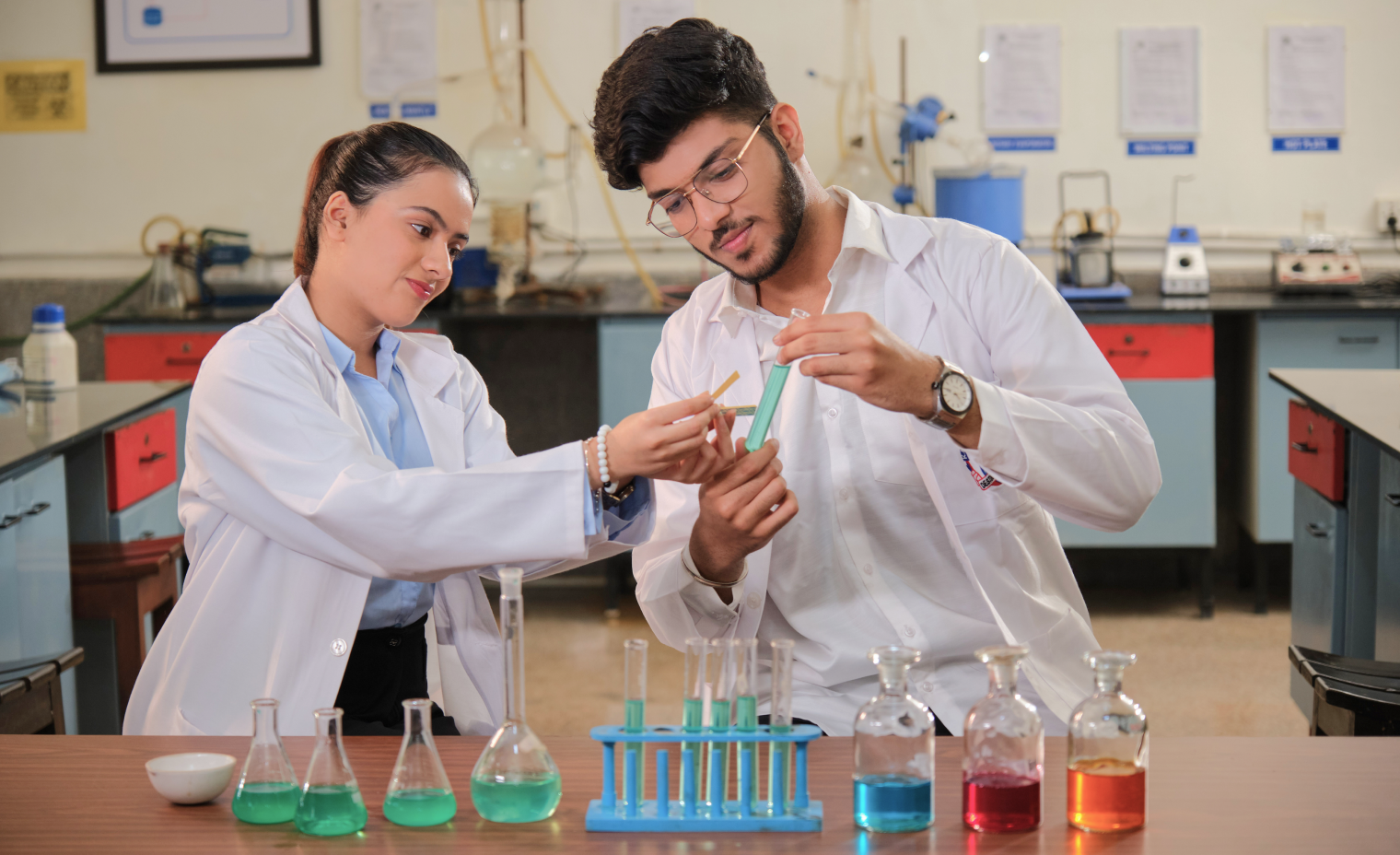
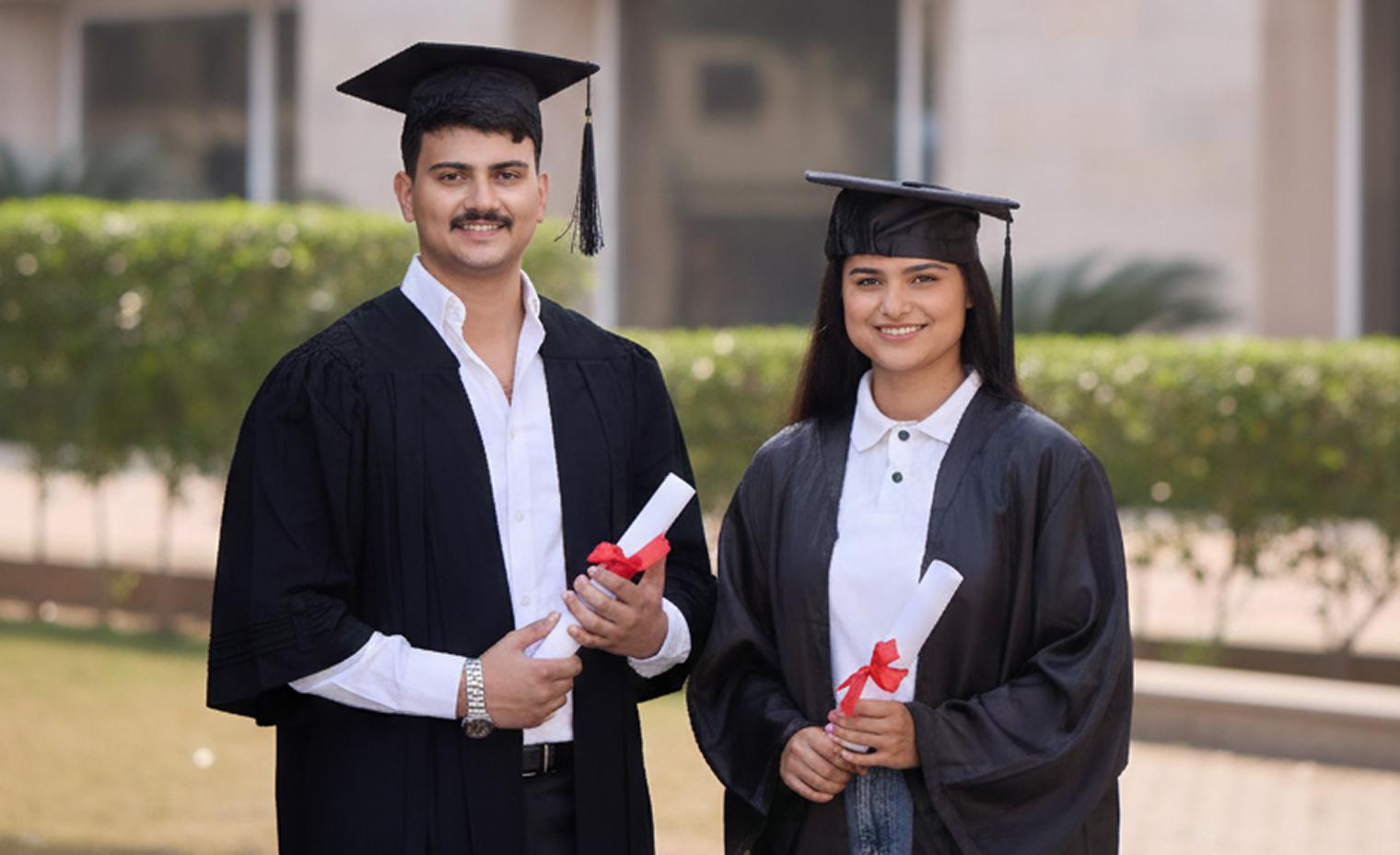
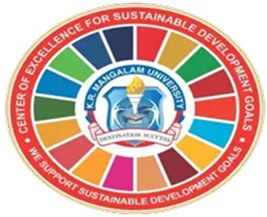
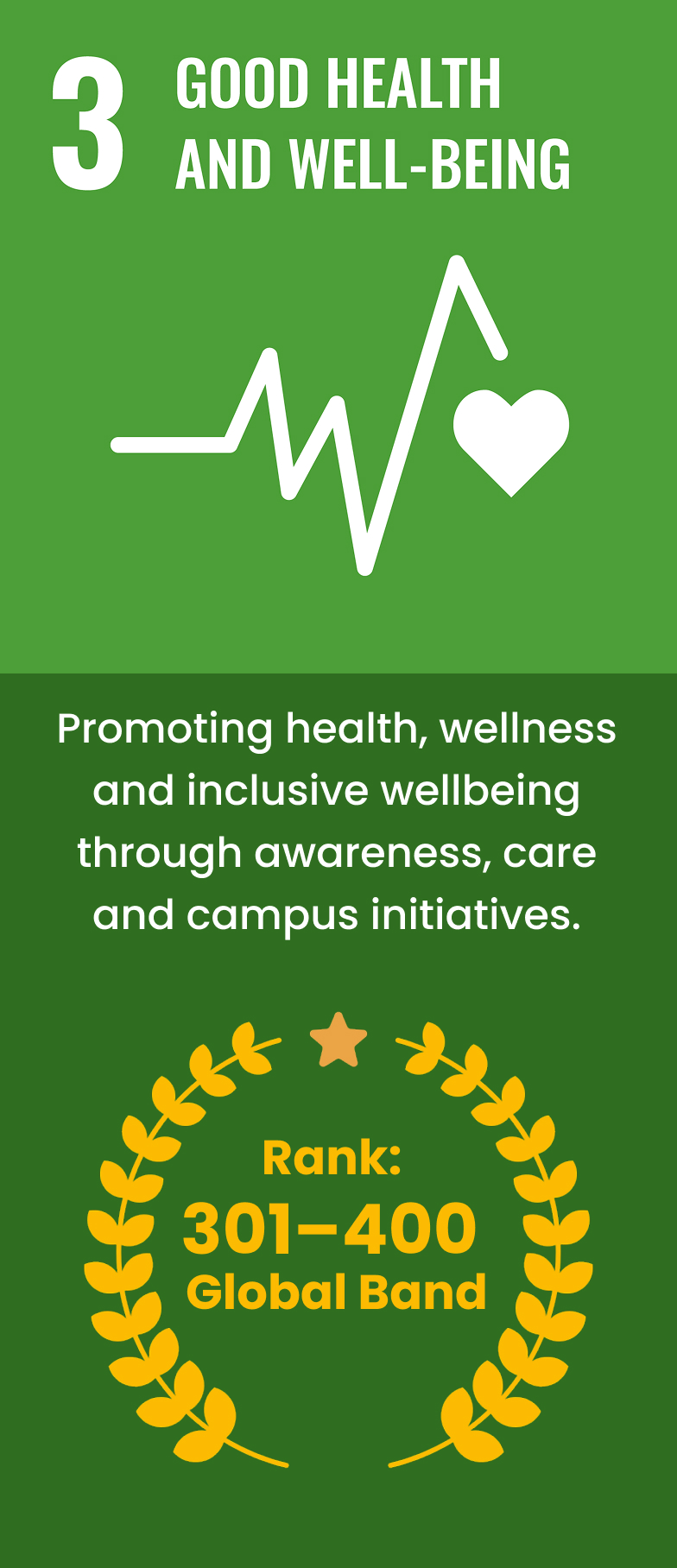
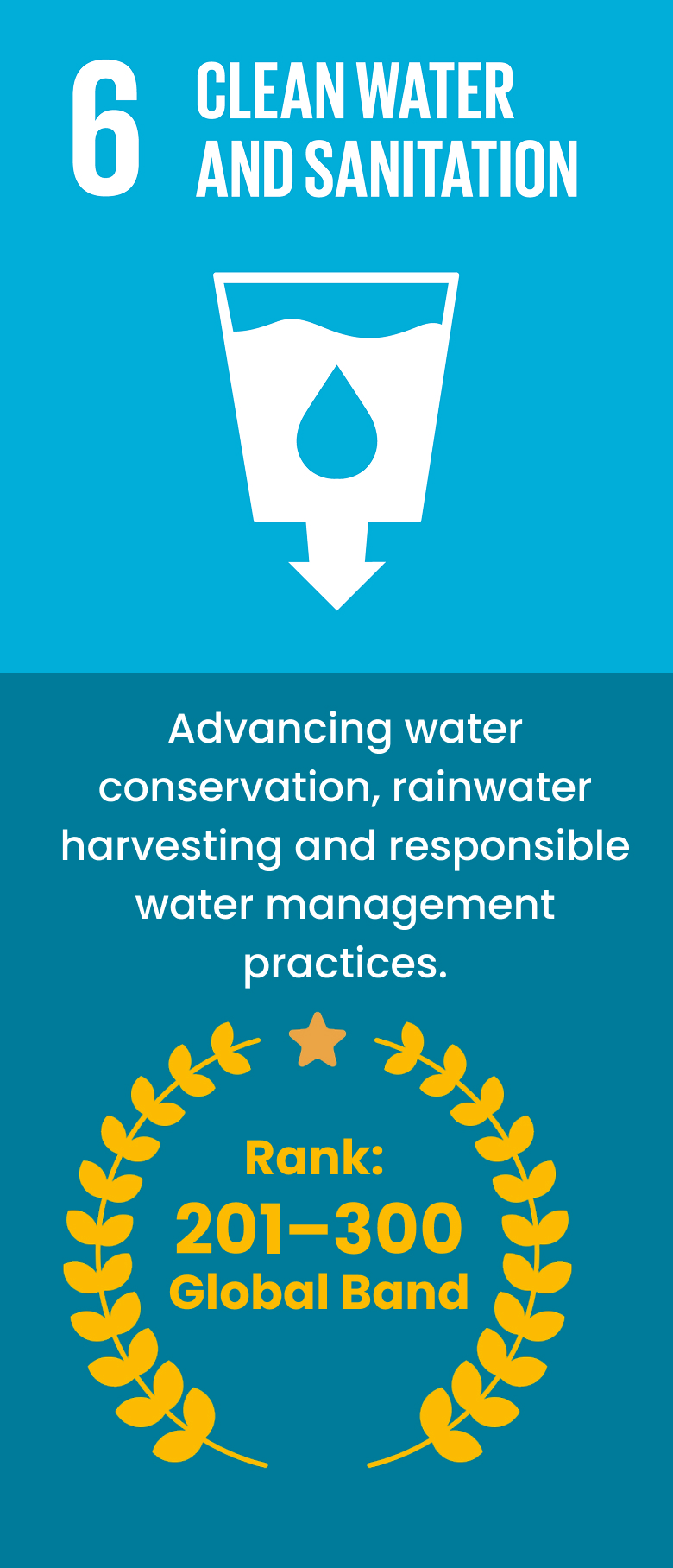
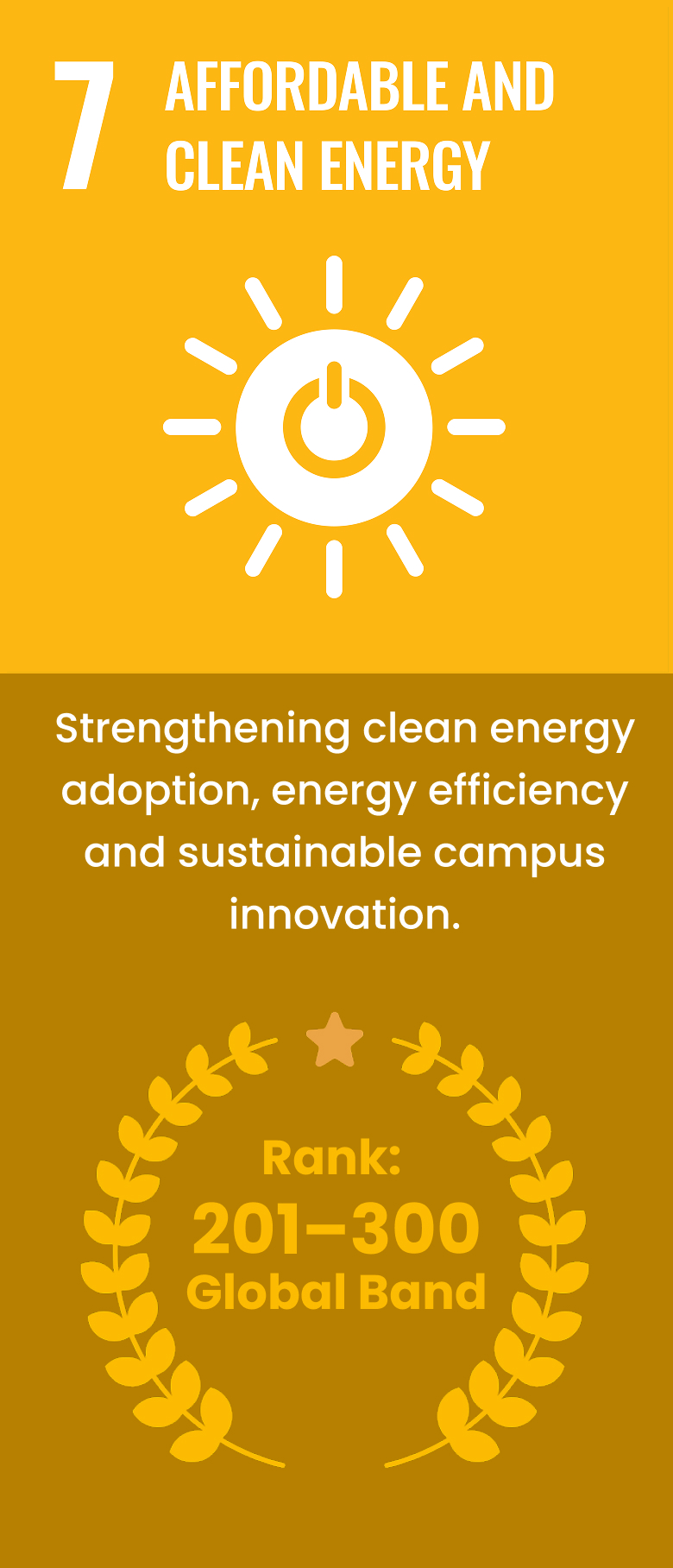
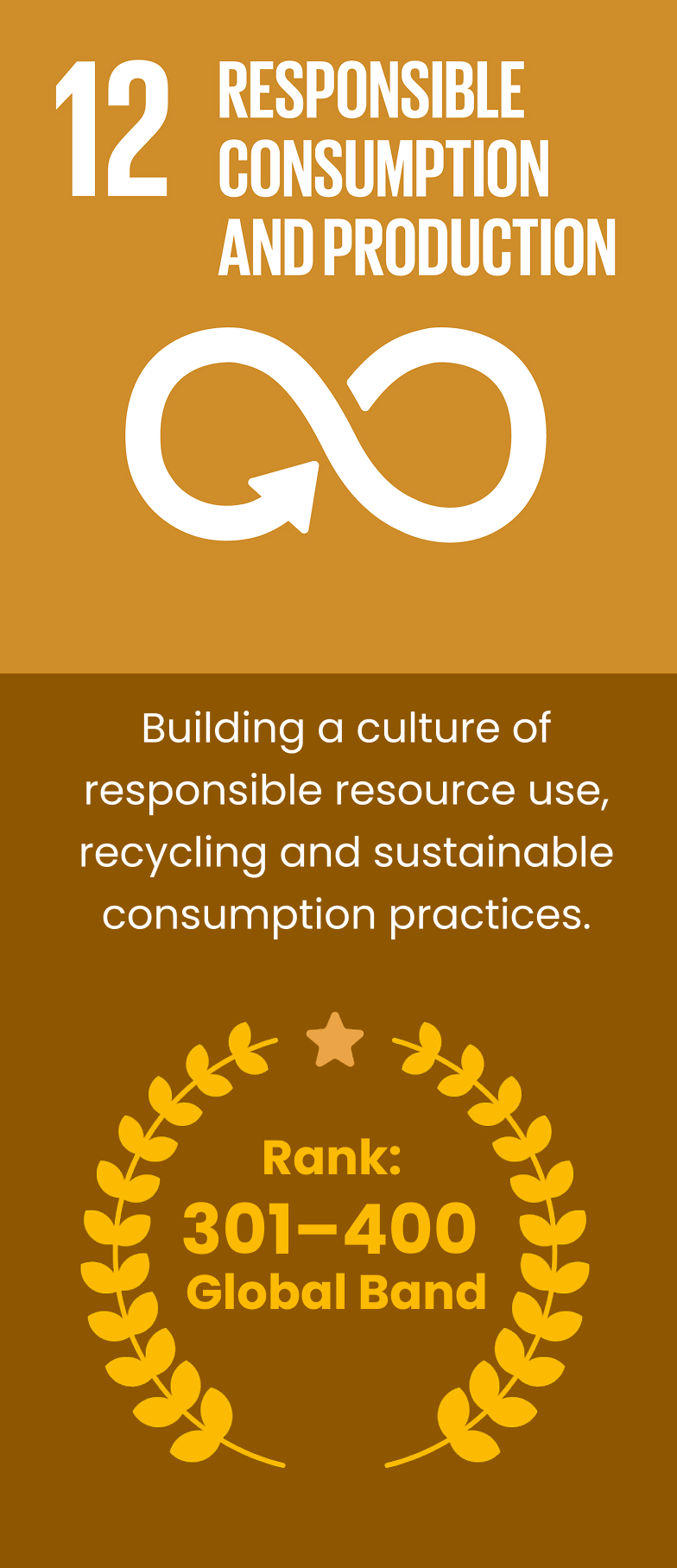
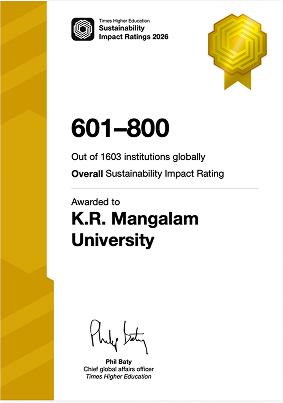
The United Nations’ Sustainable Development Goals (SDGs) are a framework for ensuring a sustainable future. The 17 Goals provide a blueprint for addressing diverse global challenges such as poverty, gender discrimination, quality education, lack of infrastructure, climate change, access to justice, and partnerships goals, among others. The aim of the SDGs is to collaborate and mobilise efforts towards these challenges, and, as an establishment of higher education institution, KR Mangalam University is committed to the accomplishment of the target through effective teaching and collaborative learning. Cultivating the principle of ‘Lets Rise Together, the initiatives of this establishment is important to achieve the Sustainable Development Goals as they function as incubators of recent concepts and solutions to problems, we have a tendency to face together. As an institution we are committed to the promotion of knowledge society, we have engaged with all the “17 Goals” in varied capacities of understanding and knowledge translation.
K.R. Mangalam University proactively encourages scientific attitude, curiosity and entrepreneurial zeal in its students, so that they become capable of coming up with creative ideas on how to solve the problem of sustainable development. Interdisciplinary learning and problem-solving inspire students to respond to both global and local issues in a creative and responsible manner. This will not only help in building strong academic backgrounds, but it will also help in building future ready leaders who can transform the society. The university fosters teamwork, in which researchers, educators and students collaborate closely with citizens, partners in industry and government. Through such associations, knowledge can be co-created and effective solutions can be developed to solve acute problems. This concerted effort elevates the university to become a force behind the Sustainable Development Goals (SDGs) because education, research, and innovation remain connected to the needs of the world. In order to reinforce this, K.R. Mangalam University has integrated the SDGs on the governance, pedagogical and research approaches of the University. The management of sustainability on campus is considered as one of the priorities, and the university is considered as a socially responsible institution. By using sustainability as a framework to its activities and academic vision, the university can reduce its ecological footprint and promote the principles of environmental stewardship, inclusiveness, and moral growth in students.
The Research Centre for Sustainability and Sustainable Development
Goals (SDGs) at K.R. Mangalam University serves as a strategic
institutional mechanism for integrating sustainability into academic
research, campus operations, policy engagement, and societal
transformation. The Centre adopts a multidisciplinary and
impact-oriented approach to align institutional initiatives with the
United Nations Sustainable Development Goals and national
sustainability priorities.
Through research-driven innovation, data-based sustainability
assessment, and collaborative stakeholder engagement, the Centre
contributes to measurable progress in environmental stewardship,
social inclusion, and sustainable economic development. It plays a
critical role in strengthening the University’s sustainability
governance framework and advancing climate-responsive institutional
practices at local, regional, and global levels.
To emerge as a nationally impactful and globally engaged centre of excellence that advances sustainable development through interdisciplinary research, innovation-driven solutions, policy engagement, and community-centred initiatives, thereby generating measurable environmental, social, and economic sustainability outcomes.
- Promote interdisciplinary research aligned with the United
Nations Sustainable Development Goals.
- Develop innovative and context-specific solutions to regional,
national, and global sustainability challenges.
- Strengthen integration of sustainability principles into
teaching, research, campus management, and institutional
governance.
- Support policy formulation, sustainability assessment, and
evidence-based institutional transformation.
- Foster national and international partnerships to enhance
sustainability research impact and knowledge exchange.
- Contribute to the transition towards low-carbon,
resource-efficient, and climate-resilient campus systems.
- Generate research outputs and technological innovations that
support sustainable development pathways.
- Build sustainability capacity among students, faculty, and
community stakeholders through training, outreach, and
experiential learning.
- Develop sustainability performance indicators and contribute to
institutional sustainability reporting, benchmarking, and impact
monitoring.
- Facilitate interdisciplinary collaboration and knowledge
networks for addressing complex sustainability challenges.
- Promote responsible resource utilisation, environmental
conservation, and climate action initiatives across the campus
ecosystem.
The Centre follows an integrated thematic research framework aligned with the University’s Institutional Sustainability Governance Model, structured across the five strategic clusters of People, Prosperity, Planet, Peace, and Partnership. These domains aim to generate knowledge, innovation, and actionable solutions contributing to sustainable development outcomes.
K.R. Mangalam University promotes inclusive social development
through sustainability-aligned research, community engagement
initiatives, and student participation programmes. This cluster
reflects the University’s commitment to advancing human
well-being, equitable access to education, public health
awareness, and community resilience in alignment with Sustainable
Development Goals 1, 2, 3, 4 and 5.
Key Human Development & Social Inclusion Performance Snapshot
🟢 SDG Social Research Publications – 320 ↑
🟢 Community Beneficiaries through Outreach –
🟢 Student Participation in Sustainability Initiatives –
🟢 Health & Well-being Programmes Conducted –
| Indicator | FY 2022-23 | FY 2023-24 | FY 2024-25 | Performance Trend | FY 2025-26 Target |
|---|---|---|---|---|---|
| SDG-aligned research publications in health, education & social sustainability | 44 | 72 | 320 | ↑ Strong multi-year growth | 350 |
| Community beneficiaries through sustainability outreach programmes | 114 | 58 | 51 | ↑ Increased outreach initiatives | |
| Student participation in social sustainability initiatives | ↑ Enhanced engagement culture |
K.R. Mangalam University advances sustainable economic development
through innovation-driven research, renewable energy initiatives,
green entrepreneurship support, and industry collaboration. This
cluster reflects the University’s commitment to promoting
responsible industrial growth, resilient infrastructure, and
inclusive economic opportunities in alignment with Sustainable
Development Goals 7, 8, 9, 10 and 11.
Key Sustainable Innovation & Economic Growth Performance Snapshot
🟢 SDG Innovation & Economic Sustainability Research Publications
– 402 ↑
🟢 Renewable Energy & Infrastructure Research Expansion –
Significant growth ↑
🟢 Inclusive Development & Smart Systems Research Engagement –
Strengthened ↑
🟢 Interdisciplinary Sustainability Innovation Output –
Accelerated ↑
| Indicator | FY 2022-23 | FY 2023-24 | FY 2024-25 | Performance Trend | FY 2025-26 Target |
|---|---|---|---|---|---|
| SDG-aligned research publications in renewable energy, innovation, infrastructure & inclusive economic growth | 96 | 148 | 402 | ↑ Strong multi-year research growth | 430 |
K.R. Mangalam University is committed to environmental
responsibility through integrated climate action strategies,
resource conservation practices, renewable energy adoption,
biodiversity enhancement, and circular economy initiatives. This
cluster reflects the University’s efforts to strengthen ecological
sustainability and climate resilience in alignment with
Sustainable Development Goals 6, 12, 13, 14 and 15.
Key Environmental Sustainability & Climate Action Performance
Snapshot
🟢 Environmental Sustainability Research Publications – 515
🟢 Solar Renewable Energy Capacity – 310 kWp
🟢 Wastewater Treatment Coverage – 80%
🟢 Rainwater Harvesting Coverage – 9.24 lakh sq.ft
🟢 Low-flow Water Fixtures – 933
| Indicator | FY 2022-23 | FY 2023-24 | FY 2024-25 | Performance Trend | FY 2025-26 Target |
|---|---|---|---|---|---|
| Installed solar renewable energy capacity (kWp) | 310 kWp | 310 kWp | 310 kWp | ✓ Stable green energy infrastructure | Solar expansion in new blocks |
| Percentage of wastewater treated (campus STP coverage) | 80% | 80% | 80% | ✓ Consistent treatment performance | Enhanced reuse optimisation |
| Rainwater harvesting connected area | 9.24 lakh sq.ft. | 9.24 lakh sq.ft. | 9.24 lakh sq.ft. | ✓ Stable conservation infrastructure | Coverage expansion planning |
| Water conservation fixtures installed (low-flow taps) | 933 | 933 | 933 | ✓ Sustained efficiency systems | Smart metering & monitoring |
| Waste management circularity implementation status | Composting & segregation initiated | Structured waste processing strengthened | Integrated recycling & organic composting operational | ↑ Progressive institutional maturity | Waste-to-energy pilot exploration |
K.R. Mangalam University promotes responsible institutional
governance through sustainability-oriented policies, ethical
leadership practices, transparency mechanisms, and participatory
decision-making processes. This cluster reflects the University’s
commitment to strengthening institutional integrity, regulatory
compliance, and inclusive governance systems in alignment with
Sustainable Development Goal 16.
Key Governance & Institutional Sustainability Performance Snapshot
🟢 Governance & Institutional Sustainability Research Publications
– 74 ↑
🟢 Structured Campus Health & Well-being Ecosystem – Operational
institutional framework
🟢 Sustainability Governance Policies – Integrated across academic
and administrative systems
🟢 Stakeholder Participation in Sustainability Committees –
Strengthening collaborative governance
| Indicator | FY 2022-23 | FY 2023-24 | FY 2024-25 | Performance Trend | FY 2025-26 Target |
|---|---|---|---|---|---|
| SDG-aligned research publications in governance, ethics, justice & institutional sustainability | 28 | 46 | 74 | ↑ Steady academic growth | 90 |
| Institutional sustainability governance framework implementation | Foundational sustainability policies operational | Governance coordination mechanisms strengthened | Integrated sustainability governance model active | ↑ Institutional governance maturity | ESG governance integration roadmap |
| Campus health, wellness & ethical leadership initiatives | Structured wellness programmes initiated | Expanded participation ecosystem | Holistic well-being support framework operational | ↑ Inclusive campus culture strengthening | Preventive well-being strategy |
| Stakeholder participation in sustainability | Committee-level | Departmental sustainability | Multi-stakeholder sustainability | ↑ Collaborative | Community sustainability |
| governance processes | engagement initiated | coordination improving | engagement visible | governance culture | governance platform |
K.R. Mangalam University actively promotes collaborative
approaches to sustainable development through strategic
partnerships with international institutions, industry
stakeholders, government agencies, and community organisations.
This cluster reflects the University’s commitment to advancing
global sustainability dialogue, interdisciplinary research
collaboration, and knowledge exchange in alignment with
Sustainable Development Goal 17.
Key Sustainability Partnership Performance Snapshot
🟢 International SDG Collaborative Research Output – Strong upward
trend ↑
🟢 Multi-country Sustainability Research Engagement – Expanding
academic network ↑
🟢 Interdisciplinary Institutional Research Partnerships –
Strengthened collaboration ecosystem ↑
🟢 Global Knowledge Exchange in Sustainability Themes – Increasing
institutional visibility ↑
| Indicator | FY 2022-23 | FY 2023-24 | FY 2024-25 | Performance Trend | FY 2025-26 Target |
|---|---|---|---|---|---|
| International SDG-aligned collaborative research publications | Verified collaboration present | Collaboration volume increased | Strong international co-authorship visibility | ↑ Expanding global sustainability engagement | Strategic global research alliances |
| Countries involved in sustainability research collaboration | Emerging global academic linkage | Expanded multi-country research network | Structured international sustainability research presence | ↑ Institutional internationalisation maturity | Targeted global SDG research partnerships |
| Joint sustainability research | Foundational interdisciplinary projects | Strengthened applied sustainability | Growing collaborative | ↑ Partnership depth strengthening | Global sustainability |
| Initiatives with academic / industry partners | Research interface | Innovation ecosystem | Innovation platform |
K.R. Mangalam University adopts an outcome-driven approach to sustainability research, focusing on translating academic knowledge into practical solutions that support environmental protection, social inclusion, and sustainable economic development. The University promotes interdisciplinary research aligned with the Sustainable Development Goals through increasing scholarly publications, funded projects, innovation initiatives, and collaborative research partnerships at national and international levels.
Research outcomes are actively applied through pilot sustainability interventions, technology demonstrations, consultancy engagements, and policy advisory contributions. These initiatives contribute to institutional sustainability transformation as well as community development outcomes. By integrating research insights into campus practices such as renewable energy adoption, water conservation, waste circularity, and biodiversity enhancement, the University strengthens evidence-based sustainability governance and promotes climate-responsive development pathways.
K.R. Mangalam University integrates sustainability principles into campus operations, infrastructure development, and stakeholder engagement initiatives to achieve measurable improvements in environmental performance and resource efficiency. The University has progressively enhanced renewable energy adoption, energy-efficient infrastructure, water conservation practices, and sustainable waste management systems as part of its commitment to responsible campus management.
Initiatives such as rainwater harvesting, wastewater reuse, green landscape development, and biodiversity enhancement contribute to strengthening ecological resilience and promoting sustainable behavioural practices among students and staff. By aligning sustainability research with institutional policies and operational planning, the University supports continuous performance improvement and advances its transition towards a low-carbon, resource-efficient, and environmentally responsible campus ecosystem.
K.R. Mangalam University has established a structured sustainability governance framework to guide planning, monitoring, and implementation of sustainability initiatives across academic and administrative functions. Sustainability priorities are overseen by an institutional committee under senior leadership, ensuring coordination among departments, research centres, operational units, and student engagement platforms. Regular performance reviews are conducted to monitor progress against sustainability indicators related to energy efficiency, water management, waste reduction, biodiversity conservation, and social sustainability initiatives. This governance approach promotes transparency, stakeholder participation, and continuous institutional improvement aligned with national and global sustainability priorities.
The University operationalises sustainability policies through coordinated action plans supported by defined roles, monitoring systems, and performance evaluation mechanisms. Sustainability initiatives are implemented across functional domains including energy management, water conservation, green infrastructure development, and community engagement programmes.
Institutional monitoring tools such as sustainability dashboards, internal reviews, and annual reporting processes enable tracking of key performance indicators and benchmarking with recognised sustainability frameworks. Through this integrated implementation mechanism, the University reinforces accountability, strengthens strategic sustainability commitment, and fosters a culture of environmental responsibility and inclusive development across the campus ecosystem.
The University runs an Open Elective Programme which is a basket of subject open to all the students from various school. The University offers a subject OLA712 Women and Law in the open elective subjects with an objective to understand the issues related to gender and crime, to understand the applicable theories, any particulars of prosecution and sentencing of female offenders and female victims. This subject also emphasis on the gender and crime as an objective of the subject.
The University Campus is well equipped with campus security for students, staff (teaching and non-teaching) including both male and female. There is both male and female security service ensuring protection, safety and security for students of all schools. The University provides professional security officers to all the entries of the Campus. No outsider is allowed inside of the campus without student, teaching or non-teaching identity card. A visitor gate pass is provided to visitors which are to be submitted at the time of leaving the campus. The bikes and car boots are checked at the gate at the time of entering and exiting the campus. There 24/7 CCTV surveillance all throughout the campus i.e. at the gate, entrance, corridors, reception etc. The safety and security is given utmost importance by the University.
University provides common rooms, male and female washrooms and common rooms to students. The college common rooms for ladies and Men are located on each floor and used by the students in their leisure time in a private space. The University has also ensured that the ladies’ washroom is equipped with sanitary Napkin dispensers.
The university offers a convenient on-campus daycare center for children aged 6 months to 6 years, specifically designed for the children of its employees. Staffed by certified early childhood educators, the center provides a safe and nurturing environment with a curriculum focused on fostering cognitive, social, and emotional development. With flexible hours to accommodate the diverse schedules of university staff and faculty, the daycare also emphasizes strict health and safety protocols. Subsidized by the university, it is an affordable and valuable resource that supports employees in balancing their professional and personal lives, contributing to a more productive and satisfied workforce.
| Sr. No. | Activities and Events for the promotion of gender equity during the last five years. | Link to open |
| 2023-24 | ||
| 1. | International Women’s Day 2024 dated 09-03-2024 | CLICK HERE |
| 2. | International Human Rights Day 2023 dated 09-12-2023 | CLICK HERE |
| 3. | School of Design Collaboration with Radio Vishwas – International Week of Violence Against Women 4,5,6 December 2023 | CLICK HERE |
| 4. | Session on Gender Equality 20-10-2023 | CLICK HERE |
| 5. | Free Medical Checkup Camp dated 14-09-2023 | CLICK HERE |
| 6. | World Health Day Event dated 07-04-2024 | CLICK HERE |
| 2022-23 | ||
| 7. | Teacher’s Day Celebration 05-09-2023 | CLICK HERE |
| 8. | Blood Donation Camp dated 17-10-2022 | CLICK HERE |
| 9. | Women’s Health Care dated 05-12-2022 | CLICK HERE |
| 10. | Expert Lecture “Woman Health & Hygiene dated 13-01-2023 | CLICK HERE |
| 11. | Expert Lecture on 'Emotional Intelligence’ 31-01-2023 | CLICK HERE |
| 12. | Self Defence Session on International Women Day dated 08-03-2023 | CLICK HERE |
| 13. | 2nd Poster Making Competition on social injustices, mental health, crypto currency, electronic waste, freedom from hunger, artificial intelligence dated 13-03-2023 | CLICK HERE |
| 2021-22 | ||
| 14. | Guest Lecture on the topic "Women’s Rights are Human Rights." on National Human Rights Day dated 10-12-2021 | CLICK HERE |
| 15. | Celebration of International Women’s Day dated 08-03-2022 | CLICK HERE |
| 16. | World Cancer Day dated 04-02-2022 | CLICK HERE |
| 17. | Two Days Management Development Program on "Gender Sensitization and Sexual Harassment at Work Place" from 23-03-2022 & 24-03-2022 | CLICK HERE |
| 18. | Expert Talk on Motivation is Right Inside You dated 25-03-2022 | CLICK HERE |
| 19. | Social Immersion Initiative dated 28-3-2022 | CLICK HERE |
| 20. | Health Check-up Camp on the occasion of World Health Day 2022 dated 07-04-2022 | CLICK HERE |
| 21. | Poster Making Competition on the theme child labour, anti-ragging, cyber-crimes, domestic violence, environmental awareness dated 16-04-2022 | CLICK HERE |
| 22. | Blood Donation Camp dated 14-07-2022 | CLICK HERE |
| 2020-21 | ||
| 23. | International Women’s Day Celebration dated 08.03.2021 | CLICK HERE |
| 24. | Gender Sensitivity issues and women empowerment dated 15-09-2020 | CLICK HERE |
| 2019-20 | ||
| 25. | International Women’s Day Self-Defence Techniques for Girl Students and Female Faculties dated 08-03-2020 | CLICK HERE |
| 26. | Understanding Gender Sensitization 05-12-2019 | CLICK HERE |
K.R. Mangalam University is deeply committed to sustainability, integrating comprehensive facilities for alternative energy sources and energy conservation. Guided by a forward-looking Solar Energy Policy and a Biogas Plan, the institution has adopted an advanced Energy Management System to monitor and optimize energy use, assess costs, and ensure reliable supply. These measures reflect the university’s proactive approach to building a resource-efficient campus.
To further its green initiatives, the university actively implements modern energy conservation technologies and strategies aimed at minimizing consumption. By reducing dependency on conventional energy sources and embracing renewable solutions, the campus not only ensures operational efficiency but also upholds its responsibility toward climate action and long-term ecological balance.
The institution’s dedication to environmental stewardship is also evident in its efforts beyond energy management. Having achieved a zero-pollution status through strict adherence to sustainability benchmarks, K.R. Mangalam University has submitted the necessary data and credentials for external scrutiny. Its rainwater harvesting system effectively recharges the soil and replenishes the underground water table, creating a self-sufficient ecosystem that supports both the campus and the surrounding community.
9001-2025 Energy Audit - KRMU - 23-05-2025 Environmental Audit - KRMU - 23-05-2025 Green Audit - KRMU - 23-05-2025 ISO 50001-2025 ISO14001-2025 ISO CertificatesThe University has tie-ups with authorized vendors to collect garbage and paper waste from designated places. 100% usage of disposable products like paper glass helps to reduce solid waste in the campus. Students and staff members are encouraged to make the campus plastic-free. The University has placed waste bins in every area as per requirement with colour coding for e.g. green, blue and yellow. The compost pits to dump green waste, which is utilised for manure preparation and for maintaining a green campus. The wet waste is recycled along with cafeteria waste for soil manure/fertilisers after being processed in a pit. Standard operating procedure for disposal of chemical and microbial waste is in practice.
The University has Sewage Treatment Plant of one lakh litre capacity, which is utilized for gardening. There is 100% utilization of liquid waste within the campus. Water from wash basins and hostel rooms are stored in tanks and further utilized for gardens. Low flush cistern has been installed in washrooms. Water squirting has been enabled in all taps. In view of the National Mission on Clean and Green Environment, we have taken steps for plantation inside as well as outside the campus. This activity is monitored by NSS every year. Tanks with the required storage capacity are available for rainwater harvesting.
Biomedical waste from university’s animal house is collected in separate bins. The University has signed a contract with authorized bio-medical waste management contractor who collects the waste from the designated place and disposes it according to bio-medical waste management rules.
A Standard Operating Procedure is being followed for the management of “The Hazardous Lab & other Waste Disposal”. The e-waste generated from hardware which cannot be reused or recycled is disposed of centrally through the authorized vendors. Disposing of old, out dated and non-functioning electronic items such as monitors, computers, keyboards, mouse, power supplies, printers, batteries etc. is a major problem because such materials contain toxic chemicals and improper disposal of these items is injurious for living beings. The institute has identified certified vendors for E-waste disposal. The electronic equipment to be disposed is collected at a central store and then handed over to the concerned vendors.
Faculty and staff members participate in the recycling effort by following the principle of separation of recyclable and non-recyclable materials and placing them in appropriately marked recycling bins. Students are motivated to participate in campus recycling efforts.
All kinds of hazardous chemicals like lead batteries, waste diesel from DG set and other chemical storage glass bottles are disposed-off according to the standard disposal norm, taking special care that no harm is caused to any living beings. The University has signed a contract with authorized waste management contractor who collects the waste from the designated place and disposes it according to waste management rules
Conserving and preserving of water is a key issue that has been addressed by the University in the form of rainwater harvesting. The campus has been practicing rainwater harvesting mechanism in an area of 24.3 acres. There are 17 rainwater harvesting pits all over the campus. This mechanism ensures increase in water table index. This water is used for gardening & flushing toilets. The details of rainwater harvesting system have been designed by a certified architect and have been implemented throughout the campus.
Borewells are also one of the major water resources in the University. It is 3inches wide & 220 fts. deep which fulfills water requirement of the 24.3 acre campus.
The University campus consists of underground tank (Pump Room) of total capacity 4 lakh liters near Block A (Pump Room) wherein underground tanks no.1 & no.2 have a capacity of 1 lakh liters each for domestic use and underground tanks no.3 & no.4 have a capacity of 1 lakh liters each for Fire Fighting purpose & overhead tanks on block A, B, C & hostel building.
pEach block has two tanks for domestic water supply as well as for firefighting system with capacity of 50,000 liters each. On hostel building 25,000 liters capacity tank is provided. Maintenance and cleaning of overhead water tanks are done periodically.The University Sewage treatment plant is fully operational with 3,50,000 liters waste water collection capacity. Every day 1,00,000 liters sewage water is treated which is used for watering plants within the campus.
KRMU has been awarded as the Sustainable Institutions of India in Green Rankings 2024. The University is aware of its environment conservation responsibilities and embraces principle of sustainable development to ensure any adverse environmental impact. Infrastructural development is done to maximize usage of natural resources like native vegetation, water reserves, sun and wind resources.
Following initiatives are taken to ensure that KRMU becomes environment friendly campus.
The University implements no automobile policy in the campus. All the vehicles of employees and students are parked in the designated parking area. There are separate gates for entry and exit of vehicles. Inside the campus there is no entry of vehicles of any kind.
All the staff and students will use bicycles/battery powered vehicles as a part of Green Campus & Environmental Sustainability, the entry of automobiles inside the campus is strictly prohibited. Only eco- friendly vehicles (bicycle and battery-operated vehicles) are permitted inside the campus. Any student, staff or outsiders parking their vehicle inside the premises will face disciplinary action. Students & Staff are encouraged to use cycles on campus
The building plan and architecture are planned in user friendly that promotes walkability. Proper footpaths are made along the roads within the campus and are well maintained in terms of quality with lush green belts accompanying the roadsides. Campus is developed in walk friendly manner with network of pedestrian walkway across the campus and to discourage use of vehicles inside the campus
Two-tier plantations have been done along the campus boundary. Fruit bearing and shady plants like Ashok, Sondana, Kusum, Vismarkya, Kachnar, Pilkan, Sashut, Champa etc are planted. A nursery, and a well functional green house, composting unit to provide organic manure and trained manpower to carry out horticulture work is maintained. An organic orchard is created which harbors many horticulture plant varieties.
All official communication to staffs and students is done through email, data collection is carried out through Sero soft portal. The university is trying its best to minimize plastic usage. The stores and food stalls are motivated to use paper and jute bags for packing. Awareness program is also conducted like Swachh Bharat Abhiyan.
All vehicles of the University have “Pollution Under Control” certificate University provides CNG buses and CNG cars for students, faculty and staff for daily commuting and also encourages carpooling to reduce carbon footprint.
The University consists of a solar power generating system on the roof top of the buildings. The university also promotes Earth Hour initiative of WWF by switching off lights for one hour on the designated date and time.
Environment Club has been established in the University to ensure:
KRMU provides a barrier-free environment in the university entail ensuring accessibility and inclusivity for all individuals, regardless of their physical, cognitive, sensory, or other abilities.
The University has a well-equipped medical room with provision of qualified doctor, nurse and nursing assistants on 24*7 basis to cater medical need of university including divyangs. Apart from Medical centres special clinical centres for eye & vision, language and speech and psychological counselling are fully functional to add friendless to students in general and Divyang students in particular.
The University emphasizes providing an inclusive environment for all the students and employees. Communal socio- economic and such other programmes are best achieved through conduct of major events like Hindi Diwas, Engineers Day, Architecture Day, Youth Day, Human Rights Day, Khadi Day, Teachers Day, Haryana Day, Festivals like Holi, Diwali, Gurpurab, Basant Panchami, Vishwakarma Puja, Valmini Jayanti, Lohri etc. Hindi Diwas is also celebrated in which students participate in debate, poster and essay competitions. This establishes positive interaction among people of different racial and cultural backgrounds.
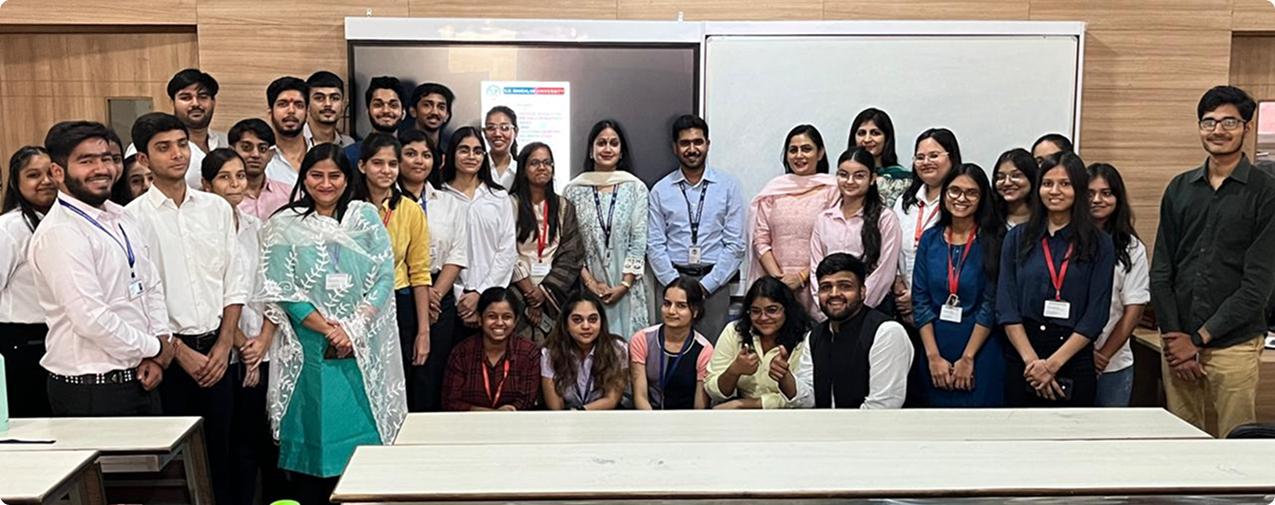
Ambedkar Jayanti, Gandhi Jayanti, Netaji Subhash Chandra Bose Jayanti, Sardar Vallabh Bhai Patel Jayanti (Unity Day) and other important days are celebrated in the University to create awareness about the national leaders and their contribution in the development of India.
Clubs and Societies are formed by students on the campus which support and propagate the idea of diverse cultures. The students are given ample opportunities to organize cultural festivals to showcase our rich dance forms, music and diverse enriching traditional beliefs from various states across India. The students also visit Suraj Kund International Crafts Fair every year to understand the rich and diverse culture, handicrafts and develop inter-disciplinary entrepreneurship skills.
In cultural fest ‘Rendezvous’ popular musicians and singers with their teams are invited to enthrall the students with rich cultural songs. This helps not only in tapping the talents of the students but also making them conscious of the rich culture of our state and our country.
KRMU’s annual literary magazine ‘Reflections’ encourages people to pen down their ideas in the form of poems, stories, essays and paintings. Such literary and artistic expressions of students are compiled and widely circulated annually.
The students are encouraged to take up projects based on the theme to promote local and regional culture such as fashion shows on the theme of Indian States, the Art Gallery of School of Humanities promotes rich cultural heritage of India, Journalism School organizes various competitions in Hindi language also.
Special facilities are created for the Divyangjan students. Their mobility is supported with the provision of ramps and wheelchairs. Special restroom facilities have been provided in the college premises. Audio-visual and Braille facilities are available for them on the ground floor of the library. During the examination, scribes are arranged for the needy.
Chetna Society in collaboration with Heartfulness Trust organizes meditation sessions. The collaboration session with ISCON are also conducted to promote peace and harmony.
Reports| Sr. No | Name | Designation | Position |
| 1 | Prof. (Dr.) Rajendra Sinha | Vice Chancellor | Chairperson |
| 2 | Prof. Pravin Bharti | Registrar (I/C) | Member |
| 3 | Dr. Prakash G. Burade | Associate Dean, School of Engineering & Technology | Member |
| 4 | Dr. Nissar Reshi | Dean, School of Science | Member |
| 5 | Dr. M. S. Gambhire, Professor and Dean | Dean, School of Pharmaceutical Sciences | Member |
| 6 | Dr. Pawan R. Bhaladhare | HOD, School of Computer Sciences and Engineering | Member |
| 7 | Dr. Rupali Jitendra Khaire | Dean, School of Commerce and Management Studies | Member |
| 8 | Dr. Sharvari V. Vaidya | Dean (I/C), School of Law | Member |
Internal Policy Handbook
Section: Campus Sustainability and Environment
Policy Title: Eco-Friendly Transportation Policy
Effective From: August 2024
Review Cycle: Every 3 years
This policy outlines the university’s commitment to promoting eco-friendly, safe, and sustainable modes of transportation within and around the campus. It supports the university’s broader goal of becoming a Green Campus by reducing air pollution, conserving energy, enhancing road safety, and lowering its overall carbon footprint.
This policy applies to:
4.1 Restricted Entry of Automobiles
4.2 Use of Bicycles and Battery-Operated Vehicles
4.3 Public Transportation and University Transport System
4.4 Carbon Footprint Reduction Measures
5. Infrastructure Support
6. Awareness and Engagement
7. Monitoring and Compliance
8. Review and Improvement
Document Control
1.0 August 2024 Initial implementation of Eco-Friendly Transportation Policy

K.R. Mangalam University, established in 2013 under the Haryana Private University Act, is a pioneering institution committed to transformative education and nurturing future leaders.
Read MoreSohna Road, Gurugram, Haryana
122103