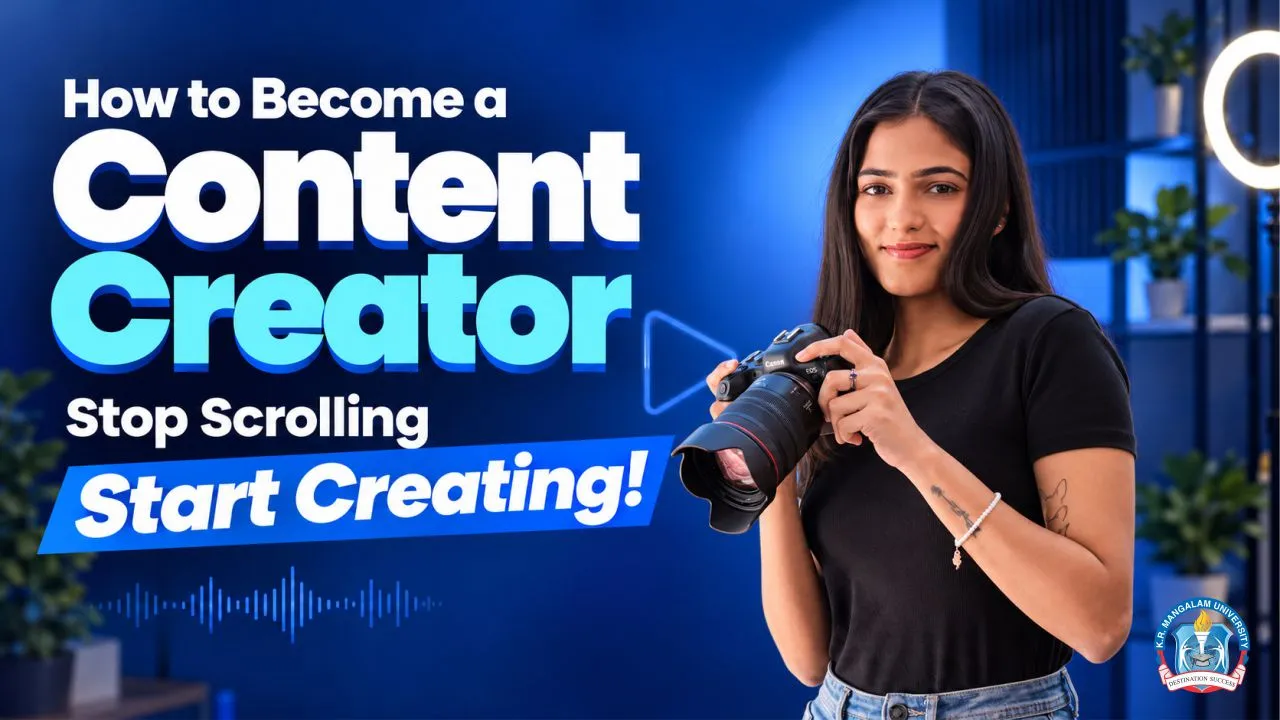
A content creator turns ideas, creativity, and digital skills into engaging content that connects with audiences.
Content creation has become an important part of digital communication, marketing, media, and the growing creator economy. For individuals exploring how to become a content creator, understanding the required skills, responsibilities, career options, industry trends, and future opportunities is essential. This guide explains the process of becoming a content creator, career pathways in India, the creator economy, and the role of education and practical skills in building a content creation career. It also highlights opportunities at K.R. Mangalam University (KRMU) through its School of Emerging Media and Creator Economy, which focuses on practical, industry-oriented learning in media, digital content, and emerging creator platforms.
Overview of This Blog
| Sections |
What It Covers |
| Things to Understand Before Becoming a Content Creator |
Key concepts, responsibilities, digital content creation, and industry trends. |
| How to Become a Content Creator? |
Step-by-step process from choosing a niche to creating and publishing content. |
| Creator Economy: What Does It Mean? |
Meaning of the creator economy and its major monetisation opportunities. |
| Content Creation and the Creator Economy |
Connection between content, audience building, personal branding, and monetisation. |
| Creator Economy Statistics |
Recent statistics highlighting the growth and scale of India’s creator economy. |
| Education for Content Creation at KRMU |
K.R. Mangalam University’s School of Emerging Media and Creator Economy, programmes, and practical learning opportunities. |
| Conclusion |
Summarisation of this blog post. |
Things to Understand Before Becoming a Content Creator
Before readers learn “how to become a content creator”, it is important to understand:
What is Content Creation?
Content creation is the process of developing and publishing original material to inform, educate, entertain, or engage a specific audience. It can include blogs, articles, videos, podcasts, social media posts, photographs, graphics, infographics, and other forms of media. Content creators usually focus on a particular niche and choose formats and platforms that suit their audience.
Digital content creation refers specifically to creating and sharing content through digital platforms and online channels. It involves activities such as writing, video production, graphic design, photography, podcasting, SEO, social media management, and content planning. Digital content can be published through websites, blogs, YouTube, Instagram, LinkedIn, podcasts, and other online platforms.
With the growth of digital platforms, digital content creation has become an important part of marketing, communication, personal branding, and the wider creator economy.
What skills are needed to become a content creator?
Key skills include writing, storytelling, video editing, graphic design, SEO, social media, and basic analytics. |
Also Read: B.A. in Journalism and Mass Communication: Fee, Scope & More
What Content Creators Do
A content producer generates digital media, such as videos, podcasts, or textual content, that caters to a certain target audience. Typical tasks include the following:
- Editing and Proofreading: Reviewing and refining text for clarity, accuracy, and style, ensuring all content aligns with brand guidelines and messaging.
- Multimedia Creation: Clicking and editing images, recording and editing videos, making animations or GIFs.
- Collaboration: Coordinating with agencies and contributors, collaborating with team members, including marketers, designers, and subject matter experts.
- Content Management: Organising and managing content libraries, updating and repurposing existing content.
- Analytics and Reporting: Monitoring content performance metrics, delivering data-driven insights and recommendations.
Content Creation as a Career in India
After getting clarity on “how to become a content creator?”, readers now need to understand the viability of content creation as a career in India.
Content creation has developed into a diverse career option as businesses, media platforms, and audiences increasingly rely on digital content. Individuals with skills in writing, video production, design, storytelling, social media, and digital marketing can explore different roles across the growing creator economy.
Career Paths in Content Creation
Content creation can lead to various career paths, depending on an individual’s skills, interests, and preferred content format:
- Social Media Creator: Develops posts, reels, short videos, graphics, and other content for social media platforms.
- Blogger: Creates informative, educational, or entertainment-focused textual content for websites and blogs.
- Influencer: Builds an audience around a particular niche and collaborates with brands through sponsored content and partnerships.
- Podcaster: Produces audio or video content, including discussions, interviews, storytelling, and educational programmes.
- UGC Creator: Creates user-generated-style content for brands to use in their digital marketing campaigns.
- Content Strategist: Plans content themes, formats, publishing schedules, and strategies based on audience and business objectives.
- Brand/Content Marketer: Creates and manages content designed to communicate a brand’s message and support marketing goals.
- Freelance Creator: Provides content creation services to multiple clients, businesses, agencies, or organisations.
Freelancing & Entrepreneurship Opportunities
Freelancing provides another pathway, allowing creators to work with multiple clients on projects such as social media content, videos, blogs, graphics, and UGC campaigns. Experienced creators may also collaborate with brands through sponsorships, partnerships, affiliate marketing, and commissioned content.
Content creation can also support entrepreneurship. Creators may build personal brands, launch digital products, develop online communities, start creative agencies, or establish creator-led businesses. As the creator economy continues to evolve, combining creative abilities with digital, marketing, and business skills can open up varied professional opportunities.
Future of Content Creation in India
The future of content creation in India is being shaped by evolving audience preferences, technology, and digital platforms. Key trends include:
- Short-Form Video: Reels, Shorts, and other short videos continue to drive content consumption.
- AI-Assisted Creation: AI tools support content ideation, writing, editing, design, and personalisation.
- Regional Content: Regional-language content is helping creators reach wider audiences.
- Creator-Led Businesses: Creators are building income streams through products, courses, memberships, and services.
- Live Streaming: Live content enables real-time audience interaction across education, gaming, entertainment, and more.
- UGC & Influencer Marketing: Brands increasingly collaborate with creators for digital campaigns.
- Personal Branding: Consistent content helps creators build expertise and audience trust.
- Niche Communities: Specialised content helps creators build focused and engaged audiences.
Overall, combining creativity, digital skills, audience understanding, and adaptability can help creators explore opportunities in India’s evolving creator economy.
How to Become a Content Creator?
Becoming a content creator involves a series of planned steps, from selecting a suitable niche to developing relevant skills and consistently publishing valuable content.
Choose a Relevant Content Niche
The first step is to identify a niche that aligns with the creator’s interests, knowledge, and strengths. A focused niche helps content creators build a specific audience and develop content with greater consistency. Popular areas may include travel, technology, fashion, education, fitness, food, or entertainment. The chosen niche should provide enough scope for original, useful, and engaging content.
Understand the Target Audience
Understanding the target audience helps creators produce content that addresses their interests, needs, and challenges. Audience research can involve social listening, online surveys, platform analytics, and competitor analysis. These insights can help identify relevant topics, preferred content formats, and audience expectations.
Build Essential Content Creation Skills
Content creators need a combination of creative, technical, and digital skills depending on their chosen niche and format. These may include writing, storytelling, video production, editing, graphic design, SEO, social media management, and basic analytics. For example, video creators can benefit from developing skills in filming, editing, scripting, and visual storytelling.
Plan Content with a Content Calendar
A content calendar helps creators organise ideas, production schedules, publishing dates, and promotional activities. Planning content in advance can support consistency across platforms while making it easier to maintain a regular publishing schedule. It can also help creators balance different content formats and topics.
Create, Publish and Share Content
Once the required skills and content plan are in place, creators can begin producing and publishing content for their target audience. Depending on the niche, content may be shared through blogs, YouTube, Instagram, LinkedIn, podcasts, or other digital platforms. Consistent publishing, audience engagement, and performance analysis can help creators refine their content strategy over time.
What is the creator economy?
It is a digital ecosystem where creators monetise their content, skills, expertise, and personal brands. |
Creator Economy: What Does It Mean?
The creator economy is a growing digital ecosystem in which individuals such as influencers, content creators, writers, educators, artists, and other creative professionals produce content and monetise their skills, expertise, and personal brands. Digital platforms such as YouTube, TikTok, Patreon, and Substack allow creators to reach audiences directly and explore different income sources, including advertising, sponsorships, subscriptions, affiliate marketing, and product sales.
Content Creation and the Creator Economy
Content creation and the creator economy are closely connected. Content is the primary output that creators use to attract audiences, build personal brands, and generate income through digital platforms. As creators consistently produce valuable and engaging content, they can develop audiences that create opportunities for monetisation and professional growth.
Also Read: MA in Journalism and Mass Communication: Fee, Scope & More
Creator Economy Statistics
India’s creator economy has expanded rapidly, supported by growing internet usage, social media adoption, brand collaborations, and new monetisation models. Some recent statistics highlight the scale and growth of this ecosystem:
4.12 million creators in India
The creator base grew from approximately 0.96 million in 2020 to 4.12 million in 2025, representing more than fourfold growth over five years, according to the 2026 ISB–Hashfame report.
66% of creators are from non-metro markets
In 2025, 66% of India’s creators came from non-metro markets, showing the growing reach of the creator economy beyond major cities (ISB–Hashfame report).
$350–400 billion Creator-influenced consumer spending
BCG’s 2025 India creator economy report estimates that creators influence $350–400 billion in consumer spending in India. This figure is projected to exceed $1 trillion by 2030.
$20–25 billion in Direct Creator-economy Revenues
BCG estimated India’s creator ecosystem generated around $20–25 billion in direct revenues, with the figure projected to reach $100–125 billion by 2030.
Education for Content Creation at KRMU
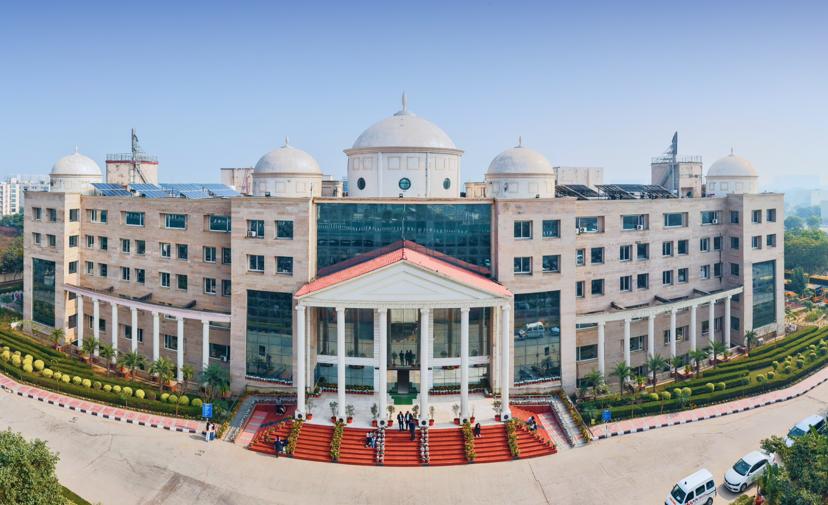
K.R. Mangalam University (KRMU) prepares students for emerging careers in media, content creation, journalism, and the creator economy through its School of Emerging Media and Creator Economy (SEMCE). The school combines practical learning, live projects, industry interaction, internships, and mentorship to help students develop relevant creative and digital skills.
Programmes offered include:
- B.A. Journalism and Mass Communication – 3 years
- B.A. (Hons./Hons. with Research) Journalism and Mass Communication – 4 years
- M.A. Journalism and Mass Communication – 2 years
- Ph.D. in relevant media/research areas
Students gain exposure to digital content creation, storytelling, video production, podcasting, social media, branding, audience engagement, and creator-led platforms, making SEMCE relevant for those interested in content creation and emerging media careers.
Conclusion
To sum up, learning how to become a content creator involves developing creative, digital, communication, and audience-focused skills while consistently creating valuable content. With opportunities across social media, blogging, video, UGC, podcasting, freelancing, and entrepreneurship, content creation offers diverse career pathways. K.R. Mangalam University’s School of Emerging Media and Creator Economy provides relevant programmes and practical learning for students interested in building careers in media and the evolving creator economy.
Explore KRMU’s programmes to build relevant content creation skills and take the next step towards a career in digital media and the creator economy.
FAQs
What does a content creator do?
A content creator develops digital content such as videos, blogs, podcasts, graphics, and social media posts for a specific audience.
How to become a content creator?
Choose a niche, understand the target audience, develop relevant skills, plan content, and publish consistently.
Is content creation a career in India?
Yes, it offers opportunities in social media, blogging, video, podcasting, UGC, freelancing, and digital marketing.
How can KRMU help aspiring content creators?
K.R. Mangalam University’s School of Emerging Media and Creator Economy offers programmes and practical learning in media and emerging creator platforms.




 13 Schools700+ Faculty Members













 13+Years of Educational Experience