There is a growing demand for qualified pharmacy professionals in various fields. The prominent sectors include pharmaceutical research and development (R&D), clinical research, medicine manufacturing, quality assurance, healthcare, and regulatory affairs. With continuous advancements in biotechnology, drug development, and healthcare systems, the pharmaceutical industry is actively looking for skilled professionals with strong academic and practical knowledge. Due to this increasing demand, many students choose to pursue a Bachelor of Pharmacy (B.Pharm.) after completing their 12th-grade education. Students interested in building careers in the pharmaceutical and healthcare sectors are constantly searching for information related to B.Pharm. admission.
To help aspiring students understand the programme better, this guide will discuss important aspects of B.Pharm. admission after 12th. These aspects include eligibility criteria and fees.
This blog will also discuss KRMU and its admission process. Additionally, it will cover higher education options and job opportunities after a Bachelor of Pharmacy (B.Pharm.) to help students understand why pursuing a B.Pharm. degree is a smart move.
Overview of Upcoming Sections
| Sections |
Descriptions |
| What Is B.Pharm.? |
Provides an overview of the Bachelor of Pharmacy programme, including its focus on pharmaceutical sciences, medicines, and practical training. |
| B.Pharm. Eligibility Criteria |
Covers important eligibility requirements such as educational qualifications, required subjects, minimum marks, and entrance examinations for B.Pharm. admission. |
| B.Pharm. Admission Fees |
Discusses the fee structure of the B.Pharm. programme, including tuition fees, laboratory charges, and examination fees. |
| Why Choose KRMU for B.Pharm. Admission? |
Highlights K.R. Mangalam University’s pharmacy programmes, practical learning approach, laboratories, scholarships, and industry-oriented education. |
| B.Pharm. Admission Process at KRMU |
Explains the admission procedure at KRMU, including application submission, document verification, selection process, and seat confirmation. |
| Options for Further Studies After B.Pharm. |
Discusses higher education opportunities such as M.Pharm., Pharm.D., MBA in Pharmaceutical Management, and certification programmes. |
| Job Opportunities After B.Pharm. |
Covers career opportunities available after B.Pharm., including Pharmacist, Clinical Pharmacist, Medical Representative, Clinical Research Associate, and Research Scientist roles with salary ranges. |
| Conclusion |
Summarises the importance of understanding B.Pharm. admission and highlights KRMU’s industry-oriented pharmacy education and career support. |
What Is B.Pharm.?
It is an extensive undergraduate pharmaceutical sciences programme that delves extensively into the intriguing realm of pharmaceuticals. The programme places a strong emphasis on academic study while also enabling students to have a practical understanding of how pharmaceuticals are manufactured, evaluated, and safely prescribed.
B.Pharm. Eligibility Criteria
Candidates need to understand these eligibility criteria before applying for B.Pharm. admission.
| Criteria |
Descriptions |
| Education Requirement |
Completion of 10+2 with Physics, Chemistry and Biology/Mathematics; minimum aggregate of 50% marks |
| Other Requirements |
Merit or admission examinations like KCET, JEE Main, NEET, MHT CET, CUET, AP EAMCET, TS EAMCET, or KEAM |
Also Read: B.Pharm Admission 2026 Guide: Eligibility, Fees, Syllabus & Jobs
B.Pharm. Admission Fees
Examining the cost structure is crucial when applying for admission to the B.Pharm. programme. University admission fees for the B.Pharm. programme are designed to provide value for high-quality instruction, real-world experience, and career assistance.
The following elements outline the price structure, while the precise fee may differ significantly from year to year:
- Tuition Fees: Tuition fee includes lab use, classroom supplies, and instruction.
- Laboratory & Practical Fees: Provides access to state-of-the-art pharmaceutical labs and the tools needed for practical instruction.
- Registration & Exam Fees: Payment for assessment fees, academic registration, and university exams.
For the most recent information on fees, instalment plans, and available financial aid, students are urged to visit the colleges’ websites or brochures.
Why Choose K.R. Mangalam University (KRMU) for B.Pharm. Admission?
Under the School of Medical and Allied Sciences (SMAS), KRMU offers B.Pharm. and B.Pharm. (Lateral).
It seeks to offer in-depth medical science education and training through SMAS. In addition to offering academic support, state-of-the-art facilities, and experiential learning, it consistently works to provide students with the knowledge and abilities necessary to meet the health-related needs of the modern world.
By combining academic knowledge with practical training, our specially designed curriculum exposes students to learning in a range of healthcare settings. It strongly focuses on research-based learning, cutting-edge diagnostic tools, and interprofessional practice to give future healthcare professionals the ability to adapt to shifting market demands. Through expert supervision, hands-on clinical practice, and access to well-equipped laboratories, students get a comprehensive grasp of medical sciences.
Below are the details of its programmes:
| Programmes |
Duration |
Eligibility |
Fees (Per Year) |
| B.Pharm. |
4 years |
The candidate must have earned at least 50% of the possible points in Physics, Chemistry, Biology, and Maths during their 10+2 exams at any accredited board or university. On December 31st of the year of application, the candidate must be at least 17 years old. The age will be determined by reviewing the matriculation/secondary school admission form or the equivalent examination certificate. |
₹ 2,14,000 |
| B.Pharm. (Lateral) |
3 years |
Completed a two-year D. Pharm program with at least 50% of the possible points from an accredited institution or college that has been authorised by the Pharmacy Council of India (PCI). On December 31 of the year of application, the candidate must be at least eighteen years old. The age will be determined by reviewing the matriculation/secondary school admission form or the equivalent examination certificate. |
₹ 2,14,000 |
B.Pharm. Admission Process at KRMU
KRMU’s B.Pharm. admissions procedure is intended to be open, merit-based, and available to qualified applicants. After fulfilling the previously mentioned fundamental eligibility requirements, prospective students must take the following actions:
Application Submission
Interested candidates can apply online through the official KRMU website or visit the admission office in person to submit the completed application form before the deadline.
Document Verification
Following the submission of the form, candidates must upload or provide the necessary academic records, including their 12th-grade marksheet, ID proof, and any relevant category certifications.
Selection Process
In accordance with the university’s admission policies, selection is often based on the candidate’s academic standing in the 12th-grade, the other qualifying requirements listed above, followed by an interview or counselling.
Seat Confirmation
Candidates must pay the admission fees within the allotted time frame in order to confirm their seat after being shortlisted.
Students can easily and safely complete the B.Pharm. admissions procedure with the aid of KRMU’s admission site, which provides step-by-step instructions.
Options for Further Studies After a B.Pharma.
Below are some higher studies options after a B.Pharma.
M. Pharm.
The two-year postgraduate Master of Pharmacy (M.Pharm.) programme offers specialisations in clinical pharmacy, pharmaceutical chemistry, pharmacology, and pharmaceutics.
Pharm.D.
The Doctor of Pharmacy (Pharm.D.) programme focuses on hospital pharmacy, patient care, and advanced clinical practice.
MBA in Pharmaceutical Management
The MBA in Pharmaceutical Management programme prepares graduates for managerial positions in the pharmaceutical and healthcare industries by fusing commercial acumen with pharmacy expertise.
Pharmaceutical Sciences
Students interested in research, development, or teaching might benefit from a ScD in Pharmaceutical Sciences.
Diploma or Certification Programmes
Acquire specialised knowledge, enrol in short-term programmes in clinical research, regulatory affairs, quality assurance, or drug safety.
After earning a bachelor’s degree in pharmacy, pursuing further education not only broadens one’s knowledge but also greatly boosts one’s job chances by providing access to leadership, clinical, research, and international possibilities.
Job Opportunities After B.Pharm.
Below are the career opportunities after getting a B.Pharm. degree:
Pharmacists
They are responsible for interpreting doctors’ notes and compounding and dispensing prescription medications. Along with instructing patients on how to take their medicines, they inform them about any potential side effects and adverse reactions with other drugs. They maintain accurate records of the customers and the medications, verify order entries, replenish stock and remove expired or damaged products from the inventory. They comply with legal rules and regulations related to pharmaceutical practice.
Salary Range
₹4–6 LPA
Clinical Pharmacists
Clinical pharmacists examine patient records and assess patient circumstances in collaboration with physicians and other medical specialists to ascertain if prescription drugs are suitable. For the best possible patient outcome, they counsel physicians on precise medication doses and delivery. They also educate patients on maintaining good health by following a balanced diet, regular exercise routine, and prescribed medication regimen.
Salary Range
₹4–8 LPA
Medical Representatives
Promoting and selling drugs and medical equipment to chemists, physicians, and other healthcare providers is the primary responsibility of medical representatives (MRs). To accomplish this effectively, they possess a thorough understanding of the medications they are promoting. Since it is part of their job to follow up with sales leads, attend corporate meetings, and cultivate connections with customers, they can also benefit from having strong interpersonal skills. Medical representatives design plans to market certain goods, compile reports and presentations, collect consumer feedback, and keep up with medical advancements.
Salary Range
₹4–7 LPA
Clinical Research Associates
Their main responsibilities include conducting clinical trials and research studies to determine the safety of pharmaceutical and biotechnological goods. They create trial procedures, set up trial locations, and oversee trial materials for the study. Additionally, they communicate with physicians and an ethics committee to guarantee the safety and rights of study participants. They keep trial records and generate reports and paperwork.
Salary Range
₹4–9 LPA
Research Scientists
Researching different pharmacological subjects is the primary responsibility of research scientists. They do this by organising research investigations, coming up with research plans, and creating research procedures. They provide reputable reports, white papers, and articles on their research conclusions after assessing the data. At industry gatherings, and at scientific conferences and seminars, they are able to present their findings.
Salary Range
₹5–12 LPA
Note: Salaries may vary based on skills, experience, company, and location.
Conclusion
Understanding the B.Pharm. admission process is an important first step for students planning to build careers in the pharmaceutical and healthcare sectors. From eligibility criteria and fee structure to higher education opportunities and career prospects, students must carefully evaluate every aspect before applying.
To enable students thrive in the changing pharmaceutical sector, K.R. Mangalam University (KRMU) provides industry-oriented learning, hands-on experience, state-of-the-art laboratories, and robust academic support.
Apply to KRMU and begin your journey in the Pharmacy field.
Also Read: Know Everything About the Bachelor of Pharmacy Program
FAQs
What is the eligibility criteria for B.Pharm. admission?
Candidates must complete 10+2 with Physics, Chemistry, and Biology/Mathematics with the required minimum aggregate marks as specified by the college or university.
Can PCM students apply for B.Pharm. admission?
Yes, students from both PCM and PCB backgrounds are generally eligible for B.Pharm. admission in many universities.
Is NEET compulsory for B.Pharm. admission at KRMU?
No, NEET is not mandatory for admission to the B.Pharm. programme at K.R. Mangalam University.
Which industries hire B.Pharm. graduates?
B.Pharm. graduates can work in pharmaceutical companies, hospitals, healthcare organisations, clinical research firms, medicine manufacturing industries, and regulatory sectors.




 13 Schools700+ Faculty Members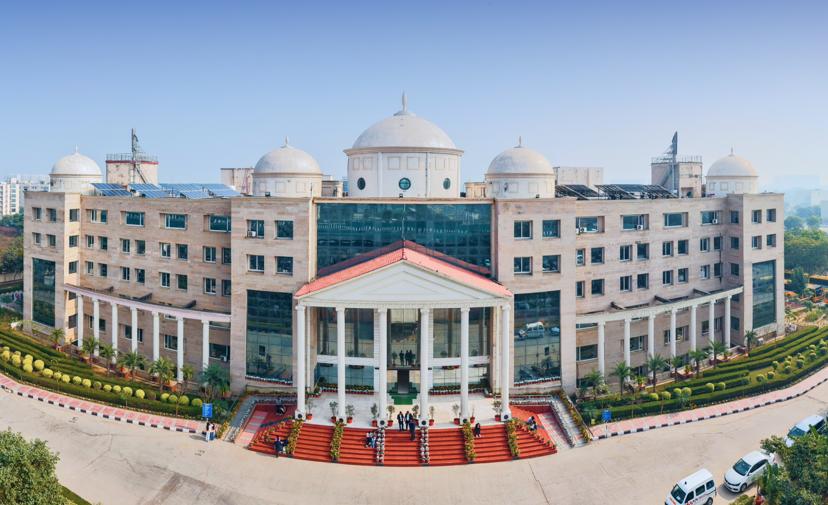













 13+Years of Educational Experience