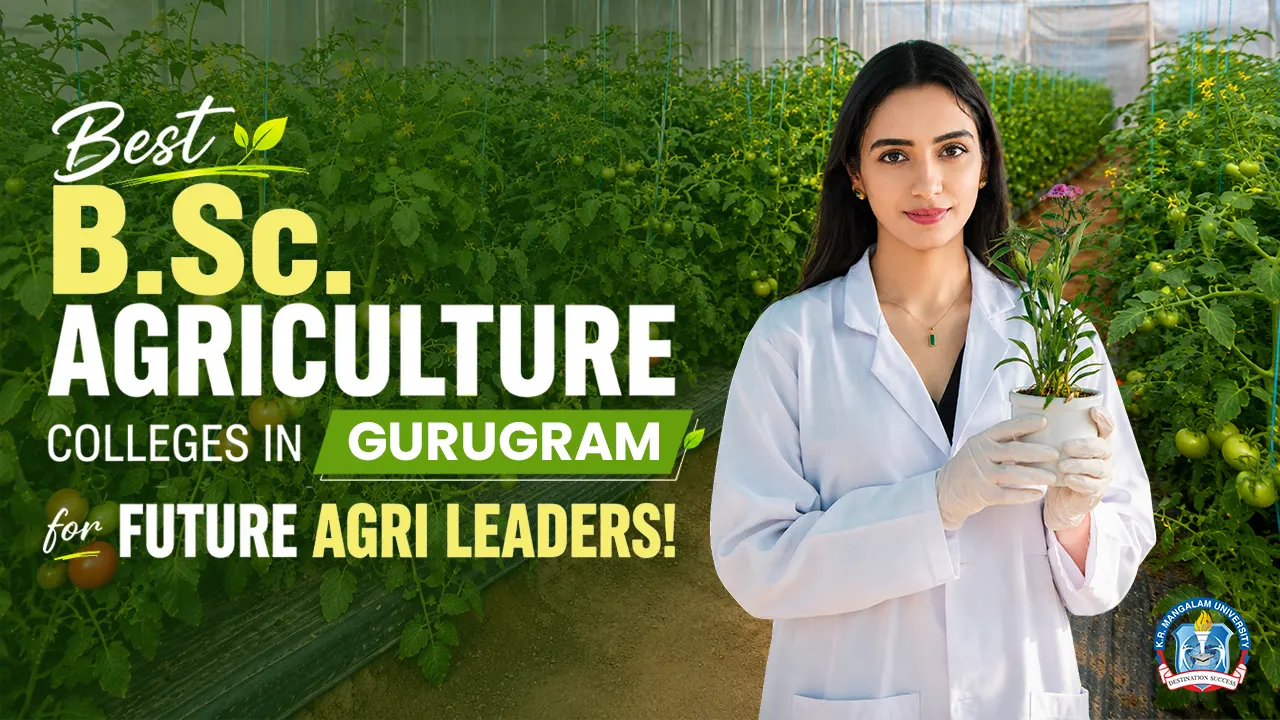
Every breakthrough in agriculture begins with quality education and hands-on experience.
Agriculture contributes nearly 20% of India’s Gross Value Added (GVA) and employs 46.1% of the country’s workforce. All of this makes it one of the largest employment-generating sectors in India. Traditional farming is no longer the only form of agriculture. In order to increase production and food security, it now incorporates biotechnology, precision farming, agribusiness, and sustainable agricultural methods.
As agriculture embraces innovation and modern technologies, the need for highly qualified professionals continues to grow. This has led to the increase in popularity of the undergraduate programme, i.e., B.Sc. (Hons.) Agriculture, among many students. They are now searching for the best B.Sc. agriculture colleges in Gurugram. They are willing to join an educational institute that will give them a proper education and guidance. But the issue is that there are multiple options available.
This blog will help students to find the right B.Sc. agriculture colleges in Gurugram.
Quick Glance At the Blog
| Section |
What We Will Cover? |
| About B.Sc. Agriculture (Hons.) Course |
Learn about the programme. Understand the general admission procedure, including application, document submission, entrance examinations (if applicable), counselling, and final enrolment.
Explore the approximate fee range at private universities in Gurugram and the factors students should compare before choosing a college.
|
| B.Sc. Agriculture Colleges in Gurugram: How to Choose the Right One? |
Discover the key factors to evaluate, such as curriculum, faculty, practical exposure, laboratories, industry collaborations, research opportunities, and placement support. |
| Why Choose K.R. Mangalam University for B.Sc. (Hons.) Agriculture? |
Learn about KRMU’s industry-oriented curriculum. Also learn about the hands-on learning approach, modern infrastructure, experienced faculty, internships, and career support. |
| After Earning a B.Sc. in Agriculture, What Are the Career Options? |
Explore the diverse career opportunities available after graduation, including roles in agribusiness, government, research, food processing, and agricultural technology. |
| Conclusion |
Summarises the importance of choosing the right university and highlights how the right academic environment can support a successful career in agriculture. |
About B.Sc. Agriculture (Hons.) Course
Before shortlisting B.Sc. agriculture colleges in Gurugram, students need to know everything about the B.Sc. agriculture (Hons.) admissions.
Basic Information
Agricultural sciences and contemporary farming methods are the main topics of the B.Sc. (Hons.) Agriculture course. It equips students to tackle issues pertaining to agricultural innovation, sustainability, resource management, and food production. The duration of the B.Sc. Agriculture programme is four years.
Typically, students study topics like:
- Agronomy
- Plant pathology, agricultural economics, and soil science
- Plant Breeding and Genetics in Horticulture
- Entomology, Agricultural Engineering, and Agricultural Extension
Through field trips, labs, internships, and research projects, the course integrates classroom instruction with hands-on training.
Highlights of B.Sc. (Hons.) Agriculture Programme
- The duration of this course is four years.
- To get admission to it, candidates must have graduated from a recognised board with a Class 12th degree in physics, chemistry, biology/mathematics/agriculture. Universities may have different requirements for eligibility.
B.Sc. Agriculture (Hons.) Admissions Process
Although the admission process varies from one university to another, it generally follows these steps:
- Filling out the online application form through the university’s official website.
- Submitting the required academic documents and supporting certificates.
- Appearing for the university entrance examination or CUET, if applicable.
- Participating in a personal interview or counselling session, where required.
- Completing the admission process by paying the prescribed fees after selection.
Students are advised to visit the official website of their preferred university to review the latest eligibility criteria, admission guidelines, and important deadlines before applying.
B.Sc. (Hons.) Agriculture Fees in Private Colleges
The fee structure varies depending on the university, infrastructure, facilities, and industry exposure offered. In Gurugram, the yearly tuition fee for B.Sc. (Hons.) Agriculture at private universities generally is between ₹1 and 2 lakh for the entire programme. Students should also compare scholarship opportunities, education loan assistance, hostel charges, and other academic facilities before making a decision.
B.Sc. Agriculture Colleges in Gurugram: How to Choose the Right One?
When evaluating B.Sc. Agriculture colleges in Haryana, students should consider more than just facilities; they should also take into account aspects like industry exposure, practical training, academic excellence, and placement prospects.
- Curriculum: Look for a curriculum that is in line with current farming methods and new business trends.
- Real-World Experience: Agricultural education must include field trips, demonstrations, and internships.
- Faculty Expertise: Faculty members with experience can offer both industry insights and scholarly advice.
- Laboratory & Equipment: Practical learning experiences are improved by well-equipped laboratories.
- Industry Links: Employability can be enhanced by exposure to agribusinesses and agricultural organisations.
- Opportunities for Research: Innovation and scientific thinking are fostered by project participation.
- Assistance with Placement: Strong career counselling and placement support can facilitate students’ entry into the profession.
Also Read: Top B.Sc. Agriculture Colleges in Haryana Complete Guide
Why Choose K.R. Mangalam University for B.Sc. (Hons.) Agriculture?
Numerous employment options are accessible with a B.Sc. (Hons.) in Agriculture, but selecting the correct institute is essential to preparing students for long-term success. Aspiring agricultural professionals require practical experience, industry knowledge, and the confidence to tackle real-world problems in addition to textbooks and exams.
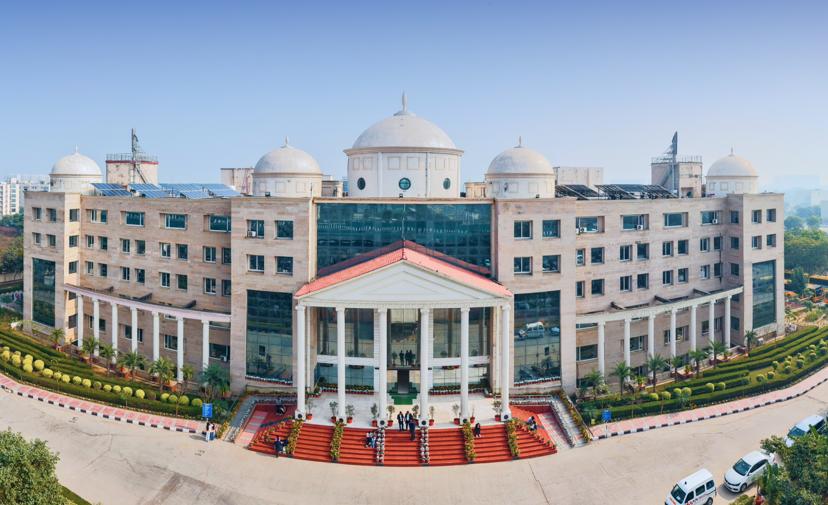
K.R. Mangalam University stands as one of the top B.Sc. agriculture colleges in Delhi NCR. It offers B.Sc. (Hons.) Agriculture programmes are characterised by their industry-focused curriculum, state-of-the-art facilities, and emphasis on hands-on learning.
What KRMU students can anticipate is as follows:
Learn Beyond the Classroom
The programme allows students to apply theoretical concepts to practical agricultural practices. It is a combination of academic learning with field trips, lab sessions, demonstrations, and hands-on experiences.
Industry-Relevant Curriculum
Students gain comprehensive knowledge of modern agricultural practices, including agribusiness, sustainable farming techniques, agricultural innovation, and emerging technologies that are transforming the industry.
Get Practical Experience
Students can put their knowledge to use. They can network with professionals in the field. They are also prepared for the workforce through internships and hands-on training.
Learn from Experienced & Expert Faculty
Professors who combine a solid academic background with real-world knowledge from the agriculture industry teach KRMU’s students.
Develop a Mindset of Entrepreneurship
The university promotes creativity, problem-solving, and entrepreneurial thinking, whether students choose to work for government agencies, agribusiness companies, or academic institutions or start their own businesses.
Develop Future-Ready Capabilities
To improve overall employability, the learning process incorporates communication, critical thinking, leadership, teamwork, and professional ethics.
Get the Best Infrastructure
Both scientific research and the development of practical skills are supported by well-equipped labs and state-of-the-art facilities.
After Earning a B.Sc. (Hons.) in Agriculture, What Are the Career Options?
After understanding the KRMU’s B.Sc. (Hons.) in Agriculture programme, it’s time to discuss career options after this course.
The fact that a B.Sc. (Hons.) in Agriculture does not restrict graduates to a specific job route is one of its greatest benefits. The agricultural sector of today goes well beyond traditional farming, opening doors for government agencies, agribusiness firms, research institutions, startups, and the food industry.
Students can investigate the following career options:
Agronomists
A job as an agronomist can be a fantastic fit if increasing crop yield and encouraging sustainable agricultural methods sound intriguing. Agronomists study crops, enhance cultivation techniques, and maintain soil health. They create solutions for agricultural problems in close collaboration with farmers and researchers.
Range of Average Salary: ₹4–10 LPA
Agriculture Officers
In order to assist farmers and carry out agricultural programmes, agriculture officers are crucial. They monitor farming practices and offer technical advice. They assist in ensuring that agricultural programmes and initiatives reach the communities they are meant to benefit.
Range of Average Salary: ₹4–7 LPA
Agriculture Development Officers
These experts serve as a liaison between farmers and governmental organisations. They enable the provision of agricultural inputs, support contemporary farming methods, and run awareness campaigns. They also help to increase food security and production.
Range of Average Salary: ₹4–7 LPA
Agricultural Sales Executives
Professionals with an understanding of both agricultural and client needs are needed by agribusiness firms. While developing solid industry ties, agricultural sales executives assist farmers in selecting appropriate items. They include high-quality seeds, fertilisers, farm equipment, and crop solutions.
Range of Average Salary: ₹3–8 LPA
Food Safety Officers
This position provides a chance for students interested in public health and food quality. It also enables them to make sure that food products are manufactured in accordance with the set regulatory criteria. Food safety officers conduct facility inspections, keep an eye on compliance, look into complaints, and support consumer safety.
Range of Average Salary: ₹4–6 LPA
Agribusiness Managers
Agribusiness managers oversee the business operations of agricultural enterprises. These operations include procurement, production, marketing, and sales. They play a key role in improving operational efficiency and profitability.
Range of Average Salary: ₹5–10 LPA
Soil and Plant Analysts
Soil and plant analysts evaluate soil fertility, plant health, and nutrient requirements. They recommend suitable fertilisers, soil management practices, and crop improvement strategies. They do this to enhance agricultural productivity.
Range of Average Salary: ₹3.5–7 LPA
Seed Production Officers
Seed production officers ensure the production and quality of certified seeds. They supervise seed processing, quality testing, and compliance with agricultural standards. They work with seed companies and research organisations.
Range of Average Salary: ₹4–8 LPA
Note: These are only estimates and could change based on the employer, location, experience, abilities, and current trends in the field.
Conclusion
A B.Sc. (Hons.) Agriculture degree can open doors to many careers. There will be career options in agribusiness, research, food processing, government services, and agricultural technology. These opportunities can be seized by those who begin by choosing a university that offers both support for academic growth and practical skill development. By making an informed decision, students can prepare themselves for a dynamic and impactful career in the agriculture sector.
Explore how K.R. Mangalam University’s B.Sc. (Hons.) Agriculture programme helps students develop the knowledge, practical skills, and industry exposure needed for a successful career.
Do not waste any time and join KRMU!
Also Read: Why KRMU Is Considered One Of The Best BSc Agriculture Colleges In India?
FAQs
What is the duration of the B.Sc. (Hons.) Agriculture course?
The B.Sc. (Hons.) Agriculture programme is a four-year undergraduate degree that combines classroom learning with laboratory work, field visits, internships, and practical training.
What is the eligibility for B.Sc. (Hons.) Agriculture admissions?
Most universities require candidates to have completed Class 12th with Physics, Chemistry, and Biology, Mathematics, or Agriculture from a recognised board. Eligibility criteria may vary across universities.
What is the admission process for B.Sc. (Hons.) Agriculture colleges in Gurugram?
The admission process generally includes filling out an online application, submitting academic documents, appearing for a university entrance exam or CUET (if applicable), attending counselling or an interview, and completing fee payment after selection.
What are the B.Sc. (Hons.) Agriculture fees in private colleges?
The tuition fee at the private B.Sc. (Hons.) Agriculture colleges in Gurugram generally range from ₹1 lakh to ₹2 lakh per year, depending on the university, infrastructure, and facilities offered.
What should students consider while choosing a B.Sc. (Hons.) Agriculture college?
Students should evaluate the curriculum, faculty expertise, laboratory facilities, field visits, internships, industry collaborations, research opportunities, infrastructure, scholarships, and placement support before selecting a college.

























 13+Years of Educational Experience