Engineering and technology have become some of the most sought-after career fields for students after completing 12th grade. With rapid advancements in artificial intelligence, robotics, cybersecurity, automation, and digital transformation, pursuing B.Tech. courses after 12th offers excellent opportunities for innovation, career growth, and global exposure. Many students are now searching for B.Tech. courses after 12th and researching each of them to ensure they make the right choice. This blog explores B.Tech. courses after 12th, eligibility criteria, top specialisations, career opportunities, and salary prospects. Here, it will also be discussed why K.R. Mangalam University (KRMU) can be an excellent choice for engineering education.
Quick Overview of the Blog
Here is the glimpse into this blog.
| Section |
Description |
| About the B.Tech. Course |
Explains what B.Tech. means, its duration and the role of engineering and technology education. |
| Types of B.Tech. Specialisations |
Covers traditional engineering areas and emerging technology-focused specialisations such as AI & ML, Data Science, Cyber Security, Robotics & AI, Full Stack Development and UX/UI. |
| Eligibility for B.Tech. in India |
Explains general eligibility requirements for B.Tech. admission after Class 12 and lateral-entry options after a diploma. |
| Career Scope After B.Tech. |
Highlights career opportunities across software, data, cybersecurity, robotics, engineering and other technology-related areas. |
| Jobs and Salary Prospects |
Provides general information about career roles and salary factors for B.Tech. graduates. |
| Top Hiring Companies |
Lists examples of companies that recruit engineering and technology graduates. |
| Why Choose KRMU for B.Tech.? |
Highlights KRMU’s current B.Tech. programmes, industry collaborations, practical learning, placement assistance and university-level facilities. |
| Conclusion |
Summarises the importance of choosing a B.Tech. specialisation based on career interests, skills and future goals. |
About the B.Tech. Course
What is B.Tech.? Does it actually provide decent professional opportunities? After graduating from school, students commonly ask these kinds of questions. ‘B.Tech.’ means ‘Bachelor of Technology’. It is an academic degree awarded to undergraduates who successfully complete a four-year curriculum. The goal of B.Tech programmes aim to provide students with a thorough education in a range of technology and engineering fields. In India, it is among the most sought-after undergraduate degrees. Around 1.5 million students enrol in B.Tech programmes annually.
Types of B.Tech. Specialisations
B.Tech today isn’t just about the old familiar branches anymore it’s spread into a bunch of directions some rooted in classic engineering others chasing whatever tech trend is reshaping industries right now. Here’s a rundown
Computer Science and Software
This one’s still the heavyweight covers Computer Science and Engineering full stack development and a bunch of adjacent software tracks that keep evolving year after year
Artificial Intelligence and Data
AI and ML sit here alongside Data Science and Robotics & AI basically anything built around crunching data and making machines think a little smarter
Cybersecurity
A narrower lane but a critical one Cyber Security and broader information security work falls under this umbrella
Electronics and Hardware
Think semiconductors circuit design and the physical systems that make devices actually function this is where electronics engineering lives
Core Engineering
The traditional backbone Mechanical Civil Electrical Chemical these branches have been around forever and honestly aren’t going anywhere anytime soon
Emerging Technologies
Robotics automation IoT cloud computing and other fast-moving fields that didn’t even exist as standalone specializations a decade or two back
Each of these paths pulls you toward a different kind of career so it really comes down to what excites you more building software training algorithms defending networks designing circuits or just diving into whatever’s next
Eligibility for B.Tech. in India
How you apply will determine your eligibility for a B.Tech. in India. There are three primary routes:
Regular Admission (After Class 12)
Students should have completed 10+2 with physics, chemistry, and mathematics subjects.
The majority of universities require at least 50% to 60% of the aggregate marks.
Around 75% in PCM subjects may be required by prestigious universities like IITs.
Biology students may also be accepted into several specialisations, such as agriculture or biotechnology.
Most of the time, students must also take state-level exams like JEE Main, JEE Advanced, WBJEE, VITEEE, or other B.Tech. entrance exams.
Lateral Entry (After Diploma)
In some universities, students can enrol directly in the second year of B.Tech. if they have a three-year diploma in engineering or a similar discipline.
The diploma should be from an accredited institute.
The majority of colleges require a diploma with at least 50% of the aggregate marks.
Career Scopes
The career prospects after completing a B.Tech. course are vast and diverse. You can work in various sectors, including IT, manufacturing, government services, research and development, and many more. Here are some of the popular career options for B.Tech. graduates:
- Software Engineer
- Network Administrator
- Civil Engineer
- Mechanical Engineer
- Electrical Engineer
- Data Analyst
- Research and Development Scientist
- Aerospace Engineer
- Biomedical Engineer
Jobs and Salaries
B.Tech. graduates can expect a good starting salary, with the average salary in India ranging from INR 3 to 5 lakhs per annum. However, the salary varies depending on the specialisation, job profile, and company. Here are some of the popular B.Tech. jobs and their average salaries in India:
- Software Engineer: INR 4-6 lakhs per annum
- Civil Engineer: INR 3-5 lakhs per annum
- Mechanical Engineer: INR 3-6 lakhs per annum
- Electrical Engineer: INR 3-6 lakhs per annum
- Network Administrator: INR 3-4 lakhs per annum
- Data Analyst: INR 3-5 lakhs per annum
- Research and Development Scientist: INR 6-10 lakhs per annum
- Aerospace Engineer: INR 4-8 lakhs per annum
- Biomedical Engineer: INR 3-6 lakhs per annum
Top Hiring Companies
Many top companies recruit B.Tech. graduates, including both Indian and multinational companies. Some of the popular companies that hire B.Tech. graduates are:
- TCS
- Infosys
- Wipro
- Capgemini
- Tech Mahindra
- Larsen & Toubro
- Reliance Industries
- Amazon
- Microsoft
- Google
The abovementioned information shows that B.Tech. courses offer a wide range of specialisations and career options, with a good starting salary and various top companies recruiting B.Tech. graduates. So, if you’re interested in pursuing engineering after 12th standard, B.Tech. could be a great option for you.
Why Select KRMU for B.Tech.?
K.R. Mangalam University (KRMU) is a prestigious university dedicated to moulding the future of young minds. It offers various B.Tech. programmes which are:
These combine hands-on learning with research-driven instruction to provide our students with an unmatched educational experience. KRMU’s state-of-the-art facilities, knowledgeable instructors, and well-equipped labs provide the ideal learning environment to develop the next generation of engineering professionals.
Conclusion
Selecting the best B.Tech. course is about laying the groundwork for your entire career, not just selecting a subject. Choose a B.Tech. programme that fits your interests and goals, whether you’re passionate about software development or mechanical engineering. Being a part of the tech revolution is in itself thrilling, and there are countless options. Are you prepared to move forward in influencing the future of technology? Discover the cutting-edge and diverse programmes that K.R. Mangalam University offers.
Apply to KRMU and start your path to a prosperous engineering career right now!
Also Read: What to do after BTech CSE
FAQs
Why is B.Tech. Computer Science a top career choice?
B.Tech. Computer Science offers innovation-driven career paths in fields like AI, Data Science, and ML, with high demand and rewarding salaries. It’s ideal for anyone passionate about technology.
What specialisations can students pursue?
Some of the popular specialisations include Artificial Intelligence, Data Science, Cybersecurity, Cloud Computing, and Blockchain Technology offering diverse career paths.
What is the duration of B.Tech. courses?
The standard duration of B.Tech. courses is four years.
Can I apply for a B.Tech. course after 12th without maths?
No, Maths is a mandatory subject for most B.Tech. programmes.




 13 Schools700+ Faculty Members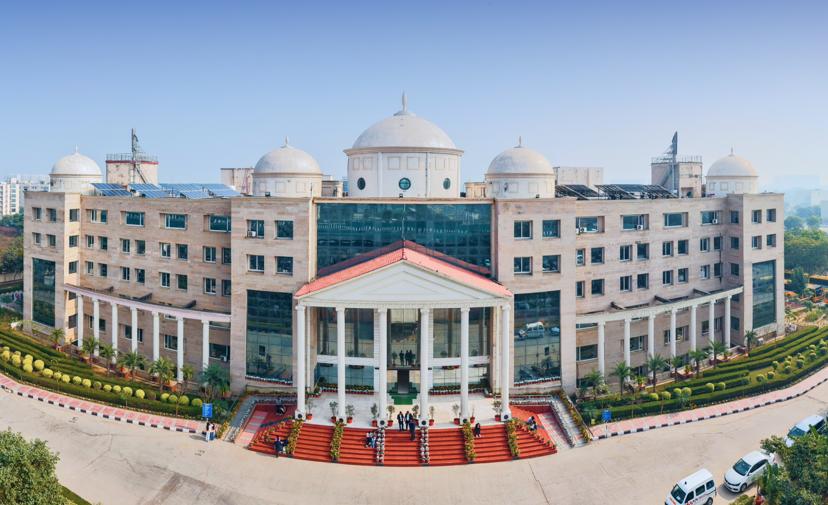













 13+Years of Educational Experience