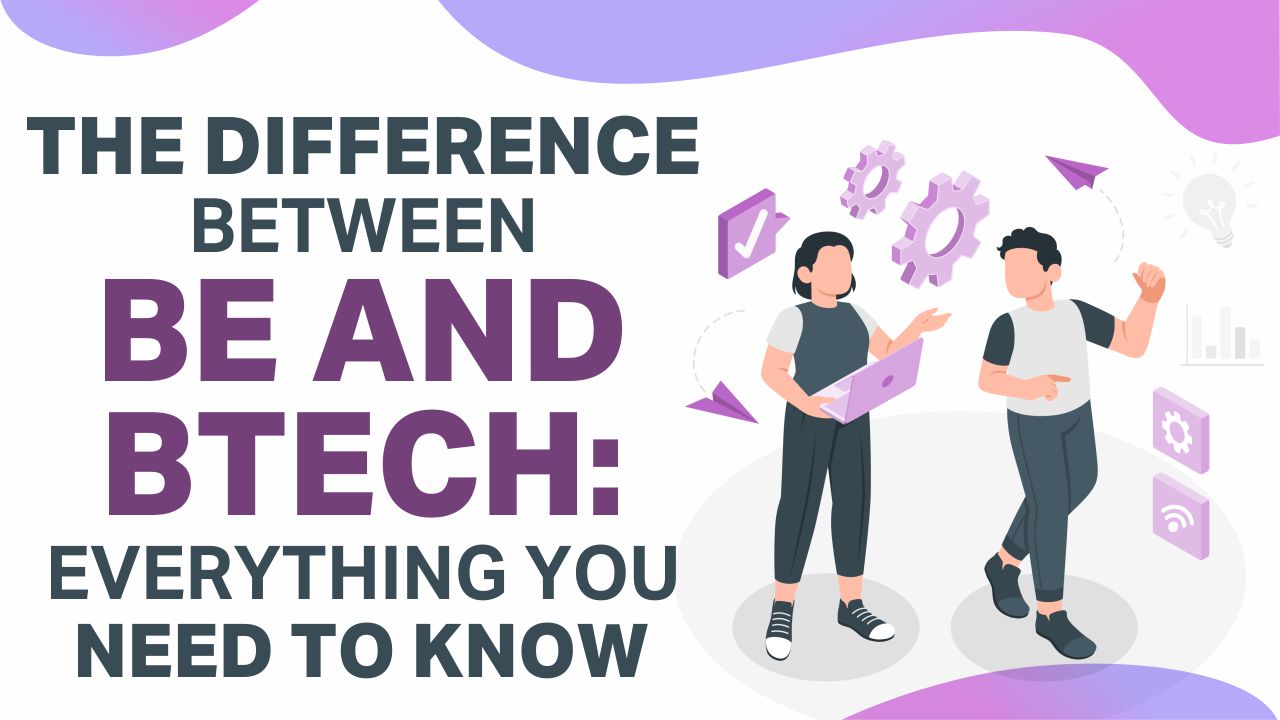
Have you completed your 12th in the science field, and are you worried about which course to use? You have visited the right place. Engineering is one of the most popular degree courses after 12th grade, and deciding on which degree to pursue is a big question mark for most students. The programmes are offered in the form of BE (Bachelor of Engineering) or B.Tech (Bachelor of Technology). In this blog, let us learn about the key differences between BE and B.Tech. and which is better.
What is BE?
A BE course, which stands for Bachelor of Engineering is a four-year-long course that contains 8 semesters. It primarily focuses on offering theoretical information and the engineering side of science. This programme is designed to equip budding engineers with the knowledge and skills required to tackle real-world challenges in the engineering field. The programme emphasises critical thinking, and problem-solving encouraging them to think creatively and develop essential innovative solutions.
What is B.Tech?
The full form of B.Tech is a Bachelor of Technology is a highly sought-after engineering degree offering diverse career opportunities in the dynamic technological landscape. It is a professional degree that covers various aspects of engineering and technology. A B.Tech degree is necessary because it provides students with the important skills and knowledge essential for a good career in the engineering field. It is a skill-based course offering more focus on practical applications. There are various specialisations under B. Tech, some of them are mentioned below:
- Mechanical
- Civil
- Artificial Intelligence
- Machine Learning
- Cyber Security
- Full Stack Development
Difference Between BE and B. Tech
Understanding what is the difference between BE and BTech can be pivotal for students aiming for a career in the engineering field. The BE and BTech programmes may look similar but some distinct differences can influence your educational experience and career choices.
|
Different Factors
|
BE (Bachelor of Engineering) |
BTech (Bachelor of Technology)
|
|
Emphasis
|
Emphasis on the theoretical aspects of engineering, principles and concepts |
Emphasis on the practical aspects of engineering, principles and concepts |
|
Focus
|
The Focus is on core engineering principles and concepts |
The focus is on technology-oriented concepts
|
|
Core Subjects
|
It includes mechanics, fluid mechanics, structure analysis |
It includes computer programming, data structure, software engineering etc. |
|
Curriculum Style
|
Traditional Curriculum Style |
Dynamic and industry-oriented curriculum style |
| Specialisations |
Classical engineering specialisations |
Technology-driven specialisations
|
|
Duration
|
The four-year course is more focused on theoretical aspects |
The four-year course is more focused on practical aspects |
| Curriculum Updations |
The curriculum updations are not done frequently or regularly
|
The curriculum updations are done regularly |
| Internships |
Internships are not compulsory |
Internships are compulsory
|
2 Myths regarding BE and BTech
Myth 1: People have the misconception that BTech is only offered by the government and BE is offered by private institutes; in reality, both the government and private institutes offer BTech and BE programmes to their students.
Myth 2: BTech is only about coding and IT. A BTech degree emphasises practical skills and technology, but it is not only about coding but does include a wide range of engineering fields.
Which is better BE or BTech
This question is quite difficult to answer as it depends on individual career goals, interests, and passions. BTech can be more suitable for you if you are inclined towards practical and hands-on experiences, whereas BE will be suitable for you if you are interested in the theoretical aspects of engineering.
Both BE and B.Tech degrees hold a strong recognition in terms of job opportunities. However, the difference lies in its approach, where one focuses on teaching and the other on learning. The B.Tech programme offers industry-oriented skills, which open wide career opportunities in IT companies and technical fields.
On the other hand, the B.E. programme emphasises more the theoretical part, which can give you an advantage in research, higher studies or a career in academia. Both programmes offer similar career opportunities, where B.Tech graduates can adapt to industry projects, while B.E. graduates have an edge in fields that require analytical and conceptual depth.
Career Options after BE & BTech
Both BE and B.Tech open doors to exciting career opportunities, but the roles may vary slightly based on your specialisation and learning style.
BE Graduates can work as:
- Design Engineers
- R&D Engineers
- Project Engineers
- Government Sector Engineers (Railways, PSU, DRDO)
B.Tech Graduates can work as:
- Software Developers / Full Stack Developers
- Data Scientists / AI Engineers
- Cybersecurity Specialists
- Product Developers
- System Architects
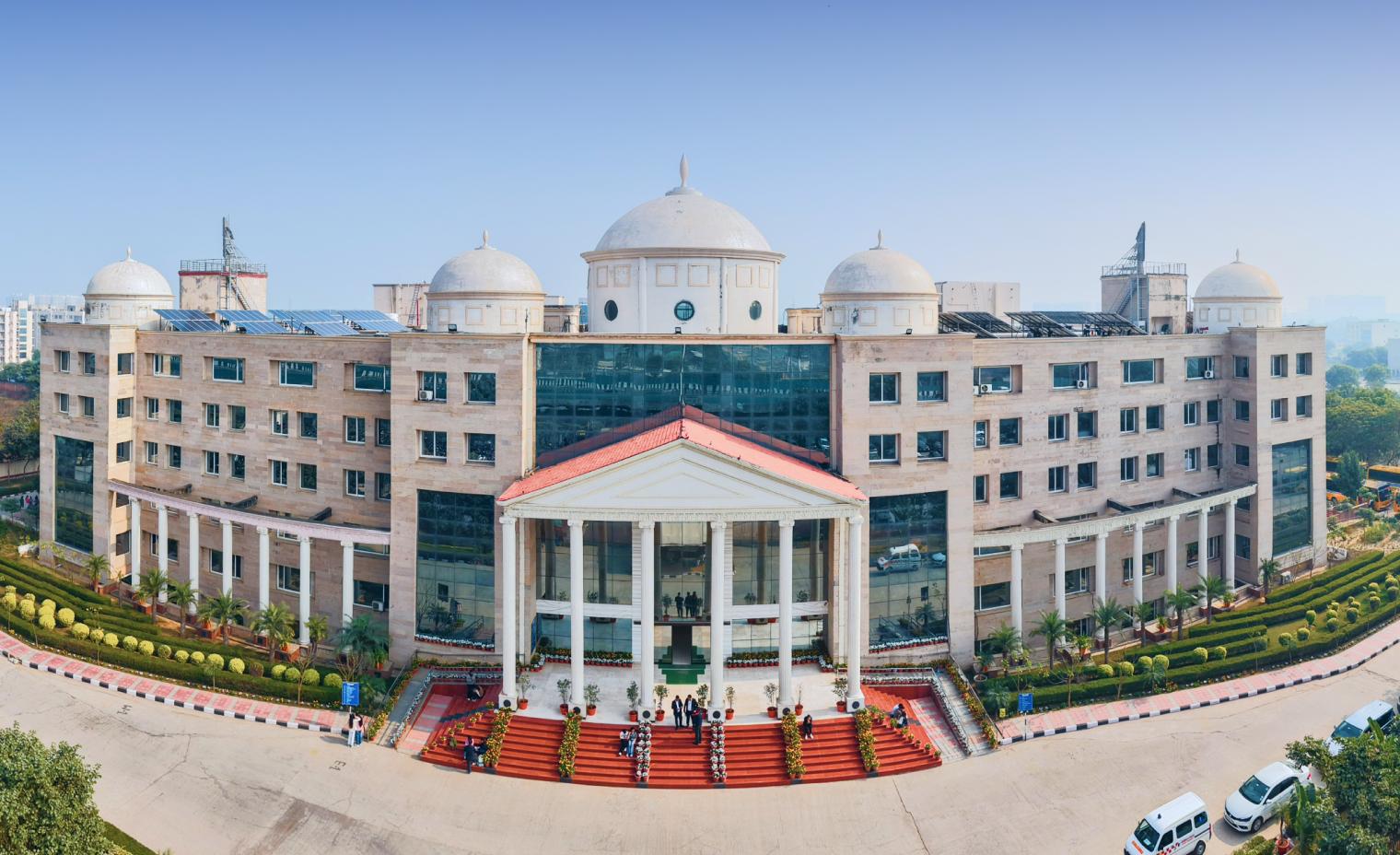
BTech programmes at K.R. Mangalam University
School of Engineering and Technology, K.R. Mangalam University offers various specialisations under BTech such as Computer Science, Cyber Security, Artificial Intelligence etc. KRMU believes in providing students with practical training through various internships, industrial visits, projects etc. K.R. Mangalam University has collaborated with various industry partners to offer technical support, and training to students.
The faculty of the SOET school at KRMU develops students by encouraging them through hands-on practices in workshops, seminars, hackathons and technical fests. With in-hand practices, students can apply their knowledge in real life and experience industry-based work.
Also, the curriculum we offer is regularly updated as per the latest industry trends to prepare students to tackle real-world challenges. With such unique and innovative approaches, the university not only gives students the chance to explore new technologies and develop solutions that contribute to the strengthening engineering landscape.
BTech specialisations offered at K.R. Mangalam University:
- B.Tech. Computer Science & Engineering (CSE)
- B.Tech. CSE (AI & ML) with academic support of Samatrix & IBM
- B.Tech. CSE (Cyber Security) with academic support of EC-Council & IBM
- B.Tech. CSE (Data Science) with Academic Support of IBM
- B.Tech. CSE (Full Stack Development) with academic support of Xebia
- B.Tech. CSE (UX/UI) with academic support of ImaginXP
Highlights of School of Engineering and Technology
- Dynamic Curriculum specially designed in consultation with industry experts in the field of engineering.
- Consistent mentoring by top industry insiders.
- Participate in hands-on projects, Hackathons, conferences, and competitions.
- Collaborations with IBM, Samatrix, Xebia, Grant Thorton, and GCEC foundation.
- Students gain practical experience through state-of-the-art labs, working with real-world datasets and projects. This hands-on approach helps in understanding complex AI and ML concepts and their applications. At SOET, we emphasis Project-based learning, field Projects, Research projects and Internship.
- 100% Training and Placements Assistance.
Conclusion
It is difficult to state with certainty if BE or BTech is a superior course. Both programmes have their advantages and disadvantages, but if you are interested in gaining hands-on training and practical exposure, then you can go for the BTech programme while if you think you are more inclined towards getting theoretical exposure, then BE will be suitable for you. Remember, before choosing any one of them, it is necessary to understand the difference between BTech and BE.
Also Read: What to do after BTech CSE
FAQs
Is there a difference in the duration of B.E. and B.Tech.?
Both B.E. and B.Tech. typically span four years, each year divided into two semesters.
Is there a difference between B.E. and B.Tech.?
B.E. stands for Bachelor of Engineering and BTech stands for Bachelor of Technology, both are engineering courses one of the major differences is that BTech is a skill-oriented degree whereas BE is a theoretical degree.
Is B.E. and B.Tech. same?
No there are some differences between BE and BTech, BE programme focuses on engineering disciplines with a theoretical approach while BTech focuses on technology domains major focus on practical applications and approaches.
The Difference between BE and BTech: Everything you need to know
Students, after pursuing any of the courses, can make careers in software development, design engineering, research development, cybersecurity, and other technical fields.
Can I pursue higher studies after completing a BE or B.Tech.?
Yes, graduates of both programmes can pursue higher education, including M.Tech, MS, MBA, or PhD programmes, depending on the course requirements and admission criteria.
How to Take Admission at K.R. Mangalam University, KRMU?
The registration process is simple and straightforward; just click on this link to register.
Which degree offers better salary packages: BE or B?Tech.?
Salary packages depend on factors such as specialisation, technical skills, work experience, the recruiting company, and the institution's placement opportunities.




 13 Schools700+ Faculty Members













 13+Years of Educational Experience