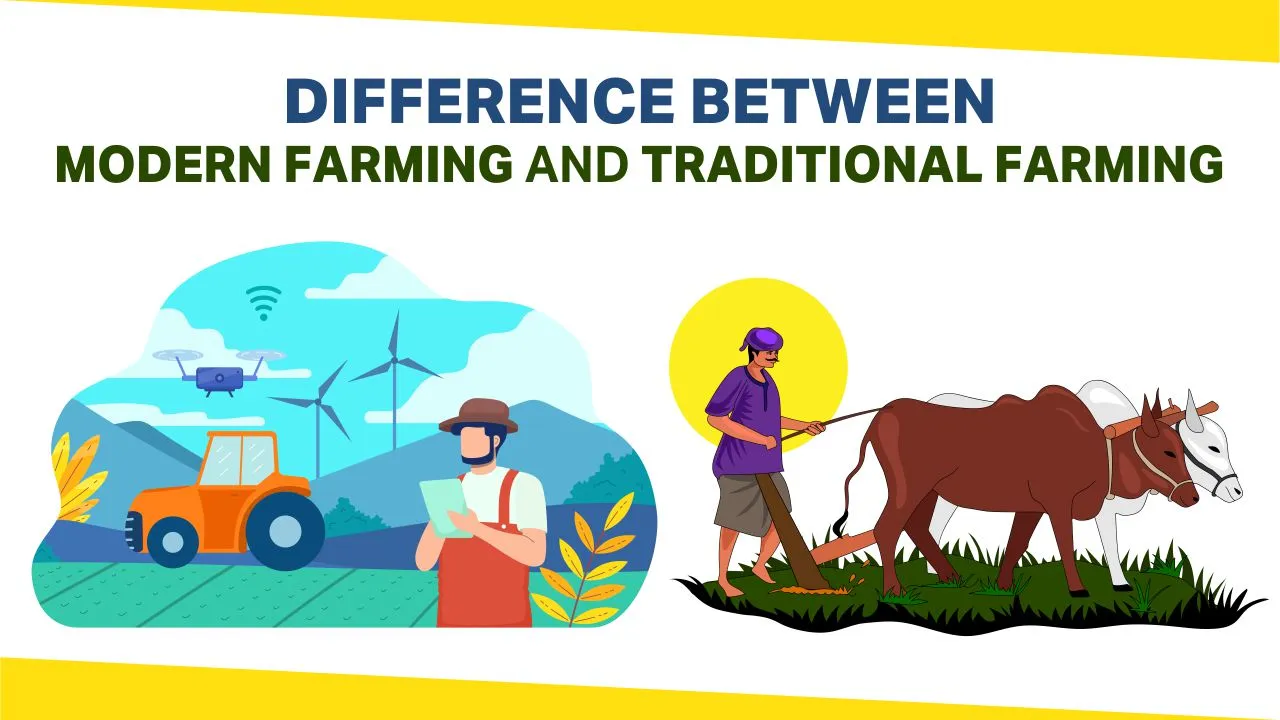
The Difference Between Modern Farming and Traditional Farming: Doing Agriculture with applications of science and technology is a part of human advancement. Modern farming reflects this perfectly, yet traditional farming still exists as a small fraction of agriculture farming. There must be some good reasons why both these methods are getting along so well. So now let’s read about both types of farming separately in detail. Afterthat, take a look at their differences.
What Is Traditional Farming
Traditional farming is also called “small-scale farming”. It refers to agricultural practices followed from generation to generation. Furthermore, they rely on old-age techniques and tools. It also involves cultivating crops and raising livestock.
Traditional farming often emphasizes local and indigenous knowledge that relies on natural processes. Moreover, with the use of limited mechanization or modern technology use. This approach focuses on sustainability and harmony with the environment and climate. Moreover, it helps in maintaining soil fertility and biodiversity.
Yet, it is less efficient in yield than modern industrialized farming methods. The traditional farming methods vary across cultures and regions. This reflects the diversity of agricultural practices worldwide.
Traditional Farming Method
- Intercropping: This process involves growing different crops together in the same field. Furthermore, it helps in increased productivity and efficient space use.
- Integrated Crop Animal Farming: This method combines crop cultivation with livestock rearing. In order to, optimize nutrient cycling and agricultural output.
- Water Harvesting: This traditional farming method includes collecting and storing rainwater. With the purpose to mitigate water scarcity and improve irrigation of agriculture.
- Crop Rotation: It involves sequentially planting different crops in the same area. This method helps in maintaining soil health and preventing pest buildup.
- Shifting Cultivation: It involves temporary cultivation in one area until soil fertility declines. After that, moving to a new plot, allowing the land to regenerate.
- Poly Culture: This method involves cultivating many crop species in a single area. In order to, mimic natural ecosystems and promote biodiversity.
- Agroforestry: It involves integrating trees with crops or livestock. Furthermore, to enhance sustainability, soil fertility, and ecosystem services.
- Cover Cropping: This includes planting specific crops to cover and protect soil during off-seasons. It also prevents erosion and improves soil structure.
- Traditional Organic Composting: This traditional farming method uses natural materials to decompose and enrich soil. It also fosters nutrient cycling and fertility.
- Mixed Cropping: This method involves cultivating different crops in one field. In order to, to optimize resource use and enhance resilience.

Effects Of Traditional Farming On The Environment
Traditional farming practices have both positive and negative effects on the environment. Some potential effects of traditional farming on the environment include.
Positive Impacts:
- Biodiversity: Traditional farming often involves diverse crop varieties and mixed cropping. This promotes biodiversity and maintains a wider range of plant and animal species.
- Local Adaptation: Traditional farmers often use locally available seed varieties and farming techniques. Moreover, it reduces the reliance on monoculture and promotes resilient ecosystems.
- Soil Health: Certain traditional practices like crop rotation and organic composting enhance soil fertility and structure over time.
- Water Management: Traditional systems incorporate water harvesting and efficient irrigation methods. These methods help manage water resources more sustainably.
- Cultural Heritage: Traditional farming preserves indigenous knowledge and cultural practices tied to the land.
Downsides:
- Deforestation: Some traditional farming practices involve clearing forests for cultivation. This leads to habitat destruction and loss of biodiversity.
- Soil Erosion: Unsustainable traditional practices, such as shifting cultivation can cause soil erosion and degradation when not managed properly.
- Chemical Use: While traditional farming relies less on synthetic chemicals, some practices involve the use of harmful substances like certain traditional pesticides or inadequate waste disposal.
- Resource Depletion: Without utilizing modern techniques for replenishing nutrients, traditional farming can lead to the depletion of soil nutrients over time.
- Limited Productivity: Traditional methods may have lower yields compared to modern industrial farming. Furthermore, this can contribute to increased pressure on natural habitats to meet food demands.
Also Read: Why Agriculture is the New Frontier for Youth Entrepreneurship
What Is Modern Farming
Modern day Farming Method is also known as “industrial or conventional farming”. It is a highly mechanized and technology-driven approach to agriculture. To maximize yield, It emphasizes large-scale monoculture, utilizing genetically modified crops, synthetic fertilizers, and pesticides.
Modern farming methods, like GPS-guided machinery, drones, and data analytics optimize resource use. While increasing productivity and meeting global food demands is a major concern. Modern farming often faces concerns about environmental sustainability due to chemical runoff, soil degradation, and biodiversity loss.
Despite its efficiency, a balance between high output and ecological responsibility remains a challenge. Furthermore, this prompts the exploration of alternative practices that minimize negative environmental impacts.
Modern-Day Farming Method
- Precision Farming: This method of modern farming uses technology to optimize crop management and resource use for increased efficiency.
- Aeroponics: This method utilises an air-mist environment without soil for growing plants. Moreover, this promotes efficient nutrient absorption.
- Aquaponics: It combines aquaculture (fish farming) and hydroponics, where fish waste provides nutrients for plants.
- Hydroponics: It cultivates plants in nutrient-rich water solutions, without soil, to enhance growth.
- Drones in Modern Farming: This method utilizes unmanned aerial vehicles for tasks like monitoring, mapping, and precision applications in agriculture.
- Monoculture: It involves planting a single crop species over a large area to reduce biodiversity.
- Tissue Culture: This method deals with propagating plants in a controlled laboratory environment from small tissue samples.
- Vertical Farming: This practice includes growing crops in stacked layers or vertical structures. It is often used in urban settings to save space.
- Controlled-Environment Agriculture (CEA): This is a method of growing crops indoors with controlled temperature, light, and humidity for optimal conditions.
- Integrated Pest Management (IPM): It involves employing various techniques to manage pests while minimizing environmental impact.
Effect Of Modern Day Farming Method On The Environment
Modern methods of farming have significant effects on the environment. Let’s read about their both positive and negative impacts.
Positive Impacts:
- Increased Productivity: Modern farming techniques have enabled higher crop yields. Moreover, it helps to meet the growing global demand for food.
- Efficient Resource Use: Precision agriculture technologies optimize water, fertilizer, and pesticide application. This use of technology reduces waste and improves resource efficiency.
- Reduced Land Conversion: Higher yields on existing farmland limit the conversion of natural habitats into agricultural land.
- Technological Innovation: Modern farming drives innovation in agricultural technologies, leading to more sustainable practices.
Downsides:
- Soil Degradation: The use of intensive tilling and chemicals leads to soil erosion, compaction, and reduced fertility.
- Chemical Pollution: The excessive use of synthetic fertilizers and pesticides can contaminate soil and water bodies. Furthermore, it impacts non-target species.
- Biodiversity Loss: Monoculture and chemical use can lead to a decline in plant and animal diversity which disrupts ecosystems.
- Water Pollution: Runoff from fields carries pesticides and fertilizers into waterways. Thus, causing pollution and harming aquatic life.
- Greenhouse Gas Emissions: Modern farming fuel use, synthetic fertilizer production, and livestock methane contribute to greenhouse gas emissions.
- Loss of Agroecosystem Services: Intensive modern agriculture practices reduce the capacity of ecosystems to provide services like pollination and natural pest control.
So, balancing the benefits of increased food production with environmental sustainability requires the adoption of more sustainable practices. Some of them are agroecology, organic farming, and regenerative agriculture, which focus on minimizing negative impacts while maintaining productivity.
Difference Between Modern Farming And Traditional Farming
| Traditional Farming |
Modern Farming |
| Low rate of production |
Higher rate of production |
| Minimum damage to the environment |
Less environment-friendly |
| More farm labour and use of cattle |
Less farm labour and use of tractors |
| Use of compost and manure |
Use chemical-based fertilizers and pesticides |
| Grow quality products |
Produces lower quality products |
Also Read: Guide On KRMU’s B.Sc. Agriculture Admission 2025
FAQs
What are the modern methods of farming?
Some popular modern farming methods are Precision Farming, Aeroponics, Aquaponics, Hydroponics, Drones in Modern farming etc.
Modern farming methods require more inputs which are manufactured in the industry do you agree?
Yes, modern farming relies on the industrial production of inputs like fertilizers, pesticides, and machinery. Yet these inputs enhance yields and production but also raise concerns about environmental sustainability and resource consumption.




 13 Schools700+ Faculty Members













 13+Years of Educational Experience