Today, forensic Science has become an important part of criminal investigations, cybercrime detection, disaster victim identification, financial fraud investigations, and digital evidence evaluation. The number of forensic professionals needed is rising at an unprecedented rate as courts rely increasingly on scientificeEvidence.
Below is a concise, tabular overview that summarises the complete information on the forensic science course eligibility, subjects, job opportunities, and the KRMU advantage in a structured and easy-to-read format. In short, it is a summarised version of the information provided in the blog.
Course Overview
| Particular |
Details |
| Course Level |
Undergraduate |
| Eligibility |
12th pass from the Science stream with 50% marks aggregate. |
| Duration |
3 years |
| Focus areas |
Evidence analysis, criminal law, biology, chemistry |
| Subjects |
Introduction to Forensic Science, Crime and Society, Criminal Law, Forensic Psychology, Forensic Dermatoglyphics, Technological Methods in Forensic Science, Criminalistics, Forensic Chemistry, Forensic Biology, Forensic Ballistics, Forensic Medicine, Forensic Anthropology, Forensic Toxicology |
| Course Advantages |
Creative Field, Analytical Skills, Rewarding Career, Interdisciplinary Learning, High Demand |
| Job options after course completion |
Forensic Psychologist, Forensic Scientist, Crime Scene Investigator (CSI), Forensic Laboratory Analyst, Digital Forensics Analyst, Forensic Document Examiner, Forensic Science Researcher / Professor |
| KRMU for BSc Forensic Science (Hons.) |
Expert Faculty, Modern Facilities, Research Opportunities, Industry Collaborations, Placement |
What You’ll Learn in Real Life with a B.Sc. Forensic Science?
| Learning Area |
Practical Skills & Real-Life Exposure |
| Evidence Collection & Preservation |
Securing crime scenes, collecting blood, hair, fibres, weapons, and preserving evidence without contamination for court use. |
| Fingerprint Analysis & DNA Profiling |
Fingerprint Analysis & DNA Profiling
Identifying individuals using fingerprints and DNA, working with AFIS and DNA sequencing techniques
|
| Cyber Investigation & Digital Data Recovery |
Recovering deleted files, tracing IP addresses, analysing digital devices, and investigating cyber frauds |
| Crime Scene Reconstruction |
Analysing bloodstain patterns, bullet trajectories, and positions of victims/offenders to recreate crime events |
| Report Writing & Courtroom Presentation |
Preparing forensic reports, explaining findings clearly, and presenting expert testimony in courts |
Forensic science courses after 12th? Are you passionate about solving crimes? But the question is how you would do it. By pursuing a B.Sc. forensic science Course. That’s right. Because it’ll expertise you in the scientific process of analyzing evidence.
Have you seen forensic experts on famous TV shows? Providing justice to the victim. But how do they do it? Forensic experts combine scientific expertise with investigative techniques. Moreover, they reconstruct events, provide expert testimony, and aid crime investigations.
Since you’re investing in becoming one. So, read this blog that talks about forensic science studies and its career prospects.
Forensic Science Course Eligibility?
Candidates seeking admission to forensic science courses after 12th must fulfil two criteria:
- Must have completed the 12th examination or an equivalent in the Science stream.
- Have achieved a minimum of 50% aggregate marks.
It is crucial to first read the eligibility criteria before pursuing the BSc forensic science course.
What is a B.Sc. Forensic Science Course?
B.Sc. Forensic Science is a 3-year undergraduate degree that educates in both criminalistics and laws. Moreover, It covers disciplines such as biology, chemistry, physics and various others. Studying these modules helps in developing skills in evidence collection, analysis, and presentation. It also provides students with the opportunity to pursue careers in fields such as cybersecurity, education, crime investigation, law enforcement agencies, and government departments.
B.Sc. Forensic Science Subjects
Forensic science studies cover a wide range of subjects that upskill students to pursue careers in diverse fields. In addition, it enables to gain real-life exposure that includes major concepts such as:
- Introduction to Forensic Science
- Crime and Society
- Criminal Law
- Forensic Psychology
- Forensic Dermatoglyphics
- Technological Methods in Forensic Science
- Criminalistics
- Forensic Chemistry
- Forensic Biology
- Forensic Ballistics
- Forensic Medicine
- Forensic Anthropology
- Forensic Toxicology
Also Read: A Guide on Dual Degree (BSc & MSc) Forensic Science programme
Practical Skills You Will Learn
Throughout the programme, you will gain hands-on experience of forensic techniques and investigative tools. It helps you to understand the use of modern forensic equipment and software used by law enforcement agencies, forensic laboratories, legal institutions, etc. Besides you’ll learn:
- Evidence Collection: Gain knowledge in identifying, collecting, preserving, packaging, and documenting physical evidence while maintaining the chain of custody.
- DNA Profiling: Obtain practical knowledge of DNA extraction, amplification, and analysis for human identification, paternity testing, and criminal investigations.
- Fingerprint Analysis: Develop expertise in fingerprint development, classification, comparison, and identification through traditional and digital forensic methods.
- Crime Scene Reconstruction: Learn how to examine crime scenes, analyse evidence, reconstruct events, and determine the sequence of incidents.
- Digital Investigation: Acquire skills in cyber forensics to recover digital evidence from computers, mobile devices, and online platforms.
- Courtroom Reporting: Learn to prepare forensic reports, present findings clearly, and provide expert testimony in judicial proceedings.
Benefits of Pursuing B.Sc. Forensic Science
By now, you must have understood the aim and objective of studying the undergraduate Forensic Science course. In this section, we will discuss the benefits of pursuing this specialised programme.
- Creative Field: Unlike other undergraduate degrees, B.Sc. Forensic Science is a highly creative field. Unlike other science disciplines, these professionals have roles beyond the laboratories.
- Analytical Skills: Skilled forensic science professionals possess strong analytical skills for collecting and analysing evidence and conducting investigations.
- Rewarding Career: One can snag reputable job roles with high salary packages after pursuing the programme.
- Interdisciplinary Knowledge: One of the biggest benefits of this course is acquiring interdisciplinary knowledge. They require knowledge about various fields, including psychology, law, chemistry, biology, and more.
High Demand: B.Sc. Forensic Science has witnessed an increased demand in India because of the rising dependency on scientific evidence in crime scenes.
Jobs After B.Sc. Forensic Science
There are numerous good-paying jobs after BSc forensic science. Below are some career options that graduates can opt for after completion of the course.
1. Forensic Psychology
As Forensic psychologists, you’ll be working in law enforcement agencies and the legal system. They give assessments, evaluations, and expert evidence on the psychological aspects of criminal behavior and court proceedings.
2. Forensic Scientist
You can work as a forensic scientist in government labs, law enforcement organizations, or commercial forensic consultancy companies. Moreover, you’ll be performing tasks such as analyzing and interpreting physical evidence collected from crime spots. In order to, present results in court are all part of the job description.
3. Crime Scene Investigator
The vital tasks of crime scene investigators (CSIs) are gathering and preservation of evidence found at crime scenes. They take notes and pictures of the incident, gather samples, and make sure the chain of custody is correct. CSIs regularly work with law enforcement organisations.
4. Forensic Laboratory Analyst
Forensic science graduates work as analysts in forensic labs. Their focuses are DNA analysis, toxicology, ballistics, fingerprint analysis, and trace evidence analysis. They analyse data using cutting-edge scientific tools and methods and produce reports as part of the work.
5. Digital Forensics Analyst
Due to the surge in cybercrime, Digital Forensic experts are in high demand. For their prowess in recovering and examining digital evidence from electronic devices. Moreover, By pursuing a BSc forensic science course, students will get insight into computer systems, data recovery methods, and digital research tools.
6. Forensic Document Examiner
Forensic document examiners analyze and compare handwriting, signatures, typewriting, and other document-related evidence. Furthermore, assess the veracity of documents, spot forgeries, and offer professional testimony in court.
7. Forensic Science Researcher
Another career option is working as a professor or researcher in the education industry. This job profile entails educating the next generation of forensic scientists. Moreover, I engage in forensic science research and teaching.
Related Blog: Top Career Options After B.sc (Honors) Forensic Science
Earnings After Graduating With a Forensic Science Degree
The forensic science course salary after graduating is between 3 LPA to 5 LPA for freshers. Moreover with experience and reaching higher positions such as of a forensic scientist, forensic manager, or forensic investigator you can expect a salary ranging between 7 LPA to 15 LPA or even higher.
Study B.Sc. Forensic Science (Hons.) at K.R. Mangalam University
K.R. Mangalam University is the best place to pursue a B.Sc. (Hons.) Forensic Science program. Here are a few reasons why it is considered to be the best option in Delhi NCR:
- Expert Faculty: K.R. Mangalam University boasts a group of expert tutors with a wide range of forensic science experience. These professors bring a lot of real-world experience and academic expertise to the classroom, giving students insightful advice.
- Modern Facilities: The university offers best-in-class facilities and laboratories for hands-on learning and real-world experience.
- Research Opportunities: K.R. Mangalam University promotes Forensic science-related research and innovation. Here, students take part in research projects and closely work with faculty members to improve the field of forensic science. Moreover, students get real-world experience in the course under the guidance of top professionals.
- Industry Collaborations: The university has strong collaborations with various leading authorities and organisations. This gives students the chance to participate in internships, receive hands-on training, and learn about actual forensic investigations. These partnerships help students become more employable and give them the chance to build important relationships within the forensic science sector.
- Placement: The university has a dedicated placement cell that helps students locate appropriate internship and employment opportunities.
Also Read: Develop Forensics Expertise with Best BSc Forensic Science Course in Delhi
Conclusion
Choosing forensic science after 12th opens doors to an exciting, impactful career blending science and investigation. With strong academic foundations, practical exposure, and growing industry demand, a BSc Forensic Science course equips students with essential analytical and technical skills. Institutions like K.R. Mangalam University further enhance learning through industry exposure, preparing students to contribute meaningfully to justice and society.
FAQs
Is Forensic Science in demand?
The demand for Forensic Science is pretty high as India is witnessing rising crime rates and the increased importance of scientific evidence. The crimes are becoming complex and sophisticated, indicating the need for skilled professionals in the field.
What is the scope of Forensic Science?
The scope of a career in Forensic Science is very promising, as both the private and government sectors require experts. Some of these sectors include law enforcement, private forensic labs, research facilities, hospitals, and more.
Do I need to appear for NEET to pursue a B.Sc. Forensic Science course?
NEET (National Eligibility cum Entrance Test) scores are not considered to pursue B.Sc. Forensic Science. This is because Forensic Science does not fall under the category of the science stream.
Which is the best university to pursue a B.Sc. in Forensic Science?
Even though many universities offer a B.Sc. in Forensic Science, K.R. Mangalam University is the best one. Located in Gurugram, KRMU is recognised by the UGC.




 13 Schools700+ Faculty Members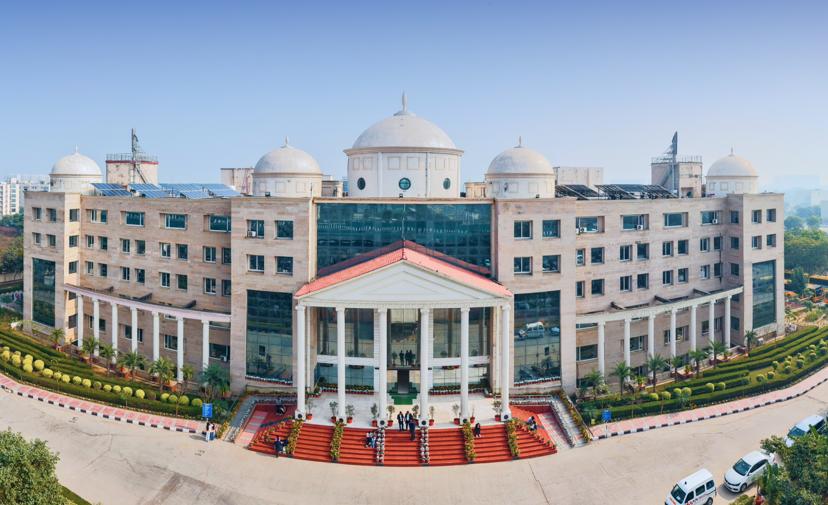













 13+Years of Educational Experience