B.Sc. Agriculture pulls together a lot of fields under one roof. Agriculture food production plant science animal husbandry agribusiness sustainable farming all of it finds a place here. Farming isn’t what it used to be either. Precision farming biotechnology modern irrigation and data driven crop management have changed the game and that shift has opened real opportunities across farming research food processing agribusiness, government services and other allied industries too.
The programme doesn’t stop textbooks. It mixes scientific knowledge with hands on agricultural learning covering agronomy horticulture, soil science, plant pathology, genetics, agricultural economics, engineering, food technology and agricultural extension. So, if Class 12 just ended and B.Sc. Agriculture is on your mind here’s what matters. Eligibility duration of subjects’ fees, admission process career opportunities and future scope. Understanding these before you decide can save you a lot of second guessing later.
Overview of the BSc Agriculture Course
B.Sc. (Hons.) Agriculture is an interdisciplinary course that comprises agricultural sciences and modern practices. Here is every detail that you need to know about the programme:
| Programme Name |
Bachelor of Science Agriculture Sciences |
| Eligibility Criteria |
You must have passed 10+2 or equivalent Examination from any recognised board/university in Physics, Chemistry, Maths/ Biology / Agriculture with a minimum of 50% aggregate marks |
| Course Duration |
4 Years |
| Number of Semesters |
8 Semesters |
| Modules Covered |
Sericulture, Plant Pathology, Horticulture, Genetics & Plant Breeding, Food Technology, Agricultural Microbiology, Soil Science, and more |
Eligibility Criteria
As a student if you’re planning to pursue a career in B.Sc. (Hons.) Agriculture at KRMU, you must complete your class 12th with PCM/PCB/Agriculture from any recognised board. A minimum of 50% aggregate marks is required to apply for the course.
The admission process for the course can be done through merit and direct interview or the BSc Agriculture Entrance Exam.
BSc Agriculture Job Opportunities
After completing a BSc Agriculture Hons Degree, students can have multiple job opportunities. They can either apply in the private sector or government sector. However, there are some most common BSc Agriculture job opportunities for students including:
- Agriculture Research Scientist: The role of agriculture scientists is to analyse the different farming methods and food production. With the help of research, agricultural scientists develop new ways to improve the quality of food crops and supply.
- Extension Officer: An extension officer works as an intermediary between farmers and researchers. They work as a communicator to make sure that farmers make the right decision to get the best result.
- Agriculture Officer: The role of the agriculture officer is to check the quality of the crop grown by farmers. They make sure that all agricultural operations take place according to municipal legislation. Also, they help in audit, investigating, and testing other agricultural goods.
- Quality Assurance: Quality assurance work is to ensure the standard quality of crops and conduct tests to make sure the production runs smoothly. They work in a team to ensure the final production meets the standard of quality set by the organization.
- Plant Breeder: The role of a plant breeder is to increase crop production by utilizing various breeding techniques.
- Farm Manager: Managing a farm and ensuring machines and other farming tools are working smoothly. They trained staff and monitored their work.
- Agriculture Loan Officer: The work of agricultural loan officers is to provide loans to the producers and rural citizens Agricultural loan officers, or agriculture lenders, work to help producers and rural citizens obtain funds needed to fund their operation, purchase property and more through different loan and credit options.
- Food Processing Manager: Set and monitor product standards, examining samples of raw products or directing testing during processing, to ensure finished products are of prescribed quality. Coordinate or recommend procedures for facility or equipment maintenance or modification, including the replacement of machines.
Where to Pursue an Integrated Dual Degree Course?
Students who are interested in pursuing integrated programmes do not have many choices. Even though there are thousands of universities and colleges, not all of them are credible, and the credible ones may not offer this unique course type. But we are here to make your task easier. Located in Gurugram, K.R. Mangalam University is an excellent private college to pursue this course. Offering the highest quality of education, infrastructure, and facilities, KRMU is the perfect choice.
Here are the types of integrated courses available at KRMU:
| Course Name |
Integrated BBA + MBA |
Integrated/Dual Degree B.Sc.-M.Sc. (Forensic Science) |
| Course Type |
Integrated |
Integrated |
| Course Duration |
5 Years |
5 Years |
| Admission Eligibility Criteria |
10+2 or equivalent examination from any recognised board/university + A minimum of 50% aggregate marks |
10+2 or equivalent examination from any recognised board/ University in Science (Physics/Chemistry/Biology/Mathematics) + A minimum of 50% aggregate marks |
| Programme Fee Per Year |
Rs.2,30,000 |
Rs.1,30,000 |
| Average Salary |
6-12 LPA |
7-10 LPA |
| Career Options |
Financial Analyst, Management Consultant, Operations Manager |
Forensic Scientist, Forensic Anthropologist, Crime Scene Investigator |
BSc Agriculture at K.R. Mangalam University (KRMU)
The BSc Agriculture programme at K.R. Mangalam University equips students with modern agricultural knowledge, practical field experience, and industry-oriented skills. The curriculum blends agricultural science, technology, and contemporary farming practices to prepare students for evolving challenges in the agriculture sector.
At KRMU, students benefit from state-of-the-art labs, research-driven learning, experiential training, and industry collaborations that enhance both technical and practical competence. With expert faculty, regular field visits, internships, and hands-on learning through model farms, the programme ensures students gain real-world agricultural exposure.
KRMU also provides strong placement support, guiding students toward careers in agribusiness, farm management, food processing, government sectors, research institutions, and more. For students passionate about agriculture and sustainable development, KRMU offers an ideal environment to build a rewarding and impactful career.
Conclusion
As we’ve discussed the course of BSc in Agriculture, you may put the course on your career bucket list. The course opens up a gateway to career opportunities in the dynamic and vital field of agriculture. Also, the career opportunity BSc Agriculture (Hons.) course is extensive, offering specializations that cater to various interests.
As the world grapples with various new challenges like lack of food and sustainable development, the role of BSc Agriculture graduates becomes crucial. The career growth in the field of agriculture is extensive and the field will grow faster than any other field within the next 5 years.
A BSc in Agriculture provides access to a wide range of fulfilling careers in contemporary farming, agribusiness, research, and sustainable development. K.R. Mangalam University provides students with both technical knowledge and practical skills through a combination of industry-focused curriculum, experienced mentorship, and hands-on training. The university’s state-of-the-art labs, field experience, and robust placement assistance guarantee that graduates are confident and prepared for the workforce. By enrolling at KRMU, students enter a future where they may develop a secure and influential career while making a significant contribution to India’s expanding agricultural environment.
Also Read:- 5 REASONS WHY AGRICULTURE IS A GREAT INDUSTRY TO WORK IN
FAQs
Planning your future in agriculture studies? Here are some important FAQs you should know.
Why is B.Sc Agriculture often overlooked by students?
Many students tend to associate agriculture only with traditional farming and overlook its modern, technology-driven aspects. Lack of awareness about diverse career opportunities also contributes to it being underrated.
What does a B.Sc Agriculture course teach?
The programme covers a wide range of topics such as crop production, soil science, horticulture, genetics, food technology, and animal husbandry, giving students a strong foundation in both theory and practical applications.
What are the eligibility requirements for B.Sc Agriculture?
Students must have completed their 10+2 education with subjects like Physics, Chemistry, and Biology/Mathematics/Agriculture, usually with a minimum of 50% aggregate marks.
Why choose K.R. Mangalam University for B.Sc Agriculture?
The university offers industry-oriented curriculum, modern laboratories, field training, and strong placement support, helping students gain both technical expertise and real-world experience.




 13 Schools700+ Faculty Members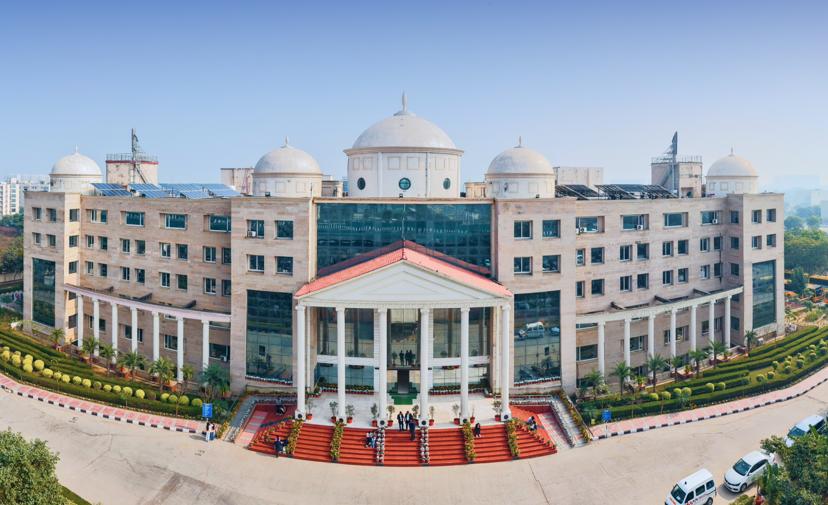













 13+Years of Educational Experience