Jobs After MBA — say those words in any business school hallway, and options come flooding in. Finance, marketing, consulting, business analytics, operations, HR, technology, take your pick. Marketing Manager.
Investment Banker. Business Consultant. Product Manager. Finance Manager. HR Manager. Data Analyst. Project Manager. All solid, all in demand. But there’s no universal “best” job here — what works depends on your specialisation, your strengths, and where you actually want to be down the line.
Quick Glance At The Blog
Below is a concise, tabular overview that summarises the complete information on the MBA programme, its eligibility criteria, high-paying jobs after MBA and the KRMU advantage in a structured and easy-to-read format. In short, it is a summarised version of the information provided in the blog.
| Particular |
Detail |
| About the MBA course |
A postgraduate programme related to business and management. |
| Eligibility Criteria |
50-60% marks aggregate from a recognised university. |
| High-Paying Jobs After MBA |
Marketing Manager, Business Development Manager, Project Manager, Consultant, Entrepreneur, Human Resource Manager, Investment Banker, Finance Manager, Credit Manager & Accountant. |
| Why KRMU for MBA |
Industry-focused curriculum, practical training, placement assistance and modern infrastructure facilities. |
About the MBA Course
The Master of Business Administration, or MBA, is a two-year postgraduate programme in management and business. It offers an in-depth understanding of operations, strategy, marketing, finance, and human resources. The course develops the analytical, decision-making, and leadership abilities necessary for managerial positions. Owing to these advantages, an MBA is among the most sought-after postgraduate degrees in India.
Eligibility Criteria
The qualifications needed to enrol in an MBA programme may vary based on the university and programme type. Graduates from a variety of academic disciplines who want to improve their managerial and leadership abilities in the business sector often opt for this postgraduate option. The general requirements for enrollment in an MBA programme are listed below:
| Particular |
Detail |
| Educational Qualification |
Must have completed a bachelor’s degree from a recognised university. |
| Minimum Marks |
50% aggregate marks in graduation, with certain top institutes even asking for 60%. |
| Entrance Exams |
CAT, MAT, XAT, SNAP, GMAT, NMAT, CMAT, and other university exams. |
| Eligible Streams |
Science, Commerce or Humanities all are eligible. |
List of Top High-Paying Job Opportunities After MBA
There are multiple job opportunities after MBA across various sectors that you can consider. This specialised degree not only equips you with job-ready skills but also prepares you for employment opportunities around the globe. Whether you want to work in the corporate world or just want to start your own business, an MBA degree can help you with both. Below is a list of top jobs after an MBA that you can consider:
Marketing Manager
A marketing Manager is someone responsible for developing marketing strategies to promote their services or products. They thoroughly research on market and work closely with sales teams to drive business goals into reality. They also manage various campaigns and advertising for the organisations.
Business Development Manager
Business development managers identify new business opportunities to drive growth and profits for the business. They are effective communicators who build strong connections with potential clients. Also, they research current market requirements, develop critical strategies and negotiate deals with clients.
Project Manager
Project managers manage projects from initiation to completion ensuring they are meeting certain goals and budgets. Mostly, they are in charge of planning, executing and closing projects while handling any changes that may occur.
Consultant
Consultants are professionals who provide expert advice to their organisations where they work to improve efficiency and deal with problems. They actively analyse business operations, identify the concerns and work towards them.
Entrepreneurs
Entrepreneurs identify business opportunities and are ready to undertake risks to start their businesses. However, they need to adapt to the changing market conditions and take rational decisions in order to setup and maintain their businesses.
Human Resource Manager
Human resource managers are responsible for recruiting, maintaining employment relations and training new employees. Also, they develop and implement HR policies to ensure a positive workforce culture in an organisation.
Investment Banker
Investment Banker is one of the most sought-after career paths among MBA graduates. This is all about providing expert financial services with strong analytical abilities. Investment bankers help their potential clients by providing them with financial services to create capital.
Finance manager
Students after an MBA can also consider choosing to become finance managers where they will be accountable for overseeing the financial status of an organisation. Also, they have to do financial planning, analysis of datasets, and budgeting, to guide their organisation to achieve its financial goals.
Credit Manager
Credit managers are responsible for assessing clients’ creditworthiness. For this, they analyse & maintain financial statements, assess risks and set credit limits. Also, they ensure to maintain healthy cash flow and minimise financial risks for their clients or organisations.
Accountant
MBA graduates can also choose to become accountants where their role revolves around maintaining and examining financial records to ensure accuracy. They are also responsible for handling auditing, financial reporting, tax preparation etc. Moreover, they provide crucial insights into financial performance, helping companies to make informed decisions.
Also Read: MBA Entrance Exam 2024: Latest Updates

Jobs After MBA: Salary Expectations For MBA Graduates
After an MBA, you have several career paths to choose from in both the public and private sectors. Graduates often search on the internet for jobs after MBA and salary expectations.
Below is a table of top high-paying jobs after MBA with their average annual salary for freshers in India:
| Job Title |
Average Annual Salary |
| Project Manager |
Rs. 6 lakh
|
|
Digital Marketing Manager
|
Rs. 5.5 lakh |
|
Business Operations Manager
|
Rs. 6.5 lakh |
|
Business Analysts
|
Rs. 4 lakh |
| Marketing Manager |
Rs. 4.5 lakh
|
| Human Resources Manager |
Rs. 6 lakh
|
| Business Development Manager |
Rs. 7 lakh
|
|
Supply Chain Manager
|
Rs. 5 lakh |
|
Sales Manager
|
Rs. 3 lakh |
|
Financial Officer
|
Rs. 3.5 lakh |
|
Financial Analyst
|
Rs. 5 lakh
|
| Investment Banker |
Rs. 4 lakh
|
| Healthcare Administrator |
Rs. 3.5 lakh
|
| Data Analyst |
Rs. 4 lakh
|
Note: The salary mentioned above are sourced from various sources on the internet. Hence, they can vary. Salary depends on various factors like level of experience, your final marks in MBA, reputation of an organisation, the college chosen for pursuing an MBA, etc.
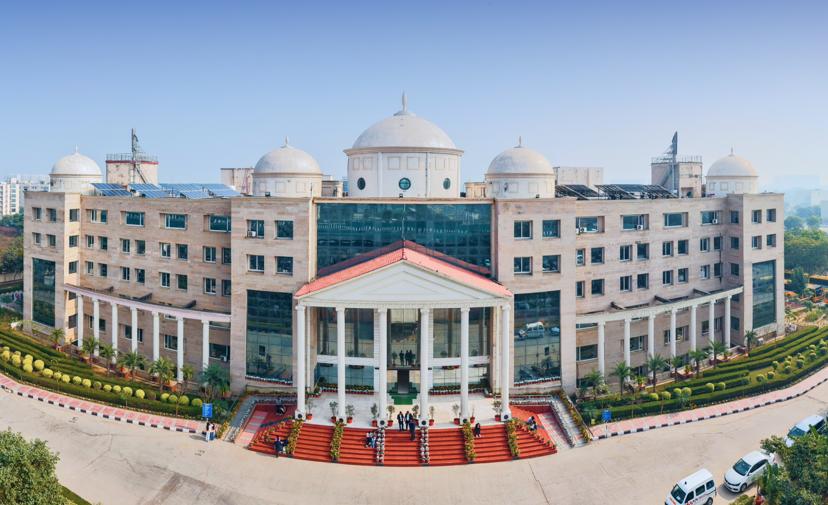
K.R. Mangalam University and MBA Programme
K.R. Mangalam University (KRMU) is a leading institution known for delivering industry-focused, skill-driven management education. The university offers MBA programmes designed to prepare students for today’s competitive business world. With experienced faculty, corporate collaborations, internships, and hands-on industry exposure, students gain practical learning beyond classrooms.
KRMU provides specialisations in areas like Marketing, Finance, HR, Business Analytics, International Business, Entrepreneurship, IT Management and more—ensuring students can build expertise in their chosen field. The curriculum includes case studies, live projects, industrial visits, guest lectures from industry leaders, and modern learning tools.
Additionally, the university’s strong placement cell connects students with top companies, offering excellent job opportunities, internships, and career guidance. From leadership development to communication and teamwork, KRMU helps MBA students become confident, skilled and career-ready professionals.
Conclusion
Business is shifting fast. Digital transformation isn’t slowing down, AI keeps creeping into decisions that used to be gut-feel, and companies want numbers before committing to anything. That works in favour of MBA graduates — demand keeps climbing. Why? An MBA isn’t just theory. It builds leadership instincts, sharpens problem-solving, and teaches you to juggle people and budgets without dropping either. That pays off everywhere: startups, multinational giants, consulting firms, banks, even government roles. This guide covers where an MBA can take you, salary expectations, career scope, and how to pick a specialisation that fits.
FAQs
What are the most in-demand MBA specialisations?
Some of the best MBA specialisations include:
MBA in Finance
MBA in Information Technology
MBA in Human Resource Management
MBA in Marketing
MBA in Operations Management
MBA in International Business
MBA in Logistics & Supply Chain Management
MBA in Healthcare Management
MBA in Business Analytics
MBA in Entrepreneurship
What are the eligibility criteria to pursue an MBA?
Candidates must have passed 10+2 examinations from a recognised board and must have a bachelor’s degree in any discipline from a recognised university with at least 50% (45% reserved for SC/ST) aggregate marks. Most of the top B-schools require students to appear for national entrance exams like the CAT, MAT, and CMAT. Some colleges conduct state-level entrance exams for MBA such as KMAT, TS ICET, TANCAT, and AP ICET. Some colleges conduct their own entrance exams for MBA admission, such as KREE, SNAP, XAT, etc.
What are the benefits of pursuing an MBA degree?
Pursuing an MBA degree will help you advance your career, develop essential skills, build connections across the nations, and enhance your professional life in just 2 years.

























 13+Years of Educational Experience