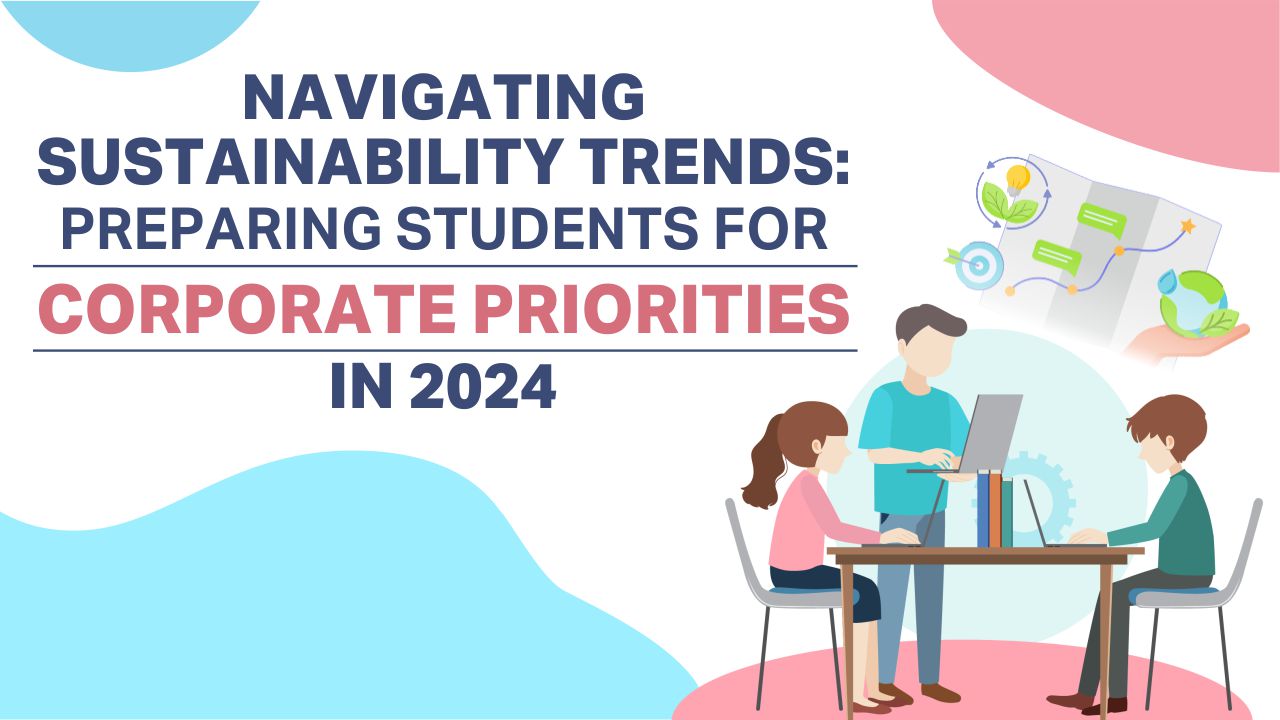
In the ever-evolving business landscape, sustainability Trends has emerged as a pivotal force shaping corporate strategies worldwide. As a stride in 2024, this trend continues to gain momentum, influencing every aspect of organisational operations. In today’s world, sustainability isn’t a buzzword or a choice anymore for businesses, organisations, governments or even an individual either.
It is a way of life that has to be a part of everyone’s decision-making as well as everyday practices. This in turn leads to creation of newer practices, processes & products that can benefit leading a more sustainable business, keeping the top line & bottom line also intact. It is the cornerstone of corporate strategy.
4 Sustainability Trends for Corporate Priorities in 2024
Sustainable Supply Chain: Redefining Operations
Supply chain is an integral part of any business, manufacturing or services, and so is sustainability now, making it essential for all business to integrate them both. The two core focuses in this domain become fostering social responsibility and ethical practices throughout the entire supply chain network.
Companies like Ford, Coca Cola, Nestle, Adidas, Tesla, IKEA, UPS and many more have been the pioneers in this, motivating to different businesses globally to inculcate sustainable supply chain practices. In India, with the changing consumer behaviour and greater government focus through sustainability driven rules and regulations the brands have started focusing on bringing in a sustainable shi in their supply chain processes.
Broadly the suppliers can be two tier structures, in which can also identify the sustainable practices shall be appropriate for them:
- First Tier Supplier : The ones who supply to your company directly, here you have more control over the choice of suppliers hence should be the focus in this case.
- Second Tier Supplier: Suppliers who supply to your suppliers, now here the control isn’t direct & information gathering on the suppliers will be an additional cost, so this is where companies tend to miss out on their sustainability goals. The solution this could be first-tier suppliers to gather information not only about their supplier’s health, safety, labor, and environmental practices but also about the sustainability performance of their lower-tier suppliers. peer-training , pass on the elements of sustainability management to second-tier suppliers from the first – tier supplier and many more such creative practices.
Most integral part of this change is the youth, whom we at K.R.Mangalam University are training in this direction with courses that focuses on logistics & supply chain, in which prepare the students to think of such creative solutions, delve into the intricacies of supply chain management. Through case studies, interactive simulations and projects, students learn how sustainable practices can enhance efficiency, mitigate risks, and create long-term value for organisations and society alike.
Sustainability Reporting: Upholding Accountability
Transparency is another pillar of a strong business structure and one of most important aspect of business practices. In an era where stakeholders demand accountability, sustainability reporting more than a volunteer exercise- it’s a requisite for corporate legitimacy. Companies are expected to disclose their environmental, social, and governance performance (ESG) performance, providing stakeholders with a comprehensive understanding of their impact and commitments.
To pick a very different example from an industry i.e. entertainment & music industry, which doesn’t automatically syncs in with sustainability, I would like to share the example of a band named-Coldplay. As a goodwill practice they started releasing a sustainability report aer their every concert, in which they have confirmed a reduction of 47% in their carbon footprint over the year & this reporting spiked their brand loyalty, goodwill & following across the globe. This small initiative towards reporting and publishing their efforts has helped them towards any business’ top line and bottom line.
At K.R. Mangalam University we recognize the importance of sustainability reporting for accountability and our courses in accounting, finance, and subjects focusing on corporate governance emphasise the integration of ESG metrics into financial reporting framework. We prepare them to assist organisations in transparently communicating their sustainability efforts to stakeholders.
Circular Economy: Transforming Waste into Resources
The world has moved way ahead of the linear “take-make-dispose” model as it is no longer sustainable in a world grappling with scarcity & environmental degradation. This brought the need to shi our focus on circular economy, a regenerative approach that aims to minimise waste and maximise resource efficiency. In 2024, businesses are increasingly embracing circular practices, viewing waste not as a burden but as a valuable resources waiting to be repurposed.
Circular economy has led to the biggest discussion and proposed business of today’s time – waste management. It has become so popular that we as a country are looking forward to develop indigenous solutions to waste management problems. Though the idea of this had been in discussion for longtime, it has started becoming a reality now. For example, the solution is being offered from the grassroots level i.e. waste segregation which can only lead to further steps. Government support towards such initiatives has also motivated people move in this direction.
Our students get a chance to gain awareness about such concepts, through various mediums and the interdisciplinary approach that we follow while teaching them to ensure that they get wholesome knowledge about everything up and coming.
Green Bonds: Financing Sustainability Initiatives
As the urgency to address climate change intensifies, traditional financing mechanisms fall short in funding sustainable initiatives. The solution – an innovative financial instrument – Green Bonds, specifically designed for environmentally friendly projects. With increasing environmental initiatives, green bonds are gaining traction as investors seek opportunities to align their capital with sustainability objectives. This isn’t just helping them making an effort towards the right direction, but also making them earn on their investment.
These kind of innovative solutions in the financial industry which has the power to make or break movements in every industry. If there is money movement in all industries, solutions and innovations can be funded leading the movement towards sustainability easier and quicker.
The courses in economics, finance and investment management at our university equips our students with the skills towards innovating such solutions and using them to the bestest use.
Conclusion
This way the discussion around sustainability isn’t just preaching anymore, it has become a part of practice for almost all industries. The innovation and challenges in this sphere is not just exciting but also leading to economic growth with newer businesses and solutions springing up every day. We are all just spectators anymore, we are the change makers in passive and active manner. Here’s to hoping for a better solution.
Also Read: Why Pursue BBA Logistics and Supply Chain Management
FAQs
Here are some frequently asked questions:
How does technology support sustainability initiatives?
Technologies like AI, data analytics, renewable energy systems, and smart resource management tools help organisations improve efficiency and reduce environmental impact.
What role do students play in sustainability?
Students contribute to sustainability through awareness, innovation, research, eco-friendly practices, and participation in sustainable development initiatives and projects.
Which industries are focusing most on sustainability?
Industries such as manufacturing, construction, logistics, agriculture, fashion, finance, food production, and technology are increasingly adopting sustainability practices.
Why are sustainability skills important for future careers?
Sustainability skills are becoming highly valuable as companies seek professionals who can contribute to ESG goals, green innovation, responsible business operations, and climate-conscious decision-making.




 13 Schools700+ Faculty Members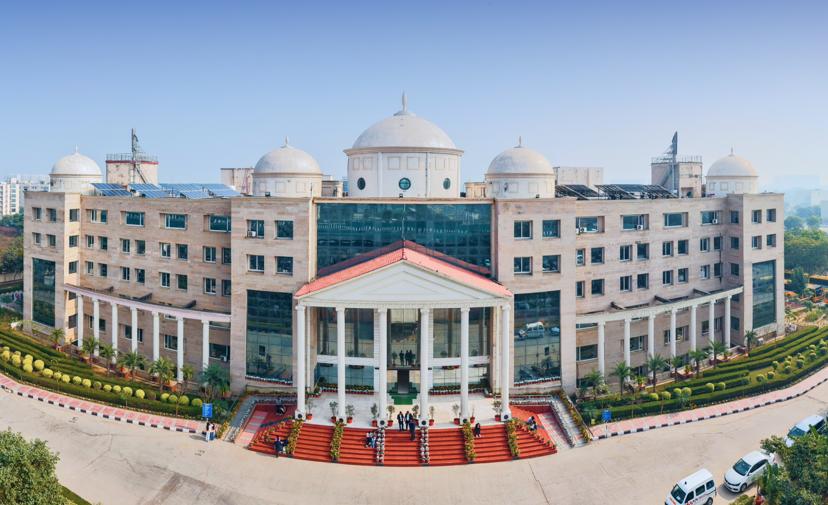












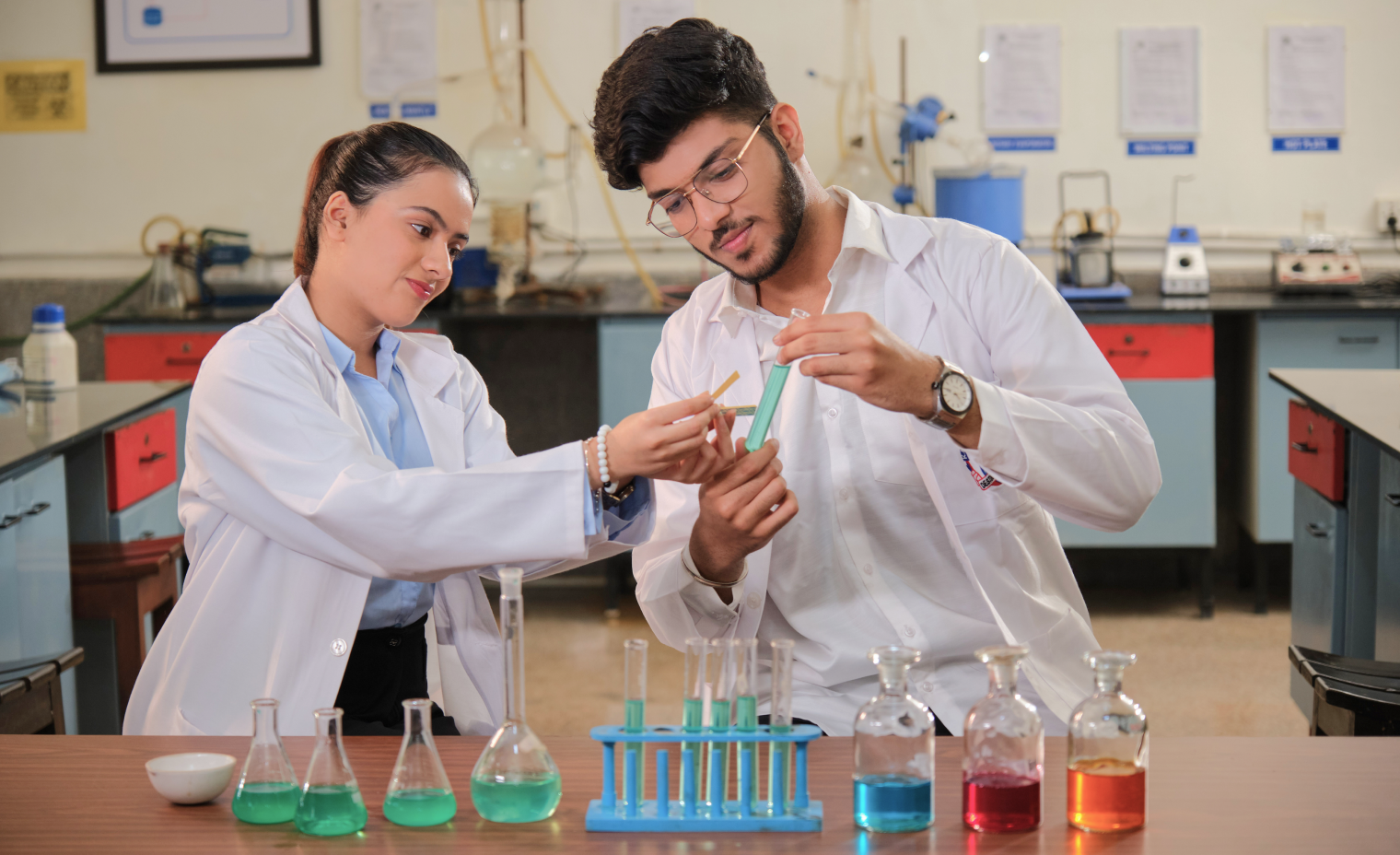
 13+Years of Educational Experience