For many students, navigating the world of higher education can be challenging. Although UG and PG terminology is commonly used in the education system, it may still be difficult for some to fully understand their meanings, course structures, and other details. This confusion often leads to uncertainty when making important academic and career decisions. Gaining clarity about these terms can help students choose the right path based on their interests, goals, and future aspirations. A better understanding also enables them to plan their educational journey more effectively and confidently. Therefore, this blog aims to help students gain a clear understanding of both UG and PG courses, whether they are in class 12 or have already completed their bachelor’s degree.
Overview Of This Blog
| Sections |
Descriptions |
| UG: What is it? |
Covers the concept of undergraduate education, its scope, and opportunities after completion. |
| PG: What is it? |
Describes postgraduate education, its advanced nature, and career benefits. |
| Why Pursue UG & PG Courses? |
Highlights benefits such as individual development, specialisation, strong foundation, and career preparation. |
| Difference Between UG and PG |
Compares UG and PG programmes based on duration, education level, and job opportunities. |
| Eligibility Criteria |
Details the requirements for admission into UG and PG programmes. |
| KRMU UG & PG Courses |
Provides an overview of various UG and PG programmes offered by K.R. Mangalam University across multiple schools. |
| How to Choose the Right Programme |
Explains a step-by-step approach, including introspection, course research, and decision-making factors. |
| Career Opportunities After UG & PG |
Outlines job roles, higher education options, and career growth after completing UG and PG courses. |
| Conclusion |
Emphasises the importance of choosing the right course and highlights KRMU as a strong option for future-ready education. |
UG: Your First Step Toward Success
The UG full form is ‘undergraduate’. As it is the first level of higher studies after completing school education, it is a widely chosen path among students. Upon completing this stage, students receive an undergraduate degree that reflects their knowledge and expertise in their chosen field of interest.
Whether they choose to start a career in their preferred field or continue their education, obtaining a bachelor’s degree opens up a wide range of opportunities. It also allows students to explore various streams such as science, engineering, humanities, commerce, and more.
Also Read: Get Your MBA Degree From the Best College in Delhi, NCR
PG: Take Your Expertise to the Next Level
The PG full form is “postgraduate”. It is considered the second level of higher studies after earning a bachelor’s degree. Since UG and PG are consecutive stages, students must complete an undergraduate degree to become eligible for postgraduate programmes, highlighting the key difference between the two levels.
Students can pursue a variety of postgraduate options, including a master’s degree, a doctorate, a PG certification, or a PG diploma. The curriculum at this level is more advanced and specialised, helping individuals gain deeper expertise and stand out in a competitive job market.
Why Pursue UG and PG Courses?
A student’s decision to pursue UG and PG studies plays a significant role in shaping their future professional career. The following are some of the key benefits of undertaking these courses in detail:
Individual Development
After completing high school, pursuing undergraduate and postgraduate programmes allows students to deepen their knowledge in their chosen field and unlock new growth opportunities. These programmes encourage learners to explore new concepts, challenge their abilities, and develop essential skills such as critical thinking, problem-solving, communication, and decision-making—building a strong foundation for future academic and career success.
Specialisation
Having expertise in a specific field significantly increases an individual’s chances of securing employment. By pursuing both undergraduate and postgraduate programmes, individuals can gain in-depth knowledge and become highly specialised in their area of interest, making them strong candidates in the job market.
Solid Foundation
To succeed in their preferred field, individuals must have strong foundational knowledge of the subject. Undergraduate and postgraduate programmes provide the opportunity to build this solid base. With the right skill set, progressing in a professional career becomes much easier.
Preparing for a Career
The curriculum and teaching approaches of UG and PG programmes are designed to provide essential subject knowledge and understanding. This prepares individuals for their desired careers by equipping them with the necessary training, skills, and experience. Postgraduate graduates are more likely to move into middle-level or senior roles.
Difference Between UG and PG Courses
The difference between UG and PG is shown in the following table:
| Differences |
UG Programme |
PG Programme |
| Course Duration |
Most undergraduate programmes typically span three years. However, some professional courses, such as engineering, architecture, and medicine, require a longer duration to ensure in-depth learning, practical training, and comprehensive skill development. |
Postgraduate programmes typically take one to three years to complete, depending on the course and specialisation. In contrast, a postgraduate diploma is a shorter, more focused program that can usually be completed within six to twelve months. |
| Education Level |
UG is the first level of higher education and is intended to provide fundamental knowledge and concepts in a certain discipline. It encompasses both academic and practical subject-matter expertise. |
Advanced modules, such as a master’s degree in subject-specific study, are usually included after graduation. Theoretical coursework, research, and real-world application of the subject are all covered in this module. |
| Job Opportunities |
Individuals can begin their careers in entry-level roles such as analysts or executives. These positions provide valuable hands-on experience, helping build practical skills and professional insight that contribute to long-term career growth. |
After completing postgraduate studies, individuals can also pursue middle-level management roles in organisations, where they can apply their advanced knowledge, lead teams, and take on greater professional responsibilities. |
Eligibility Criteria for UG and PG Programmes
Now, let’s do a brief discussion on the eligibility criteria for both of these programmes:
Eligibility for UG (Undergraduate) Programmes
- Candidates must have completed 10+2 (higher secondary education) from a recognised board.
- A minimum of 45%–60% marks is generally required (varies by course and institution).
- Some courses, such as engineering, medicine, or law, may require appearing in entrance exams (e.g., JEE, NEET, CLAT).
- Specific subject requirements may apply (e.g., PCM for B.Tech., PCB for medical courses).
Eligibility for PG (Postgraduate) Programmes
- Candidates must have completed a relevant bachelor’s degree (UG) from a recognised university.
- A minimum of 50%–60% marks is typically required (relaxation may apply for reserved categories).
- Some PG programmes require entrance exams (e.g., CAT for MBA, GATE for M.Tech).
- Certain courses may also require work experience or interviews/group discussions.
These eligibility criteria may vary by course and university, so students should always check the specific requirements of their chosen institution.
UG and PG Courses of KRMU
K.R. Mangalam University (KRMU) is committed to empowering aspirational students and enhancing their educational experience. The university fosters a strong culture of innovation, research, and intellectual curiosity, encouraging students to think creatively, build confidently, and explore ideas in greater depth. Every student at KRMU is motivated to embrace transformative learning opportunities and develop into confident, future-ready leaders.
UG Programmes
Below are some of the most popular UG programmes offered by KRMU:
- B.Sc. (Hons.) Cyber Security
- B.Tech. Computer Science and Engineering (CSE)
- BCA (Cyber Security) with Academic Support of EC Council
- B.Tech. CSE (Robotics & Artificial Intelligence) with Academic Support of IBM & powered by Microsoft Certifications
- B.Sc. (Hons.) in Finance (with optional specialisations in Quantitative Finance and Actuarial Science)
- BBA (Human Resource)
- BBA Marketing
- BBA Finance
- BBA (HR/ Marketing/ Finance/ International Business/ Travel & Tourism) Semester Abroad Programme with University of East Anglia (UEA), Norwich, UK
- BBA LL.B. (Hons.)
- B.A. LL.B. (Hons.)
- LL.B. (Hons.)
- B.Pharm.
- Bachelor of Emergency Medical Technologist (Paramedic) (B.EMT.) with Academic & Industry support of Emversity (3 yrs + 1 yr Industry Internship)
- B.Sc. (Hons.) Cardiovascular Technology with Academic & Industry support of Emversity (3 yrs + 1 yr Industry Internship)
Bachelor of Physiotherapy (BPT)
- B.A. (Hons.) English
- B.A. (Hons.) Economics
- B.A. (Hons.) Psychology
- Bachelor of Architecture (B.Arch.)
- Bachelor of Fine Arts (BFA)
- B.Des. (Hons./ Hons. with Research) Fashion Design
PG Programmes
Below are the different PG programmes offered by KRMU:
School of Engineering & Technology
- Master of Computer Applications (MCA)
- MCA (AI & ML) with Academic Support of IBM and Powered by Microsoft Certifications
School of Management and Commerce
- MBA with Academic Support of IBM
- MBA (Fintech) with academic support of Ernst & Young (EY)
- MBA (Digital Marketing) with academic support of IIDE
School of Legal Studies
School of Medical & Allied Sciences
- M.Pharm. (Master of Pharmacy) – Pharmaceutics
- M.Pharm. (Master of Pharmacy) – Pharmacology
School of Liberal Arts
School of Architecture & Design
- Design (Interior Design)
To know every UG & PG programme of K.R. Mangalam University, students are requested to kindly visit the official website.
How to Choose the Right UG Programme, PG Programme, or Both?
To choose the right programme, students need to follow the 2 steps below:
Step 1: Engage in Introspection
Individuals should take time to engage in introspection before exploring courses. They should consider which subjects they found most fascinating in school and whether they are more inclined towards analytical thinking, human interaction, or creative expression.
Step 2: Research Course
Once students gain a clearer understanding, they should compare it with courses that align with their interests and strengths.
Curricular Depth
They should evaluate how well a programme balances theoretical knowledge with practical application. For instance, a data science course typically combines strong theoretical foundations (such as statistics and machine learning) with hands-on projects.
Specialisations
Some undergraduate and postgraduate programmes allow students to gain expertise in specific areas. They should look for courses that offer flexibility through modular or elective-based structures.
Career Paths
It is important to analyse alumni outcomes. Students should explore where and at what position the recent graduates are working—whether in academia, industry, entrepreneurship, or research.
This strategic approach to research helps students move beyond simply selecting a course based on interest and enables them to make a well-informed and practical decision.
Step 3: Make a Decision
Make a balanced decision by combining the preceding steps:
Self-profile
Individuals should evaluate how well the programme aligns with their interests and strengths.
Academic Rigour and Relevance
They should assess whether the programme will effectively prepare them for their desired career path.
Institutional Support
Individuals should consider whether the learning methods, mentorship, and infrastructure meet their needs.
Future Flexibility
Students should ascertain whether the programme allows scope for further growth, development, and adaptability.
Validation & Feedback
Individuals should seek guidance to ensure their enthusiasm is supported by informed and experienced advice.
Career Opportunities After UG & PG Courses
Here are the career opportunities after UG & PG courses:
After UG
After completing an undergraduate degree, individuals can explore multiple career paths depending on their field of study:
Entry-Level Jobs
Roles such as executive, analyst, associate, or trainee in various industries
Internships & Skill-Based Roles
Opportunities to gain practical experience and build industry-relevant skills
Government Jobs
Preparation for competitive exams like SSC, UPSC, banking, etc.
Entrepreneurship
Starting a business or working on innovative ideas
After PG
Postgraduate education opens doors to advanced and specialised career opportunities:
Specialised Roles
Jobs requiring in-depth expertise in a specific domain
Middle-Level Management Positions
Leadership roles in organisations
Research & Academia
Opportunities in teaching, research, and PhD programmes
Global Career Opportunities
Better chances of working with multinational companies
Conclusion
Understanding the difference between UG and PG courses is essential for making informed academic decisions. While UG courses build the foundation, PG courses help in specialisation and career growth. Choosing the right course can significantly impact future opportunities.
K.R. Mangalam University offers a wide range of industry-orientated UG and PG programmes designed to build strong foundations and specialised expertise.
Apply to KRMU today to take the first step toward a future-ready career.
Also Read: Explore the Top Law Courses at K.R. Mangalam University
FAQs
What is the main difference between UG and PG courses?
UG courses focus on building foundational knowledge, whereas PG courses provide advanced learning and specialisation in a specific field.
What are the career options after UG?
Students can opt for entry-level jobs, internships, government exams, entrepreneurship, or pursue higher education (PG).
What are the benefits of pursuing PG courses?
PG courses offer specialisation, higher salary potential, better job roles, and opportunities in research or academia.
How to choose the right UG or PG course?
Students should analyse their interests, strengths, career goals, curriculum, and future opportunities before making a decision.




 13 Schools700+ Faculty Members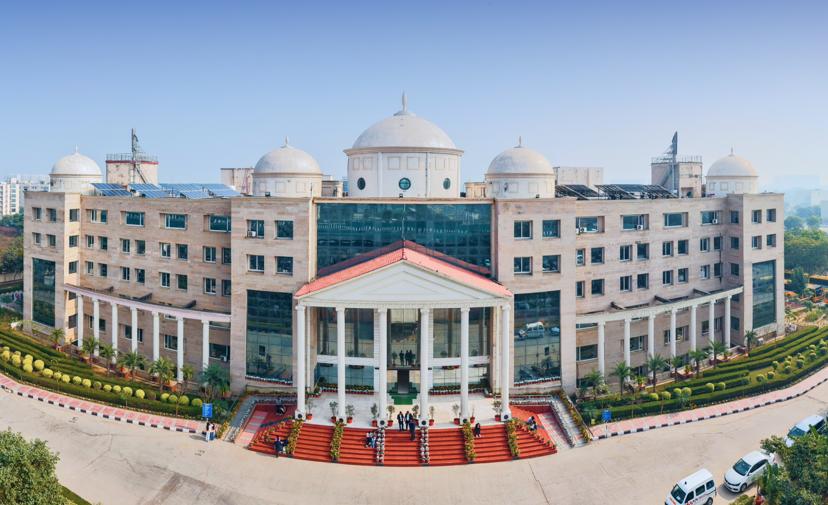













 13+Years of Educational Experience