Have you completed your BBA programme and are considering pursuing an MBA? If yes, then you must be thinking about which specialization is best in MBA after BBA. Well, it completely depends on your interests and which careers you wish to pursue.
An MBA not only enhances a student’s knowledge of business management but also prepares them for leadership roles. Apart from this, there are other benefits that make an MBA degree highly popular among students. In this blog, we will walk you through all these prominent aspects, apart from briefing you on which specialization is best in MBA after BBA.
What Is An MBA
MBA (Master Of Business Administration) is a prestigious 2-year postgraduate degree which is opted by BBA graduates to elevate their business acumen. An MBA programme offers students a comprehensive idea of how businesses work and what key factors to consider while pitching business ideas. Subsequently, this programme also equips them with a basic understanding of how one can transition to another industry and accelerate their career graph in one go.
An MBA programme is a suitable option for everyone who wishes to walk into a better future. But with so many options available in the market one can get confused about which specialization is best in MBA after BBA. Henceforth, we’re here to help you out. However, firstly we will address the career benefits of doing an MBA after BBA for your guidance.
Why Choose MBA after BBA?
- Enhance Your Business Knowledge: While pursuing a BBA programme, students gain knowledge about foundation business aspects. However, those who choose to pursue an MBA programme tend to acquire detailed information about fundamental business principles. Students develop a comprehensive proficiency in a particular subject and become proficient enough to handle complex business challenges.
- Walk Towards Your Interest: Students who hail from a BBA background tend to have a prior idea about your strengths and weaknesses and hence, have the complete liberty to choose a field relevant to their interest. By choosing a field of your interest, you will align more closely with your career goals.
- Acquire Practical Acumen: Getting hands-on practical experience is necessary to survive in the ever-changing business industry. During an MBA programme, students dive deep into theoretical aspects and gain hands-on experience in their respective fields. Subsequently, they also get to strengthen their management abilities to become ready for managerial roles in leading companies across the globe.
- Easy Transition: Once you complete your MBA degree, you’ll have a strong edge and renowned companies will be willing to hire you for mid-senior or top-level roles. Also, you will already have a deep understanding of the theoretical subjects improving your critical thinking skills and problem-solving abilities.
- Spectacular Job Opportunities: Getting selected for senior-level roles is quite easy for MBA graduates with a BBA background. Top companies like Amazon, Deloitte, Wipro, Genpact, Siemens, etc prefer hiring MBA graduates who have passed out from a recognised university. Students who choose to pursue an MBA programme from K.R. Mangalam University easily get placed in reputed companies as we offer 100% placement assistance, ensuring our students land the best jobs in the industry.
- Endless Global Networking Opportunities: An MBA programme opens your pathway to connect with notable alumni, peers, and industry leaders. You will get to connect with intelligent minds and discuss your business ideas. Moreover, your networking will also give you a clear understanding of how the business industry works. As an MBA student, you will also get to work on global business issues alongside top industry experts.
Top MBA Specialisations To Pursue
There is a wide range of MBA (Master of Business Administration) specialisations; however, students need to reflect on their career interests and goals to choose an MBA programme of their choice. However, if you’re still confused about which specialization is best in MBA after BBA, we’ve got you covered.
Here’s a list of the most sought after specializations in an MBA programme:
- MBA in Human Resource (HR): Focuses on talent acquisition, employee engagement, training, performance management, and organizational culture.
- MBA in Finance: Covers financial planning, investment analysis, banking, risk management, and corporate finance.
- MBA in Operations: Deals with process optimization, production planning, quality management, and efficient business operations.
- MBA in Marketing: Emphasizes market research, branding, consumer behavior, sales strategies, and digital campaigns.
- MBA in Business Analytics: Trains students to analyze data, use statistical tools, and support data-driven business decisions.
- MBA in Digital Marketing: Focuses on SEO, social media marketing, content strategy, online advertising, and analytics.
- MBA in Technology Management: Combines business strategy with technology to manage IT systems, innovation, and digital transformation.
- MBA in Supply Chain Management: Covers logistics, procurement, inventory management, distribution, and global supply chain strategies.
- MBA in Fintech: Focuses on financial technologies such as digital payments, blockchain, AI in finance, and financial innovation.
- MBA in Healthcare Management: Prepares students to manage hospitals, healthcare systems, operations, and healthcare policies.
- MBA in International Business Management: Focuses on global trade, international marketing, cross-border finance, and international business laws.
- MBA in IT Management: Trains professionals to manage IT infrastructure, enterprise systems, cybersecurity, and technology teams.
- MBA in Hospitality and Tourism Management: Focuses on hotel management, travel operations, customer service, and tourism business development.
Eligibility Criteria For MBA Programme
BBA graduates need to fulfil certain requirements to pursue an MBA programme. Here’s a complete breakdown of the MBA eligibility criteria.
- A candidate must have a bachelor’s degree from a recognised university with a minimum of 50% aggregate.
- If you wish to pursue an Executive MBA, you must hold 2-5 years of relevant work experience
- Certain universities provide admission based on CAT, GMAT, XAT, NMAT, IPMAT, and MAT scores.
- Lastly, applicants need to clear a general discussion and personal interview round (if applicable) to get admission into their dream college.
What is the Salary After Completing the MBA Programme?
The average salary of BBA graduates after MBA in India typically starts at 6-12 LPA depending upon the college you complete your MBA from. However, those students who have graduated from K.R. Mangalam University have bagged whopping packages of 56.6 LPA. Key factors like educational background, knowledge, and aptitude play a prominent role in getting the best package.
The typical package offered to top MBA graduates in different specializations is listed below.
| Specialisation |
Job Profile |
Average Salary |
| Human Resource |
HR Recruiter, Grievance Addresser, Payroll Specialist, HR Specialist |
3-12 LPA |
| Finance |
Investment Banker, Financial Analyst, Risk Manager, Consultant, and Portfolio Manager |
6-12 LPA |
| Operations |
Quality Control Advisor, Strategist, Employee Trainer, Legal Advisor |
6-17 LPA |
| Marketing |
PR, Advertiser, Content/Copywriter, Designer/Videographer, Social Media Expert |
4-22 LPA |
| Business Analytics |
Data Analyst, Business Intelligence Analyst, Data Scientist, and Technical Team Leader. |
4-12 LPA |
| Digital Marketing |
Digital Marketing Manager, SEO Specialist, Content Strategist, Brand Manager |
8-12 LPA |
| Technology Management |
Project Manager, Database Developer, Quality assurance, IT Consultant |
7-19 LPA |
| Supply Chain Management |
Store Manager, Product Designer, Supply Caretaker, Operations Head, Inventory Manager |
5-18 LPA |
| Fintech |
Fintech Product Manager, Financial Analyst, Risk Analyst, Compliance Officer, Blockchain Developer, |
6-9 LPA |
| Healthcare Management |
Clinical Manager, Health Administrator, Health Advocate, Insurance Specialist, Quality Improvement Manager |
5.2- 19 LPA |
| International Business Management |
Business Manager, Business Analyst, Management Consultant, Chief Executive Officer, Sales Development Representative |
8-30 LPA |
| Hospitality and Tourism Management |
President, Sales Head, Assistant Manager, Finance Manager, Managing Director, Analytics Officer |
5-16 LPA |
Why K.R. Mangalam University is the Best University for an MBA Programme?
There are more than 3000 institutions in India offering admission into an MBA programme. Out of all the available options, K.R. Mangalam University is the best because it provides elevated career growth to the students. As of today’s date, our course modules equip students with theoretical and practical knowledge of the management industry. With well-equipped classrooms, state-of-the-art infrastructure, skilled professionals, and blended learning techniques, we’ve become the best university for an MBA in Gurugram.
Here’s a list of programmes we offer at K.R. Mangalam University:
- MBA in Business Analytics
- MBA in Digital Marketing with academic support of IIDE
Conclusion
By now your doubt on which specialization is best in MBA after BBA must be resolved and you must have clarity on which field is suitable for you. BBA or any other graduate should definitely pursue an MBA programme to sharpen their business acumen, learn about management and build leadership qualities. Doing so will give you a competitive edge and will open the door to the best career opportunities. Furthermore, it means that you will get a better salary package and will progress towards a bright future.
KR Mangalam University’s MBA programmes provide an excellent pathway to build managerial expertise alongside people-centric skills. With industry-focused curricula, experienced faculty, and strong career support, KRMU empowers students to turn their interest in psychology and management into successful, future-ready careers.
Read More: Best University for MBA in India with International Partnerships
FAQs
What is the age limit to pursue an MBA programme?
There is no minimum age limit to pursue an MBA programme. Anyone can apply for this programme.
Can a non-BBA graduate pursue an MBA?
Yes, any graduate can pursue an MBA programme. To pursue an MBA programme, you must have passed from recognised university with a minimum 50% aggregate.
Should everyone pursue an MBA?
Yes, everyone should pursue an MBA programme after a BBA or any other graduation for lucrative career opportunities.
What is the average salary of an MBA graduate in India?
The average salary of an MBA graduate in India ranges around 3-15 lakhs per annum depending upon the institution you pursue your MBA from.
Which specialization is best in MBA after BBA?
Human Resource, Marketing, Finance, Digital Marketing, FinTech, Operations, and Business Analytics are some of the best specialisations in MBA.
Is an MBA better in India or abroad?
It depends on your career goals and budget. Pursuing an MBA in India is more affordable and helps in building a strong network within the Indian corporate sector. On the other hand, an MBA abroad offers global exposure, international networking, and higher salary packages, but comes with higher costs.




 13 Schools700+ Faculty Members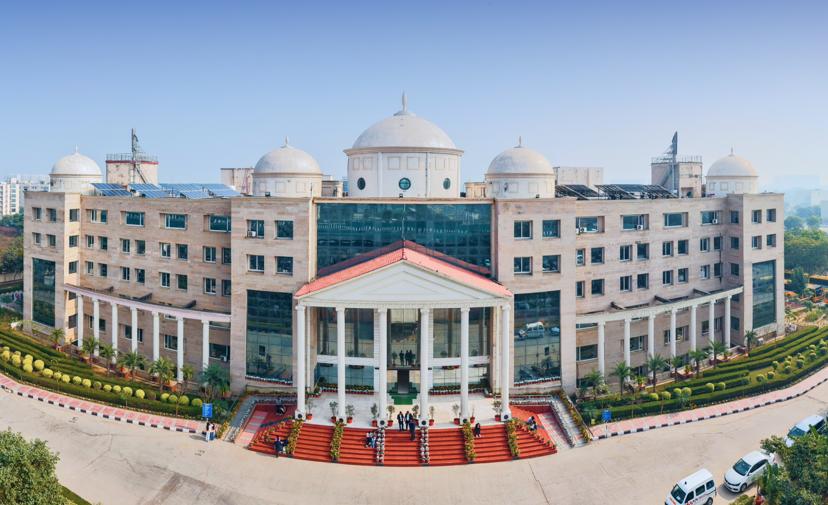













 13+Years of Educational Experience