Integrated Dual Degree: In today’s fast-changing education landscape, students are increasingly searching for academic pathways that offer specialised knowledge while cutting down on the repetition that usually exists between undergraduate and postgraduate study. If we look at how an integrated dual-degree programme works, combining two levels of education into one structured pathway so students can work toward two qualifications within a single connected programme, we can see why this option is gaining so much attention right now.
Considering the range of benefits these programmes bring, academic continuity, specialised subject knowledge, practical exposure, and in many cases a more efficient use of both time and resources, we can certainly say that integrated dual-degree programmes are becoming a serious alternative to the traditional two-degree route. That said, the structure, duration, eligibility requirements, and the actual process of awarding degrees can vary quite a bit from one university to another, so no two programmes should be assumed to work the same way.
In this blog, we’ll explore what an integrated dual degree really means, how these programmes function in practice, which integrated course options are most popular among students today, what eligibility requirements typically look like, the key benefits worth knowing about, and why K.R. Mangalam University stands out as a strong option for students considering an integrated degree path.
ge for a separate postgraduate. The programme allows students to earn two different degrees at the same time. For example, students can enrol for a B.Tech + M.Tech degree at the same time and save both time and tuition costs.
In this blog, you’ll explore what an integrated dual degree is, its benefits, why this programme is popular among the Genz, etc.
Quick Glance At The Blog
Below is a concise, tabular overview that summarises the complete information on everything you need to know about integrating dual degree programmes in a structured and easy-to-read format. In short, it is a summarised version of the information provided in the blog.
| Particular |
Detail |
| About the Integrated Degree |
A dual degree comprising both a bachelor’s & master’s programme. |
| Key Benefits of an Integrated Degree |
Greater Flexibility, Time & Money Saving, Improve Interdisciplinary skills & Enhance Students’ Employability |
| Integrated Courses |
BBA-MBA, BEd + Med, BSc + BEd, B.Pharm + M.Pharm, BTech + MBA, BCom + LLB, & BTech + MTech |
| Eligibility Criteria for Integrated Courses |
A higher secondary certificate (10+2) from any recognised board |
What is an Integrated Degree?
The integrated dual degree is a dual degree which comprises bachelor and master programme. For example, if you choose an integrated dual degree in engineering, it’ll combine both B.Tech and M.Tech degrees. Instead of selecting a degree separately, you choose a combined one.
Pursuing an integrated degree not only saves you one year but also helps students get a master’s degree without any entrance test offered by institutes.
How Does an Integrated Dual Degree Work?
An integrated dual degree combines your undergraduate and postgraduate years into a single, unbroken programme rather than two separate ones. You begin with the fundamentals, and as time passes, things get more advanced — specialisations show up, projects carry more weight, internships give you real exposure, and eventually you’re doing work that leans into actual research. An Integrated B.Sc.-M.Sc. programme is a good example. Nobody hands you on advanced theory in the first semester. You work up to it, moving from the basics toward specialised subjects and practical training as the years progress.
The exact structure isn’t the same everywhere, though, and that’s something worth paying attention to. A number of universities award the undergraduate degree at a fixed point partway through the course.
Integrated Course List
To pursue an integrated course, several institutes allow students to gain expertise in two different fields in one degree. Integrated programmes give an advantage to students by saving their time and money.
| Integrated Course |
Duration |
|
BBA-MBA
|
5 Years |
| BEd + Med |
3 Years
|
| BSc + BEd |
4 Years
|
|
B.Pharm + M.Pharm
|
5 Years |
|
BTech + MBA
|
5 Years |
| BCom + LLB |
5 Years
|
| BTech + MTech |
5 Years
|
Eligibility Criteria for Integrated Courses After 12th
The eligibility criteria for these programmes required a higher secondary certificate (10+2) from any recognized or equivalent board. It’s the common eligibility criteria of institutes but some institutes may have slight variations. Apart from eligibility, some institutes offer merit-based admission required to score around 50% in their last examination.
Why KRMU for Integrated Dual Degree Courses?
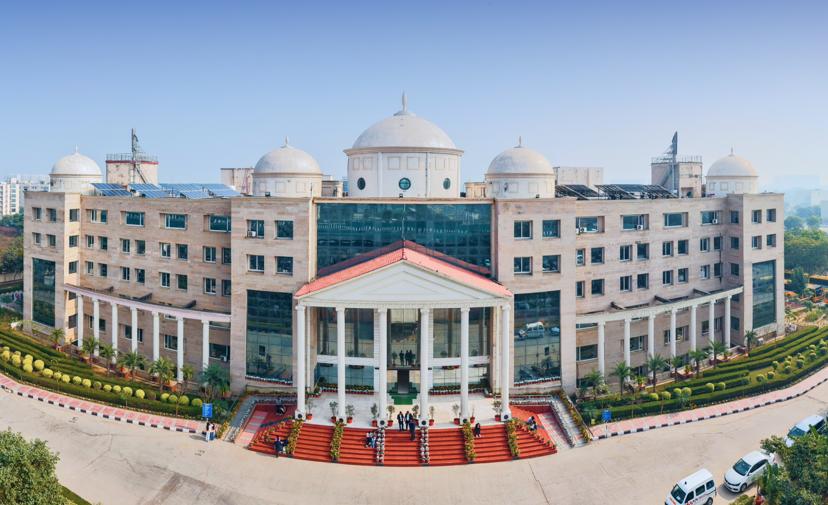
K.R. Mangalam University offers students specialised programmes that blend solid academics with hands-on exposure. Look at what students walk away with. Structured courses. Faculty who knows their field. Learning that happens through doing, not just reading. Constant contact with how things actually work in the industry. Put that together and it’s easy to see why this university stands out for anyone wanting a complete academic experience.
Think about everything that actually matters when picking an integrated programme. Curriculum design. Practical exposure. Faculty expertise. Infrastructure. Access to internships. Career support once you’re done. All of this together decides how ready a student really feels the moment they step into their professional life.
Academic Continuity
A seamless transition from basic to advanced topics is ensured by the curriculum’s design, which eliminates redundant coursework.
Employability
Recruiters looking for people with both breadth and depth of expertise find graduates more appealing because they enter the job a year earlier with advanced dual qualifications.
Research Opportunity
Through annual internships, real-world projects, and cutting-edge infrastructure like advanced labs for science-focused integrated degrees, programs prioritise experiential learning.
Conclusion
The integrated programmes provide an advanced-level approach to education. Pursuing integrated programmes helps students with a fulfilling and prosperous future. There are various benefits of the course like flexibility, saving time, enhanced interdisciplinary skills, and student employability.
FAQs
What is an integrated degree program?
The integrated dual degree is an integrated dual degree of bachelor and master programme. For example, if you choose an integrated degree in engineering, it'll combine both B.Tech and M.Tech degrees.
How does an integrated dual degree help to save money and time?
Integrated programs allow students to complete multiple degrees in less time compared to the combined duration of the programme. Pursuing an integrated degree programme not only saves students time but also saves their money because multiple programmes are expensive.
What are the advantages of enrolling in an integrated degree program?
Greater Flexibility: Combines various subjects from bachelor and master programs, offering broader learning opportunities.
Time and Cost Efficiency: Saves time and money by reducing the duration and cost of education.
Interdisciplinary Skills Development: Enhances critical thinking, problem-solving, and teamwork skills.
Improved Employability: Equips students with comprehensive skills and knowledge that are attractive to employers.
Can we have 2 degrees in different fields?
Yes, integrated degree programs often allow for the combination of different fields. For example, a student might pursue a BTech in Computer Science and then transition to an MBA, merging technology and business skills.
How do integrated programs enhance employability?
Pursuing integrated degree courses equips students with essential skills and knowledge that help them to get a job. Most employers prefer candidates who are well-skilled with the ability to problem-solve and work collaboratively.
























 13+Years of Educational Experience