Every thriving society is built on education, and teachers are essential to a country’s development. The B.Ed. programme is a calculated step toward a career in teaching. The B.Ed. is a professional undergraduate programme comprising theory of pedagogy and practice that prepares students to deal with various learning settings and teaching issues. It equips students with the best preparation for entering the teaching profession by helping them develop a strong understanding of educational concepts and practical teaching techniques. Obviously, many who are interested in the teaching profession are curious about B.Ed. course admissions and other aspects of this course.
This blog post can help students by providing information about this programme.
Overview of the Upcoming Sections
| Sections |
Descriptions |
| Pursuing B.Ed. Course After 12th |
Explains why and who should pursue a B.Ed. course. |
| B.Ed. Course Admissions |
Covers important admission-related information such as eligibility criteria, admission routes, entrance exams, and the application process. |
| B.Ed. Course Fees |
Explains the major components of the B.Ed. fee structure, including tuition fees, examination charges, internship fees, and library/resource charges. |
| Why Choose KRMU for B.Ed.? |
Highlights K.R. Mangalam University’s practical learning approach, curriculum innovation, ICT-enabled education, internships, and expert faculty guidance. |
| B.Ed. Course Scope |
Discusses the academic and professional growth opportunities available after completing a B.Ed. degree. |
| Conclusion |
Summarises the importance of understanding B.Ed. course admissions and highlights KRMU’s industry-oriented teacher education. |
Pursuing a B.Ed. Course After 12th
Before discussing B.Ed. course admissions, it is important to learn:
Why Pursue a B.Ed. Course after 12th?
Obtaining a B.Ed. degree has several benefits. It teaches a person effective teaching methods, classroom management techniques, and educational psychology principles. It creates a number of job options in the public and commercial sectors. Here are a few main benefits:
- Comprehensive Knowledge: Develops a strong understanding of teaching theories, educational principles, and instructional approaches.
- Practical Experience: Provides valuable real-world teaching experience through practical training and classroom exposure.
- Career Opportunities: Opens up diverse career opportunities in teaching and the broader field of education.
- Job Security: Qualified teachers with the right skills are in high demand across various educational institutions.
- Professional Growth: Enhances career prospects by offering opportunities for higher education, training, and specialisation.
Who Should Think About Pursuing a B.Ed. Course After 12th?
Those who are passionate about teaching and wish to improve the lives of students should pursue a B.Ed. It’s ideal for people who love working with kids or young adults and have a keen interest in curriculum development and teaching strategies. A B.Ed. can be the perfect choice for you if you are communicative, patient, and dedicated to helping others grow and succeed.
Also Read: Why is KRMU Among the Top B.Ed. Colleges in Delhi NCR?
B.Ed. Course Admissions
To understand B.Ed. course admissions, students need to understand:
Eligibility Criteria
To secure a seat in a B.Ed. programme, students must meet the following standard requirements:
- Academic Qualification: Completed bachelor’s degree (B.A., B.Sc., B.Com.) or master’s degree in a relevant discipline.
- Minimum Marks: A minimum of 50% aggregate marks is required for general category candidates, though state and central universities generally offer a 5% relaxation (to 45%) for reserved categories (SC/ST/OBC/PWD).
- Teaching Subjects: Candidates often need to select one “teaching subject” or pedagogy that they studied for at least two years during their undergraduate studies.
Admission Route
Admissions are typically conducted via one of two primary pathways:
Entrance Exams
Most reputable state and central universities require candidates to clear a Common Entrance Test (CET) or a state-level Joint Entrance Examination (JEE). These exams assess general knowledge, teaching aptitude, logical reasoning, and language proficiency.
Merit-Based
Many private institutions and specific distance-education universities grant direct admission based strictly on marks obtained in the qualifying degree.
Application Process
The application window varies by institution and state boards:
- Registration: You will need to register on the official university or state examination board portal.
- Documentation: Students will be required to upload scanned copies of their academic marksheets, degree certificates, passport-sized photographs, and ID proofs.
- Application Fee: Pay the required registration fee online.
B.Ed. Course Fees
When evaluating a B.Ed. fee structure, the overall cost is split across several components:
- Tuition Fees: The primary and largest component of the fee structure, covering the core cost of academic education and faculty lectures.
- Registration & Enrolment Fees: A one-time administrative charge paid at the beginning of the course to register the student with the affiliating university.
- Examination Fees: Recurring charges collected before each semester or annual exam cycle to cover evaluation, question paper setting, and marksheet processing.
- Internship & School Experience Fees: Covers the administrative costs of arranging mandatory teaching practice stints at local schools.
- Library & Resource Centre Funds: Charges meant for accessing academic journals, physical reference books, and digital educational databases.
- Refundable Caution Deposit: A security deposit collected during admission to cover potential damages, which is completely refunded upon graduation.
Note: Fees vary depending on university infrastructure, facilities, and programme structure.
Why select K.R. Mangalam University (KRMU) for a B.Ed.?
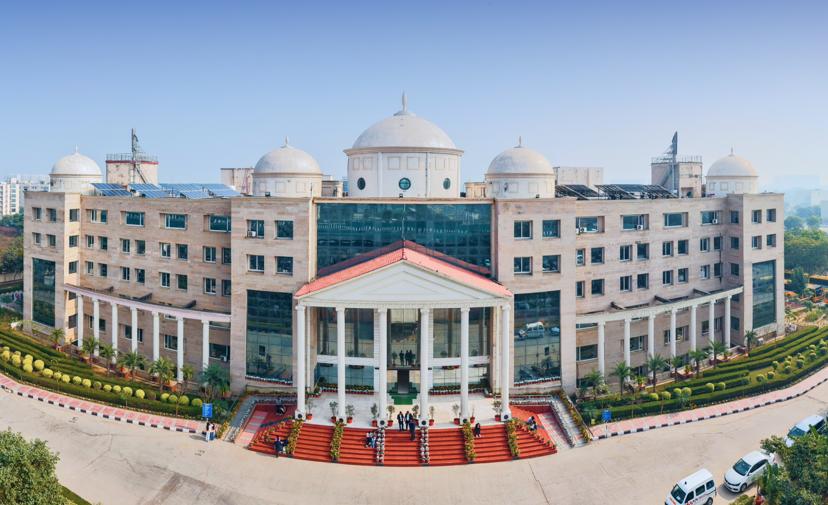
Under the School of Education, KRMU offers a Bachelor of Education (B.Ed.) programme. This programme is the combination of:
Curriculum and Pedagogy Innovation
Learn in-depth techniques for teaching that combine psychology, pedagogy, and subject-matter expertise. In accordance with NEP 2020 criteria, the curriculum is created to prepare teachers for dynamic classrooms.
Exposure to Real Classroom Instruction
Gain confidence in your ability to successfully manage classrooms and implement cutting-edge tactics to improve student learning results by participating in extended school internships, microteaching sessions, and practical experience.
Guidance from Skilled Teachers
Learn under the guidance of highly skilled instructors, seasoned academicians, and education experts who will help you become an influential teacher by sharing their knowledge, tactics, and real-world experiences.
ICT and Technology-Assisted Education
Learn how to use ICT integration, smart classroom apps, and digital teaching tools to remain ahead of the curve in the field of digital education while engaging contemporary students through interactive, tech-driven approaches.
B.Ed. Course Details of KRMU
| Duration |
Programme Fee / Year |
Eligibility |
| 2 years |
₹1,35,000 |
UG/PG degree with at least 50% aggregate marks from an accredited university. |
Subjects Covered
Topics in its syllabus included:
- Childhood Development and Diversity
- Educational Philosophy and Purpose
- Development of Education in India
- Language and Communication in Teaching and Learning
- Competency-based Assessment for Learning
- Environmental Education and Disaster Management
B.Ed. Course Scope
A B.Ed. degree is not the end of the journey, but the beginning of a lifetime of academic and professional growth.
Higher Studies After B.Ed.
Many graduates want to broaden their knowledge of this domain. Pursuing higher education becomes highly beneficial for teachers, as it expands career opportunities, enhances expertise, and increases employability both in India and internationally. Below are some higher study options available after a B.Ed. degree.
M.Ed. (Master of Education)
For educators who want to progress in teaching, research, or academic administration, the M.Ed. is still the most popular postgraduate option following the B.Ed. (Bachelor of Education). Graduates of the M.Ed. programme are prepared for positions as teacher trainers, education consultants, or academic leaders by gaining an in-depth understanding of pedagogy, curriculum design, and educational psychology.
M.A. in Education
Pursuing an M.A. in Education allows students to explore educational planning, school administration, and policy-making.
Ph.D. in Education
A Ph.D. in education provides access to research and teaching at the university level.
Postgraduate Diploma
A one-year postgraduate diploma in areas such as special education, educational counselling, or inclusive teaching provides specialised knowledge for individuals looking to advance their expertise.
Career Opportunities
After earning a B.Ed. (Bachelor of Education), teaching is the most popular career route. Teachers have a significant impact on students’ academic and personal development, whether they are teaching at the elementary, secondary, or higher secondary levels. With additional training and qualifications, B.Ed. graduates can progress to leadership roles such as vice principal or principal.
| Teaching and Related Jobs |
Salary Range (Approx.) |
| Elementary/Primary Teachers |
₹2.5–5 LPA |
| Secondary School Teachers |
₹3–6 LPA |
| Upper Secondary/Senior Secondary Teachers |
₹4–8 LPA |
| Vice Principals |
₹6–12 LPA |
| Principals |
₹8–18 LPA |
Note: Salaries may vary depending on the school, location, qualifications, teaching experience, and board affiliation (CBSE, ICSE, State Board, IB, etc.).
Other than teaching, there are many other career options, which include:
| Career Option |
Description |
Salary Range (Approx.) |
| Education Consultants |
Assist institutions, students, or schools in developing curricula and improving policies. |
₹4–10 LPA |
| Academic Coordinators |
Oversee academic programmes, instructional techniques, and standards of excellence in educational establishments. |
₹4–8 LPA |
| Online Tutors |
Organise online courses and produce educational resources for online learning environments. |
₹2.5–6 LPA |
| Instructional Designers |
Create interactive training materials and instructional content for online learners. |
₹5–12 LPA |
| Education Researcher |
Do research on curricular innovation, student psychology, or pedagogy. |
₹4–9 LPA |
Note: Salaries may vary depending on experience, skills, institution, location, and level of expertise.
Conclusion
Understanding B.Ed. course admissions is essential for students planning to build a successful career in the education sector. From eligibility criteria and fee structure to career opportunities and higher studies, students should carefully explore every aspect before applying for a B.Ed. programme.
K.R. Mangalam University (KRMU) offers industry-oriented teacher education with practical training. It also provides modern teaching methodologies, ICT-enabled learning, and expert academic guidance to prepare future educators for dynamic classrooms.
Apply to KRMU and take the next step toward your B.Ed. course admission and teaching career!
Also Read: A Comprehensive Guide to B.Ed. Course Details
FAQs
What is a B.Ed. course?
A B.Ed. (Bachelor of Education) is a professional teaching programme that prepares students for careers in the education sector through pedagogy, classroom management, and practical teaching training.
What are the eligibility criteria for B.Ed. course admissions?
Students generally need a bachelor’s or master’s degree with at least 50% aggregate marks from a recognised university to apply for B.Ed. course admissions.
Can students pursue a B.Ed. course after 12th?
Students usually need to complete graduation before applying for a B.Ed. programme. However, integrated programmes like BA B.Ed. or B.Sc. B.Ed. can be pursued after 12th.
What is the salary range after a B.Ed. course?
Salaries may vary depending on experience and institution, but B.Ed. graduates can earn from ₹2.5 LPA to ₹18 LPA across different education roles.
What higher studies options are available after B.Ed.?
Students can pursue M.Ed., M.A. in Education, Ph.D. in Education, or postgraduate diploma programmes in special education and counselling.

























 13+Years of Educational Experience