“Did you know that some of India’s most prominent freedom fighters, prime ministers, and constitutional experts started their careers as lawyers? Today, the legal profession continues to be one of the most influential and diverse career paths in the country, making the choice of a law college more important than ever.”
Every Supreme Court lawyer was once a student searching for the right law college! The best law colleges in India are those that combine academic excellence, practical legal training, internship opportunities, moot court exposure, experienced faculty, and strong placement support. While National Law Universities (NLUs) remain highly sought-after, many students today also consider private institutions that offer industry-oriented legal education and career-focused learning.
The quality of a law college can significantly influence a student’s career opportunities. India has around 1,700 law colleges and universities offering legal education, producing thousands of law graduates every year. However, top-tier law firms and leading corporate legal departments recruit only a small fraction of these graduates, making the legal job market highly competitive.
Experts attribute this gap largely to differences in practical training, industry exposure, internship experience, and career readiness.
This highlights why students should look beyond rankings when evaluating law colleges. Factors such as curriculum design, faculty mentorship, and industry connection. This guide explains what makes a law college worth considering and highlights the key factors students should evaluate before making an admission decision.
Quick Glance At The Blog
| Sections |
Description |
| Which is the Best Law College in India? |
Explains the key factors students should evaluate when selecting a law college, including curriculum, faculty, placements, industry exposure, infrastructure, and location. |
| Best Law Colleges in India After 12th |
Discusses the major categories of law institutions, including National Law Universities, government law colleges, and private law universities. |
| Why K.R. Mangalam University Is Emerging as a Preferred Choice for Law Students? |
Highlights KRMU’s curriculum, faculty, infrastructure, career support, industry exposure, and strategic location. |
| Future Career Opportunities in Law |
Explores emerging legal career paths in corporate law, cyber law, intellectual property, compliance, public policy, and legal consulting. |
| Conclusion |
Summarises the factors that make a law college worth considering and explains how KRMU supports aspiring legal professionals. |
Did You Know?
Law graduates today work in technology, finance, consulting, sports management, and public policy—not just courtrooms.
Ask Yourself Before Ascertaining Your College!
Before you take the final call on deciding on your college, ask yourself the following questions:
Do you want to become a Corporate Lawyer or a Courtroom Advocate?
Choose a college that matches your career goals. Corporate law aspirants should focus on placements and industry ties, while future litigators should prioritise moot courts and courtroom exposure.
How Important are Internships in your college decision?
Internships bridge the gap between theory and practice. Strong internship opportunities can significantly boost your skills, network, and employability.
Are you choosing a Law College based on rankings or Career outcomes?
Students often focus on rankings, but recruiters frequently look at practical skills, internships, moot court experience, and academic performance.
Does the college have a strong alumni network that can help your career?
A strong alumni network can open doors to mentorship, internships, and job opportunities throughout your legal career.
“The good lawyer is not the man who has an eye to every side and angle of contingency, but who throws himself on your part so heartily that he can get you out of a scrape.”
— Ralph Waldo Emerson
Also Read: Explore the Top Law Courses at K.R. Mangalam University
Which is the Best Law College in India?
There is no single answer to the question, “Which is the best law college in India?” The right choice depends on a student’s career goals, budget, preferred specialisation, and learning preferences. However, the following factors can help students make an informed decision.
Curriculum
The college or university must offer a curriculum that teaches students both academic knowledge and practical skills. It incorporates case studies, simulated trials, and legal research projects to assist students in applying legal principles in real-world scenarios. Graduates are equipped with the skills necessary to successfully navigate the complexities of the legal profession thanks to the emphasis on practical learning.
Teachers and Other Experts
Prominent academics, well-known legal specialists, and practising solicitors must be connected to the institution in order to improve students’ educational experiences. Their guidance and coaching are essential in assisting students in becoming competent solicitors.
The institution can also invite eminent jurists, eminent legal figures, and guest speakers to help students better understand a variety of perspectives and current legal trends. This exposure to subject-matter experts must provide students with a competitive advantage and a comprehensive understanding of the legal environment.
Career Opportunities and Placements
Check for placements and employment opportunities. Always give top priority to the best placement law colleges in India. The institution must have strong ties with prestigious law firms, corporate associations, and governmental agencies in order to provide internships and career placements for its students. Additionally, it should have a dedicated placement cell that primarily works directly with students to identify their career goals and then provides them with the resources and support they require to achieve those goals.
Industry Connections
Industry connections are among the most valuable factors students should consider when choosing a law college. Strong relationships with law firms, corporate legal departments, courts, legal consultants, and industry professionals can provide students with opportunities that extend beyond classroom learning.
Through industry collaborations, students may gain access to internships, workshops, guest lectures, networking events, and mentorship opportunities. These experiences help them develop practical skills, understand current legal challenges, and build professional connections early in their careers.
Infrastructure
Infrastructure also plays a crucial role in shaping a student’s academic journey. Modern classrooms, moot court facilities, well-equipped libraries, research centres, and technology-enabled learning spaces contribute to a comprehensive legal education. Such facilities create an environment where students can strengthen their legal knowledge, develop practical skills, and prepare for professional careers in the legal sector.
Location
One of the most essential elements students should examine while choosing a law institution is its location and infrastructure. Courts, attorneys, law firms, and other legal institutions may be more easily accessible from a strategically located legal institution. Students may see court cases, speak with solicitors, and get important exposure to real-world legal settings because of this close proximity.
“Law and order are the medicine of the body politic, and when the body politic gets sick, medicine must be administered.”
— Dr. B.R. Ambedkar
Common Myths V/S Facts About Law in India
Long before you step into a courtroom, your legal education begins shaping the skills, networks, and opportunities that will define your career. Here are some common myths about the legal profession and the actual realities that every law aspirant should know:
Myth: Law graduates only become Lawyers.
Reality: They can become corporate counsels, policy analysts, legal journalists, compliance officers, mediators, and entrepreneurs.
Myth: The highest-ranked college is always the best choice.
Reality: The best college depends on your career goals, specialisation interests, budget, and location preferences.
Myth: Only students from National Law Universities (NLUs) succeed in the legal profession.
Reality: Success in law depends on skills, internships, networking, and continuous learning. Graduates from many institutions build successful careers in litigation, corporate law, the judiciary, and public service.
Myth: Law is all about arguing in court.
Reality: A large part of legal work involves research, drafting contracts, advising clients, policy-making, compliance management, negotiation, and dispute resolution outside the courtroom.
Best Law Colleges in India After 12th
Students can choose from National Law Universities, government universities, and private law schools. Each category offers distinct advantages depending on a student’s career goals, budget, and preferred learning environment.
The best law college doesn’t just teach laws—it teaches you how to think.
National Law Universities (NLUs)
National Law Universities (NLUs) are prestigious establishments in India that provide specialised legal education. NLUs are well known for their rigorous academic programmes that equip students for the highly competitive legal industry. The extensive curriculum encompasses both traditional and new topics, such as intellectual property, technological law, and constitutional law. It helps students stay current with evolving laws and legal developments through regular updates.
In order to assist students in applying theory to real-world situations, NLUs place a strong emphasis on practical learning through moot courts, internships, legal aid clinics, and research projects. Students are encouraged to publish papers, submit to journals, and give presentations at conferences because of the emphasis on research-driven teaching.
Government Law Colleges or Universities
Government institutions are renowned for their established academic reputation, uniform curricula, and affordable tuition. Particularly for well-liked programmes like engineering, business, law, and medicine, admissions are usually merit-based and extremely competitive.
Strong intellectual and research credentials are common among faculty members at government institutions, who are often chosen through stringent public service procedures. In India and elsewhere, degrees from government colleges are generally recognised. Owing to these reasons, many of them are considered among the best law colleges in India with low fees.
Private Law Colleges or Universities
A variety of factors make private colleges or universities appealing, such as state-of-the-art facilities, industry exposure, international alliances, innovative teaching methods, and great placement opportunities. As the legal profession becomes more dynamic and internationally interconnected, students are looking for colleges that offer not just academic knowledge but also practical exposure and career-ready skills.
The best example is K.R. Mangalam University.
Did You Know?
The Indian judiciary is among the largest in the world, with the Supreme Court of India, High Courts, and thousands of subordinate courts serving millions of citizens.
Why is K.R. Mangalam University Emerging as a Preferred Choice for Law Students?
Among the best private law colleges in India, the university has emerged as a preferred choice for students seeking a balance between academic excellence, practical exposure, and professional development. This is because KRMU offers:
Best Curriculum
It prepares students for the changing legal landscape with internationally relevant and industry-aligned law undergraduate, postgraduate, and Ph.D. programmes. The university provides aspiring legal professionals with the skills necessary to pursue careers in corporate law, litigation, public policy, compliance, and other legal domains through a curriculum designed with academic and industry insights, hands-on learning opportunities, and an interdisciplinary approach.
Faculty and Academic Mentorship
Faculty members play a crucial role in shaping a student’s legal knowledge, analytical thinking, and professional development. Experienced educators not only teach legal concepts but also guide students in legal research, case analysis, moot court preparation, and understanding contemporary legal issues.
Top-Level Infrastructure Facilities
In terms of infrastructure facilities, KRMU offers:
Smart Classrooms
Students may have an engaged and interesting learning experience in the smart classrooms. With projectors, digital whiteboards, audio-visual equipment, and internet connections, these cutting-edge classrooms enable teachers to employ multimedia presentations, case law visuals, and court video recordings for more efficient instruction.
Moot Courts
Students can gain confidence in legal reasoning and case presentation by using K.R. Mangalam University’s state-of-the-art courtroom setting, which mimics actual courtroom processes.
Library
For law students, the K.R. Mangalam University law library is a crucial academic resource. It has a vast library of Indian and international law books, legal periodicals, bare acts, case law digests, and reference resources.
Computer Labs
Legal research, case study analysis, online legal writing, and the use of specialised software are made easier by the computer laboratories’ state-of-the-art equipment and fast internet.
Career Development Support
K.R. Mangalam University supports career readiness through internships, industry networking, skill-development initiatives, and placement assistance. These opportunities help students build professional competencies and explore careers across diverse legal domains.
Industry Connections
K.R. Mangalam University recognises that strong industry connections play a vital role in legal education. The university fosters meaningful engagement between students and the legal profession through interactions with legal experts, guest lectures, workshops, seminars, industry visits, and internship opportunities. These experiences help students gain practical insights into the legal sector and understand the realities of professional practice.
Strategic Location
Located in Gurugram, K.R. Mangalam University offers students close proximity to
- Corporate offices
- Law firms
- Startups
- Legal consultancies
Future Career Opportunities in Law
A law degree opens doors. The right law college helps you choose which door to walk through.
The legal profession is no longer limited to litigation and courtroom practice. With the rise of technology, global business, and regulatory frameworks, law graduates can now explore diverse career paths in corporate law, cyber law, intellectual property rights, data privacy, compliance, public policy, arbitration, and legal consulting.
Choosing a law college is your first legal decision—and it may be the most important one of your career. Why? Because the future of law lies at the intersection of legal expertise, technology, business, and governance.
As organisations increasingly seek legal professionals who can navigate complex regulations and emerging legal challenges, students should choose a law college that provides industry exposure, practical learning opportunities, and career-focused education.
Conclusion
There is no single answer to the question, “Which is the best law college in India?” The ideal choice depends on a student’s career aspirations, learning preferences, and professional goals. Factors such as curriculum, faculty expertise, infrastructure, industry connections, location, and placement support play a crucial role in shaping a successful legal career.
For students seeking a blend of academic excellence, practical learning, industry exposure, and career-focused education, K.R. Mangalam University offers a comprehensive environment to develop the knowledge, skills, and professional competencies required in today’s legal profession.
Remember! The best law college isn’t necessarily the most famous one—it’s the one that aligns with your ambitions, learning style, and career goals. So Apply at KRMU today!
Also Read: PhD Course Guide: Admissions, Eligibility, and Requirements
FAQs
Which are the best law colleges in India after 12th?
Students can pursue integrated law programmes from National Law Universities (NLUs), government law colleges, and private universities. Among the private ones, the most popular option among Delhi NCR students is K.R. Mangalam University.
What factors should students consider when choosing a law college?
Students should evaluate the curriculum, faculty expertise, industry connections, internship opportunities, infrastructure, location, moot court exposure, and placement support before making an admission decision.
Which are considered the best law colleges in India with low fees?
Many government law colleges and universities are known for offering quality legal education at relatively affordable tuition fees. However, private universities like K.R. Mangalam University often provide stronger industry exposure, access to modern infrastructure and dedicated placement support.
Why are industry connections important in legal education?
Industry connections provide students with access to internships, workshops, guest lectures, networking opportunities, and practical exposure that help bridge the gap between legal theory and professional practice.
What career opportunities are available after completing a law degree?
Law graduates can pursue careers in litigation, corporate law, legal consulting, intellectual property rights, cyber law, compliance, arbitration, public policy, legal research, and judicial services.




 13 Schools700+ Faculty Members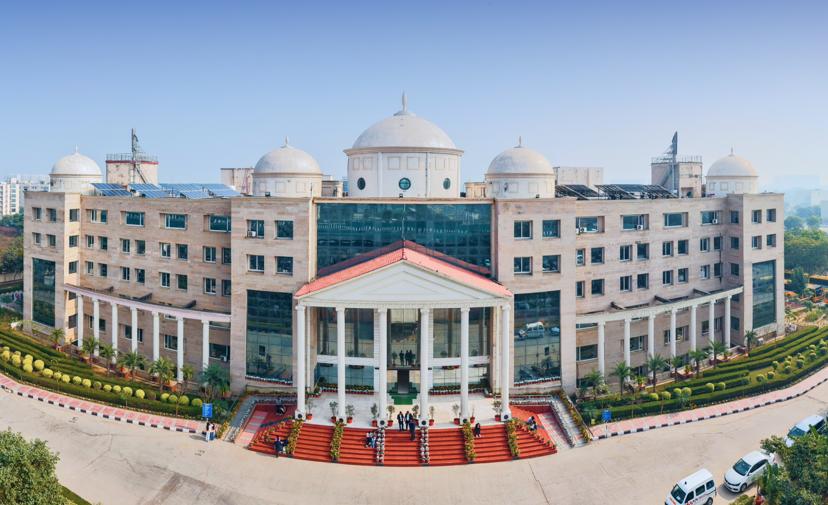













 13+Years of Educational Experience