India is emerging as a thriving hub for PhD degree holders. With increasing government support and funding, a large number of students are pursuing a PhD course, aspiring to grab enhanced career opportunities for the future. So if you’ve been searching for ‘How to do a PhD course in India’ then you’ve arrived at the right spot because, in this blog, we’ll discuss every single detail that a Ph.D. aspirant should know about in India.
PhD Full Form: Meaning and Overview
The PhD full form is Doctor of Philosophy. If you are asking what is the full form of PhD, it refers to the highest academic degree awarded in various fields, including education, science, arts, and technology.
The PhD full form in education specifically denotes advanced research in educational theory, practice, and policy. This degree focuses on original research, critical analysis, and contribution to knowledge in a specialised area. A PhD prepares candidates for careers in academia, research, leadership roles, and policy-making, establishing them as experts in their chosen discipline.
What is a PhD Course?
A Ph.D. Programme is a 3 to 6-year rigorous research-oriented degree programme pursued by students under the guidance of a faculty supervisor. It usually involves coursework, comprehensive examinations, and the completion of a dissertation. While pursuing a Ph.D. course, the student has to dedicate their complete time to research. However, students can also opt for a part time Ph.D. where they can choose to pursue a Ph.D. as they work in the corporate world.
A Ph.D. student conducts original research in their specialised field, systematically documenting their findings in a research thesis. Upon submitting the thesis to their supervisor, the student must be prepared to defend their work through an open defence academic viva voce, demonstrating a comprehensive understanding of their research data and methodologies.
|
Overview of a Ph.D. Program In India
|
|
PhD full form
|
Doctor of Philosophy |
|
Level of Course
|
Doctorate
|
| Average Course Duration |
3-6 years
|
| PhD Course Fees |
₹50,000 – ₹1,50,000 (Per Year)
|
|
Entrance Exams
|
UGC NET, JGEEBILS, CSIR UGC NET, IIT JAM
|
| Average Salary After PhD. |
₹4 – ₹12 LPA (depends on course and industry type)
|
Why Should You Pursue a PhD Course in India?
India is a growing economy with tons of newly developing industries where the need for more skilled industry experts has been increasing simultaneously. Pursuing a Ph.D. in India has started to make a lot of sense for multiple reasons, including:
- Pursuing a PhD will help you gain academic excellence and an edge over others who don’t hold a PhD degree.
- A PhD is one of the most valuable academic degrees in India as well as abroad. It is one of the best qualifications that an individual can obtain academically.
- In addition to achieving academic excellence, obtaining a PhD allows you to use the ‘Dr’ prefix before your name, a distinction that is highly respected, particularly in India.
- You will gain immense research and development experience in your specialisation during the research.
- You will be exposed to holistic learning through theoretical methods, practical approaches, and research & development orientation during the course.
- Many government organisations like ISRO, BARC, IGCAR, DRDO, and ISRO, etc., and the education department hire candidates who hold a PhD degree.
- During your research, you can collaborate or work with some of the best academicians in the field as well as professional experts.
Eligibility Criteria for Pursuing a PhD Course
The common PhD course eligibility criteria in India have been mentioned below:
- The candidate must possess a master’s degree with at least 50% aggregate marks.
- The master’s degree should be in the field, course, or stream that is related to the Ph.D. one wants to pursue.
- Some universities may need students to possess an M.Phil. degree to pursue a Ph.D. In such cases, the candidate may get one-year relaxation with this degree.
- For those from an engineering background, they must possess a valid GATE score, and science students may apply for the CSIR NET.
(Note: The UGC-NET qualification is not mandatory for admission to a PhD programme in India; however, many universities and research institutions require candidates to have passed the UGC-NET to qualify for scholarships, fellowships, or assistantships that can provide financial support for their PhD studies.)
K.R. Mangalam University: Ph.D. Course Details
K.R. Mangalam University (KRMU) is among the top colleges preferred by most Ph.D. aspirants. With a state-of-the art infrastructure, a focus on comprehensive research, world-class learning facilities, and the best faculty, KRMU’s PhD students get to experience the best research and learning opportunities.
Here’s the list of KRMU schools that offer PhD programmes:
How to Apply for PhD Admission 2024 at K.R. Mangalam University?
The KRMU PhD admissions have started, and here are all the details that you should know if you wish to pursue your PhD from K.R. Mangalam University:
- The last date to fill out the application form is October 24, which costs ₹2,000.
- The K.R. Mangalam Entrance Examination (KREE) will take place on October 26, which you must take.
- Once you pass the entrance examination, you’ll be called in for a faculty-led interview and upon passing that, you’ll receive an acceptance email.
What to Expect From a Ph.D. Course Structure?
A Ph.D. course majorly revolves around research, thesis, and coursework to further develop the foundational knowledge of the students. There are 5 major steps in a Ph.D. course structure:
Programme Coursework
Students must attend their core course seminars or classes to further polish their knowledge in their field of study. Moreover, this coursework can include both required and elective courses.
Proposal of Research
Once the students are done with their core courses, they must develop a research proposal outlining the problem or topic they wish to research and investigate. This proposal must address the questions their research aims to answer along with the methods they’ll be using to collect and analyse data to decipher conclusions.
Attend Comprehensive Examinations
Before a student begins their PhD research, they must pass certain comprehensive examinations covering their field of study so that they can showcase their competence as a subject matter expert.
Facilitate Research
Once the coursework is complete and the comprehensive examinations have been passed, students can begin their research, which typically involves collecting data and conducting experiments (if required) to answer the questions they aimed to answer in their research proposal.
Dissertation
The final step in any PhD course is the dissertation, during which the student must present their research findings, conclusions, and contributions to their field of study. This final dissertation is defended before a committee of industry experts, PhD holders, and faculty members. A Ph.D. is conferred only after the student has successfully defended their research and achieved official publication.
Best Career Options After PhD Course In India
PhD holders are among the highest earners in our country, particularly when their area of study aligns with current industry trends and market demands. Below, we highlight some of the top career options available to PhD graduates, along with the entry-level salaries they can expect to earn:
|
Job Profile
|
Entry Level Salary (In Rs) |
|
Assistant Professor
|
3.6 – 6 LPA |
|
Research Scientist
|
6.5 – 10 LPA |
|
Senior Research Fellow
|
4 – 7 LPA |
| Postdoctoral Researcher |
8 – 12 LPA
|
| Management Consultant |
16 – 22 LPA
|
| Associate Professor |
7 – 10 LPA
|
*Note: The salary mentioned above are sourced from various sources on the internet. Hence, they can vary.
Conclusion
Pursuing a PhD course is an honour in itself, where you get to explore a whole new domain and contribute towards development with the help of your research and findings. Moreover, upon completing your PhD, you’ll open the doors to some of the best career opportunities out there that will pay you well for all the hard work and efforts you’ve put into becoming your subject matter expert. By choosing K.R. Mangalam University for your PhD, you’ll benefit from a supportive academic environment and access to resources that will enhance your research experience and career prospects.
Also Read: Computer Science: CSE PhD from Top Universities
FAQs
How long does a PhD programme last?
A PhD programme can last anywhere from 3 to 6 years depending upon the course type and the field of research a student chooses to pursue.
How much would a PhD course cost me in India?
A PhD programme in India is much cheaper than most countries abroad. The fee for a PhD programme in India can range from ₹50,000 to ₹1,50,000 depending upon the PhD course duration, type, and industry.
What is the eligibility criteria to get admission to a Ph.D. programme in India?
To get admitted into a Ph.D. programme in India, one must score a minimum of 55% marks (or equivalent CGPA) in their Master’s. However, there are relaxations for SC/ST/PWD candidates which may be applicable. Moreover, there are many universities and colleges that require a valid score in any of the national or university-level entrance examinations like UGC NET, CSIR NET, GATE, or any university-specific entrance tests.
Which are the most pursued Ph.D. courses in India?
Some of the most pursued Ph.D. programmes in India include:
Ph.D. in Business Administration,
Ph.D. in English,
Ph.D. in Hindi,
Ph.D. in History,
Ph.D. in Chemistry,
Ph.D. in Computer Science,
Ph.D. in Education,
Ph.D. in Law,
Ph.D. in Information Technology (IT)




 13 Schools700+ Faculty Members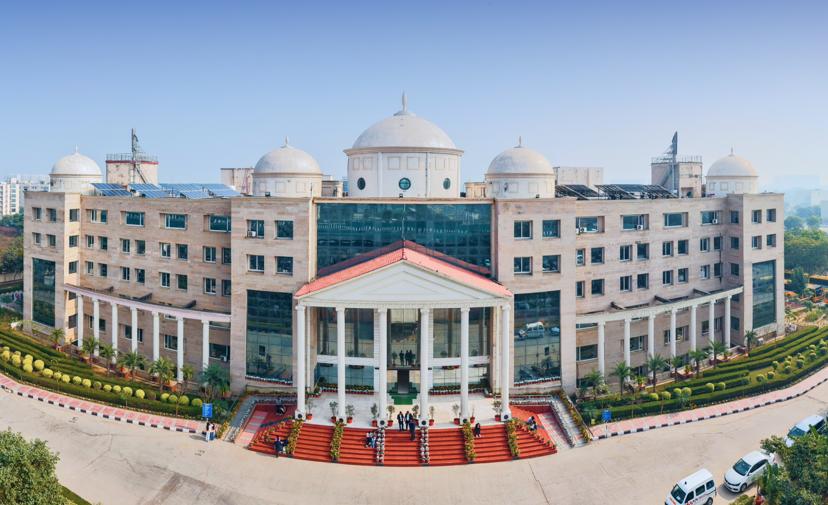













 13+Years of Educational Experience