A B.Sc. degree is the foundation for careers that drive research, technology, and innovation.
BSc degree courses are among the most respected and popular degrees globally. BSc courses offer a plethora of specialisations to choose from. Whether you’re into computer science, environment, biotechnology, physics, or healthcare, a B.Sc. degree prepares you with the in-depth proficiency to thrive in today’s high-demand industries.
K.R. Mangalam University KRMU in Gurugram keeps its focus steady on industry relevant education, practical learning research and emerging areas of science and technology. With over 100 programmes spread across 11 schools, the university now has more than 12000 students with 18000 plus successful alumni and 700 plus educators on its side. Students get more than just textbook knowledge here. They build real academic depth alongside skills that matter once they step into a career.
Each B.Sc. specialisation is designed to provide specialised knowledge and essential skill sets needed to excel in the future. For those inclined towards higher education, a B.Sc. degree imparts advanced knowledge in scientific concepts. In this detailed blog, we’ll uncover the significance of B.Sc. degree courses and the promising career opportunities available for students.
Overview of This Blog
| Sections |
What You’ll Learn |
| What is a B.Sc. Degree? |
Understand what a B.Sc. degree is, its duration, eligibility, and why it remains one of the most popular undergraduate programmes. |
| Course Duration: 1-Year, 3-Year and 4-Year Options |
It covers the different course durations, programme types, and their primary focus |
| Why Pursue B.Sc. Degree Courses? |
Discover the key benefits of pursuing a B.Sc., including career opportunities, higher education prospects, and skill development. |
| Why Are B.Sc. Graduates in High Demand? |
Learn how the growth of biotechnology, healthcare, research, and emerging technologies is increasing demand for B.Sc. graduates. |
| List of Top B.Sc. Degree Courses |
Explore popular B.Sc. specialisations, including Computer Science, Cyber Security, Data Science, Mathematics, Physics, Chemistry, Forensic Science, and Agriculture, along with career prospects and salary ranges. |
| B.Sc. Degree Courses at K.R. Mangalam University |
Get an overview of the B.Sc. programmes offered at KRMU, their eligibility criteria, and how the curriculum prepares students for industry-ready careers. |
| Conclusion |
Learn why a B.Sc. degree is a future-ready qualification and how K.R. Mangalam University helps students build successful careers through practical learning and industry exposure. |
This overview provides a quick snapshot of the topics covered in the blog, helping readers easily navigate the content and understand what to expect.
What is B.Sc. Degree?
A Bachelor of Science (B.Sc.) is a professional undergraduate degree which is popular among science students after 12th grade. Generally, the B.Sc. degree courses span three to four years. Unlike other courses, a B.Sc. degree is more specialised and provides comprehensive knowledge of technology and science. The degree is highly sought-after and valuable worldwide, as it offers graduates a wide range of career opportunities.
Apart from technical knowledge, B.Sc. degrees also focus on communication, analytical, and problem-solving abilities, preparing graduates for real-world challenges in both corporate and research environments.
A B.Sc. degree includes has a broad spectrum of disciplines such as computer science, agriculture, etc. Each course is designed to equip students with advanced knowledge and the requisite skills to excel in the future.
The eligibility criteria for pursuing B.Sc. courses vary across colleges and universities. Candidates must meet certain eligibility requirements in order to get admission to top colleges. Some of the most common eligibility criteria are:
- Candidates must have completed the 10+2 examination from an accredited board of education.
- The minimum percentage has to be between 50% and 60%.
- Candidates must have graduated high school in the science stream or have studied physics, chemistry, biology, and mathematics.
(Note: Several top colleges may ask you to appear for B.Sc. entrance exams. Check all crucial information available on their official websites.)
Also Read: BSc Subjects List for Different Specialisations
Course Duration: 1-Year, 3-Year and 4-Year Options
| Course Duration |
Programme Type |
Key Details |
| 1 Year |
Postgraduate Diploma or Certificate |
Usually designed for specialised learning or skill development after completing the required prior qualification. |
| 3 Years |
Traditional B.Sc. Degree |
Provides foundational and specialised knowledge in a chosen science discipline through theoretical and practical learning. |
| 4 Years |
Four-Year Undergraduate B.Sc. (Honours/Honours with Research) |
Offers advanced subject knowledge, research opportunities, and deeper academic specialisation, depending on the university and programme structure. |
Note: The duration and structure of B.Sc. programmes may vary by university and applicable UGC guidelines. A one-year option is generally not a standard undergraduate B.Sc. degree; students should check the specific programme details before applying.
Why Pursue B.Sc. Degree Courses?
If you are interested in science, technology, engineering, and mathematics (STEM) and want to build a successful career, then choosing a B.Sc. course would be the right option for you. Graduates of B.Sc. courses have a wide range of career opportunities to choose from in diverse sectors. Here are compelling reasons why you should consider pursuing BSc degree courses:
- Various Career Prospects – Graduates of B.Sc. are highly sought after in diverse fields such as education, healthcare, engineering, agriculture, etc. The degree prepares students to meet the current requirements of big industries and select a broad spectrum of career paths. You not only get stable job opportunities but also competitive salaries.
- Expanding Learning Horizons – Studying B.Sc. courses expands your learning horizons and provides an in-depth understanding of the course you have chosen. Additionally, students are often encouraged to engage in hands-on research and projects to gain invaluable skills and knowledge beyond the classroom.
- Opportunities To Pursue Higher Education – After graduating with B.Sc. courses, graduates can choose to step ahead to advanced studies, such as a master’s or PhD. Pursuing further higher education in your chosen field can significantly enhance your knowledge and open doors to higher-level positions in a big industry.
- Developing Critical Skills & Gaining Scientific Knowledge – B.Sc. courses provide comprehensive knowledge, equipping students with essential skills necessary for a prosperous future in science and beyond.
Why Are B.Sc. Graduates in High Demand?
Before discussing more about the courses, it is crucial to know why there is a high demand for B.Sc. graduates. Below are the reasons:
- India’s bioeconomy has grown to over US$165 billion, creating opportunities in biotechnology, healthcare, and life sciences.
- The healthcare and life sciences sector remains one of India’s fastest-growing employment sectors, driven by digital health, diagnostics, and clinical research.
- Employers increasingly seek graduates with skills in research, laboratory techniques, data analysis, and emerging technologies, making specialised B.Sc. programmes more relevant than ever.
List Of Top B.Sc. Degree Courses (Along with Career Options)
BSc courses focus on developing subject-specific expertise and cultivating essential skills in aspiring students. Graduates of these courses can explore various career opportunities in diverse sectors and beyond. Students who are still confused about what the top B.Sc. degree courses list is can consider some of the below options:
B.Sc. (Computer Science)
A B.Sc. in computer science is a three-year undergraduate degree that emphasises imparting theoretical and practical concepts of computer science. Students gain a stronghold in computer programming, software development, data structure, ethical hacking, statistical methods, and many others. After completing a B.Sc. in computer science, graduates can explore career paths like computer programmer, web developer, creative coder, audio engineer, software engineer, data scientist, mobile app developer, and database manager.
Average Salary Range: ₹4–12+ LPA
B.Sc. (Cyber Security)
With the growth of the digital world, the scope of a B.Sc. cyber security programme is enormous and expanding quickly. Organisations all over the world, from governments and defence agencies to global corporations, are actively looking for qualified cyber security specialists due to the increase in cybercrime, hacking, and data breaches. Graduates in this profession can pursue numerous positions, such as Ethical Hacker, Security Analyst, Cyber Forensics Expert, etc.
B.Sc. (Data Science)
The B.Sc. Data Science programme covers a wide range of sectors, including marketing, cyber security, e-commerce, healthcare, finance, and more. Graduates are qualified to work as AI/ML experts, data scientists, analysts, and business intelligence specialists.
B.Sc. (Mathematics)
A Bachelor of Science in Mathematics is a three-year undergraduate degree that deals with assisting students to develop essential skills needed in the field of mathematics. Graduates can explore career prospects such as economist, accountant, teacher, technical writer, mathematician, data analyst, retail banker, and loan officer.
Average Salary Range: ₹4–10+ LPA
B.Sc. (Physics)
A bachelor of science in physics is a three-year undergraduate degree that focuses on providing all crucial aspects of physics. Graduates of a B.Sc. in physics can explore career paths such as quality control manager, data analyst, physicist, professor, radiologist’s assistant, technician, and research associate.
Average Salary Range: ₹3.5–9+ LPA
B.Sc. (Chemistry)
A bachelor of science in chemistry is a professional three-year undergraduate degree designed to impart combined knowledge of both theoretical and practical applications of chemistry. The course covers various branches of chemistry, preparing students to have excellent career opportunities. Some of the top career paths after a B.Sc. in chemistry are chemical engineer, chemistry teacher, lab technician, toxicologist, and R&D chemist.
Average Salary Range: ₹3.5–10+ LPA
B.Sc. (Forensic Science)
For people who are enthusiastic about scientific analysis and criminal investigation, a B.Sc. in forensic science provides an exciting and fulfilling career path. Graduates can work as forensic analysts, crime scene investigators, toxicologists, or digital forensic experts in crime laboratories, law enforcement agencies, law firms, intelligence bureaus, and private forensic labs.
Average Salary Range: ₹4–10+ LPA
BSc (Agriculture)
The Bachelor of Science in Agriculture is among the most popular B.Sc. degree courses designed for students who want to gain an in-depth understanding of soil science, crop production, animal husbandry, agricultural microbiology, etc. Graduates can explore career paths after completing a three-year BSc in Agriculture as horticulturists, agricultural consultants, agriculture development officers, soil quality controllers, lab technicians, forest officers, ecologists, agricultural specialists, and agribusiness managers.
Average Salary Range: ₹4–10+ LPA
Note: Salary numbers are approximate and may vary based on the work type, company, industry, region, experience, credentials, technical skills, certifications, and further education.
Entrance Exams You Need to Clear
- CUET-UG: Many universities accept CUET-UG scores for admission to B.Sc. programmes across various specialisations.
- University-Level Entrance Exams: Some universities conduct their own entrance tests to assess candidates’ subject knowledge and eligibility.
- Merit-Based Admission: Several institutions offer admission based on Class 12 marks without requiring an entrance examination.
- Subject-Specific Requirements: Certain B.Sc. specialisations may require candidates to have studied specific subjects in Class 12, even if admission is merit-based.
Note: Entrance exam requirements vary by university and specialisation. Check the official admission guidelines before applying.
B.Sc. Degree Courses Available At K.R. Mangalam University
Founded back in 2013, KRMU Gurugram has grown into a place offering a wide range of undergraduate programmes. The idea is simple. Blend classroom learning with something industry-oriented and practical, so students aren’t left guessing what the real world expects.
The numbers tell part of the story which are 100 plus programmes, 11 schools, 12000 students and 18000 plus alumni who’ve already moved on and made their mark. 700 plus educators guiding it all. But KRMU doesn’t stop at numbers. It pushes industry exposure hands on learning research to work international opportunities and placement support as core parts of how it teaches.
For anyone drawn to science and technology KRMU has a solid lineup of B.Sc. programmes. Computer science, cyber security, data science, physics, chemistry mathematics, forensic science and even agriculture all sit within reach for students who know where their interest lies.
Here are some of the well-known B.Sc. courses of KRMU:
| Programmes |
Eligibility Criteria |
| B.Sc. (Hons.) Computer Science with academic support of IBM |
Passed 10+2 or equivalent from any recognised board/university in any stream with Mathematics/ Statistics/Computer/Information Science as one subject with minimum 50% aggregate marks. |
| B.Sc. (Hons.) Cyber Security |
Passed 10+2 or equivalent from any recognised board/university in any stream with Mathematics/ Statistics/Computer/Information Science as one subject with minimum 50% aggregate marks. |
| B.Sc. (Hons.) Data Science |
Passed 10+2 or equivalent from any recognised board/university in any stream with Mathematics/ Statistics/Computer/Information Science as one subject with minimum 50% aggregate marks. |
| B.Sc. (Hons. / Hons. with Research) Physics |
Passed the 10+2 or equivalent examination from any recognised board/ University with PCB/PCM as a mandatory course with a minimum of 50% aggregate marks. |
| B.Sc. (Hons. / Hons. with Research) Chemistry |
Passed the 10+2 or equivalent examination from any recognised board/ University with PCB/PCM as a mandatory course with a minimum of 50% aggregate marks. |
| B.Sc. (Hons. / Hons. with Research) Maths |
Passed the 10+2 or equivalent examination from any recognised board/ University with PCM as a mandatory course with a minimum of 50% aggregate marks. |
| B.Sc. (Hons. / Hons. with Research) Forensic Science |
Passed the 10+2 or equivalent examination from any recognised board/ University in Science (Physics/Chemistry/Biology/Mathematics) with a minimum of 50% aggregate marks. |
| B.Sc (Hons.) Agriculture |
Passed 10+2 or equivalent Examination from any recognised board/university in Physics, Chemistry, Maths/ Biology / Agriculture with minimum 50% aggregate marks. |
Conclusion
B.Sc. degree courses offer tremendous career options for graduates in diverse sectors. These programmes not only emphasise imparting theoretical knowledge but also practical applications. These courses often provide students with critical skills such as problem-solving, quantitative reasoning, analytical, and technical skills, which are necessary for career possibilities in both the public and private sectors. Additionally, graduates of BSc courses can pursue careers in sectors like agriculture, computer science and many more. Those interested in advancing their careers or gaining specialised knowledge can choose a BSc degree.
At K.R. Mangalam University, students benefit from industry-aligned curriculum, hands-on labs, expert faculty, and excellent placement support—making a B.Sc. from KRMU a smart and future-ready choice.
Explore K.R. Mangalam University’s industry-focused B.Sc. programmes to develop a future-ready career.
Also Read: Exploring Jobs After BSc Chemistry: Private And Government Jobs
FAQs
What is a BSc degree?
A BSc degree is an undergraduate degree that provides students with in-depth knowledge in various disciplines. The BSc degree courses span three to four years.
What are the best BSc degree courses?
Some of the popular and most sought-after BSc courses include Nursing, Computer Science, Physics, Mathematics, Biology, Biotechnology, Chemistry, Agriculture, Zoology, and Information Technology.
What is the qualification for BSc?
To become eligible for BSc courses, candidates must have completed their 10+2 examination from a recognised board of education with a science stream or must have studied subjects like physics, chemistry, biology, or mathematics. The admission requirements may depend on the specific courses and colleges one is interested in.
Is a BSc degree valuable?
Absolutely yes, a BSc degree is a highly regarded qualification for students. The demand for its graduates is extensive across various industries.
What are the future prospects of attaining a BSc degree?
A BSc degree offers strong career prospects in research, IT, healthcare, teaching, and government sectors, while also paving the way for higher studies like M.Sc. or MBA.




 13 Schools700+ Faculty Members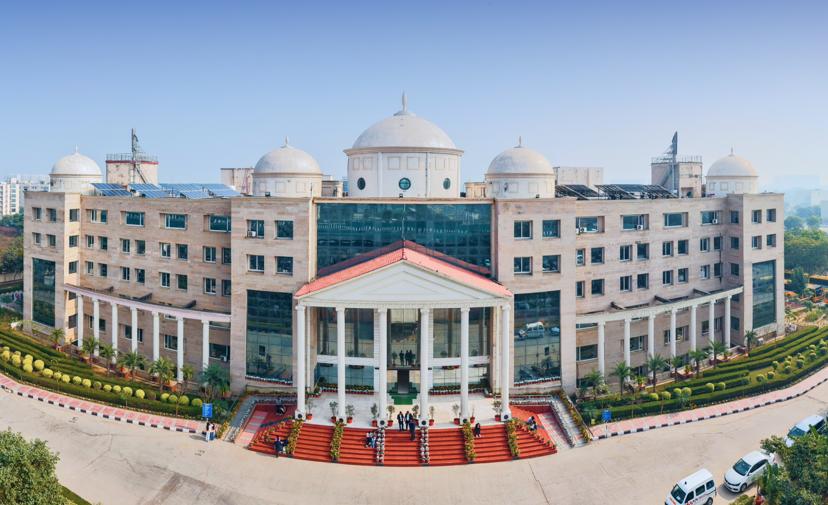













 13+Years of Educational Experience