After completing graduation, many students start exploring career paths that offer growth, stability, and opportunities across multiple industries. One of the most preferred postgraduate choices for commerce students is an MBA, as it opens doors to corporate jobs, entrepreneurship, management roles, and international career options. With businesses becoming more competitive and technology-driven, professional management education has gained even more relevance.
Students often find themselves in a dilemma, asking, “Can I do MBA after BCom?” The answer to this question is Yes, you can definitely pursue an MBA programme right after graduating with a BCom degree. The business knowledge and expertise you gain during your BCom programme can be very beneficial for an MBA. Several colleges in India offer MBA programmes after BCom, but you need to meet certain eligibility requirements. In this article, we will also be discussing the answer to these two questions: “What is the meaning of MBA?” and “Which MBA specialization is best in future?”
Can I Do MBA After BCom? Is MBA Tough?
As already discussed above, definitely you can pursue an MBA after your B.Com course, and as far as the answer to the question, “Is MBA tough?” is concerned, it entirely depends on your strengths and interests. If you’ve dreamed of working in top organisations and MNCs or starting your own business and want to take your career to new heights, choosing an MBA can be the right option for you. Pursuing an MBA programme will not only equip you with invaluable business knowledge but also help you focus on developing essential life skills such as public speaking skills, better communication skills, teamwork, team building, pressure-handling, leadership, etc.
What Are The Benefits Of Pursuing An MBA After BCom?
Pursuing an MBA after BCom provides students a lot of benefits, helping them to make an influential career in the corporate domain. The combination of both of these programmes not only imparts extensive business expertise but also prepares you to achieve your future goals.
Here are some of the key benefits of studying MBA after BCom.
Advancing Leadership Quality
The MBA programme helps students acquire valuable leadership and decision-making skills to ensure a dynamic business environment in the workplace.
Enhancing Knowledge and Expertise
Students who enrol in an MBA after a BCom programme acquire a broad range of business knowledge, enabling them to become well-rounded professionals to tackle different business difficulties.
Entrepreneurship and Start-up
MBA is a good career choice for business-focused students. It provides a unique understanding of business planning, technique, finance, and invention. The programme helps students connect with successful entrepreneurs and start-ups.
Lucrative Job Opportunities
MBA offers various employment opportunities across various sectors with higher earning potential. The degree equips students with essential skills such as leadership, strategic thinking, and business intelligence.
Global Exposure and International Opportunities
With an MBA degree, students gain worldwide exposure, including the opportunity to study abroad, student exchange programmes, or international internships. This experience helps students to strengthen their skills and develop global mindset qualities that employers value more. Additionally, possessing an MBA degree makes it easier for you to collaborate with multinational corporations.
Better Salary Growth
One of the biggest reasons students choose an MBA after BCom? Better salary growth. A BCom degree gets you an entry-level job, sure. But an MBA opens doors to managerial roles, leadership positions, and honestly, much bigger paychecks. And here’s the thing — as you gain experience, promotions come faster too. MBA graduates typically see stronger compensation packages, no matter which industry they pick.
Networking Opportunities
One of the major benefits of pursuing an MBA is that it provides exceptional networking opportunities for aspiring management students from all backgrounds. Students connect with industry professionals and participate in rigorous events, leading to employment opportunities worldwide.
Makes You Corporate-Ready
MBA programmes train students to handle:
- Real business problems
- Client handling
- Projects and deadlines
- Team management
This ensures graduates are workplace-ready from day one.
High Demand in Private & Government Sectors
MBA graduates are employed by:
- Banks
- MNCs
- Startups
- Government organisations
- Consulting firms
- Manufacturing companies
This ensures stable and wide career scope.
Helps in Studying Abroad or Working Overseas
Many international companies hire Indian MBA graduates, and students can further pursue:
- MBA abroad
- Post-graduate diplomas
- Certifications like CFA or CPA
This opens global career doors.
Also Read: PGDM vs MBA: What’s the Right Choice for Your Future?
MBA Eligibility After BCom
Before applying for an MBA, though, most universities expect you to meet a few basic requirements:
- A bachelor’s degree in BCom, or really, any recognised discipline works.
- Minimum aggregate marks, as set by the university.
- Entrance exam scores (if the university asks for them).
- Personal interviews or group discussions, depending on where you’re applying.
At K.R. Mangalam University, things work a bit differently. Admissions follow university guidelines, yes, but they’re also based on the KREE entrance exam and a round of faculty interaction.
Which MBA Specialisation Is Best In Future?
MBA after BCom is crucial for students who want to expand their careers and aspire to work in managerial positions in reputed organisations and businesses. Pursuing an MBA after a BCom helps students gain advanced management knowledge and develop essential skills valued by big employers. However, choosing an MBA with the right specialisation is as necessary as selecting an MBA college. Here is a list of the best MBA specialisations available for students in India:
MBA in Operations Management
An MBA in operations management helps students in the effective management and enhancement of a company’s daily operations. This involves handling the supply chain, logistics, quality control, and production procedures. Students who complete this MBA specialisation will have the knowledge and abilities to maximise profits, cut expenses, and maintain efficient corporate operations.
Career Options:
- Logistics Manager
- Quality Assurance Manager
- Inventory Control Manager
- Production Manager
- Operations Manager
- Supply Chain Manager
- Project Manager
MBA in Marketing
MBA in marketing prepares students to understand the needs of the market and consumer behaviour. Students learn everything from creating marketing campaigns to reaching target audiences.
Career Options:
- Digital Marketing Manager/Strategist
- Sales Manager
- Marketing Manager
- Brand Manager
- Market Research Analyst
- Advertising Manager
- Product Manager
- Public Relations Specialist
MBA in Finance
An MBA in finance is a postgraduate programme that prepares students to achieve influential roles in the field of finance and banking. This helps students make an informed financial decision by evaluating financial data, managing investment portfolios, and overseeing budgeting and financial strategies.
Career Options:
- Financial Analyst
- Investment Banker
- Risk Manager
- Asset Manager
- Wealth Manager
- Corporate Finance Manager
- Financial Planner
- Chief Financial Officer
MBA in Business Analytics
An MBA in business analytics is a postgraduate degree that teaches students the effective use of data to make wise decisions. It is a two-year postgraduate programme that imparts essential management expertise to drive business growth.
Career Options:
- Data Analyst
- Analytics Consultant
- Operations Analyst
- Business Intelligence Analyst
- Business Strategist
- Market Research Analyst
- Data Scientist
- Predictive Analyst
MBA in Information Technology
MBA in information technology programme is for those students who want to gain combined knowledge of both business and information technology. After graduation, students have diverse career possibilities in those sectors that require both technical and managerial skills.
Career Options:
- IT Consultant
- IT Manager
- Database Administrator
- Systems Analyst
- Network Security Manager
- Technology Solutions Manager
- IT Project Manager
- Chief Technology Officer
MBA in HR Management
MBA in HR Management is a two-year specialised post-graduate programme designed to impart students with an advanced understanding and essential life skills required in the business domains. MBA in HR management is one of the most sought-after programmes among aspiring business students who want to become an influential part of the modern corporate sector.
Career Options:
- Human Resources (HR) Manager
- HR Consultant
- HR Analytics Specialist
- HR Training Specialist
- Training and Development Manager
- Technical Recruiter
- Human Resource Executive
Why Choose K.R. Mangalam University For MBA After BCom?
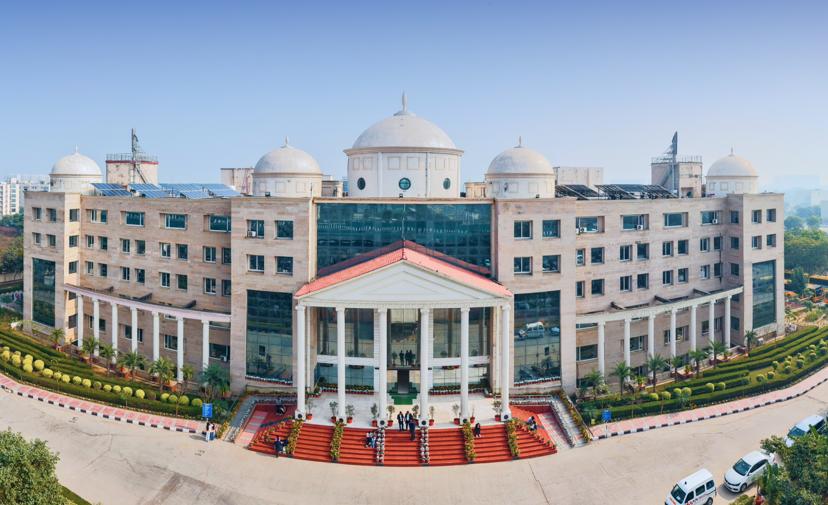
K.R. Mangalam University (KRMU) is known for its excellent education and world-class infrastructure for students. The university has maintained great placement records over the years in the business world. There is no doubt in its academic excellence, as it offers a dynamic curriculum specially designed to train students to advance in both personal and professional realms.
Additionally, KRMU provides a conducive learning environment for its students. The university has strong industry connections with leading businesses to ensure students gain relevant knowledge, making them highly employable in the job market. Students are indulged in developing influential personalities, building strong leadership skills, and gaining entrepreneurship ideas to enhance their further employability.
Students pursuing MBA programmes from K.R. Mangalam University get access to exclusive resources and facilities. Also, they are encouraged to participate in various industry-specific training programs and projects. The faculty members at KRMU are highly professional with years of educational experience who constantly bring practical insights to the classrooms, helping students develop essential skills. The university has a dedicated placement cell for students to connect with top industry professionals and gain in-depth knowledge from them.
Following are the MBA programmes offered by K.R. Mangalam University:
Conclusion
Summing up, we believe the answer to your question, “Can I do MBA after BCom?” must have been cleared by now. Students who are passionate about developing strong managerial skills and business acumen should consider pursuing an MBA after graduating with a BCom degree. The programme follows a multidisciplinary approach, incorporating theoretical knowledge with practical understanding. The demand for MBA graduates is continuously expanding, offering better job opportunities to future professionals. Pursuing an MBA allows you to develop essential business knowledge and skills necessary to have a prosperous life.
K.R. Mangalam University offers industry-oriented MBA programmes designed to equip students with real-world business exposure, strong analytical skills, and hands-on learning through internships, live projects, and corporate collaborations. With expert faculty, modern classrooms, and a dedicated placement cell, KRMU ensures that students are prepared to become confident leaders and skilled professionals in the corporate world.
Also Read: Explore The Best Jobs After MBA For Graduates
FAQs
What is the full form of MBA?
MBA stands for Master of Business Administration. It is a two-year postgraduate programme offered by several universities around the world.
What are the highest-paying MBA specialisations in India?
Some of the highest-paying MBA specialisations in India are:
MBA in Finance
MBA in Digital Marketing
MBA in Business Analytics
MBA in Information Technology
MBA in International Business
MBA in Operations Management
MBA in Event Management
MBA in Marketing
MBA in Entrepreneurship
Which MBA specialisation is best after BCom?
BCom graduates can choose MBA specialisations such as MBA in business analytics, MBA in finance, MBA in marketing, MBA in entrepreneurship, MBA in operations and supply chain management, and MBA in digital marketing.
What are the job opportunities after MBA?
You can work in diverse fields such as Finance, Marketing, Human Resources, Travel & Tourism, Operations, Entrepreneurship etc.

























 13+Years of Educational Experience