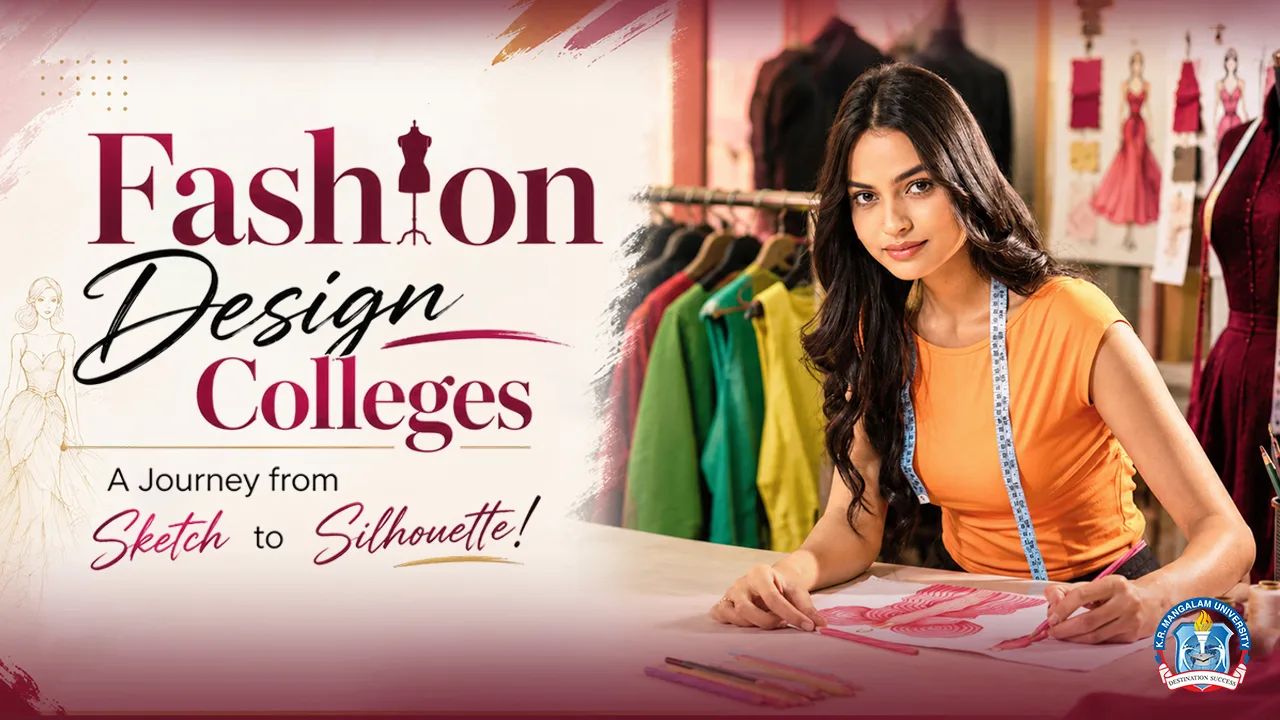
Fashion isn’t just about creating beautiful clothes. It is also about solving problems through creativity, innovation, and design.
With India’s fashion and lifestyle industry evolving rapidly, fashion design courses have become one of the most sought-after programmes by students passionate about designing and styling. To build a successful career in this field, obtaining a quality education is essential. One of the best ways to achieve this is by studying at a reputable fashion design college, where students can develop the knowledge, skills, and creativity needed to succeed in the industry.
However, with numerous fashion design colleges offering diverse programmes, selecting the right one can be challenging.
This guide covers everything students need to know, including tips for selecting the best fashion design college and career opportunities.
Quick Glance At The Blog
| Sections |
What We Will Cover |
| Why is Fashion Design Growing in Popularity? |
Explanation of why fashion design is emerging as a popular option. |
| What Fashion Design Courses are offered by Fashion Design Colleges? |
Understand the different fashion design programmes available after Class 12th. |
| How to Choose Among the Best Fashion Design Colleges? |
Learn the key factors to compare before selecting a college. These factors include curriculum, faculty, placements, etc. |
| Why select K.R. Mangalam University’s Fashion Design Course? |
Discover the programme highlights, practical learning approach, portfolio development, and industry-oriented curriculum offered by KRMU. |
| Career Opportunities After a Bachelor of Fashion Design |
Explore the industries, popular job roles, and average salary ranges available after completing a Bachelor of Fashion Design. |
| Conclusion |
Recap the important factors to consider while choosing a fashion design college and the next steps towards building a successful career in fashion. |
Why is Fashion Design Growing in Popularity?
Before discussing fashion design colleges, it is important to understand the reasons behind the growing popularity of fashion design as a career choice.
Recent industry statistics state that fashion design is growing in popularity as a career because
- Sustainable and ethical fashion is becoming increasingly popular among consumers, creating new opportunities for designers who can develop eco-friendly products.
- The global fast-fashion market is projected to grow from $20 billion to $60 billion by 2030, indicating the fashion industry’s increasing demand for new and innovative products.
- The Indian textile and fashion industry is expected to create around 40 lakh new jobs in the upcoming years, providing a broad range of career opportunities across multiple sectors. These sectors include merchandising, retail, manufacturing, and entrepreneurship.
These changes demonstrate why admission to the fashion design courses is becoming more popular. It can be an important step for students hoping to establish prosperous careers in one of the fastest-growing creative industries in the world.
Also Read: KRMU is Among the Best Fashion Designing Colleges in India
What Fashion Design Courses are offered by Fashion Design Colleges?
Here are some of the fashion design courses offered by fashion design colleges:
- Bachelor of Design (B.Des.)
- B.Sc. in Fashion
- B.FTech
- Short-term Diplomas
How to Choose Among the Best Fashion Design Colleges?
For a better fashion design education, aspirants need to find the right top fashion design college in Delhi NCR. But the issue is that there are lots of fashion design colleges and universities all claiming to offer top-notch education. To find the right option, one should consider the following:
Institute’s Reputation
An institute’s reputation is one of the most important factors to consider when choosing a fashion design college. A well-established institution with a strong track record of placing graduates in leading fashion companies demonstrates its ability to provide high-quality education that meets industry standards. Reputable colleges also maintain strong connections with fashion brands, designers, and industry professionals, enabling students to access valuable internships, industry collaborations, networking opportunities, and better career prospects after graduation.
Dynamic Curriculum
Fashion is a dynamic and unpredictable industry, particularly in the retail sector. A college programme should incorporate fundamental subjects like textile design and fashion illustration, clothing manufacturing, and fashion marketing, and it should be closely aligned with the evolving fashion trends. Specifically, top-tier programmes always foster creativity with both technical and business qualities.
Campus Facilities & Infrastructure
Since fashion design is a practical field, modern infrastructure is essential. Students should choose institutions with well-equipped design studios, CAD labs, and textile laboratories to gain hands-on experience and industry-relevant skills. With the help of these facilities, students can put their innovative ideas into practice and turn them into useful designs.
Industry Exposure
Practical experience makes the transition from student to professional much smoother. Top fashion design colleges offer internships, live projects, and strong industry connections to help students gain real-world experience and build successful careers.
Expert & Experienced Faculty
Experienced faculty with both academic and industry backgrounds provide valuable guidance on design concepts, technical skills, and market trends, helping students develop the knowledge needed for a successful career.
Placement Support
After investing years in their education, students expect strong career opportunities. Colleges with dedicated placement cells and active alumni networks can provide better job prospects and industry connections.
Why select K.R. Mangalam University’s Fashion Design Course?
K.R. Mangalam University (KRMU) offers a B.Des. (Hons. / Hons. with Research) Fashion Design programme.
Numerous employment options in the vibrant global fashion and lifestyle business are made possible by the B.Des. (Hons. / Hons. with Research) Fashion Design programme. The curriculum prepares students to work for prestigious fashion houses, retail brands, e-commerce platforms, and media. It also enables students to start their own fashion labels and startups. It does all this by providing them with creative thinking and industry exposure.
Highlights of the B.Des. (Hons. / Hons. with Research) Fashion Design Programme
Discover what makes KRMU’s B.Des. (Hons. / Hons. with Research) Fashion Design programme stand out.
Advanced Instruments & Methods
Students receive practical instruction in advanced design software. They also get instruction in model preparation and garment construction. This programme bridges the gap between traditional craftsmanship and cutting-edge digital fashion technologies.
Creative Exploration
Students are encouraged to develop a personal style that displays originality. They become capable enough to do it while adhering to industry standards and international fashion trends.
Practical Education
Students get hands-on experience and exposure to real-world issues in the fashion and lifestyle business. They get all this through studio classes, workshops, internships, and cooperative projects with industry partners.
Career Options After a Bachelor of Fashion Design
The Bachelor of Fashion Design graduates can be part of:
- Fashion Houses
- Luxury Brands
- Apparel Manufacturing
- Retail
- E-commerce
- Costume Design
- Fashion Media
- Export Houses
- Fashion Startups
| Job Role |
Role Overview |
Key Responsibilities |
Average Salary Range |
| Fashion Designer |
Transform creative ideas into fashionable apparel and accessories that set trends and inspire the fashion industry. |
Design clothing and accessories, Develop fashion collections, Research trends and fabrics, Create sketches and prototypes |
₹4–12 LPA |
| Costume Designer |
Design costumes and accessories for films, television, theatre, and other productions to bring characters to life. |
Analyse scripts, Conduct historical research, Create costume sketches, Source or construct costumes, Collaborate with directors and production teams |
₹5–15 LPA |
| Fashion Stylist |
Curate impactful fashion looks that define the visual identity of brands, designers, and personalities. |
Style photoshoots and campaigns, Collaborate with photographers, designers, and creative teams, Coordinate wardrobe and accessories, Stay updated with fashion trends |
₹4–15 LPA |
| Fashion Illustrator |
Communicate fashion concepts through expressive sketches and digital illustrations to support design development. |
Create fashion illustrations and digital artwork, Visualise design ideas, Support collection presentations, Research trends and aesthetics |
₹4–10 LPA |
| Fashion Merchandiser |
Bridge creativity and business by managing product development, sourcing, and retail strategy. |
Organise merchandise, Forecast fashion trends, Plan pricing strategies, Coordinate with manufacturers and suppliers, Support marketing and promotions |
₹5–12 LPA |
| Textile Designer |
Develop innovative textile patterns, colour palettes, and fabric concepts for diverse applications. |
Create textile prototypes, Design patterns and colourways, Evaluate fabric performance, Recommend production techniques, Collaborate with manufacturers, product managers, and R&D teams |
₹4–10 LPA |
**Note: Salary ranges are indicative and may vary based on factors such as experience, skills, employer, job location, and market conditions.
Below are popular job roles for these graduates:
Fashion Designers
Fashion designers bring creativity to life. They do this by turning creative ideas into fashionable apparel and accessories. These creations might set trends and motivate the fashion industry.
Average Salary Range: ₹4–12 LPA
Costume Designers
By creating clothing and accessories for movies, TV shows, and theatres, costume designers bring characters to life. Script analysis, historical research, design drawing, and building or procuring the clothing to fit the director’s artistic vision are the first steps in the creative process.
Average Salary Range: ₹5–15 LPA
Fashion Stylists
Fashion stylists convert fashion ideas into jaw-dropping looks. These looks help brands, designers and personalities to craft their visual identities. They are indispensable for fashion and entertainment. That’s because they work with:
- Photographers
- Designers
- Creative teams
To ensure every visual element works as part of a greater whole that communicates a powerful aesthetic impact.
Average Salary Range: ₹4–15 LPA
Fashion Illustrators
Fashion illustrators bring design concepts to life with digital images and emotive sketches. They are familiar with fashion trends, aesthetics and visual storytelling. This enables them to assist designers in creating collections and showcasing original ideas in an effective way.
Average Salary Range: ₹4–10 LPA
Fashion Merchandisers
Fashion merchandising is a fast-paced, exciting field that blends business with creativity. Fashion merchandisers work from corporate headquarters, overseeing product development, sourcing and market execution. They also have the opportunity to visit manufacturing facilities, supplier locations and retail outlets.
The main responsibilities of a fashion merchandiser are:
- Organising merchandise
- Predicting patterns
- Pricing planning
- Building relationships with manufacturers and suppliers
- Marketing and promotion
Average Salary Range: ₹5–12 LPA
Textile Designers
Textile designers explore colour schemes, textile structures, and patterns for use in various production environments. Their job is also to define the concepts and stylistic orientations. These professionals:
- Create prototypes
- Assess performance
- Assist in choosing the best techniques for spinning, weaving, printing, or finishing
Textile designers collaborate with
- Manufacturers
- Product managers
- R&D teams
To ensure that design ideas are compatible with technological feasibility, production capacity and industry needs.
Average Salary Range: ₹4–10 LPA
Conclusion
To sum up this fashion design colleges blog, selecting the right fashion design college is important. It’s the first step to building a successful career in the creative industry. Students should look at the curriculum, faculty, industry exposure, infrastructure, placement support, etc., while comparing colleges. A good Bachelor of Fashion Design programme will help students develop the creative, technical and business skills. These are all skills that are needed to succeed in the ever-changing world of fashion.
Searching for a Bachelor of Fashion Design programme with a focus on the industry? Discover more about the curriculum, practical learning opportunities, industry experience, and admissions procedure of K.R. Mangalam University’s B.Des. (Hons. / Hons. with Research) Fashion Design programme.
Take the first step towards converting creativity into a successful career in fashion by joining KRMU.
Also Read: Explore Best College for Fashion Designing in Delhi NCR
FAQs
How do I choose the best fashion design college?
Students should evaluate factors such as:
Curriculum
Faculty expertise
Design studios and infrastructure
Industry collaborations
Internship opportunities
Placement support
Alumni network
What career opportunities are available after a Bachelor of Fashion Design?
Graduates can work as:
Fashion Designer
Fashion Stylist
Costume Designer
Textile Designer
Fashion Illustrator
Fashion Merchandiser
What is the average salary after a Bachelor of Fashion Design?
Entry-level salaries generally range from ₹4–15 LPA, depending on the job role, employer, location, experience, and individual skills.
Why choose K.R. Mangalam University for a Bachelor of Fashion Design?
K.R. Mangalam University offers an industry-oriented B.Des. (Hons. / Hons. with Research) Fashion Design programme featuring practical learning, portfolio development, advanced design tools, internships, and industry exposure to prepare students for careers in the global fashion industry.
What skills are required to become a fashion designer?
Successful fashion designers typically need creativity, sketching ability, knowledge of textiles, garment construction, fashion trends, communication skills, and proficiency in design software.




 13 Schools700+ Faculty Members












 13+Years of Educational Experience