“A general MBA builds breadth, while a specialised MBA builds depth.”
Choosing between a general MBA vs specialised MBA is an important decision for students planning a career in management. A general MBA provides broad knowledge across different areas of business, while a specialised MBA focuses on a particular field such as finance, marketing, FinTech, or Business Analytics. Questions such as “Is general MBA valuable?” can help students understand which path may suit their interests, skills, and long-term career goals. This blog will help students to make the right decision by explaining general MBA vs specialised MBA. Before that, we will also explore popular specialisations and other information related to these MBA programmes.
Is a General MBA Valuable?
Answer: Yes. A general MBA provides broad management knowledge and offers flexibility across different business functions and career paths. |
Overview of This Blog
| Section |
What We Will Cover |
| A General MBA: What is It? |
Explains the broad business knowledge and flexibility offered by a general MBA. |
| A Specialised MBA: What is It? |
Explains how a specialised MBA focuses on a specific business or industry domain. |
| Types of MBA Specialisations |
Describes popular options such as Finance, Marketing, FinTech, Digital Marketing, Business Analytics, Entrepreneurship, and Artificial Intelligence. |
| Which is the Toughest MBA Specialisation? |
Discusses why Finance, Business Analytics, AI, and FinTech may be challenging and why difficulty varies by student. |
| Which MBA Specialisation Has More Salary? |
Compares salary considerations for general and specialised MBAs and highlights factors that influence earnings. |
| General MBA vs Specialised MBA in India |
Compares both MBA pathways based on flexibility, career direction, business functions, and specialisation. |
| How to Decide Between a General MBA and Specialised MBA? |
Provides a simple framework based on students’ interests, strengths, career goals, flexibility, and preferred business domain. |
| Why Consider an MBA at K.R. Mangalam University? |
Highlights KRMU’s MBA opportunities, practical learning, faculty mentorship, internships, industry interaction, placement support, scholarships, and global exposure. |
| Conclusion |
Summarises the key differences and factors to consider when choosing between a general and specialised MBA. |
A General MBA: What is it?
Students enrolled in a general MBA programme study a variety of business topics, including accounting, finance, marketing, operations, and strategy. It is intended to provide students with a solid grasp of business operations and management.
Teaching skills that are applicable to a variety of occupations and sectors is the aim of the programme. The core management subjects are taught to students in the first year of a specific MBA programme.
They can then decide what they wish to study in further detail during their second year. During the first year of a general MBA programme, students study various aspects of business to determine their areas of interest.
A Specialised MBA: What is it?
A postgraduate degree with a focus on a particular business or industry is called a specialised MBA. Because it covers a wide range of topics, including finance, marketing, operations management, human resource management, information technology, and healthcare management, it is more focused than a normal MBA.
The programmes are intended to give students the information and abilities needed in their specialised professions so they can readily occupy particular positions within those sectors.
These programmes differ from others in a number of ways, such as offering classes that are directly related to your desired area of specialisation, involving students in real-world projects, offering internship opportunities, and establishing connections with other professionals working on related projects or businesses.
Also Read: MBA Programme: Eligibility, Admission, Fee, Syllabus & Scope
What are the Types of MBA Specialisations?
Below are some of the known MBA specialisations:
MBA in Finance
An MBA in Finance, which emphasises risk management, investment strategies, and financial planning, is one of the most well-liked specialisations. Anyone interested in economic systems, statistics, and analysis should read it.
The programme covers financial accounting, corporate finance, investment banking, portfolio management, and mergers & acquisitions. It fosters the development of analytical and quantitative decision-making skills.
MBA in Marketing
Students learn about customer behaviour, brand positioning, and market dynamics. It is perfect for strategically minded creative thinkers.
Important areas include advertising, sales strategy, digital marketing, brand management, and market research. In competitive markets, it allows you to become an expert in product positioning and promotion.
By combining technology and finance, it equips students for the rapidly evolving digital financial sector. Anyone who wishes to work at the intersection of banking and innovation will find it ideal.
Digital payment systems, blockchain, cryptocurrency, financial analytics, and artificial intelligence in banking are all significant areas. The focus is on how technology is transforming traditional financial services.
An MBA in digital marketing focuses on using digital media to promote companies, products, and services. For those who are interested in analytics, innovation, and consumer interaction, it is perfect.
Performance analytics, email marketing, social media marketing, SEO, SEM, and content strategy are all taught to students. It combines creative concepts with data-driven advertising tactics.
MBA in Business Analytics
An MBA in business analytics focuses on making data-driven decisions. It links corporate strategy and data science. Students are taught data modelling, statistical analysis, predictive analytics, and data visualisation. Tools like Tableau, Python, and SQL are often included in the programme.
MBA in Entrepreneurship
Those who wish to start or manage their own businesses are the target audience for this specialisation. It encourages innovation, creativity, and business planning.
Students learn about venture formation, funding and finance, startup management, product development, and firm scaling. The programme encourages taking chances and thinking outside the box.
MBA in Artificial Intelligence
The MBA in AI is a specialisation that combines machine learning, automation, and intelligent technology with business leadership. The programme covers robotics, data science, AI-driven analytics, business process automation, and ethical AI governance. It gives professionals the tools they need to lead the adoption of AI in companies.
Which is the Toughest MBA Specialisation?
The difficulty level of an MBA specialisation depends largely on a student’s academic background, interests, and strengths. Some specialisations may feel more challenging because they involve quantitative analysis, technical concepts, and complex decision-making.
Finance, business analytics, artificial intelligence, and FinTech are often considered challenging areas because they can involve mathematics, statistics, data analysis, technology, and financial concepts.
However, there is no universally toughest MBA specialisation. A specialisation that seems difficult to one student may be comparatively easier for another based on their skills and interests.
For example, students comfortable with numbers and analytical subjects, one may find finance or business analytics manageable, while students with strong communication and creative skills may prefer marketing or digital marketing.
Therefore, students should not choose an MBA specialisation solely based on its perceived difficulty. Instead, they should consider their academic strengths, interests, career goals, curriculum, and required skill set before making a decision.
Which MBA Specialisation Has More Salary?
The general MBA vs specialised MBA salary comparison depends on several factors, so neither option can be considered universally higher-paying. A general MBA provides broad management knowledge and can lead to roles across areas such as marketing, finance, operations, and human resources.
A specialised MBA develops deeper expertise in a particular field, which may help students qualify for specialised roles. Salary can vary based on specialisation, job role, organisation, experience, location, skills, and career progression.
For example, specialised areas such as finance, business analytics, FinTech, or artificial intelligence may lead to high-paying roles, while a general MBA can also provide access to well-paying managerial and leadership positions as professionals gain experience.
Therefore, students should look beyond starting salary and consider career growth, job responsibilities, industry demand, and their own strengths when choosing between a general MBA and a specialised MBA.
General MBA vs Specialised MBA in India
In India, both general MBA and specialised MBA programmes can provide strong career opportunities, but they serve different career preferences. A general MBA offers broader knowledge across areas such as finance, marketing, human resources, operations, and business strategy. It can be suitable for students who want flexibility or are still exploring their preferred career direction.
A specialised MBA focuses more deeply on one particular business area, such as finance, marketing, FinTech, digital marketing, etc. It can be a suitable choice for students who already have a specific career goal and want to develop specialised knowledge and skills.
| General MBA |
Specialised MBA |
| Provides broad management knowledge |
Provides in-depth knowledge of a specific field |
| Offers greater flexibility in career choices |
Provides a more focused career direction |
| Covers multiple business functions |
Focuses on one specialised area |
| Suitable for students exploring different management roles |
Suitable for students with a defined career interest |
When choosing between the two, students should consider their interests, academic strengths, career goals, preferred industry, curriculum, and long-term growth opportunities. The right choice ultimately depends on the individual’s career plans rather than whether one type is universally better.
What Should Students Consider Before Choosing an MBA?
Answer: Students should consider their personal interests, academic strengths, career goals, preferred work environment, industry demand, salary expectations, and future growth opportunities. |
How to Decide Between a General MBA and a Specialised MBA?
Choosing between a general and specialised MBA depends on a student’s career goals, interests, and preferred learning approach.
Students can choose a general MBA if they:
- Want broad management knowledge.
- Are still exploring career options.
- Prefer greater career flexibility.
- Want exposure to multiple business functions.
Students can choose a specialised MBA if they:
- Have a clear career goal.
- Know their preferred business domain.
- Want to develop specialised skills.
- Prefer focused career preparation.
Why Consider an MBA at K.R. Mangalam University?
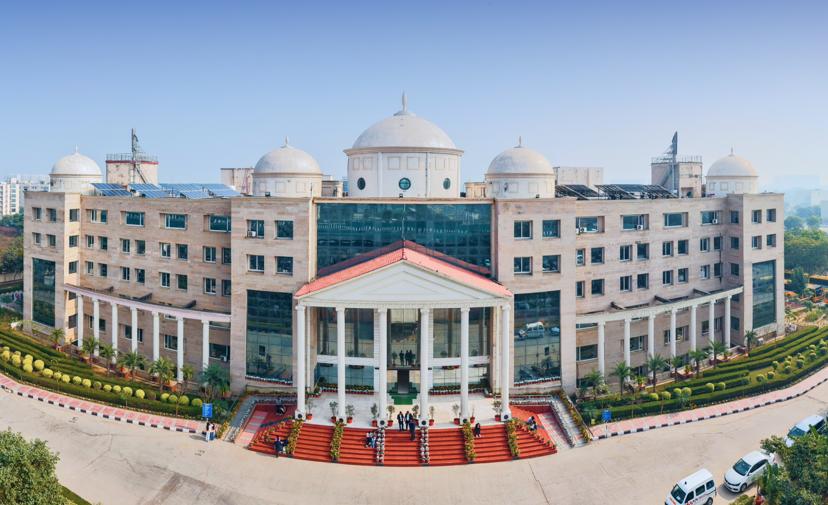
Students exploring management education can consider K.R. Mangalam University (KRMU) for its MBA programmes and the range of academic, practical, and career-focused opportunities available to students.
Industry-Oriented Learning
The MBA curriculum focuses on industry-relevant knowledge and skills, helping students understand evolving business practices and requirements.
Practical Exposure
Students can connect theoretical concepts with practical applications through:
- Projects: Work on academic and business-related projects.
- Case Studies: Analyse practical business situations and develop solutions.
- Presentations: Strengthen communication and presentation abilities.
- Industrial Activities: Gain exposure to real-world business environments.
Faculty Mentorship
Faculty members support students throughout their academic journey through:
- Academic Guidance: Assistance with subjects and coursework.
- Mentorship: Guidance related to learning and professional development.
- Skill Development: Support in improving relevant management skills.
Internship Opportunities
Internships can help students:
- Gain Workplace Experience: Understand professional work environments.
- Apply Knowledge: Use classroom concepts in practical situations.
- Develop Professional Skills: Build communication, teamwork, and workplace skills.
Industry Interaction
Students can gain industry insights through:
- Guest Lectures: Learn from professionals with industry experience.
- Workshops: Participate in sessions focused on practical business concepts.
- Industry Sessions: Understand current workplace practices and expectations.
Placement Support
KRMU provides career and placement-related support through:
- Resume Building: Guidance on preparing professional resumes.
- Interview Preparation: Support for improving interview skills.
- Professional Skills: Activities aimed at developing workplace competencies.
- Career Guidance: Assistance in understanding potential career pathways.
Career Development
Career-focused initiatives help students improve:
- Communication Skills: Develop effective professional communication.
- Employability Skills: Build skills relevant to workplace requirements.
- Professional Skills: Prepare for management-related career opportunities.
Campus Facilities
The university provides academic and student-focused facilities that support:
- Learning: Facilities that contribute to the academic experience.
- Campus Life: Spaces and amenities supporting student activities.
- Student Activities: Opportunities for interaction and engagement beyond classrooms.
Hostel Facilities
KRMU offers residential accommodation for students who require hostel facilities, particularly those coming from outside Gurugram.
Scholarships
Students can explore applicable scholarship opportunities at KRMU based on:
- Eligibility: Meeting the requirements specified for the scholarship.
- University Policies: Following the applicable scholarship terms and conditions.
- Academic or Other Criteria: Depending on the specific scholarship category.
Global Exposure
Selected students may have opportunities to participate in:
- International Academic Programmes: Exposure to academic environments beyond India.
- Summer School Experiences: Opportunities to learn in different educational settings.
- Cultural Exposure: Interaction with different educational and cultural environments.
Conclusion
A student’s interests, strengths, desired professional path, and career ambitions all play a role in the decision between a “general MBA vs. specialised MBA.” A specialised MBA gives an in-depth understanding in a certain sector, whereas a general MBA offers more comprehensive management knowledge. When making a decision, students should take into account the scope of the vocation, industry demand, prospective pay, curriculum, and future growth.
K.R. Mangalam University (KRMU) offers MBA specialisation options such as FinTech and Digital Marketing, along with practical learning, industry interaction, internships, mentorship, placement support, and career development opportunities.
Compare the available MBA specialisations at KRMU and find the one that fits your professional direction.
FAQs
Is a specialised MBA suitable for a specific career goal?
Yes, a specialised MBA can be suitable for students who have a clear career goal and want focused knowledge and skills in a particular business domain.
What factors should students consider when choosing an MBA?
Students should consider their interests, academic strengths, career goals, preferred work environment, industry demand, salary expectations, and future growth opportunities.
What is the general MBA vs specialised MBA salary?
There is no fixed salary difference between the two. Earnings depend on factors such as specialisation, job role, experience, skills, organisation, and location.
What is the difference between a general MBA and a specialised MBA in India?
In India, a general MBA offers broader management education and flexibility, while a specialised MBA provides deeper knowledge in a particular business area.
Which MBA specialisations does KRMU offer?
According to the pasted content, K.R. Mangalam University (KRMU) offers MBA specialisation options such as FinTech and Digital Marketing.
What practical opportunities are mentioned for KRMU MBA students?
The content mentions projects, case studies, presentations, industrial activities, internships, workshops, guest lectures, and industry sessions.

























 13+Years of Educational Experience