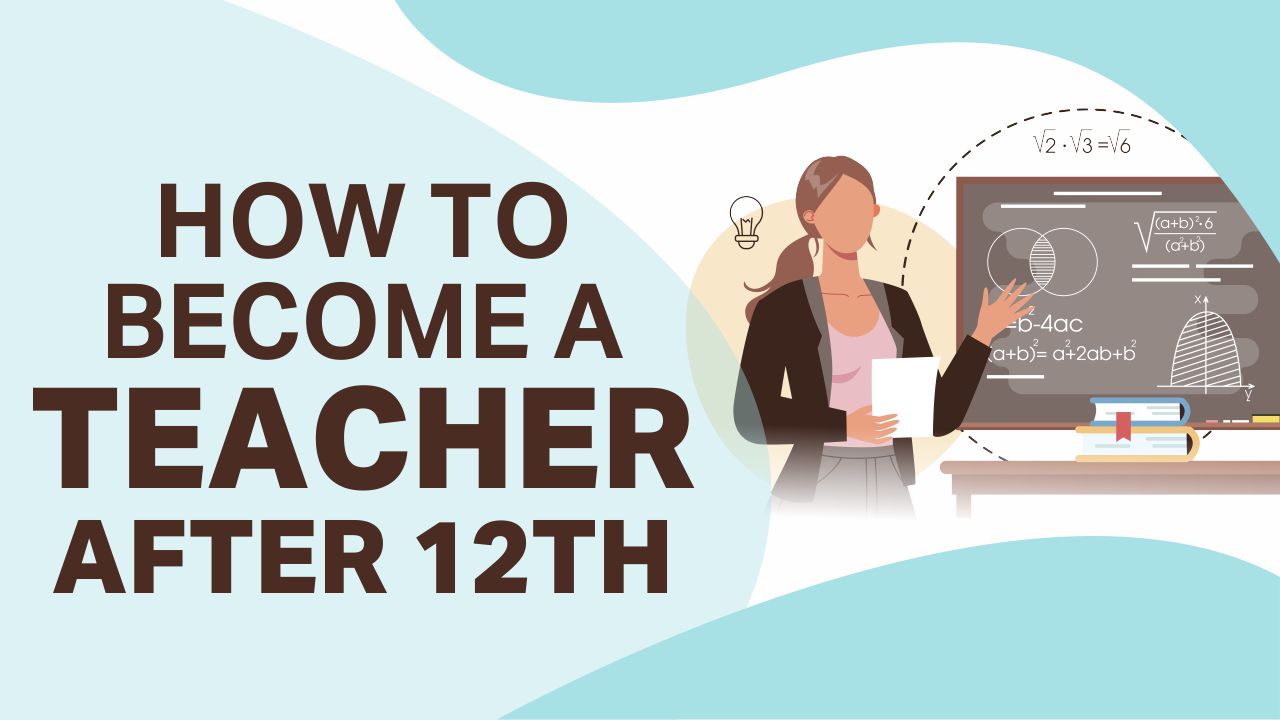
Teaching is the most respected profession in society because of its foundational role in shaping society. A teacher is someone who educates students and provides them with the necessary knowledge and skills that set the base for their future. To become a teacher in India, you generally need to pursue a Bachelor of Education (B.Ed.) degree programme, which is an NCTE (National Council for Teacher Education) approved teaching qualification after 12th. Apart from this, you can also pursue courses like B. El. Ed, D. Ed, D. El. Ed, and NTT to become a teacher after class 12. In this blog, we will discuss the step-by-step process of how to become a teacher after 12th.
Teaching has been more than just a profession; it helps students in character development, critical thinking, understanding values, and preparing for real life. From introducing young children to the basics of reading and writing to guiding senior students through important academic decisions, teachers play a significant role at every stage of education.
To become a teacher in India after 12th, you can pursue NCTE-approved courses such as B.El.Ed., D.El.Ed., or integrated degrees like B.A. B.Ed. or B.Sc. B.Ed., which combines subject knowledge with teaching methodology. After completing a relevant course, you must qualify for exams like CTET or STET to be eligible for teaching roles in government or private schools.
Overview of This Blog
The table below highlights the key topics covered in this blog, including teaching courses after 12th, eligibility exams, required skills, salary prospects, and teacher education opportunities at KRMU.
| Sections |
Descriptions |
| Teaching Job: At A Glance |
Overview of the teaching profession, roles, responsibilities, and impact on society |
| How To Become A Teacher After 12th? |
Various teaching courses after 12th, including B.Ed. and B.El.Ed. |
| Skills Required to Become a Teacher |
Essential skills such as communication, patience, creativity, classroom management, adaptability, and technical literacy |
| Exams To Become A Teacher |
Information about CTET and STET examinations required for teaching careers |
| Salary Growth and Career Progression |
Salary ranges and career advancement opportunities from primary teacher to principal or school director |
| Why Choose KRMU for Teacher Education? |
Teacher education programmes, practical training, internships, modern teaching methodologies, and academic support at KRMU |
| Conclusion |
Importance of teacher education, career opportunities, and building a successful teaching career after 12th |
Teaching Job: At A Glance
Teaching as a profession involves a multifaceted role centred around teaching, guiding, and inspiring students. Beyond classroom instruction, teachers often engage in curriculum development, collaborate with colleagues, and participate in professional development, thus leaving a lasting impact on students’ lives.
And teaching, when you sit with it, is more than a paycheck. It’s shaping how an entire generation thinks and grows and doing it through a career that doesn’t come with the usual instability. The upsides genuinely pile up:
- Teachers are still held in real regard — that hasn’t faded
- Job security that a lot of other fields can only envy
- Both government and private schools offer a path in
- Leadership positions open with enough experience
- EdTech and online teaching are creating entirely new routes
- Learning never really stops for a teacher either, which is its own kind of reward
- And there’s a quiet satisfaction in knowing the work actually matters to someone
How To Become A Teacher After 12th Grade?
After completing class 12, candidates can pursue any of the various teaching courses available, including UG and diploma courses, as well as many integrated degree programmes. Below are some of these programmes:
B.Ed.
A Bachelor of Education (B.Ed.) is a 2-year undergraduate professional degree in India. It is mandatory for graduates who want to pursue a career as a teacher in primary, secondary, or senior secondary schools.
This is a four-year integrated undergraduate programme. UG is a professional course curated to prepare the educators of the future for primary and upper-primary-level students (classes 1–8). The course explores the psychological aspects of teaching through modules like psychology development, the foundation of education, and subject-specific teaching techniques.
B.A. B.Ed.
The B.A. B.Ed. is a four-year integrated undergraduate programme that combines general arts studies with professional studies in education. This programme helps students earn both an arts degree and an education degree simultaneously. The programme is structured in such a way that it offers both theoretical understanding and practical skills across different humanities disciplines while also equipping students with effective teaching skills. It provides a wide knowledge base for becoming an elementary and secondary school teacher in India.
B.Sc. B.Ed.
It is one of the most popular career choices among those who have completed their 10+2 with a science background. This four-year programme offers an integrated degree course in both B.Sc. and B.Ed. to develop subject matter expertise in B.Sc. while also learning the teaching methodologies of B.Ed. Pursuing a UG degree course in B.Sc. B.Ed. is definitely the best option for those who wish to work as a reputed tutor, subject matter expert (SME), writer, administrator, etc.
D.El.Ed.
D.El. Ed. is a two-year professional diploma degree course for training upcoming primary-level educators. The course also helps develop child managerial skills and the development of child behaviour through multiple learning modules and internship programmes that can help a teacher mould their students however they like.
D.Ed.
A Diploma in Education is also a two-year teacher training programme that is designed to impart both theoretical and practical knowledge to its students aspiring to pursue teaching at the elementary level (grades 1–8) in all subjects. The course can be pursued in both regular and distance formats, and the duration of the course can also vary depending on the institution you choose to study at.
NTT
Nursery Teacher Training (NTT) is a specialised two-year diploma certification programme designed for aspiring nursery and pre-school-level tutors. The course modules focus on the behavioural patterns of children as well as aspects of childcare through subjects like child psychology, pedagogical skills, curriculum planning, and classroom management. The best part about the NTT courses is that anyone with an aggregate of over 40% marks in their 10+2 can pursue the course, unlike other courses that ask for relatively higher aggregate marks in their 10+2.
Skills Required to Become a Teacher
To become a successful teacher, academic qualifications are important, but so are personal and professional skills. Great teachers inspire, motivate, and connect with their students. Some essential skills to become a teacher include:
- Good Communication Skills: To explain complex topics in simple, engaging ways.
- Patience and Empathy: To understand different learning paces and emotional needs of students.
- Creativity: To design lessons that make learning interactive and fun.
- Classroom Management: To maintain discipline while encouraging participation.
- Adaptability: To adjust teaching methods based on students’ strengths and weaknesses.
- Technical Literacy: To integrate digital tools and e-learning platforms in classrooms effectively.
Exams To Become A Teacher
There are two major exams that an aspiring teacher can appear for:
- CTET: The Central Teacher Eligibility Test (CTET) is a national-level examination conducted by the Central Board of Secondary Education (CBSE). The examination is conducted to test the skills and knowledge of the aspirants. The CTET scorecard serves as valid proof of the educator’s authenticity, as most higher secondary schools and colleges recruit CTET-qualified educators.
- STET: Just like CTET, the State Teacher Eligibility Test (STET) is another test that educators can appear for so they can become eligible to teach at state-level schools in the elementary and higher secondary segments.
Salary Growth and Career Progression
With experience and advanced qualifications, teachers can move up to higher-paying roles. The standard payroll are discussed below:
- Primary Level Teacher: ₹2.5 – ₹4 LPA
- Secondary Level Teacher: ₹4 – ₹6 LPA
- Senior Secondary / PGT: ₹6 – ₹8 LPA
- Head of Department / Vice Principal: ₹8 – ₹10 LPA
- Principal / School Director: ₹10 – ₹15+ LPA
Additionally, those with advanced degrees like M.Ed. or Ph.D. can work as teacher educators, researchers, or education consultants, with lucrative opportunities in India.
Future Scope of Teaching
The field itself isn’t standing still. Digital classrooms, AI-assisted tools, personalised learning, hybrid formats — schools are picking these up faster than expected. Anyone walking in with digital comfort, fresh teaching approaches, and solid classroom handling will naturally stand out. And the classroom isn’t the only place teaching skills are wanted anymore — publishing houses, curriculum design teams, teacher training centres, education consultancies, and EdTech companies are all actively hiring people with an education background.
Another future scope of the teaching field is the growing demand for specialised educators, as some students have different learning needs. Schools and colleges are looking for teachers who can support inclusive education, early childhood development, special education, and skill-based learning. The teachers who continue to upgrade their qualifications and learn new teaching methods can explore better career opportunities over time. With experience, they may also move into academic coordination, school administration, educational research, or leadership roles.
Why Choose KRMU for Teacher Education?
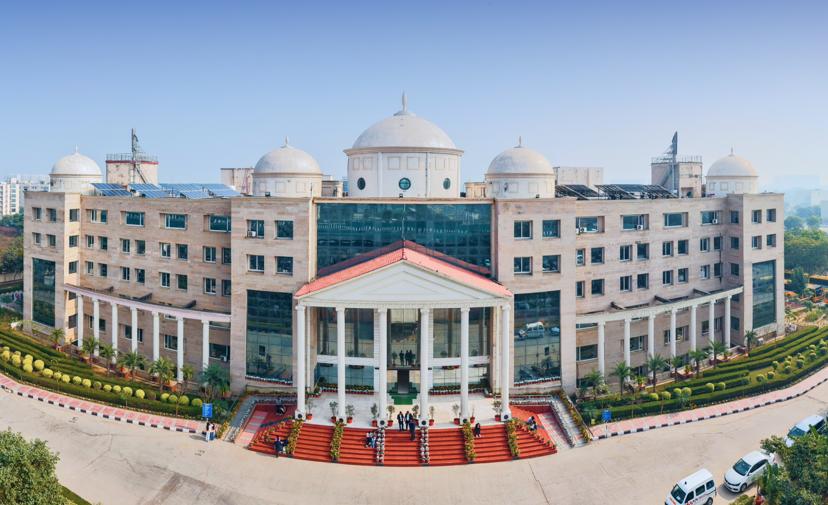
To build a successful career in teaching, students need not only the right qualification but also the right learning environment. K.R. Mangalam University offers industry-relevant teacher education programmes designed to prepare future educators with the knowledge, skills, and practical experience required in modern classrooms.
The university provides programmes such as B.Ed., B.El.Ed. (Bachelor of Elementary Education), etc. that focus on child development, teaching methodologies, classroom management, educational psychology, and experiential learning. The curriculum is designed to help students understand both the theoretical and practical aspects of teaching.
At KRMU, students gain hands-on exposure through teaching practice, school internships, workshops, classroom simulations, and community engagement activities. These experiences help aspiring teachers develop confidence, communication skills, leadership qualities, and effective teaching strategies.
The university also emphasises the use of modern educational technologies, digital learning tools, and innovative pedagogical approaches, ensuring that graduates are prepared for the evolving education sector. With experienced faculty, a learner-centric environment, and strong academic support, KRMU helps students become competent, compassionate, and future-ready educators.
For most teaching-related programmes at K.R. Mangalam University, admission is generally based on eligibility criteria and the university’s admission process. Depending on the programme and admission cycle, candidates may be required to appear for the university’s entrance process, merit-based evaluation, or personal interaction.
Conclusion
To sum up this blog post, teaching is a rewarding career that shapes the future of society through knowledge and values. By choosing the right course and developing essential skills, students can build a successful teaching career after 12th grade. Institutions like K.R. Mangalam University offer quality education and guidance, helping aspiring educators achieve their professional goals and make a meaningful impact.
Kickstart your teaching career with K.R. Mangalam University. Explore future-focused teacher education programmes and apply today!
Also Read: The Importance Of Technology As A Teaching Aid In Higher Education
FAQs
Which exams do I need to appear for if I want to become a teacher after 12th?
Anyone who wishes to become a teacher and pursue a career in the long run should appear for the CTET examination. A CTET-approved educator can easily climb up the hierarchy to pursue senior job opportunities.
Which university should I choose to pursue B.Ed. after class 12th?
You need not look further than K.R. Mangalam University if you’re looking forward to pursuing a B.Ed. degree course after class 12. The experienced faculty at KRMU, along with the world-class infrastructure and classroom-like environment, is all set to effectively train the educators of the future.
Is NTT a good option if I didn’t score well in class 12?
Yes, NTT is indeed a great option for anyone who couldn’t score well in their class 12, as most institutions offering the NTT diploma certification set the eligibility criteria as low as 40% marks in class 12.
Is a dual degree B.Ed. course a good option?
A dual-degree B.Ed. course is definitely a good option for those who wish to pursue other career options in the future. With a B.Ed. degree and a graduation degree in another discipline, you can easily broaden your career options down the line.
What is the average starting salary package of a teacher in India?
The average starting salary package of a teacher in India can be anywhere from 2.5 to 5 LPA depending upon the educator’s CTET scorecard, their highest qualification, their job location, and many other factors.















 13+Years of Educational Experience