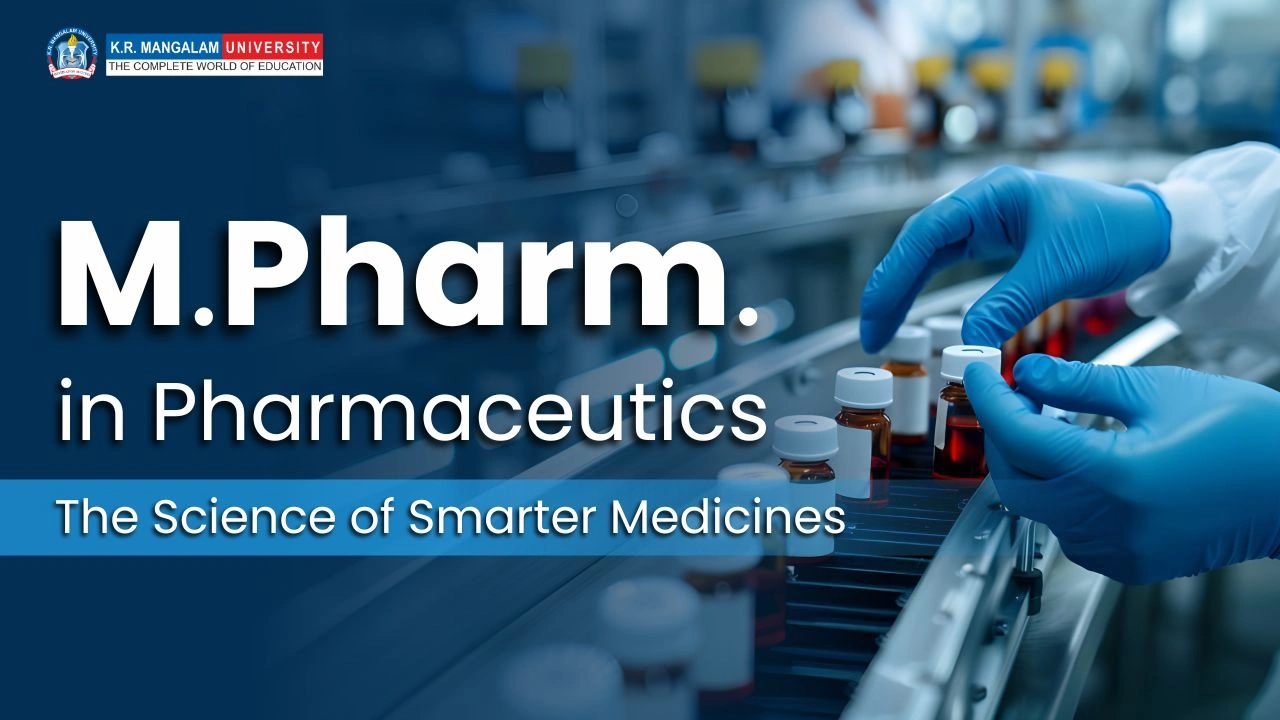
Pharmaceutics bridges the gap between scientific discovery and patient care.
Over the past ten years, India’s pharmaceutical business has developed significantly, and it is growing at a rapid pace due to new research, innovation, and increasing demand from across the world. India, often referred to as the “pharmacy of the world”, is a significant producer and exporter of pharmaceuticals. Due to this expansion, the demand for qualified experts with advanced scientific expertise in the pharmaceutical industry has increased. Therefore, pursuing an M.Pharm. in Pharmaceutics is a logical next step for students who have finished their B.Pharm.
In this blog, readers will learn about the M.Pharm. in Pharmaceutics course details and other aspects of this specialisation.
Overview of This Blog
| Sections |
What We Will Cover |
| Why Pharmaceutics Matters More Than Ever? |
Explains the growing importance of pharmaceutics in modern healthcare, drug development, pharmaceutical innovation, and India’s rapidly expanding pharmaceutical industry. |
| What Is M.Pharm. in Pharmaceutics? |
Introduces the specialisation, its focus on drug formulation, manufacturing processes, pharmaceutical technology, and advanced drug delivery systems. |
| What Is the M.Pharm. in Pharmaceutics Eligibility? |
Covers the basic eligibility requirements, including a B.Pharm. degree and institution-specific admission criteria. |
| What Is the M.Pharm. in Pharmaceutics Admissions Process? |
Outlines the typical admission process, including application submission, eligibility verification, entrance examinations (if applicable), counselling, and admission confirmation. |
| What Skills Do Students Develop During M.Pharm. in Pharmaceutics? |
Highlights key skills gained through the programme, including laboratory proficiency, analytical thinking, regulatory knowledge, communication skills, ethics, and technical expertise. |
| What are the Career Prospects for Pharmaceutics M.Pharm. Graduates? |
Discusses career opportunities in drug delivery research, quality assurance, quality control, regulatory affairs, teaching, and academia, along with indicative salary ranges. |
| Why Choose K.R. Mangalam University for M.Pharm. in Pharmaceutics? |
Explains how KRMU supports students through advanced laboratories, research opportunities, experienced faculty, industry exposure, internships, and career development initiatives. |
| Conclusion |
Summarises the advantages of getting an M.Pharm. in pharmaceutics and emphasises how crucial it is to pick a university that is both industry-focused and research-oriented for long-term professional development. |
Why Pharmaceutics Matters More Than Ever?
Before exploring M.Pharm. in Pharmaceutics course details, it is important to understand why this specialisation is gaining significance in today’s healthcare landscape.
The pharmaceutical industry is evolving rapidly, driven by advances in drug development, biotechnology, personalised medicine, and innovative drug delivery systems. As new therapies become more complex, the need for professionals who can formulate, manufacture, evaluate, and optimise medicines is increasing.
According to the Indian Brand Equity Foundation (IBEF):
- India is the world’s largest provider of generic medicines, supplying around 20% of global generic drug demand by volume.
- India’s pharmaceutical industry is projected to reach USD 130 billion by 2030, reflecting significant growth opportunities across research, manufacturing, quality assurance, and product development.
- India has the largest number of US FDA-approved pharmaceutical manufacturing facilities outside the United States, highlighting its strong pharmaceutical infrastructure and global credibility.
As the pharmaceutical sector expands, there is growing demand for professionals with specialised expertise in formulation development, novel drug delivery systems, pharmaceutical technology, regulatory compliance, and product lifecycle management.
These developments indicate that pharmaceutics is no longer limited to medicine manufacturing alone. It has become a critical discipline that supports pharmaceutical innovation, improves drug effectiveness, enhances patient outcomes, and contributes to the future of global healthcare.
Also Read: M.Pharm. Pharmacology Syllabus, Scope, Jobs & Colleges
What Is M. Pharm. In Pharmaceutics?
The science of creating and manufacturing different drugs is known as M.Pharm. in Pharmaceutics. The programme offers in-depth knowledge of advancements in pharmaceuticals, pharmacy practice, and drug delivery systems. It is focused on the manufacturing process of pharmaceuticals. Students will comprehend how companies create and produce medications. It involves the application of state-of-the-art methods in drug production, drug delivery systems, product development, and sophisticated analytical processes.
What Is the M.Pharm. in Pharmaceutics Eligibility?
Students seeking admission generally need:
- A Bachelor of Pharmacy (B.Pharm.) degree from a recognised institution.
- Minimum qualifying marks as prescribed by the university.
- Passing the entrance examination, if required by the institution.
Specific eligibility criteria may vary across universities.
What Is the M.Pharm. in Pharmaceutics Admissions Process?
The M.Pharm. in Pharmaceutics admissions process typically includes:
Step 1: Application Submission
Candidates are required to complete the university application process.
Step 2: Eligibility Verification
Academic qualifications and submitted documents are reviewed.
Step 3: Entrance Examination (if applicable) or Merit Evaluation
Some institutions consider scores from relevant entrance examinations. Selection may be based on entrance scores, academic performance, or both.
Step 4: Counselling and Fee Submission
Selected candidates are required to complete document verification and fee submission.
Step 5: Admission Confirmation
After the documents are verified and fees are submitted, the student’s admission is confirmed, and he/she get enrolled at the university successfully.
Students should always check the latest admission guidelines issued by their preferred institution.
What Skills Do Students Develop During M.Pharm. in Pharmaceutics?
Below are the skills that students will develop while studying this programme:
Laboratory Skills
A career in pharmacy necessitates practical knowledge. Students need to be skilled in:
- Making pharmaceutical formulations
- Accurately carrying out laboratory experiments
- Safely handling laboratory equipment
- Systematically documenting observations
Critical and Analytical Thinking
Pharmacists usually have to make on-the-spot decisions in certain scenarios. It requires abilities like:
- Examining medication interactions
- Recognising problems with quality
- Solving formulation or dosage-related issues
Paying Close Attention to Details
In pharmacy, accuracy is crucial. Serious repercussions might arise from even little errors in measurement, reporting, or prescription interpretation. Creating a methodical approach guarantees:
- Safe medication handling
- Appropriate quality control inspections
- Maintaining accurate records
Communication Proficiency
Effective communication is essential for pharmacy professionals while interacting with physicians, patients, and coworkers. Effective communication abilities aid in:
- Clearly outlining prescribed instructions
- Working together with medical teams
- Research and project work presentations
Understanding of Industry Rules
The pharmaceutical industry is subject to strict regulations. Students need to comprehend:
- GMPs, or good manufacturing practices
- GLP, which stands for Good Laboratory Practices
- Protocols for drug safety
- Adherence to regulations
Computer and Technical Proficiency
These days, digital instruments are a crucial component of pharmacy. Students ought to cultivate:
- Knowledge of lab software
- Proficiency in data recording and analysis
- Research instruments and records
Professional Responsibility and Ethics
Pharmacists are in charge of both medication quality and patient safety. Students need to grow:
- Research integrity
- Managing medications ethically
- Documentation accountability
Career Prospects for M.Pharm. (Pharmaceutics) Graduates
In India, the M.Pharm. programme in pharmaceutics has enormous potential. Research, academia, regulatory affairs, and consultancy are all included. Students have the information and abilities needed in a variety of professions. Here, we’ve selected a handful of them.
Research on Drug Delivery
For graduates in pharmaceutics, this is one of the primary fields of employment. They can engage in the study and creation of novel medications and formulations. This covers not just lab work but also creating project documentation such as PDRs and risk assessments.
Average Salary Range: ₹4 LPA – ₹10 LPA
Assurance and Control of Quality
Another area of interest is the pharmaceutical industry’s quality assurance and control division. This division ensures that the goods being produced adhere to legal requirements. Additionally, this division makes sure that quality is upheld during the phases of development and production. Graduates can work on defining procedures, SOPs, etc. here.
Average Salary Range: ₹3.5 LPA – ₹8 LPA
Regulatory Matters
This division makes sure that goods adhere to regulations. Graduates can find employment in consultancy businesses or industry regulatory affairs departments. They draft regulatory filings and interact with regulatory bodies. Additionally, they inform the business of any modifications to the regulations.
Average Salary Range: ₹4 LPA – ₹9 LPA
Teaching and Academics
A few graduates go on to work in academia. One career they can pursue is teaching undergraduate and graduate students at pharmacy schools. They may also participate in on-campus research initiatives.
Average Salary Range: ₹4 LPA – ₹8 LPA
Note: Salary figures are approximate and may vary based on factors such as organisation, location, experience, skills, research expertise, and industry demand. Professionals with additional qualifications, research publications, or specialised industry experience may earn significantly higher compensation.
Why Choose K.R. Mangalam University for M.Pharm. in Pharmaceutics?
A postgraduate degree can significantly influence career growth, but the quality of education and practical exposure offered by the institution often determine how effectively students translate knowledge into professional success.
For students who want to develop their proficiency in pharmaceutical sciences and establish a solid profession focused on research, K.R. Mangalam University provides a holistic M.Pharm (Master of Pharmacy) in Pharmaceutics programme. The curriculum emphasises advanced study, innovation, and industrial application in addition to basic pharmacy knowledge.
Students at KRMU have access to state-of-the-art labs, advanced research facilities, and mentorship from highly skilled instructors with solid academic and professional backgrounds. To keep students up to date with international pharmaceutical trends, the curriculum incorporates advanced ideas in drug discovery, pharmaceutical technology, regulatory affairs, clinical research, pharmacovigilance, and formulation sciences.
In order to help students acquire strong analytical and problem-solving skills, the institution also places a major focus on practical training through industrial visits, seminars, workshops, research projects, and practical experiments. Strong industrial partnerships at KRMU improve employability by opening doors for internships and practical experience.
M.Pharm. graduates from KRMU investigate a variety of employment opportunities, such as R&D laboratories, formulation development, quality assurance, regulatory agencies, clinical research companies, and pharmaceutical manufacturing units, thanks to a strong placement support system.
By enrolling in KRMU’s M.Pharm. programme, students may develop into competent chemists, researchers, and innovators who are prepared to make significant contributions to the pharmaceutical and healthcare industries.
Conclusion
As the pharmaceutical industry continues to innovate and expand, the demand for professionals skilled in drug formulation, pharmaceutical research, and advanced drug delivery systems is expected to grow steadily. An M.Pharm. in Pharmaceutics provides specialised knowledge, research expertise, and technical competencies that can open doors to rewarding careers across pharmaceutical manufacturing, research, quality assurance, regulatory affairs, and academia.
Choosing the right institution is equally important in shaping long-term career success. A programme that combines academic excellence, research exposure, practical training, and industry relevance can help students build a strong foundation for the future.
At K.R. Mangalam University, students gain access to industry-oriented learning, advanced laboratory facilities, and research-driven education designed to prepare them for the evolving pharmaceutical landscape.
Advance your expertise in pharmaceutical sciences by applying for KRMU’s M.Pharm. in Pharmaceutics programme.
Also Read: Why to pursue M.Pharm After B.Pharma
FAQs
What skills can students develop during M.Pharm. in Pharmaceutics?
The programme helps students develop laboratory skills, analytical thinking, formulation expertise, regulatory knowledge, research capabilities, communication skills, and professional ethics.
What are the career options after M.Pharm. in Pharmaceutics?
Graduates can pursue careers in research and development, formulation development, quality assurance, quality control, regulatory affairs, pharmacovigilance, clinical research, and academia.
Can I work in pharmaceutical research after completing an M.Pharm. in Pharmaceutics?
Yes. The programme provides specialised knowledge that can help graduates enter pharmaceutical R&D, formulation research, and drug delivery system development.
What is the scope of M.Pharm. in Pharmaceutics in India?
With India's pharmaceutical industry expanding rapidly, professionals with expertise in formulation science, manufacturing, quality management, and regulatory compliance are increasingly in demand.
Can M.Pharm. in Pharmaceutics graduates pursue a Ph.D.?
Yes. Many graduates continue their academic journey by pursuing a Ph.D. in pharmaceutical sciences, pharmaceutics, or related research fields.




 13 Schools700+ Faculty Members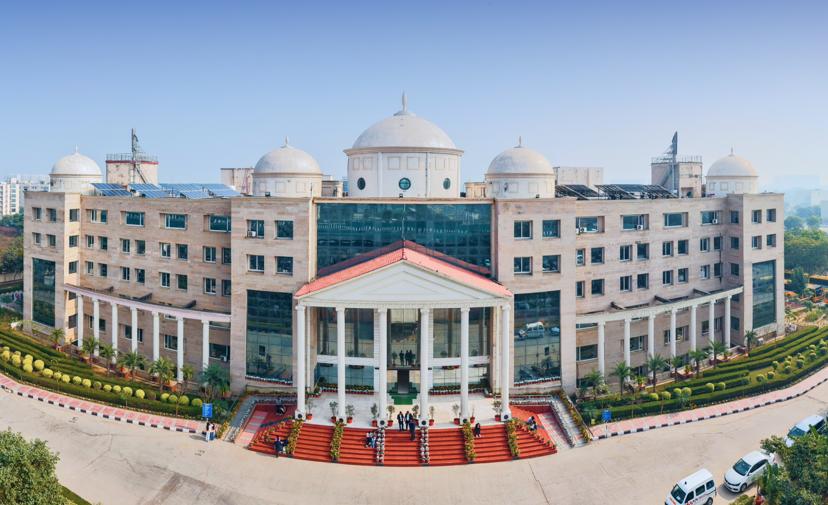












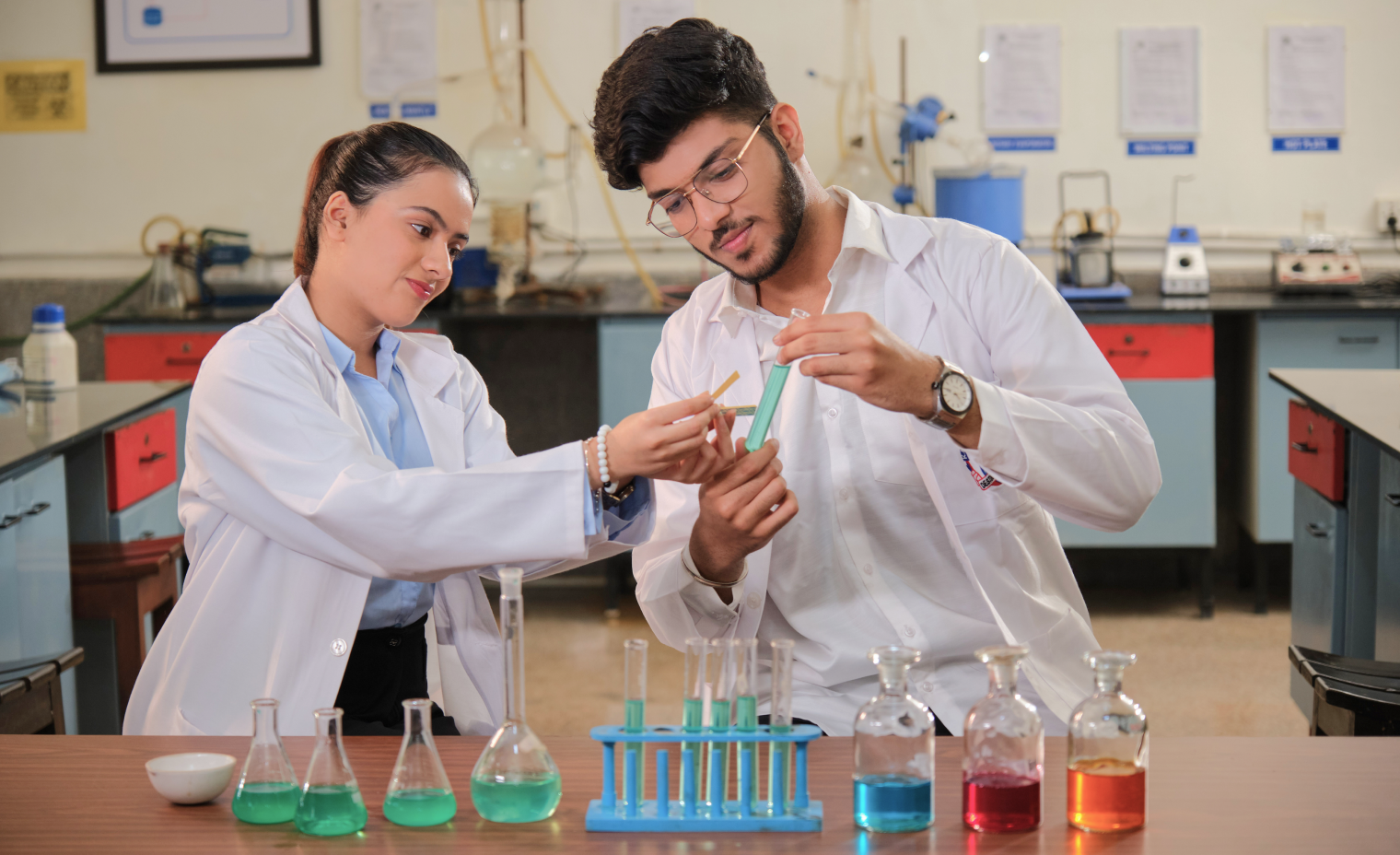
 13+Years of Educational Experience