M Pharm Pharmacology is a specialised postgraduate programme that focuses on the study of drugs, their working mechanisms, therapeutic uses, and safety profiles. Pharmacology plays a critical role in drug development, clinical research, and modern healthcare, as it bridges the gap between laboratory research and patient treatment. With rapid advancements in pharmaceuticals, biotechnology, and clinical trials, the demand for professionals with postgraduate expertise in pharmacology is steadily rising. As a result, students frequently search for topics such as the M Pharm pharmacology syllabus, M Pharm pharmacology colleges in India, etc.—all of which highlight the growing relevance of this specialisation in building research-oriented and industry-ready pharmacy careers.
In this blog post, more discussion is done on this course.
Quick Glance At The Blog
Below is a concise, tabular overview that summarises the complete information on the M Pharm Pharmacology course, its scope and the KRMU advantage in a structured and easy-to-read format. In short, it is a summarised version of the information provided in the blog.
| Particular |
Detail |
| About M.Pharm. in Pharmacology |
Course focusing on how drugs interact with biological systems, covering drug discovery, toxicology, and clinical research. |
| M.Pharm. Pharmacology Scope |
High demand in R&D; Role in drug safety and pharmacovigilance; Scope in both the Indian and global pharmaceutical industries. |
| Jobs After M.Pharm. Pharmacology |
Research & Development Managers, Clinical Project Managers, Chemical Pathologists, Research Scientists, Medical Writers, Research Officers, Medical Coders, Lecturers, Drug Control Officers |
| Why KRMU for M.Pharm. Pharmacology? |
Advanced Labs, Experienced Faculty, Student-centric Teaching Methodology, 100% Placement Assistance |
What Is M.Pharm. in Pharmacology?
The study of the effects and working mechanisms of medications on biological systems is the main focus of a postgraduate academic degree programme called the Master of Pharmacy (M.Pharm.) in Pharmacology. A subfield of pharmaceutical sciences called pharmacology studies how medications interact with living things, including how they are absorbed, distributed, metabolised, and excreted. The goal of the M.Pharm in Pharmacology programme is to give students extensive knowledge and expertise in drug development and pharmacological research.
Key Components of an M.Pharm. in Pharmacology Course
| Key Components |
Descriptions |
|
Duration
|
Usually lasting two years, the curriculum is divided into four semesters. However, the length may differ according to the nation and the particular university’s criteria. |
|
Qualifications
|
A Bachelor of Pharmacy (B.Pharm.) degree or an equivalent credential from an accredited school is often required of candidates. Performance on entrance examinations, interviews, and other requirements established by the university may also be a factor in admission. |
|
Work in the Lab
|
The programme’s practical components include laboratory work, where students have firsthand experience carrying out investigations pertaining to pharmacokinetics, toxicity, and medication effects. |
|
Exposure in the Clinic
|
Certain programmes may include clinical exposure, which enables students to observe and comprehend how pharmacological concepts are applied in a clinical setting. |
M.Pharm. Pharmacology Scope
M.Pharm Pharmacology offers a wide and growing scope across both the Indian and global pharmaceutical industries. Graduates are in high demand in pharmaceutical R&D, where they contribute to drug discovery, preclinical studies, and safety evaluation. Clinical Research Organisations (CROs) actively recruit pharmacology professionals for clinical trials, data analysis, and regulatory documentation.
The field also plays a critical role in drug safety and pharmacovigilance, focusing on adverse drug reaction monitoring and risk management. Additionally, opportunities in academia and research institutes allow graduates to pursue teaching, research, and doctoral studies. With continuous innovation in healthcare and drug development, pharmacology remains a future-ready specialisation.
Also Read: Master Degree in Pharmacy: A Comprehensive Overview
Jobs After M.Pharm. Pharmacology
Below are the job opportunities after an M Pharm Pharmacology:
Research & Development Managers
In the pharmaceutical sector, research and development (R&D) managers are in charge of spearheading innovation and research. These experts create and carry out R&D plans, initiatives, and guidelines. In order to finish R&D projects, they also oversee and direct a group of engineers, technicians, assistants, and researchers.
They work on creating novel medications, formulations, and medical supplies. To guarantee the creation of pharmaceutical items that are safe, efficient, and of the highest calibre, they supervise clinical studies, laboratory investigations, and product testing. They also make sure that their initiatives meet both legal standards and market demands.
Average Annual Salary (INR): 7 LPA – 35 LPA
Clinical Project Managers
Clinical trial preparation, execution, and closing are managed by clinical project managers. Before being authorised for general use, they make sure that novel medications, medical equipment, and therapies pass stringent clinical research testing. They are in charge of schedules, finances, ethical standards, and regulatory compliance. To guarantee that trials adhere to safety and effectiveness requirements, CPMs facilitate communication between sponsors, regulatory bodies, and research teams.
Average Annual Salary (INR): 9 LPA – 32 LPA
Chemical Pathologists
Chemical pathologists are employed by research organisations, hospitals, and diagnostic labs. To identify illnesses, they do biochemical studies of body fluids like blood. To evaluate test results and suggest suitable therapeutic therapies, these pathologists work in conjunction with physicians and healthcare teams.
They actively experiment with new diagnostic instruments. To keep an eye on health issues, they research the molecular causes of illnesses. Furthermore, through laboratory testing, they are essential in identifying ailments including diabetes, renal problems, hormonal imbalances, and metabolic abnormalities.
Average Annual Salary (INR): 5 LPA – 24 LPA
Research Scientists
Research scientists conduct scientific studies and experiments in a certain area. They are working on either pure or applied research projects. These experts create novel medications, vaccines, medical equipment, and therapeutic approaches. They are employed by pharmaceutical businesses, labs, and academic institutions.
Additionally, they strive to enhance healthcare solutions. To produce groundbreaking findings, research professionals employ cutting-edge methods, including computer analysis, genetic engineering, and molecular biology. Additionally, they acquire financing for initiatives, publish research articles, and contribute to medical innovations that have the capability to influence the future of healthcare.
Average Annual Salary (INR): 4 LPA – 13 LPA
Medical Writers
Another name for medical writers is “medical communicators”. By producing lucid, well-organised scientific materials, they are essential to the pharmaceutical, healthcare, and medical research sectors. Medical writers might work for pharmaceutical businesses, biotechnology corporations, research institutes, medical device manufacturing facilities, or independently.
Medical writers are in charge of producing research publications, clinical trial reports, regulatory filings, and instructional materials for patients and healthcare providers. Their main objective is to make complicated scientific and medical material accurate and simple to comprehend. To guarantee excellent and compliant medical documentation, they collaborate closely with physicians, researchers, and regulatory bodies.
Average Annual Salary (INR): 4 LPA – 11 LPA
Research Officers
Research officers find and develop medications and treatments, perform research in a particular genre, and evaluate data in the pharmaceutical and healthcare sectors. They conduct, evaluate, and oversee research initiatives in a variety of industries, including academia, biotechnology, healthcare, and pharmaceuticals.
In addition, the research officers conduct laboratory experiments and literature studies. They plan experiments, collect and evaluate data, and ensure that research operations adhere to ethical and legal requirements. They are also essential to quality control, clinical trials, and medication development.
Average Annual Salary (INR): 4 LPA – 9 LPA
Medical Coders
Healthcare professionals who convert medical diagnoses, procedures, treatments, and services into standardised alphanumeric codes are known as medical coders. Insurance claims, billing, and patient record keeping all make use of these codes. Additionally, the codes assist public health initiatives, obtain patient data, and analyse medical trends.
These experts collaborate with hospitals, insurance companies, and healthcare providers to guarantee correct documentation and appropriate payment for medical services. Medical coding is essential to the healthcare system because it facilitates efficient record-keeping and seamless insurance processing.
Average Annual Salary (INR): 2 LPA – 5 LPA
Lecturers
By teaching courses like pharmacology at universities and colleges, lecturers significantly contribute to the development of the future generation of pharmaceutical professionals. In addition to teaching, professors do research, write scholarly articles, and guide students who want to pursue further education or research endeavours. They are responsible for creating curriculum, creating teaching materials, and keeping up with the most recent developments in the pharmaceutical industry.
Average Annual Salary (INR): 3 LPA – 10 LPA
Drug Control Officers
Drug control officers carry out inspections, oversee the production and distribution of pharmaceuticals, and guarantee adherence to both domestic and global drug laws.
Their main duty is to safeguard the public’s health by stopping the spread of inferior, fake, or contaminated medications. They contribute to the preservation of the pharmaceutical industry’s integrity and guarantee that only safe and effective medications are supplied to customers by applying stringent quality control procedures.
Average Annual Salary (INR): 3 LPA – 5 LPA
M.Pharm. Pharmacology Colleges in India
Here are some well-known institutions where students can pursue an M.Pharm. with a specialisation in pharmacology:
- K.R. Mangalam University (KRMU), Gurugram
- National Institute of Pharmaceutical Education and Research (NIPERs)
- Institute of Chemical Technology (ICT), Mumbai
- Delhi Pharmaceutical Sciences and Research University (DPSRU)
These colleges vary in terms of fees, admission processes, research facilities, and placement support, so aspiring students should keep in mind their priorities—such as infrastructure, faculty expertise, and industry exposure—when selecting an institute.
Why Choose K.R. Mangalam University (KRMU) for M.Pharm. Pharmacology?
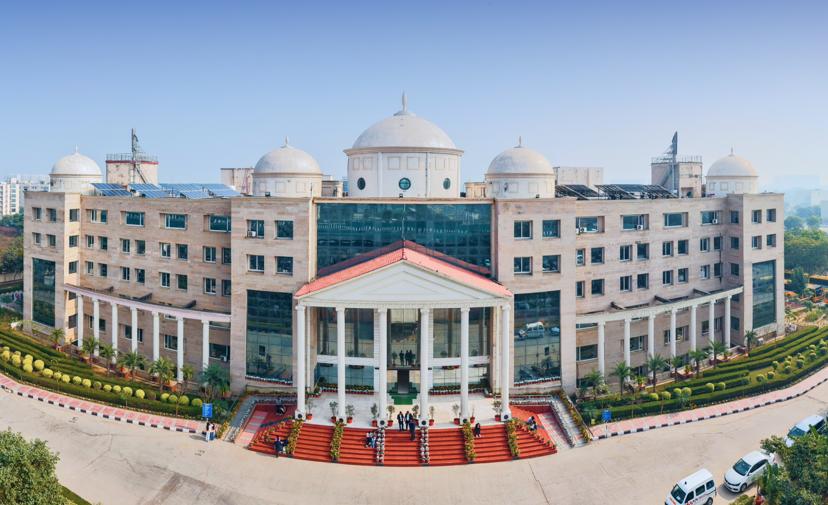
K.R. Mangalam University (KRMU) offers a well-structured M.Pharm. in Pharmacology programme with a comprehensive M Pharm pharmacology syllabus that balances advanced theoretical concepts and hands-on research training. The syllabus is designed to cover drug discovery, pharmacokinetics, toxicology, clinical pharmacology, and experimental techniques, ensuring strong conceptual clarity and practical exposure. Supported by modern laboratories, experienced faculty, and research-oriented learning, KRMU prepares students for careers in pharmaceutical R&D, clinical research organisations, pharmacovigilance, and academia, making it a reliable choice for postgraduate pharmacology studies.
| M. Pharm. |
Eligibility Requirements |
Fees (Per Year) |
| Pharmacology |
To qualify for a postgraduate pharmacy programme in 2026, candidates must have completed a B.Pharm degree from a Pharmacy Council of India (PCI)-approved institution with a minimum aggregate score of 55% across all four years. Additionally, it is mandatory for admitted students to hold a valid registration with a State Pharmacy Council; those not yet registered must complete the process within one month of their admission date. Success in maintaining your seat depends on meeting this deadline, as failure to provide proof of registration within the first month will result in the immediate and mandatory cancellation of your admission. To confirm your eligibility for the 2026 session, you can verify your degree’s validity through the PCI Approved Colleges list. |
Rs. 1,54,000 |
Conclusion
M.Pharm. in Pharmacology is a specialised postgraduate programme that opens doors to advanced careers in pharmaceutical research, clinical studies, drug safety, and academia. With the growing global demand for skilled pharmacologists, choosing the right institution is crucial. Universities like K.R. Mangalam University (KRMU) offer a well-designed M Pharm pharmacology syllabus, strong research exposure, and industry-aligned training, helping students build rewarding and future-ready careers in the pharmaceutical and healthcare sectors.
Also Read: M.Pharm. Admission Eligibility, Fees, Process & Colleges
FAQs
What is M. Pharm. in Pharmacology?
M Pharm Pharmacology is a postgraduate pharmacy specialisation focused on drug action, development, safety, and therapeutic applications.
What is the scope of M. Pharm. in Pharmacology in India?
The scope includes opportunities in pharmaceutical R&D, CROs, pharmacovigilance, academia, and research institutions in India and abroad.
What jobs are available after M.Pharm. Pharmacology?
Graduates can work as research scientists, clinical research associates, pharmacovigilance officers, lecturers, medical writers, and drug safety experts.
What does the M.Pharm. pharmacology syllabus include?
The syllabus covers pharmacokinetics, clinical pharmacology, toxicology, drug development, research methodology, and advanced laboratory techniques.
Why choose KRMU for M.Pharm. Pharmacology?
KRMU offers an industry-relevant syllabus, modern research facilities, expert faculty, and career-focused training for postgraduate pharmacology students.
















 13+Years of Educational Experience