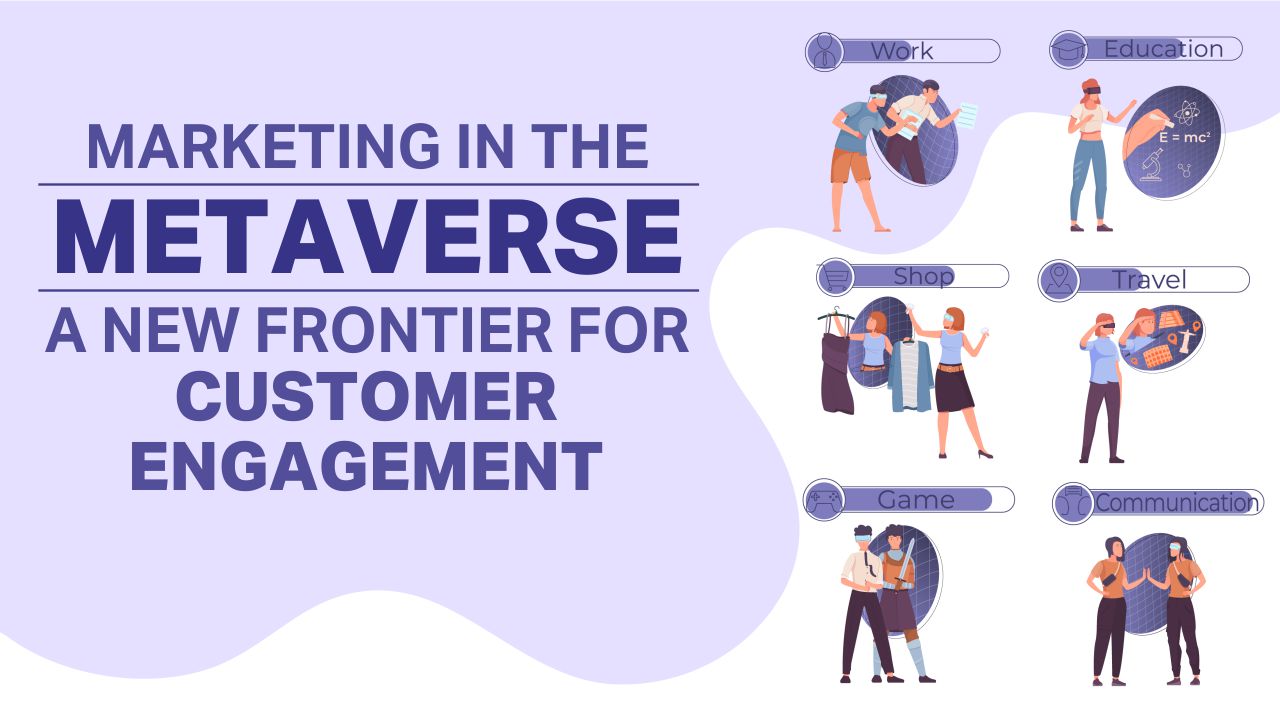
Marketing in Metaverse: The metaverse is a hypothetical virtual world that combines physical and virtual spaces and is enabled by immersive technologies like virtual reality (VR), augmented reality (AR), and mixed reality. The digital landscape is undergoing a profound transformation, with the emergence of the metaverse at the forefront.
This immersive, three-dimensional virtual space promises to fundamentally alter how we interact, consume information, and engage with brands. Marketers are taking notice, recognizing the vast potential of the metaverse to reach new audiences and forge deeper customer connections.
A virtual universe connects countless digital worlds and unveils a ground-breaking frontier for marketing strategies. In this blog, we’ll explore the exciting possibilities of marketing in the metaverse.
Possibilities of Marketing in the Metaverse
Metaverse: A Creative Canvas for Marketing
In a virtual world, people can create avatars, interact with others, and engage in an infinite variety of experiences without being constrained by physical constraints. This is the metaverse, a place where businesses and us can cultivate communities, start dialogues, and create enduring relationships. Its unique qualities such as user-generated content, immersion, and persistence set it apart from other conventional web platforms and give advertisers an unmatched creative canvas.
Combining conventional marketing knowledge with latest technology
Brands need to develop strategy frameworks that combine conventional marketing knowledge with the specifics of this virtual world if they want to succeed in the metaverse. Brands can adjust their product offerings, pricing strategies, distribution networks, and promotional methods to the specific dynamics of the metaverse by modifying well-established frameworks such as the 4Ps and 5Cs framework. Maintaining brand values while innovating and adapting requires a careful balance.
The immersive environment presents a unique opportunity for brands to connect with customers on a deeper level, fostering a sense of community and shared experiences. Imagine your online shopping experience from grocery to jewellery we unconsciously interact with one or the other element of the metaverse.
How Metaverse is different from Traditional Online Platforms
- Persistence: Unlike websites or social media platforms, the metaverse is a persistent world that continues to exist even when individual users log off. This allows for continuous brand presence and ongoing customer engagement.
- Immersion: VR and AR technologies create a sense of physical presence within the metaverse, blurring the lines between the virtual and the real. This immersive environment allows for a more impactful and engaging brand experience.
- User-generated content: The metaverse is expected to be heavily reliant on user-generated content (UGC). Brands can leverage UGC to foster a sense of community and authenticity around their products and services.
- Interoperability: Ideally, the metaverse will be interoperable, allowing users to seamlessly move between different virtual worlds. This presents brands with the opportunity to reach a wider audience across various platforms within the metaverse.
Indian Brands in Metaverse
Indian businesses are leading the way into the digital future by entering the metaverse with companies like Tanishq, MakeMyTrip, and Mahindra & Mahindra. Businesses from a variety of industries are utilizing metaverse-related tools as marketing strategies to take their business online.
Tanishq, a jewellery brand, debuted their “Romance of Polki” wedding collection in the metaverse’s 3D exhibition zones, where key pieces from the collection were on show. The audience got an amazing visual experience and could see the jewellery pieces in three dimensions. Through the use of a QR code, the attendees were able to try on the show-stopper piece.
Ceat Limited, one of the biggest tire producers in India, is opening a Ceat Shoppe in the metaverse. Their e-commerce platform is connected with the metaverse. Customers and buyers will be able to schedule orders and view products in three dimensions at the same time. Customers will also have the choice of having their tires delivered and fitted at home by the company. Additionally, a pick-up option from the actual stores will be offered.
Metaverse – the world of opportunities for MBA students
By 2026, it is anticipated that 25% of individuals will spend at least one hour a day on social media, work, retail, education, and entertainment in the metaverse. Metaverse has remarkable prospects for marketers to submerge and include customers in a three-dimensional virtual and augmented reality encounter. Brands can use the metaverse to construct their own virtual environment centered around a product or service, which customers can visit, engage with, and purchase through their avatars. The top B-Schools understand this trend is here to stay and it will open new avenues for their students.
By incorporating the metaverse into MBA curriculum, students can gain important knowledge about cutting-edge technology, trends in digital marketing, and the future of business-to-business communication.
Comprehending Emerging Technologies Virtual reality, augmented reality, blockchain, and artificial intelligence are just a few of the technologies that have come together to form the metaverse. MBA students must keep up with the latest developments and comprehend how these technologies are influencing industry landscapes, business models, and consumer behaviour by studying about the metaverse.
Digital Marketing opportunities – Brands can interact with consumers in novel ways by using the metaverse for marketing. MBA students with a grasp of the metaverse can produce creative virtual brand experiences, novel marketing plans, and effective use of emerging platforms.
Insights into Consumer Behavior: Researching the metaverse offers insights into how users engage with digital spaces, choose products, and establish virtual communities. MBA students are capable of analyzing online consumer behavior, spotting patterns, and creating customized marketing strategies that appeal to audiences in online environments.
Business Model Innovation: The metaverse is a growing marketplace where virtual products and services are bought, sold, and traded in addition to being a source of entertainment. MBA students have the opportunity to investigate novel business models, like virtual fashion, virtual real estate, and virtual events management, and gain insight into how businesses are making money from their online presence.
Opportunities for enterprise: The metaverse presents a plethora of opportunities for entrepreneurs and creatives, making it a healthy environment for enterprise. Understanding the metaverse, MBA students can spot niche and create disruptive technologies, and launch ventures that capitalize on the growing demand for virtual experiences and digital products.
Conclusion
The metaverse represents a paradigm shift for marketing, offering a new frontier for customer engagement and brand building. By understanding the unique characteristics of this virtual space and adapting existing marketing models, brands can develop innovative strategies to reach new audiences and forge deeper customer connections.
Also Read: Traditional Marketing vs Digital Marketing: Exploring their Pros and Cons
FAQs
What is marketing in the metaverse?
It involves promoting products and services in virtual environments using immersive technologies like AR, VR, and digital avatars.
Why are brands investing in the metaverse?
It offers interactive, engaging, and personalised experiences that help brands connect with younger, tech-savvy audiences.
What are some examples of metaverse marketing?
Virtual stores, branded experiences, digital events, NFTs, and interactive advertising campaigns.
How does the metaverse improve customer engagement?
It allows users to actively participate in experiences rather than just passively consuming content.
What skills are needed for a career in metaverse marketing?
Digital marketing, content creation, UX design, data analytics, and knowledge of AR/VR technologies.




 13 Schools700+ Faculty Members













 13+Years of Educational Experience