Deciding to pursue an MBA is often more than an academic route – it is a serious investment in your career, professional skill set, and future. However, one of the first practical concerns students express is, “What does an MBA degree cost?” Or simply, “How much are MBA course fees?”
In this comprehensive blog, we will break down MBA course fees, course list, explore the curriculum, understand the MBA admissions process, compare fees at the best colleges, and even examine jobs after MBA to help you make an informed investment decision.
Whether you are a new college graduate who has never worked in a management capacity or a professional who is trying to elevate their career, this blog will help you explore the MBA course fees at various colleges and where to pursue an MBA from.
MBA Full Form
Before we dive into the specifics of MBA, let us first understand the basics. The Master of Business Administration (MBA) is widely regarded as one of the most prestigious and versatile postgraduate degrees, offering graduates a strong foundation in management, leadership, and strategic decision-making across diverse industries. It is more than just a degree; it is a journey of transformation from ambitious minds into capable leaders.
An MBA will develop you beyond the pages of a textbook, enhancing your leadership, managerial, and strategic abilities while cultivating the confidence to confront complex business decisions.
The abilities you obtain from an MBA programme will enable you to beat the challenges you will face in the real world, whether it’s analysing market trends or making multi-million-dollar management decisions.
Why is an MBA important?
An MBA is a passport to a career with an impact. Whether you would like to manage a sprawling international corporation, start a brand-new enterprise, or build a career in finance, consulting, marketing, technology, or a new arena of practice like business analytics or sustainability, an MBA can offer a valuable and distinguishable advantage in the increasingly competitive job market.
The degree can offer multiple employment opportunities that are global in nature. International employers are continuing to seek out the best and the brightest graduate talent from around the world, and they increasingly identify the qualities that an MBA graduate brings with them from their degree through traditional lecture-based, online and blended learning, and experiential learning.
The potential reach of an MBA and the adaptability provided by graduation is a rare combination for any student, especially when first tackling new material as effective problem solvers from day one!
Of course, along with limitless opportunity must come some practical realities for every aspirant to consider, including the MBA course fees, length of course, and the potential for ROI.
These will be significant parameters affecting the institution you qualify for, and it is important to ensure the university you choose is universally recognised for quality education at an appropriate price point.
Let’s summarise the important aspects of an MBA Degree:
- Leadership Development – Learn how to develop and inspire teams, overcome the risk of acting on the wrong data, navigate a business crisis, and work to apply data to the decision-making process.
- Networking – Build strategic relationships with industry leaders, alumni, and fellow students across a wide range of sectors.
- Flexibility – While the skills you develop in an MBA are transferable, the brand itself is globally recognised, and so you’ll be able to pivot to similarly uncharted industries or functions with greater ease.
- Salary Increase – Data from the Graduate Management Admission Council (GMAC) found that MBA graduates in India can expect much higher starting salaries compared to their non-MBA peers.
- Entrepreneurial Skills – Learn how to turn ideas into a successful business.
According to the GMAC, 91% of recruiters expect to hire graduates of MBA programmes across India in 2025, indicating a strong demand for MBA qualifications.
Also Read: MBA in IT Management: Boost Your Tech & Business Career
MBA Courses List in India
In India, there are plenty of possibilities to pursue an MBA depending on the area of specialisation and career aspirations. Below is a quick summary of the types of MBA courses you could enrol in:
- MBA in Finance – Study related to financial management, investment analysis and banking.
- MBA in Marketing – Study related to product marketing, brand management, and digital marketing from the perspective of marketing management.
- MBA in Human Resource Management (HRM) – Course aimed at preparing students for people management and organisational leadership.
- MBA in International Business – Develops understanding of global trading and multinational functioning.
- MBA in Business Analytics – Develops understanding of data and their analysis to help you make decisions.
- MBA in Entrepreneurship – Great for new business creators.
- MBA in Operations Management – Study related to supply chain optimisation and production efficiency.
- Executive MBA – Specially designed for working professionals with work experience.
Note: K. R. Mangalam University has more specialisations that coincide with present market demand and offers postgraduates the opportunity to become competitive job seekers.
MBA Course Duration
In India, MBAs are distinguished by how they are studied:
- Full-Time MBA – 2 years (4 semesters)
- Executive MBA – 1 year (includes working professionals)
- Part-Time MBA – 2–3 years
- Online MBA – Flexible, 1–2 year reality
The full-time MBA course is the most popular choice and format for new graduates, because Part-Time and Executive MBA programmes are intended for professionals or working individuals.
Understanding MBA Course Fees in India
MBA course fees can differ drastically based upon:
- Whether it is a private, public, or international institution
- Location (metro areas are typically more expensive to live in)
- Area of specialisation
- Additional benefits (placements, internships, study abroad options)
General Fee Range (India)
- Government Colleges/Universities: ₹50,000 – ₹2,50,000 (entire course)
- Private Universities: ₹3,00,000 – ₹15,00,000 (entire course)
- IIMs and Top Tier B-Schools: ₹15,00,000 – ₹27,00,000 (entire course)
K.R. Mangalam University’s MBA fees are reasonable while still providing an excellent educational experience. The MBA programmes at the university provide not only a high level of academic learning but also practical exposure, industry visits, and placement support systems, offering good value for money.
Comparison Table – MBA Fees in Top Indian Colleges (2025)
| College/University |
Average Fees
(2 Years) |
Notable Features |
| IIM Ahmedabad |
₹25 – ₹27 lakh |
Global placements, top recruiters |
| Indian School of Business (ISB) Hyderabad |
₹36 – ₹39 lakh |
One-year MBA, international exposure |
| XLRI Jamshedpur |
₹23 – ₹25 lakh |
Strong HRM programme |
| FMS Delhi |
₹1.92 lakh |
High ROI, Delhi University affiliation |
| K.R. Mangalam University, Gurgaon |
₹4 – ₹6 lakh |
Industry-oriented curriculum, excellent faculty |
MBA Syllabus – What Will You Study?
The MBA syllabus is intended to provide theory and practice together. Specialisations can include specific subjects. The core MBA subjects normally include the following:
Second Year (Specialisation & Advanced Topics)
- Internship/Industry Project
At K.R. Mangalam University, the syllabus is regularly updated to reflect industry developments, ensuring students are well-prepared for the job market.
MBA Admission Process
The common MBA admission process in India generally consists of the following steps:
- Eligibility – Bachelor’s degree with minimum 50% marks (university dependent).
- Entrance Exam – CAT, XAT, MAT, CMAT, NMAT or the university’s entrance exam.
- Application Form – Complete and submit online/offline application with supporting documents.
- Selection Rounds – Group discussion, personal interview and even a written ability test.
- Final Admission Offer – Based on entrance exams and selection round performance.
Pro Tip: Start preparing for the entrance exams at least 8-12 months before you start applying, especially if you are targeting top-tier colleges.
Jobs After MBA – What’s the ROI?
One of the biggest reasons students choose to pursue an MBA is for better work opportunities and higher salaries.
Popular career paths post an MBA course:
- Marketing Manager
- Financial Analyst
- Human Resources Manager
- Business Development Manager
- Data Analyst
- Operations Manager
- Management Consulting
- Entrepreneurs
Salaries
- Fresh MBA graduates of good institutes can expect an average salary of ₹6-12 LPA.
- Graduates from IIM or top private universities can expect an initial salary of ₹18-25 LPA.
K.R. Mangalam University has tie-ups with leading recruiters, allowing students to be offered the opportunity to have lucrative placement deals soon after graduation.
Why Choose K.R. Mangalam University for Your MBA?
- Reasonably Priced Fees – High return on investment
- Industry Aligned Curriculum – Updates in market trends
- Industry Academia Experienced Faculty
- Strong Placement Cell – Strong Connection with Top Recruiters
- International Exposure – Global Partnerships
“Pursuing an MBA degree from K.R. Mangalam University not only gave me knowledge but also transformed my leadership skills. The industry visits and internships were game changers for my career.” – Ritika Sharma, MBA Alumni, Class of 2023
Conclusion
Pursuing an MBA often represents one of the biggest academic and financial commitments you will ever make. The MBA course fees are a critical part of the decision-making process but should never be the deciding factor. The real question to ask yourself should always be, “What am I getting for my money?”
If you choose to invest in an MBA programme at K.R. Mangalam University, you are not just paying course fees, but buying into mentorship, real-life business experience, and career pathways that will give you the best possible return on your investment.
The competitive MBA course fees have been designed to allow students from all walks of life the chance to access world-class management education at an accessible price, whilst the focus on employability provides successful graduates who are capable of leading businesses and organisations.
If you are looking for high-value business knowledge, you want a strong basis for your career, and you want that to be at the lowest possible cost with an excellent return that enhances your employability, then the K.R. Mangalam University MBA is the right choice for you.
Also Read: Explore the Best College for MBA in Marketing in Delhi NCR
FAQs
Here are some of the most frequently asked questions about MBA Course
What is the average MBA course fee in India?
MBA fees in India range from ₹50,000 in government universities to over ₹25 lakh in top private B-schools.
Is an MBA worth the cost?
Yes, if pursued from a reputable institution with strong placements, the ROI is high in terms of salary growth and career opportunities.
How long is the MBA course duration?
Full-time MBAs are typically 2 years, while Executive MBAs are 1 year.
Which is the best MBA specialisation for high salaries?
Finance, Business Analytics, and International Business often lead to higher salary packages.
Can I do an MBA without work experience?
Yes, most Indian universities accept fresh graduates, though work experience can enhance learning and placements.




 13 Schools700+ Faculty Members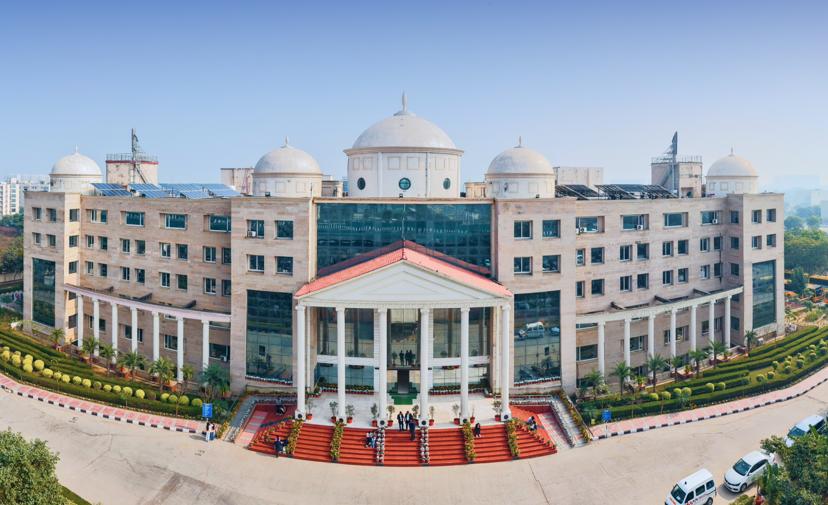













 13+Years of Educational Experience