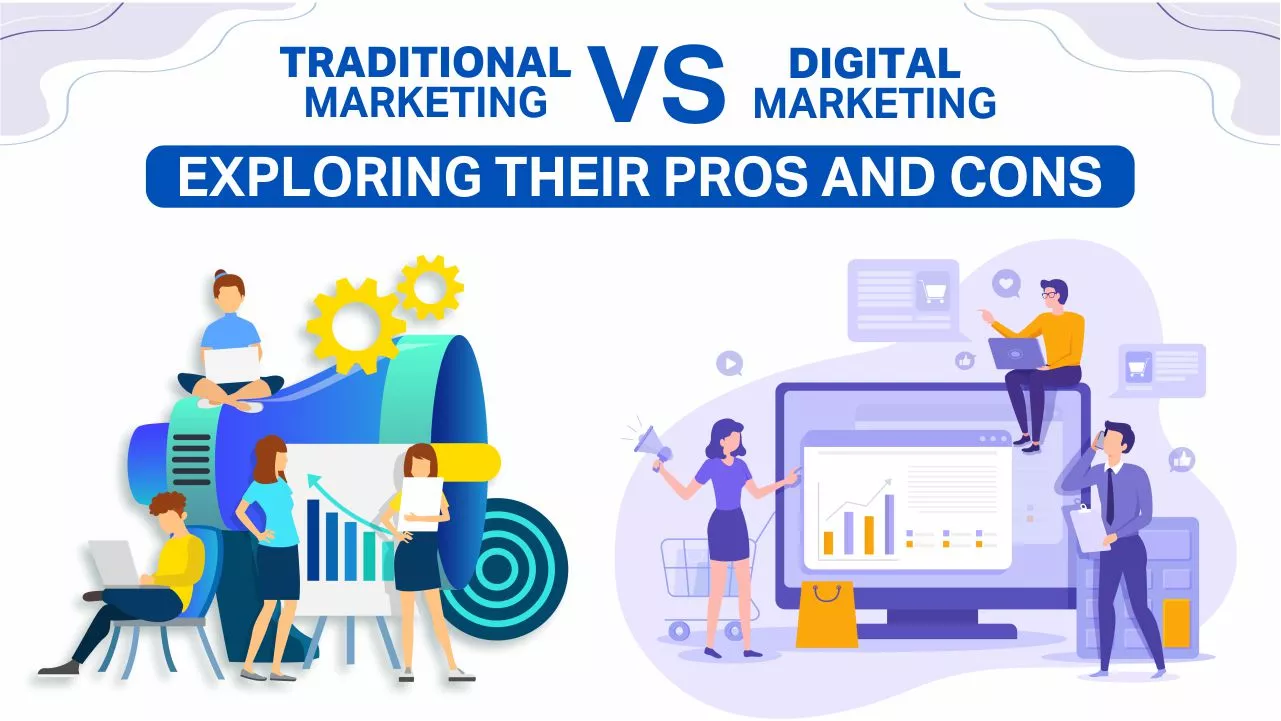
Traditional Marketing vs Digital Marketing: Marketing refers to the activities and strategies employed by companies use to advertise and sell their goods and services. In order to attract, engage, and keep customers while reaching organisational goals, entails comprehending customer demands, defining target markets, building and presenting value propositions, and utilising a variety of channels and strategies.
There are mainly two types of marketing which are online marketing and traditional marketing. Moreover, This blog is going to explore the Pros and Cons of marketing types of them in depth.
Online Marketing vs Traditional Marketing
Online marketing, also referred to as digital marketing, which is the practice of promoting goods and services via online channels like websites, social media, and email. On the other hand, traditional marketing makes use of standard media like print, television, and direct mail. While conventional marketing delivers a real, local presence, online marketing enables a greater audience reach, targeted audience engagement, and real-time analytics.
| Aspects |
Online Marketing |
Traditional Marketing |
| Reach |
Online marketing has a wider reach that allows businesses to target specific demographics, interests, and behaviours with precision using tools like search engine optimization (SEO), social media targeting, and pay-per-click advertising. |
Traditional marketing, on the other hand, generally has a more limited reach and relies on broader targeting methods such as mass media or local distribution. |
| Cost and Return on Investment |
Online marketing often offers a more cost-effective option compared to traditional marketing. Digital advertising platforms provide flexibility in budget allocation and offer various pricing models, such as cost-per-click or cost-per-impression. Additionally, online marketing allows for better tracking and measurement of return on investment (ROI) through analytics tools. |
Traditional marketing may have less precise measurement methods. |
| Consumer Engagement |
High |
Low and Short |
| Interactivity and Engagement |
Online marketing offers higher levels of interactivity and engagement with the audience. Through social media, blogs, and online forums, businesses can have direct conversations with customers, receive feedback, and build relationships. |
Traditional marketing methods, though impactful, generally lack this level of direct interaction and two-way communication. |
| Flexibility and Real-Time Adjustments |
Online marketing campaigns can be quickly adjusted and optimized in real-time based on performance data. This flexibility allows businesses to experiment, make changes, and adapt their strategies as needed. |
Traditional marketing campaigns, such as print ads or TV commercials, have more fixed timelines and require advanced planning, making adjustments less immediate. |
| Features |
Online marketing campaigns can be launched relatively quickly, allowing businesses to take advantage of timely opportunities or respond to market changes swiftly. |
Wanna gain marketing expertise check out: BBA in Marketing which is a 3 years advanced undergraduate programme that focuses on business administration and marketing concepts, equipping students with skills in advertising, sales, consumer behavior, and market analysis.
What is Traditional Marketing
Traditional marketing refers to the established strategies and distribution channels that are used to advertise goods and services. It makes use of offline techniques like telemarketing, billboards, direct mail, television and radio advertising, print ads, and these. Traditional marketing uses mass media and tangible items to spread marketing messages in an effort to reach a wide audience.
Advantages of Traditional Marketing
- Tangible Presence: Traditional marketing establishes a physical presence through mediums like print adverts, billboards, and direct mail, allowing customers to interact with the marketing materials.
- Local Targeting: Businesses can target a specific local audience through specialised advertising channels like neighbourhood newspapers or regional television networks.
- Familiarity: Many people, especially those who are less conversant with digital technologies, are familiar with traditional marketing techniques because they have been in use for a long time.
Disadvantages of Traditional Marketing
- Limited Reach: Due to its reliance on physical distribution methods and potential ineffectiveness in reaching a bigger, global audience, traditional marketing may have less reach than online marketing.
- Higher Costs: Traditional marketing methods, such as print advertisements or TV commercials, can be expensive to produce and distribute, making it a costly option for businesses, particularly small ones with limited budgets.
- Lack of Interactivity: The audience cannot be engaged and interacted with in real time, and traditional marketing is frequently a one-way communication strategy that cannot obtain rapid feedback.
Best Traditional Marketing Strategies
There are several effective traditional marketing strategies that businesses can employ to reach their target audience. Here are some of the best traditional marketing strategies:
1. Print Advertising
Advertising through newspapers, magazines, brochures, flyers, and other printed materials can still be impactful, especially when aimed at local or specialised markets. Additionally, well-placed print advertisements can raise brand awareness and draw in customers.
2. Direct Mail Marketing
It utilises physical mail to directly reach potential customers’ addresses, such as postcards, catalogues, or personalised letters. It can also be a successful approach to reach a specific audience. Personalised messaging is possible with direct mail, which also has a higher response rate than other marketing strategies.
3. Television and Radio Advertising
Radio and television continue to have a substantial audience reach and influence despite the rise of digital media. Businesses can reach a large range of potential clients by running advertisements during famous TV shows or radio programs relevant to the target population.
4. Outdoor Advertising
Billboards, posters, signage, and other forms of outdoor advertising can efficiently attract the attention of people in high-traffic areas. Outdoor advertisements are very effective for raising brand awareness and supporting local companies.
5. Event Sponsorship and Participation
Participating in trade fairs, conferences, and exhibits or sponsoring pertinent events might provide you with the chance to speak with your target market directly. These occasions give companies the chance to promote their goods and services, create connections, and get leads.
6. Public Relations (PR)
Businesses can benefit from good Public Relations by cultivating partnerships with media sources and taking advantage of press releases, interviews, or news coverage. Through print, radio, or television coverage, PR initiatives can aid in establishing credibility and enhancing brand visibility.
7. Word-of-Mouth Marketing
This technique, which encourages happy consumers to disseminate good word-of-mouth recommendations, can be an effective marketing tactic. Offering outstanding customer support and rewarding recommendations can help create buzz and draw in new clients.
What is Digital Marketing
Digital marketing is the practice of promoting goods and services using digital tools like the Internet, social media, search engines, email, and mobile applications. It includes a range of strategies, including email marketing, search engine optimisation (SEO), social media marketing, content marketing, and online advertising, to connect with and engage a specific audience in the digital sphere.
Advantages of Digital Marketing
- Wider Reach: Digital Marketing has the potential to reach a global audience with digital marketing, overcoming geographic limitations and growing its consumer base.
- Targeted Audience: With the use of digital marketing, it is possible to target customers precisely based on their demographics, interests, behaviours, and online activities, ensuring that marketing campaigns are effective.
- Cost-Effective: Digital marketing frequently provides more economical possibilities than traditional marketing does, enabling businesses with limited expenditures to reach a larger audience.
- Measurable Results: Digital Marketing allows to develop data-driven decisions and optimise tactics thanks to the powerful analytics tools provided by digital marketing, which allow them to track and evaluate the efficacy of campaigns.
- Flexibility and Real-Time Adjustments: Based on performance data, digital marketing campaigns may be modified in real-time, enabling firms to make quick adjustments and maximise their marketing efforts.
Disadvantages of Digital Marketing
- Information Overload: Because of the abundance of information available online, it can be difficult to attract and hold an audience’s attention.
- Technical Challenges: It can be a little hard and time-consuming to learn the many digital platforms and technologies that are necessary for digital marketing.
- Reliance on Technology: With the heavy reliance on technology in digital marketing, firms are susceptible to technical problems, system outages, or algorithmic changes that may affect exposure and reach.
- Privacy Concerns: Customer data collection and use for targeted advertising may give rise to privacy problems and necessitate rigorous adherence to data protection laws.
- Skills and Expertise: Hiring or training such talent might be difficult for certain firms because digital marketing involves experienced people who are knowledgeable about digital platforms and techniques.
Learn online Marketing with MBA in Digital Marketing
11 Types of Digital Marketing
The term “digital marketing” refers to a broad range of strategies and methods used to reach and interact with a target audience using digital channels and technologies. The following are some popular forms of digital marketing:
1. Search Engine Optimization (SEO)
In order to increase a website’s exposure in search engine results pages (SERPs), SEO entails optimising its content, structure, and technical elements. By focusing on relevant keywords, enhancing website usability, and obtaining backlinks from reputable sites, the objective is to enhance organic (unpaid) traffic.
2. Search Engine Marketing (SEM)
SEM refers to paid advertising efforts on search engines. It includes pay-per-click (PPC) campaigns, where advertisers bid on keywords and pay when users click on their ads. Google Ads is a popular platform for SEM.
3. Social Media Marketing
This involves leveraging social media platforms like Facebook, Instagram, Twitter, LinkedIn, and others to promote products or services, engage with the target audience, and build brand awareness. It includes organic posts, paid advertising, influencer collaborations, and social media contests.
4. Content Marketing
Content marketing focuses on creating and distributing valuable and relevant information to attract and retain a clearly defined target audience. This can include blog posts, articles, videos, infographics, e-books, podcasts, and more. The aim is to provide valuable information, build trust, and establish authority in a particular industry or niche.
5. E-mail Marketing
Email marketing involves sending targeted messages and promotional content to a list of subscribers who have opted in to receive communications from a business or organization. Effective email marketing campaigns can nurture leads, drive conversions, and build customer loyalty.
6. Pay-Per-Click (PPC)
Pay-Per-Click is an online advertising model in which advertisers pay a fee each time their ad is clicked. It is a way to drive targeted traffic to a website or landing page by placing ads on search engine results pages (SERPs), websites, or other digital platforms. The most popular platform for PPC advertising is Google Ads (formerly known as Google AdWords), but there are other platforms like Bing Ads and social media advertising platforms that also offer PPC options.
7. Influencer Marketing
Influencer marketing involves collaborating with influential individuals or personalities who have a dedicated following on social media. Brands partner with influencers to promote their products or services to their audience, leveraging their credibility and reach.
8. Display Advertising
Display ads are graphical or multimedia advertisements that appear on websites, mobile apps, or social media platforms. These ads can include banners, images, videos, or interactive elements and are typically targeted based on user demographics, interests, or browsing behaviour.
9. Affiliate Marketing
In affiliate marketing, businesses partner with affiliates who promote their products or services on their own platforms or websites. Affiliates earn a commission for each sale or action generated through their referral.
10. Mobile Marketing
With the proliferation of smartphones, mobile marketing focuses on reaching and engaging users on mobile devices through mobile-optimized websites, apps, SMS marketing, push notifications, and location-based marketing.
11. Video Marketing
Video marketing involves creating and sharing videos to promote products, demonstrate features, provide tutorials, or tell engaging stories. Platforms like YouTube, Vimeo, and social media sites are popular channels for video marketing.
These are just a few examples of digital marketing strategies. The effectiveness of each strategy depends on the target audience, business goals, and available resources. A comprehensive digital marketing approach often involves a combination of these tactics to maximize reach, engagement, and conversions.
Types Of Marketing Communication
Below is the list of predominantly applied types of marketing communication strategies.
- Digital marketing
- Public relations
- Advertising
- Personal Selling
- Social media
- Radio Advertisement
- E-mail Marketing
- Customer recommendations
- Direct marketing
- Sales promotion
KRMU offers BBA in Marketing and other business degrees where marketing is a major specialisation. These programmes are designed to help students understand consumer behaviour, branding, digital marketing, advertising strategy, and market research. Students learn how companies promote products, influence customer decisions, and manage competitive markets.
Programme Details: BBA in Marketing at KRMU
- Duration: 3 years (six semesters) for standard BBA, with a 4-year honours version also available.
- Specialisation: Marketing, covering both traditional and digital aspects.
- Application Process: Candidates register online, submit credentials, possibly appear for entrance assessment such as KREE or CUET.
- Curriculum Highlights: Includes modules in digital marketing, market research, consumer behaviour, branding, strategy, real-world projects & industry workshops.
Eligibility
- Completed 10+2 or equivalent from a recognised board with at least 50% aggregate in any stream.
- English as a language subject is generally required.
- Admission may also depend on valid scores in national entrance tests or university-based exams.
Conclusion
In today’s scenario both online marketing and traditional marketing have their importance. Online marketing offers a wide reach, precise targeting, and measurable results through digital channels, yet traditional marketing encompasses offline tactics like print, radio, and TV, reaching audiences who may not be always active on online platforms. So, It’s worth noting that Integrating traditional and digital marketing strategies can often yield the best results, as they complement each other’s strengths.
K.R. Mangalam University offers modern, industry-focused marketing programmes that prepare students to work confidently in digital marketing, branding, market research, advertising, and sales. With expert faculty, hands-on training, internships, and corporate exposure, students gain both theoretical understanding and practical experience.
For students who want creative, analytical, and high-growth career opportunities in the business world, pursuing a marketing programme at KRMU can be a rewarding and future-ready choice.
FAQs
What is traditional marketing?
Traditional marketing refers to offline promotional methods such as print ads, television, radio, billboards, and direct mail used to reach a broad audience.
What is digital marketing?
Digital marketing involves promoting products or services through online platforms like social media, search engines, websites, and email marketing.
What are the advantages of traditional marketing?
It offers strong local reach, builds trust through physical presence, and is effective for audiences who are less active online.
What are the disadvantages of traditional marketing?
Traditional marketing is often expensive, difficult to measure, and less flexible in terms of making quick changes.
How does K.R. Mangalam University prepare students for modern marketing careers?
KRMU offers industry-oriented programmes, practical learning, and exposure to digital tools and strategies, helping students build strong marketing skills.




 13 Schools700+ Faculty Members













 13+Years of Educational Experience